Why a Himalayan’s Kidneys Are Checked Before Sedation
It’s a scenario no cat parent wants to face: your beloved Himalayan needs a procedure that requires sedation or full anesthesia. Immediately, your mind races, worrying about their delicate system and how they’ll cope. This isn't just common anxiety; for Himalayan cats, whose unique genetics and anatomy present specific challenges, pre-sedation kidney checks are absolutely vital for their safety and well-being. This guide will help you understand why your vet insists on these crucial tests.
The Unique Vulnerabilities of the Himalayan Cat
Himalayans, with their stunning long coats, striking blue eyes, and sweet, docile personalities, are truly special. However, their beauty comes with a lineage that carries certain predispositions, particularly when it comes to their health. Understanding these vulnerabilities is the first step in ensuring they receive the best possible care, especially when facing medical procedures.
Inherited Renal Conditions in Himalayans
One of the most significant health concerns for Himalayans is Polycystic Kidney Disease (PKD). This isn't a condition they pick up randomly; it's an inherited genetic disorder that traces back to their Persian ancestry. Imagine tiny, fluid-filled sacs, or cysts, slowly forming and growing within the kidneys, gradually compromising their function. For more detail on this, you might want to read about how PKD1 Came Down the Persian Side of a Himalayan.
These cysts are present from birth, starting microscopic and expanding over years, often without any outward signs until the disease is quite advanced. What makes PKD particularly insidious is that a cat only needs to inherit one copy of the faulty gene to develop the condition. This means even if one parent is clear and the other carries the gene, the kitten can still be affected. It's truly heartbreaking to think of your sweet companion unknowingly battling such an issue. Understanding Why PKD Needs Only One Copy in a Himalayan can help shed light on the genetics at play here. When a Himalayan with PKD needs anesthesia, their kidneys are already under undue stress, making the careful selection and dosage of sedatives absolutely critical.
Brachycephalic Airway Syndrome and Anesthesia Risks
Beyond their kidneys, the distinctive "flat face" or brachycephalic structure of a Himalayan also presents a unique set of challenges. While undeniably charming, this flattened facial structure means they often have narrowed nostrils, an elongated soft palate, and sometimes even a hypoplastic trachea (a smaller windpipe). All of these factors contribute to Brachycephalic Airway Syndrome, which makes breathing less efficient even under normal circumstances.
When a Himalayan undergoes sedation, this already compromised airway can become even more constricted. The sedatives relax the muscles, which can cause the soft palate to obstruct the airway further, leading to increased difficulty in breathing. This struggle to breathe puts immense stress on their entire cardiovascular system. Any extra strain on their body, including difficulty processing medications, can indirectly impact kidney function. The kidneys work hard to filter out toxins, and an animal under respiratory distress might experience reduced blood flow to these vital organs, exacerbating any pre-existing kidney issues. This is a big reason why Why a Himalayan Is a Harder Anesthetic Than a Siamese is a topic often discussed among vets and breeders. The complex interplay of their respiratory and renal systems means a holistic approach to pre-surgical assessment is always necessary.
Why Pre-Sedation Kidney Checks Are Non-Negotiable
Given the potential for hidden health issues in Himalayans, performing a thorough kidney check before any sedative is administered isn't just good practice—it's absolutely essential. It's about minimizing risks and ensuring the safest possible outcome for your precious cat.
Identifying Asymptomatic Kidney Disease
One of the most frustrating aspects of kidney disease, especially PKD in its early stages, is that it’s often a silent killer. Cats are masters at hiding illness, and a Himalayan might appear perfectly healthy and energetic even when their kidneys are slowly failing. You might not notice any symptoms like increased thirst or changes in urination until 70-75% of kidney function is already lost. That’s a scary thought for any cat owner.
This is precisely why pre-sedation blood and urine tests are so vital. They can detect subtle changes in kidney function that wouldn't be visible to the naked eye. An ultrasound, for instance, can often reveal kidney cysts years before they significantly impact blood values. It’s truly amazing how early these issues can sometimes be detected, as explored in discussions around How Early Cysts Show on a Himalayan's Kidney Scan. Catching these early signs before anesthesia means your vet can make informed decisions, potentially saving your cat from serious complications. Without these checks, you're essentially flying blind, exposing your cat to unnecessary risk.
The Role of Anesthetics in Kidney Function
Anesthetic agents are powerful drugs designed to depress the central nervous system, and while necessary for procedures, they all carry risks. The vast majority of these medications, whether inhaled or injected, are metabolized by the liver and then excreted by the kidneys. Think of your cat's kidneys as the body's meticulous filtration system, constantly working to clear out waste products and drugs.
If those kidneys are already compromised—even subtly—they struggle to process and eliminate these anesthetic agents efficiently. This can lead to a prolonged recovery time, but more critically, it can cause a buildup of toxins in the system or even further damage to already weakened kidney tissue. Certain anesthetics can also temporarily reduce blood flow to the kidneys, intensifying the stress on these vital organs. This is why a vet absolutely needs to know the baseline health of your cat's kidneys before choosing an anesthetic protocol. Pet insurance providers like Healthy Paws often highlight the importance of these diagnostic tests, as they can prevent more severe, and costly, complications down the line. Investing in these checks is not just about the procedure itself, but about safeguarding your cat's long-term health.
What the Kidney Check Involves for Your Himalayan
So, what exactly do these kidney checks entail? It's more than just a quick glance. Your vet will recommend a combination of tests that provide a comprehensive picture of your Himalayan's kidney health.
Blood Tests: BUN, Creatinine, SDMA
The most common and crucial blood tests for kidney function are:
- Blood Urea Nitrogen (BUN): This measures the amount of urea nitrogen in your cat's blood. Urea is a waste product filtered out by the kidneys. Elevated BUN can indicate kidney disease, dehydration, or other issues.
- Creatinine: A waste product from muscle metabolism, creatinine is also filtered by the kidneys. A high creatinine level is a strong indicator of kidney impairment.
- Symmetric Dimethylarginine (SDMA): This is a newer and often more sensitive marker of kidney function. SDMA levels can increase much earlier in kidney disease than BUN or creatinine, sometimes detecting problems when only 25-40% of kidney function has been lost. This makes it an invaluable tool for early detection.
Together, these three values offer a robust assessment. If any of these are outside the normal range, it signals to your vet that caution is needed, and further investigation or a modified anesthetic plan might be necessary. Keeping track of Which Blood Values a Himalayan's Kidney History Demands is crucial for proactive care.
Urinalysis and Specific Gravity
A urinalysis involves analyzing a urine sample for various parameters. One of the most important aspects is Urine Specific Gravity (USG). This measures the concentration of your cat's urine. Healthy kidneys produce concentrated urine, meaning they're efficiently conserving water. If the USG is low, it suggests the kidneys are unable to concentrate urine effectively, which is an early sign of kidney dysfunction.
The urinalysis also checks for the presence of protein, glucose, blood, and bacteria, all of which can indicate kidney disease, urinary tract infections, or other health issues that could complicate sedation. A full picture of both blood and urine is truly the best way to assess renal health.
Ultrasound Screening for PKD
While blood and urine tests are excellent for detecting functional issues, they don't always reveal the underlying structural problems like cysts. This is where an ultrasound comes in. An abdominal ultrasound allows your vet to visually examine the kidneys, looking for the tell-tale signs of Polycystic Kidney Disease – the fluid-filled cysts.
These cysts can vary greatly in size and number. In younger cats, they might be very small, almost imperceptible. However, with advanced imaging, they can often be identified. It's an important diagnostic step, especially for Himalayans, to confirm or rule out PKD. We know that these cysts can become visible at various ages, and understanding At What Age a Himalayan's Cysts Become Visible can help manage expectations. Even if a genetic test for PKD has been done, an ultrasound is often still recommended, as highlighted in discussions about Why an Ultrasound Still Backs Up a Himalayan's Gene Test. It provides a direct visual confirmation of the kidney's architecture, which is invaluable before any procedure involving anesthesia.
Here’s a quick overview of these vital kidney health checks:
| Test | What it Measures | What it Can Indicate (Elevated/Abnormal) |
|---|---|---|
| BUN (Blood Urea Nitrogen) | Nitrogen waste product in blood | Kidney disease, dehydration, protein intake |
| Creatinine | Waste product from muscle metabolism | Kidney disease, muscle damage |
| SDMA | Sensitive marker of kidney function | Early kidney disease (can detect before BUN/Creatinine) |
| Urine Specific Gravity | Urine concentration | Kidneys unable to concentrate urine (poor function), dehydration |
| Urinalysis (Protein) | Protein in urine | Kidney damage, inflammation, infection |
| Ultrasound | Visual kidney structure | Cysts (PKD), kidney stones, structural abnormalities |
Protecting Your Himalayan During and After Sedation
The results of these pre-sedation kidney checks don't just tell you if your cat has kidney issues, but how your vet will proceed with the utmost care. This information is critical for every step of the process.
Tailoring Anesthetic Protocols
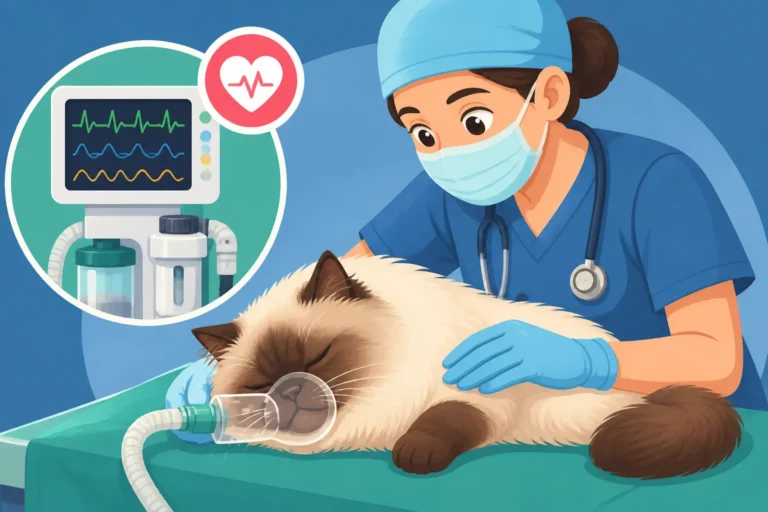
If the kidney tests reveal any abnormalities, your veterinary team will adjust their anesthetic plan accordingly. This might involve choosing different anesthetic agents that are less taxing on the kidneys, reducing dosages, or ensuring continuous intravenous fluid support throughout the procedure. Fluids help maintain blood pressure and kidney perfusion, literally flushing the kidneys to help them process drugs more effectively.
Your vet will carefully monitor vital signs, including blood pressure, heart rate, and oxygen levels, even more diligently than usual. They might opt for shorter anesthetic times if possible and ensure a smooth, calm induction and recovery to minimize stress. Every choice, from the pre-medication to the maintenance drugs, is made with your cat's specific renal health in mind. For a deeper dive into these considerations, you might find it helpful to learn about How a Vet Manages a Himalayan Under Anesthetic. It truly shows the level of precision and care involved.
Post-Sedation Monitoring and Support
The care doesn't stop once the procedure is over and your Himalayan is awake. The recovery period is just as critical, especially for cats with compromised kidneys. Your cat will likely continue to receive IV fluids for several hours post-procedure, helping their kidneys clear any remaining anesthetic agents and supporting their overall hydration. Maintaining proper body temperature is also crucial, as hypothermia can slow metabolism and excretion of drugs.
Vets will closely monitor your cat's urination and overall demeanor. Any signs of lethargy, nausea, or changes in thirst could indicate a post-anesthetic complication or a flare-up of existing kidney issues. The goal is a gentle, gradual return to their normal state. This extended monitoring is why Why a Himalayan Is Watched Longer After Surgery is a common practice; their unique needs dictate a more cautious approach. Companies like Healthy Paws are there to help cover these unforeseen but essential post-operative care costs, highlighting the importance of comprehensive pet insurance for Himalayans.
Long-Term Management for Cats with Compromised Kidneys
If the pre-sedation checks uncover a previously undiagnosed kidney condition, it can be overwhelming, but it's also a valuable opportunity to start proactive management. Kidney disease is progressive, but its progression can often be slowed with proper care. This typically involves:
- Dietary Changes: Moving to a prescription renal diet is often one of the first and most impactful steps. These diets are carefully formulated with controlled protein, phosphorus, and sodium levels to reduce the workload on the kidneys. Finding the right food for your cat can make a huge difference, and understanding Which Renal Diet a Cyst Positive Himalayan Ends Up On is a great starting point.
- Medications: Depending on the specific issues, your vet might prescribe medications to manage blood pressure, reduce phosphorus levels, or address anemia, all common complications of kidney disease.
- Hydration: Encouraging water intake through water fountains, wet food, or even subcutaneous fluids at home can significantly support kidney function.
- Regular Monitoring: Consistent follow-up appointments with blood and urine tests are essential to track the disease's progression and adjust treatments as needed.
- Environmental Enrichment: Ensuring a low-stress environment and a consistent routine helps your Himalayan thrive, even with a chronic condition.
While it's never easy to learn your cat has a chronic condition, discovering it before a stressful event like anesthesia means you can begin managing it sooner, potentially giving your beloved Himalayan many more comfortable years. Insurance providers like Healthy Paws can be instrumental in helping manage the ongoing costs associated with chronic kidney disease, ensuring you can provide the best care without financial strain. Learning about Living With a Himalayan That Inherited the Persian Kidney Gene can provide further insights and support for navigating this journey.
Disclaimer
The information provided in this article is for educational purposes only and is not a substitute for professional veterinary advice. Always consult with a qualified veterinarian for any health concerns or before making any decisions about your pet's medical care.