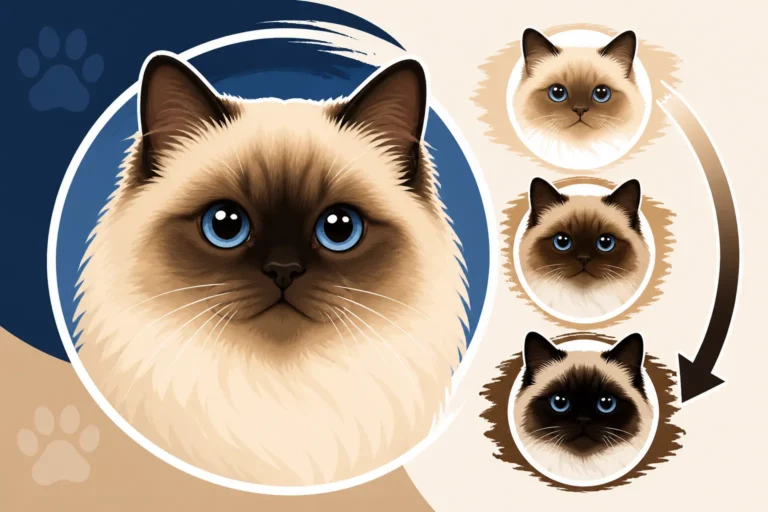
A CFA Himalayan Is a Persian on Its Own Paperwork
It's incredibly common for prospective Himalayan cat owners, and even those who've loved these beautiful felines for years, to feel utterly baffled by their registration papers. You might hear people confidently declare their Himalayan is a "Persian," while others insist it's a distinct breed. This confusion can be frustrating, making you question what you actually own or are about to bring home. This comprehensive guide aims to untangle the historical decisions and current realities of how the Himalayan cat is formally recognized by various cat registries, helping you understand precisely what your cat's paperwork signifies.
The Tangled History of Himalayan Registration
To truly understand why your Himalayan's paperwork might raise more questions than answers, we need to take a little trip back in time. The story of the Himalayan's registration is deeply intertwined with its fascinating origin and the evolving standards of cat fancy organizations.
How the Himalayan Came to Be
The Himalayan cat, with its stunning Siamese-like points on a luxurious Persian body, didn't just appear out of thin air. It was a deliberate creation, a scientific endeavor that began in the academic halls of a prestigious university. Researchers in the 1930s, particularly Clyde Keeler and Virginia Cobb, were studying genetics at Harvard Medical School. Their goal was to understand how certain traits, like color points, were inherited. By crossing Siamese cats, known for their distinctive color pattern, with Persians, famed for their long, flowing coats and docile temperament, they inadvertently laid the foundation for a new breed.
These early experimental crosses produced kittens with the long hair of the Persian and the color points of the Siamese. It wasn't about creating a new pet breed at first; it was pure genetic inquiry. However, the beauty and unique combination of traits captured the imagination of cat enthusiasts. It took several generations of careful breeding to stabilize these traits and establish the Himalayan as a recognized type, moving it from a scientific curiosity to a beloved companion. You can read more about its beginnings in The Himalayan Was Made at Harvard in the 1930s. This early history is crucial because it highlights that the Himalayan was always a hybrid, a bridge between two established breeds, which ultimately contributed to its complex registration journey.
The CFA's Pivotal 1984 Decision
Fast forward a few decades, and the Himalayan had gained significant popularity, enjoying status as its own distinct breed with many registries. However, in 1984, the Cat Fanciers' Association (CFA), one of the largest and most influential cat registries in the world, made a monumental decision that changed everything for the Himalayan in the US. They decided to "fold" the Himalayan into the Persian breed, reclassifying it as a "Himalayan Division" of the Persian. This wasn't a sudden, arbitrary move, but rather the culmination of years of discussion within the cat fancy community. The rationale was largely based on the observation that Himalayans shared the same body type, head structure, and luxurious long coat as Persians, with the only significant difference being the colorpoint gene.
The CFA argued that because Himalayans could be bred to Persians (and often were, especially in earlier generations, to maintain type and health), they were essentially a color variant of the Persian. This decision, while aimed at simplifying breeding standards and promoting consistency within the Persian family, caused considerable consternation and confusion among breeders and owners. It meant that a cat previously registered as a "Himalayan" now appeared on CFA pedigrees as a "Persian – Himalayan Division." This didn't change the cat itself, of course, but it fundamentally altered its official identity in the eyes of the largest registry. It's an important piece of history to grasp because it's the root of much of the ongoing debate and clarification needed. For a deeper dive into this historical shift, consider reading Why CFA Folded the Himalayan Into the Persian in 1984.
What "Colorpoint Persian" Really Means
When the CFA made its 1984 decision, the term "Colorpoint Persian" became the official designation for Himalayans within their registry. But what does that really mean for the cat and its owners? Essentially, it means that a Himalayan is judged against the Persian standard in the show ring, with the added characteristic of the colorpoint pattern. Imagine a Persian, identical in every way – from its cobby body and short, sturdy legs to its round head, small ears, and large, round eyes – but with the distinctive mask, ears, feet, and tail of a Siamese, along with brilliant blue eyes. That's a Colorpoint Persian.
The "Colorpoint Division" isn't a separate breed, but rather a classification within the Persian breed that acknowledges this specific genetic trait. It emphasizes the structural similarities and shared heritage with the solid-colored Persians. This distinction is vital because it means that breeders of Himalayans in CFA are striving for the ideal Persian type, simply with the added challenge of maintaining clear, well-defined points and a bright, contrasting body color. It also means that in a CFA show, a Himalayan competes within the Persian category, often against other Himalayans or sometimes even other Persian divisions, depending on the specific class. Understanding What a Colorpoint Division Means for a Himalayan can truly clarify how these cats are perceived and judged in the show world.
Decoding Your Himalayan's Paperwork
One of the first things a new Himalayan owner encounters, especially if they've purchased from a reputable breeder, is a stack of paperwork. This can feel overwhelming, like reading a foreign language. Let's break down what these documents are telling you.
Reading a CFA Pedigree
If your Himalayan is registered with the Cat Fanciers' Association (CFA), its pedigree will likely reflect the 1984 reclassification. You won't see "Himalayan Cat" boldly printed as the breed name at the top. Instead, you'll typically see "Persian" listed as the breed. However, pay close attention to the "Division" or "Color Class" sections. This is where you'll find "Himalayan" or "Colorpoint Persian." This designation confirms that your cat possesses the distinct point coloration, setting it apart from solid, bicolor, or shaded Persians.
For example, a Seal Point Himalayan would be listed as "Persian – Himalayan Division – Seal Point." This means that while its lineage traces back through Persian stock (and occasionally Siamese in the distant past for the points), its current classification is as a color variant within the Persian breed. It's important not to let this wording diminish your appreciation for your cat; it's still the same beautiful, affectionate Himalayan you adore. It's merely a bureaucratic distinction that reflects historical decisions within the cat fancy. Knowing What Your Himalayan's Certificate Actually Says is key to navigating the paperwork.
TICA's Approach to the Himalayan Breed
In contrast to the CFA, The International Cat Association (TICA) maintains a different approach. TICA still recognizes the Himalayan as a distinct breed of its own. This is a significant difference for breeders and owners who prefer to see their cats acknowledged as a separate entity rather than a division of another. For TICA, a Himalayan is simply a Himalayan, plain and simple.
This means that if your cat is TICA registered, its pedigree and registration certificates will proudly state "Himalayan" as the breed. TICA judges Himalayans based on their specific breed standard, which, while sharing many characteristics with the Persian standard due to their shared ancestry, still treats them as a unique breed. This provides a clear-cut identity for these cats within the TICA framework. Many owners and breeders find this straightforward recognition less confusing and more satisfying. If you're looking for a clear "Himalayan" on your official papers, a TICA-registered cat will provide just that. Dive deeper into this distinction by exploring TICA Still Registers the Himalayan as a Breed of Its Own.
Other Registries and Their Stances
While CFA and TICA are two of the largest and most widely recognized cat registries in North America, other organizations around the world also register Himalayans, each with its own classification nuances. For instance, in Britain, the Himalayan is often referred to as a "Colorpoint Persian." This terminology mirrors the CFA's approach, emphasizing the cat's Persian structure with the added color points. Other registries, such as the American Cat Fanciers Association (ACFA) or the Governing Council of the Cat Fancy (GCCF) in the UK, might have slightly different names or divisional classifications, but generally, they fall into one of these two camps: either considering it a division of the Persian or a standalone breed.
The key takeaway is that the official name can vary significantly depending on which registry issued the papers. It's always best to check with the specific registry if you have any doubts. Most reputable breeders will be transparent about which registries they use and why. This diversity in classification is a direct result of the breed's unique history and its close genetic ties to the Persian. For anyone delving into the world of cat registration, understanding Which Bodies Still Issue a Himalayan Certificate is an important step to ensure you get the paperwork that aligns with your expectations and understanding of the breed.
| Registry | Himalayan Classification | Description | Impact on Showing |
|---|---|---|---|
| CFA | Persian – Himalayan Division | Treated as a color variant within the Persian breed standard. | Competes within Persian classes. Judged on Persian type with color points. |
| TICA | Himalayan | Recognized as a distinct breed with its own specific standard. | Competes in Himalayan breed classes. Judged on Himalayan breed standard. |
| GCCF (UK) | Colorpoint Persian | Similar to CFA, considered a division of the Persian. | Competes within Persian classes. |
| ACFA | Himalayan | Recognizes Himalayan as a distinct breed. | Competes in Himalayan breed classes. |
Practical Implications for Owners and Breeders
Beyond the semantics of paperwork, how does this registration status actually affect you as an owner or a breeder? Understanding these nuances can help you make informed decisions, whether you're selecting a kitten or contemplating showing your magnificent cat.
Understanding Your Cat's Official Identity
For an owner who simply adores their pet, the formal classification might seem like a mere technicality. However, your cat's official identity on paper can sometimes influence perceptions, particularly if you ever discuss lineage or history with others who are deeply entrenched in the cat fancy world. If you plan to show your cat, its registration with a particular organization dictates where and how it can compete. For example, a CFA-registered Himalayan will enter Persian classes, while a TICA-registered Himalayan will enter its own Himalayan breed classes.
This official identity also reflects the breeding standards that were followed. A breeder aiming for CFA championship will focus on the Persian ideal in their Himalayans, emphasizing the full Persian head and body. A breeder focusing on TICA might have a slightly different emphasis, though good type is universally sought. Regardless of the registry, the most important thing is a healthy, well-socialized cat from a reputable breeder. However, knowing How to Read the Breed Line on a Himalayan Pedigree can help you understand the breeder's goals and the heritage of your feline companion.
Breeding Considerations and the "Himalayan Carrier" Persian
For breeders, the registration details are paramount. The CFA's decision, for instance, means that a Himalayan can be bred to a solid Persian, and the offspring can still be registered as Persians (though some may carry the Himalayan gene invisibly). This cross-breeding has allowed for genetic diversity and has helped maintain the robust health and conformation of the Persian type in Himalayan lines. It's a strategy that ensures the "Persian body" of the Himalayan remains strong.
A "Himalayan carrier Persian" is a Persian cat that doesn't display the colorpoint pattern itself but carries the recessive gene for it. If two such carrier Persians are bred, or a carrier Persian is bred to a Himalayan, they can produce Himalayan kittens. This genetic flexibility is part of what led to the CFA's reclassification. Breeders need to be acutely aware of these genetic possibilities and the implications for their breeding programs, especially concerning how kittens will be registered and presented. Understanding these genetic connections is crucial for anyone involved in serious breeding and even for prospective owners to understand the potential lineage of their kitten. Knowing Whether a CFA Himalayan Is Registered as a Persian can shed more light on these breeding practices.
Navigating the Show Ring
If you're an aspiring show cat owner, the registration status directly impacts your journey. In CFA shows, your Himalayan will compete within the Persian category. This means it will be judged against the strict Persian breed standard, with special attention paid to its colorpoints. Judges will look for the ideal Persian head (round, full-cheeked), a cobby body, short legs, and the correct texture and length of coat, all while assessing the clarity and definition of its mask, ears, legs, and tail, as well as the deep blue of its eyes. A well-presented Himalayan in a CFA show must embody the Persian ideal first and foremost.
In TICA shows, however, your Himalayan will have its own breed category. While the TICA standard will still emphasize many of the classic Persian traits, it acknowledges the Himalayan as a distinct breed with its own nuances. This can be a subtle but important difference in judging philosophy. Regardless of the registry, presentation is key – a well-groomed, confident cat with a clear pedigree and excellent conformation will always have the best chance. Understanding Which Class a Himalayan Is Judged In is essential for any serious exhibitor to ensure their beloved feline enters the correct competitive arena.
Common Misconceptions and Clarifications
The historical decisions by registries like the CFA have left a legacy of confusion. It's easy to get caught up in the terminology, but let's clear up some common misunderstandings.
The Name Versus the Breed Status
Perhaps the biggest misconception is that because the CFA merged the Himalayan into the Persian, the name "Himalayan" is somehow no longer valid or correct. This couldn't be further from the truth. The name "Himalayan" is deeply entrenched in popular culture and among cat lovers. It accurately describes a cat with a Persian body and Siamese points. Most people, outside of the specific context of a CFA show ring or pedigree, will continue to refer to these cats as Himalayans, and rightly so.
Think of it like different terms for the same delicious beverage: "coffee" is the general term, but then you have "latte" or "cappuccino." They're all coffee, but with distinct characteristics. The "Himalayan" is the widely accepted and beloved name for this particular type of cat, regardless of how a specific registry decides to classify it on paper. Breeders themselves, even those who register with CFA, will almost universally refer to their cats as Himalayans. It’s a testament to the breed's strong identity that the name persists. The discussion around Why Breeders Still Use the Name Himalayan highlights this very point.
Is a Himalayan "Less Than" a Persian?
Another unfortunate misconception that sometimes arises from the CFA reclassification is the idea that a Himalayan is somehow a "lesser" or "sub-breed" compared to a solid Persian. This is absolutely not true. Both a Himalayan and a solid Persian are magnificent examples of feline beauty, with their own unique appeals. The classification change was a decision made by a governing body based on genetic and structural similarities, not a judgment on the inherent value or quality of the cats themselves.
A well-bred Himalayan, whether registered as a Persian division or a separate breed, is just as deserving of admiration and respect as any other purebred cat. The effort, dedication, and knowledge required to breed healthy, typey Himalayans are immense. In fact, breeding Himalayans often presents additional challenges in maintaining clear point contrast and proper body color, which are not concerns for solid Persians. So, rest assured, your Himalayan is not "less than" anything; it's a cherished and distinct variant within the broader Persian family, or a breed in its own right, depending on who you ask! The actual wording on the paper doesn't change the cat, and Whether the Wording Changes What a Himalayan Is Worth is a question whose answer is a resounding "no" when it comes to the cat's inherent value.
Why the 1984 Decision Still Confuses Buyers
Even decades later, the CFA's 1984 decision continues to be a source of bewilderment for new and prospective Himalayan owners. Imagine doing your research, falling in love with the "Himalayan" cat, and then receiving paperwork that says "Persian." It can be genuinely unsettling and make you wonder if you've been misled or if your cat isn't what you thought it was. This confusion is compounded by the fact that other major registries, like TICA, do recognize the Himalayan as a separate breed.
This disparity in classification means that prospective buyers need to be extra diligent. When speaking with a breeder, it's perfectly acceptable, and indeed advisable, to ask which registries they use and how their cats are classified. A good breeder will patiently explain the distinctions and provide transparent documentation. Don't feel silly for asking; this is a genuinely complex area of cat fancy, and your breeder should be happy to educate you. Understanding Why the 1984 Decision Still Confuses Himalayan Buyers is the first step in arming yourself with the knowledge to make an informed choice.
Essential Documents for Your Himalayan
Beyond the basic registration papers, there are other crucial documents every responsible Himalayan owner should have. These go a long way in ensuring your cat's health, lineage, and overall well-being are properly recorded and protected.
What Papers a Buyer Should Insist On
When you bring home a new Himalayan kitten, you should receive more than just a cute bundle of fluff. A reputable breeder will provide you with a comprehensive set of documents that attest to the kitten's health, heritage, and proper care. At a minimum, you should receive:
- Registration Certificate: This is the official document from the cat registry (CFA, TICA, etc.) verifying your kitten's purebred status and listing its official name, date of birth, and parents' names. It will confirm how the cat is classified by that particular registry.
- Pedigree: This multi-generational family tree shows your kitten's ancestors, often going back three to five generations or more. It's a testament to the careful breeding that went into your cat.
- Health Records: This includes a record of vaccinations, deworming, and any veterinary checks the kitten has had prior to coming home. It should also include information on the health testing of the parents.
- Health Guarantee/Sales Contract: This legally binding document outlines the terms of sale, including any guarantees on the kitten's health for a specified period, responsibilities of both the buyer and seller, and sometimes spay/neuter clauses.
Never hesitate to ask for these documents. A breeder who is unwilling or unable to provide them might be cutting corners elsewhere. Insisting on proper paperwork is not just about formality; it's about protecting your investment in a beloved pet's health and future. For a more detailed look at what to expect, check out Which Papers a Himalayan Buyer Should Insist On.
Health Testing Records and Why They're Crucial
For Himalayans, specific health testing records are arguably even more important than registration certificates alone. Himalayans, owing to their Persian lineage, are prone to certain genetic health conditions. The most well-known of these is Polycystic Kidney Disease (PKD), a progressive kidney disease that can lead to kidney failure. Fortunately, a simple DNA test can determine if a cat carries the gene for PKD. Another important consideration is Progressive Retinal Atrophy (PRA), which can lead to blindness.
Reputable breeders will have both parents of your kitten genetically tested and will be able to provide clear certificates showing that they are "PKD Negative" or "PRA-rdAc Negative." Some breeders also perform cardiac screenings for Hypertrophic Cardiomyopathy (HCM), a common heart condition in many purebreds. Receiving these health certificates provides immense peace of mind, knowing that your kitten comes from a line actively screened against these devastating diseases. It's a proactive step in ensuring a long, healthy life for your cat and demonstrates the breeder's commitment to the breed's welfare. This is why Which Two Certificates a Himalayan Breeder Owes You are so vital.
Understanding Your Kitten's Contract
The sales contract is a critical document that often gets overlooked in the excitement of bringing a new kitten home. However, it's a legally binding agreement that protects both you and the breeder. Take the time to read it carefully and ask questions about anything you don't understand. Typical clauses include:
- Health Guarantees: These specify the period during which the breeder guarantees the kitten's health against genetic defects or life-threatening illnesses. It often outlines procedures for veterinary examination upon purchase.
- Spay/Neuter Agreement: Many breeders sell pet kittens with a requirement that they be spayed or neutered by a certain age. Proof of surgery may be required to release the final registration papers. This helps prevent indiscriminate breeding.
- Return Policy: Details regarding what happens if, for unforeseen circumstances, you cannot keep the kitten. Reputable breeders often require the cat be returned to them.
- Breeding Rights: If you are purchasing a kitten with breeding rights, the contract will clearly state this, and the price will be significantly higher. For pet quality kittens, breeding is usually prohibited.
A comprehensive contract signifies a responsible breeder who stands behind their cats and is committed to their long-term welfare. It's a safety net for both parties and a testament to the ethical practices of the cattery.
The True Cost Beyond the Purchase Price
When considering a Himalayan, it's easy to focus solely on the initial purchase price. However, as any veteran cat owner will tell you, the upfront cost is just the tip of the iceberg. Owning a Himalayan involves ongoing financial and time commitments, largely due to their unique physical characteristics.
Daily Grooming and Face Care
That magnificent, flowing Persian coat of a Himalayan isn't maintenance-free; in fact, it demands daily attention. You'll need a good quality steel comb to work through their dense double coat, preventing mats and tangles that can quickly become painful and lead to skin issues. Expect to spend at least 15-30 minutes every single day meticulously combing their fur, paying special attention to their armpits, britches, and behind their ears, where mats love to hide. This daily routine also needs to include brushing their teeth – those crowded Persian jaws are prone to dental problems.
Beyond the coat, their distinctive flat faces require daily care. Himalayans often have tear staining due to their brachycephalic (flat-faced) structure, which can lead to moisture building up in their nose folds and beneath their eyes. This area needs to be gently wiped clean every morning with a damp cotton ball or special pet wipes to prevent skin irritation and infection. Over time, these daily supplies add up. You'll find yourself regularly restocking on specialized combs, brushes, pet-safe wipes, and dental care products from places like Chewy. The time commitment is also significant; consistency is key to keeping your Himalayan comfortable and looking its best, and skipping a day can easily mean a major matting headache later. Read more about this in What Daily Combing Costs a Himalayan Owner in Time.
Veterinary Care Considerations
Himalayans, while generally robust, do come with certain breed-specific health considerations that can impact veterinary costs. Their brachycephalic faces, while adorable, can predispose them to respiratory issues, especially in warm weather or stressful situations. Their large, round eyes can also be prone to irritation or corneal ulcers if not properly cared for. We've already discussed PKD and PRA, emphasizing the importance of getting a kitten from tested parents. Even with clear parents, regular check-ups are vital.
Annual vet visits for a Himalayan typically involve a thorough physical examination, vaccinations, and often blood work, especially as they age. Due to the propensity for dental issues with their crowded jaws, regular dental cleanings under anesthesia may become a necessity, which can be a significant expense. Owners might also consider pet insurance to help mitigate the costs of unexpected illnesses or accidents. Providers like Healthy Paws offer various plans that can provide peace of mind, allowing you to make decisions based on your cat's health needs rather than solely on your wallet. Being proactive about their health means understanding Why a Himalayan's Vet Year Is Eyes, Teeth and Kidneys and budgeting accordingly.
Diet and Nutrition
Feeding a Himalayan isn't just about throwing down a bowl of kibble. Their unique facial structure, while endearing, means they can struggle to eat from conventional bowls or pick up certain types of kibble. Many Himalayans do best with shallow, wide dishes or even elevated bowls, which accommodate their flat faces and prevent their long ruffs from dipping into their food or water. Finding the right kibble size and shape is also important; smaller, flatter kibbles are often easier for them to manage.
Beyond the physical mechanics of eating, a high-quality diet is crucial for maintaining their luxurious coat and overall health. A diet rich in protein and essential fatty acids, like Omega-3s and 6s, will contribute to a healthy skin barrier and a shiny, less tangle-prone coat. Some owners opt for fresh food diets, which can be easier for Himalayans to consume due to their softer texture. However, these premium diets often come with a higher price tag. Given their generally sedentary lifestyle, careful portion control is also essential to prevent obesity, which can exacerbate breathing problems and grooming difficulties. For more on how to choose the right dish for your flat-faced feline, consult Feeding a Himalayan That Cannot Reach Into a Deep Bowl.
Ensuring a Long and Healthy Life for Your Himalayan
Bringing a Himalayan into your home is a commitment to ensuring they live the happiest, healthiest life possible. This involves a combination of responsible choices, ongoing care, and a keen eye for their unique needs.
The Importance of Responsible Breeding
The foundation of a long and healthy life for your Himalayan truly begins with responsible breeding practices. A good breeder prioritizes health above all else. This means performing all the recommended genetic health screenings for PKD and PRA on their breeding cats and only breeding those who are clear of these conditions. They also focus on good conformation, which includes ensuring clear airways and healthy dental structure, to the extent possible for a brachycephalic breed.
Responsible breeders don't just sell kittens; they educate prospective owners, provide ongoing support, and take back any cat they've bred if circumstances change. They invest in the health and well-being of their lines, often participating in cat shows to ensure their cats meet breed standards. By choosing a kitten from a breeder who can provide verifiable health certificates for the parents and offers a comprehensive health guarantee, you significantly increase the chances of bringing home a genetically sound companion. This diligent approach is directly linked to How Many Years a Himalayan From Tested Lines Lives, maximizing their potential lifespan.
Ongoing Health Management
Even with a healthy start, ongoing health management is paramount for a Himalayan. Regular veterinary check-ups, typically once a year for adult cats and more frequently for kittens and seniors, are essential. These visits allow your vet to monitor overall health, catch any potential issues early, and ensure vaccinations are up to date. Be observant of your Himalayan's habits; changes in appetite, litter box use, breathing patterns, or energy levels can be subtle indicators of underlying health problems.
Given their predisposition to dental issues and potential for kidney concerns, your vet might recommend specific screenings as your Himalayan ages. For example, regular blood work and urinalysis can help track kidney function, especially after the age of five or six. It's about being proactive and working closely with your veterinarian as a team. Don't hesitate to voice any concerns, no matter how minor they seem. Your vet is your best partner in keeping your Himalayan in top shape. You'll find more details on proactive care in How Often a Tested Himalayan Still Needs Checking.
Creating an Optimal Home Environment
A Himalayan's unique physical traits also mean you need to create an environment tailored to their comfort and safety. Their thick, long coats and brachycephalic faces make them particularly susceptible to overheating. Therefore, keeping your home comfortably cool, especially during warmer months, is crucial. Provide plenty of shady, cool spots for them to relax. Access to fresh, clean water in wide, shallow bowls is also essential to encourage hydration.
Due to their generally less active nature and relatively short legs, Himalayans aren't typically high-jumpers. Ensure they have easy access to their favorite lounging spots, like the sofa or your bed, with pet steps or ramps if needed, to prevent strain on their cobby bodies. Keep their grooming tools easily accessible for that daily session, perhaps in a designated "grooming corner." Finally, a quiet, consistent routine helps Himalayans thrive; they appreciate predictability and a calm household environment. Tailoring your home to their needs will make a world of difference in their overall happiness and longevity.
Disclaimer
This article is for general informational purposes only and does not constitute professional advice. Laws, prices and regulations vary by location and change over time. Consult a qualified professional for guidance on your specific situation.