What Your Himalayan’s Certificate Actually Says
It’s a truly exciting moment when you bring home your beautiful Himalayan kitten or cat. You’ve got the fluffy coat, the stunning blue eyes, and that sweet, often talkative personality. But then you look at the paperwork, that stack of certificates and pedigrees handed over by the breeder, and a wave of confusion can easily wash over you. Is your cat a Himalayan? A Persian? What do all those codes and numbers mean? This guide is here to untangle the complexities of your Himalayan's certificate, helping you understand exactly what information it holds about your beloved feline companion.
The Heart of the Matter: Why Your Himalayan's Paperwork Can Be Confusing
Let's be honest, trying to make sense of cat breed registries and their classifications can feel like deciphering an ancient scroll written in a secret language. You bought a Himalayan, you know you have a Himalayan, but the papers might say something else entirely. This discrepancy is a common point of frustration for many new owners and it stems from a fascinating, albeit convoluted, history within the cat fancy world. It's not you, it's the system, and understanding this historical backdrop is key to interpreting your cat's official documents.
The Historical Split: CFA vs. TICA
The primary source of confusion for Himalayan owners often lies in the historical decisions made by the two largest cat registries in North America: the Cat Fanciers' Association (CFA) and The International Cat Association (TICA). For decades, these organizations have taken different approaches to how they classify the Himalayan. Imagine trying to explain to a new pet parent why their gorgeous, distinctive cat might not be listed under its common name on official documents – it's understandably perplexing.
The CFA, which is arguably the older and more traditional of the two, made a significant decision in 1984 to integrate the Himalayan into the Persian breed. This meant that, on CFA paperwork, your Himalayan isn't recognized as a separate breed but rather as a "Colorpoint Persian." This choice was rooted in the shared physical characteristics and genetic lineage between Himalayans and Persians. While it simplifies things for breeders who might be working with both, it certainly doesn't help an owner who proudly tells everyone they have a Himalayan, only for their paperwork to read "Persian." We’ve covered Why CFA Folded the Himalayan Into the Persian in 1984 in more detail if you're interested in the full history.
On the other hand, TICA, a more modern and globally focused registry, maintains the Himalayan as a distinct breed. This means if your cat's papers are from TICA, you'll likely see "Himalayan" clearly stated as the breed. This approach aligns more closely with public perception and the way breeders often market their cats. For new owners, getting TICA papers often feels more straightforward because the breed name on the certificate matches the name they know and love. However, if your breeder works with both, or if you're trying to trace lines across different registries, this split can still create layers of complexity.
Navigating the "Colorpoint Persian" Label
So, what exactly does it mean if your certificate says "Colorpoint Persian" instead of "Himalayan"? It’s not just a fancy name; it’s a specific descriptor within the Persian breed group, designed to differentiate your cat from solid-colored or other patterned Persians. The "colorpoint" part refers to the Siamese-like pattern your Himalayan displays – dark points (ears, face mask, paws, tail) with a lighter body. This is the hallmark of the Himalayan, the trait that makes them so uniquely beautiful.
When you see "Colorpoint Persian" on a CFA certificate, it's essentially saying, "This is a Persian cat, but it carries the gene for colorpoint restriction, giving it the distinctive Himalayan look." It acknowledges the unique coloration while categorizing it within the broader Persian umbrella. This can be particularly confusing for those new to the cat fancy world, as they might expect a separate box labeled "Himalayan." However, rest assured, if your cat has the characteristic long Persian coat, cobby body, and the striking blue eyes and point coloration, your "Colorpoint Persian" is, in every practical sense, the Himalayan you adore. Understanding What a Colorpoint Division Means for a Himalayan can further clarify this distinction.
It’s important to remember that these classifications, while sometimes perplexing, are part of maintaining breed standards and tracking genetics. For everyday owners, it mainly affects how you might refer to your cat in official contexts or when discussing its lineage. Your vet will still recognize your feline friend as a Himalayan, regardless of the precise wording on the formal registry document.
Decoding the Breed and Registration Information
Once you move past the initial shock or confusion of the breed name, you'll find a wealth of information embedded in your cat's certificate. This isn't just a piece of paper; it’s a formal record of your cat's identity, its origins, and its place within the broader world of purebred cats. Taking the time to understand these sections can give you a deeper appreciation for your cat's heritage.
Understanding the "Breed" or "Division" Field
This is perhaps the most scrutinized section for new Himalayan owners. As we’ve discussed, this field will indicate how your cat is formally recognized by the specific registry that issued the certificate. If your certificate is from TICA, you will almost certainly see "Himalayan" listed under the breed. This is straightforward and matches what you expect. TICA's system is designed to acknowledge distinct breeds, and the Himalayan has earned its place there as a separate entity.
However, if your certificate is from the CFA, this section will read "Persian." Below that, or perhaps in a separate "division" field, you will find "Himalayan" or "Colorpoint Persian Division." This isn't a mistake; it's CFA's way of categorizing the cat. Think of it like this: all Himalayans in CFA are Persians, but not all Persians are Himalayans. The "Himalayan" designation within the Persian breed is what defines your cat's specific coat pattern and eye color. It's a key identifier that differentiates it from, say, a Solid Black Persian or a Tabby Persian. It takes a little getting used to, but it’s a systematic way they’ve chosen to manage the breed. If you're wondering What Your Himalayan's Certificate Actually Says about this, you're not alone in seeking clarity.
The Significance of Registry Numbers and Affiliations
Every purebred cat registered with a major association will have a unique registration number. This number is like your cat's social security number in the cat world – it identifies them uniquely within that specific registry's database. This number is crucial for tracking lineage, verifying ownership, and ensuring the integrity of breeding records. When you register your kitten's name with the association, this number will be linked to your ownership.
Your certificate will also clearly state the registry with which your cat is affiliated (e.g., CFA, TICA, ACFA, GCCF in the UK, etc.). It’s important to know which registry your cat belongs to because different registries have different standards, rules, and ways of tracking pedigrees. If you ever need to transfer ownership, register offspring (if you're a breeder), or look up your cat's family tree, this information is paramount. For example, if you have a CFA-registered cat, you'll consult CFA's online database for its ancestors. If it's TICA, you'd go to TICA's records. Sometimes, breeders may dual-register cats, meaning they are recognized by more than one association, which can offer flexibility but also adds another layer to the paperwork. Knowing Which Registry Prints Persian on a Himalayan's Papers and understanding its implications is a fundamental step for any Himalayan owner.
Furthermore, these registries enforce breed standards. The certificate implicitly states that your cat's ancestors, and by extension your cat, meet the criteria set forth by that organization for a Himalayan (or Colorpoint Persian). This includes details like head shape, body type (often described as "cobby" for Himalayans), coat length, and eye color. While you might just see your furry companion, the certificate confirms they come from lines recognized for upholding these specific traits.
Beyond the Basics: Unpacking the Pedigree
Your cat's registration certificate often comes hand-in-hand with a pedigree, which is essentially a family tree for your Himalayan. This document goes far beyond simply stating the breed and registration number; it delves into your cat's ancestry, offering insights into its genetic background, potential health predispositions, and the careful planning that went into its breeding. It’s not just a collection of names; it's a story waiting to be read.
Tracing Your Himalayan's Ancestry and Lineage
A pedigree chart typically lists several generations of your cat's ancestors – usually three to five generations, sometimes more. For each cat in the lineage, you'll see their full registered name, often including titles they've earned in cat shows (like "Grand Champion" or "Regional Winner"), their registration numbers, and sometimes their colors or other distinguishing features. This detailed breakdown isn't just for bragging rights; it's a vital tool for understanding the genetic blueprint of your Himalayan.
By tracing the lineage, you can see if your cat comes from a long line of champions, indicating a strong adherence to breed standards and desirable traits. More importantly, it allows you to identify common ancestors or specific lines known for certain characteristics, whether positive or negative. A responsible breeder will use the pedigree to avoid inbreeding and to make informed decisions about pairings that will produce healthy, well-tempered kittens. As an owner, it's fascinating to see the historical names and how they connect to your cat. It helps you appreciate the decades of effort that have gone into developing and maintaining the Himalayan breed.
The Importance of Breeding Rights and Pet-Only Status
One of the most critical pieces of information related to your Himalayan's certificate, often found within the purchase contract rather than the registration document itself, is whether your cat is sold with "breeding rights" or as "pet-only." This distinction is incredibly important and impacts how you can use the registration certificate.
If your Himalayan is sold as "pet-only," it means you've purchased the cat primarily as a companion animal, and the breeder expects you to have them spayed or neutered. Often, the breeder will withhold the registration papers until proof of spay/neuter is provided. This is a common practice among reputable breeders who are dedicated to responsible breeding practices and preventing accidental or backyard breeding. A pet-only status means that while your cat is purebred and has a pedigree, its offspring cannot be registered, maintaining the integrity of controlled breeding lines. This protects both the breed standard and the individual cats from potentially irresponsible breeding.
Conversely, if you've purchased a Himalayan with breeding rights (which typically costs significantly more and is usually only granted to experienced, ethical breeders), then your certificate functions as a license to breed and register the offspring. This implies a commitment to health testing, adherence to breed standards, and a deep understanding of feline genetics. For the vast majority of Himalayan owners, their cat will be pet-only, and that's perfectly fine! The joy of owning a Himalayan comes from their companionship, not from their breeding potential. Knowing Which Two Certificates a Himalayan Breeder Owes You often clarifies these contractual aspects alongside the actual registration papers.
Crucial Health Certifications and What They Mean for Your Cat's Future
Beyond lineage and registration, a truly comprehensive Himalayan certificate package should include crucial health clearances. This is perhaps the most vital aspect of the paperwork, providing peace of mind and empowering you to make informed decisions about your cat's long-term well-being. A responsible breeder prioritizes the health of their lines, and the certificates documenting these tests are a testament to that commitment.
Polycystic Kidney Disease PKD Testing
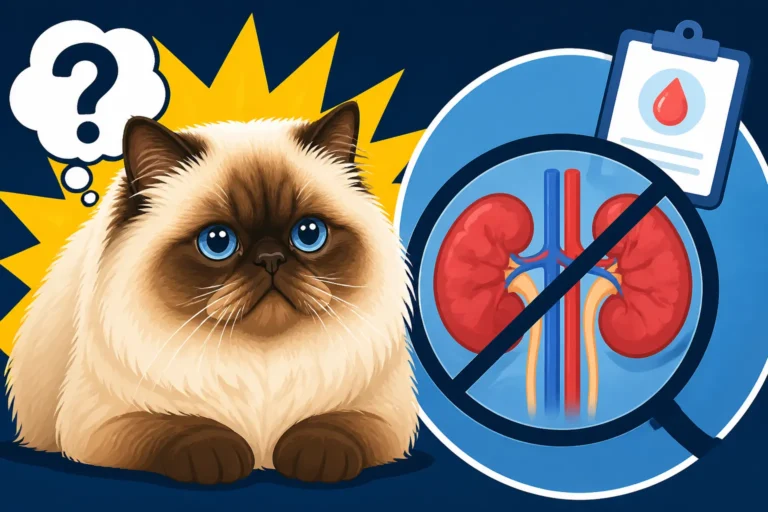
Polycystic Kidney Disease (PKD) is a hereditary condition that can affect many cat breeds, including Himalayans, due to their Persian lineage. It’s characterized by the development of multiple fluid-filled cysts in the kidneys, which can grow over time and eventually lead to kidney failure. This is a serious concern, and thankfully, there's a DNA test available to identify carriers and affected cats.
Your Himalayan's health certificate should ideally include documentation of PKD testing for both parents. The results will typically state "PKD Negative," "PKD Clear," or "N/N" for cats free of the gene, or "PKD Positive" or "N/P" for carriers, or "P/P" for affected cats. A reputable breeder will only breed "PKD Clear" cats to other "PKD Clear" cats to ensure no kittens inherit the gene. If both parents are clear, your kitten is clear. If one parent is a carrier, but bred to a clear cat, some kittens may be carriers, but none will be affected by the disease itself (as it requires two copies of the gene to express as the dominant form, but a single copy can be passed). It’s complex, but the key is that responsible breeders test. The certificate provides concrete proof of these efforts, indicating a proactive approach to preventing this debilitating disease. You can learn more about How to Read a Himalayan's PKD Certificate to fully grasp its implications.
If your cat's parents were not tested, or if the documentation isn't provided, it’s a red flag. While not all cats with PKD develop severe symptoms, it's a significant genetic risk factor that any owner would want to be aware of from day one. This is where understanding your certificate truly becomes a health imperative for your furry friend.
Progressive Retinal Atrophy PRA-b Screening
Another serious hereditary condition that can affect Himalayans is Progressive Retinal Atrophy (PRA-b), specifically the form found in Persians and Himalayans. This is an inherited eye disease that causes the gradual degeneration of the retina, leading to blindness, typically by the age of 3 to 5 years. Imagine your playful kitten slowly losing its sight; it's heartbreaking to consider.
Similar to PKD, a DNA test is available for PRA-b. Your breeder should provide certificates demonstrating that both parent cats were tested and found to be "PRA-b Clear" or "N/N." This ensures that your kitten will not develop this specific form of inherited blindness. If a cat carries one copy of the gene but is bred to a clear cat, the kittens won't be affected but might be carriers. Ethical breeding practices dictate that affected cats or carriers should not be bred without careful genetic counseling to ensure the health of future generations. The inclusion of PRA-b certificates is a strong indicator of a breeder's commitment to producing healthy kittens with good vision throughout their lives. This is just as important as kidney health; after all, your Himalayan's beautiful blue eyes deserve to see the world clearly.
Other Genetic Considerations and Certifications
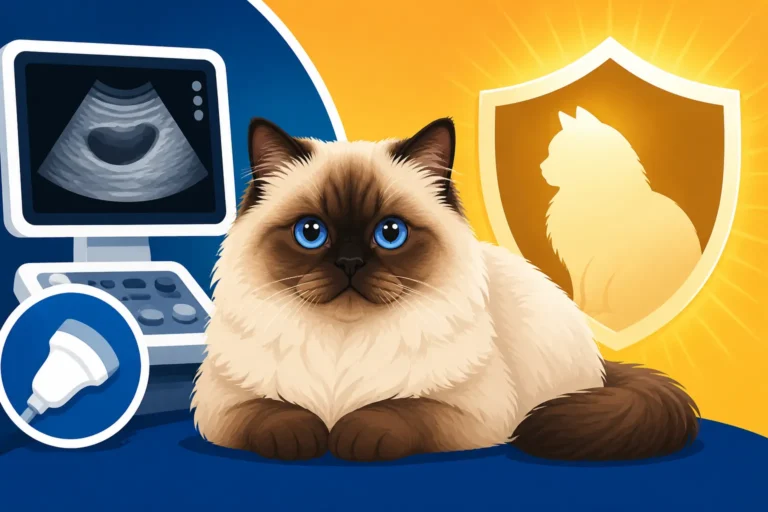
While PKD and PRA-b are two of the most commonly discussed genetic tests for Himalayans, some breeders may also provide information on other health screenings. For example, Hypertrophic Cardiomyopathy (HCM) is a common heart disease in cats, and while not as prevalent or specifically linked to a single gene in Himalayans as it is in some other breeds (like Maine Coons or Ragdolls), some breeders do perform cardiac ultrasounds (echocardiograms) on their breeding cats to screen for HCM. These scans are typically performed by a veterinary cardiologist and can help identify affected cats before they are bred. While not a DNA test, a certificate from a cardiologist stating a breeding cat is "clear" of HCM at the time of the scan is another layer of health assurance.
Additionally, some certificates might touch upon general feline health checks, vaccinations, or deworming records, which are more standard veterinary procedures rather than genetic tests. However, a responsible breeder will always provide a detailed health record for your kitten, outlining all treatments, vaccinations, and initial vet checks it has received before coming home to you. This might not be on the main registration certificate but will be part of the comprehensive packet. When talking to your vet, especially if they are new to your specific cat, having these health clearances on hand is invaluable. It helps them build a baseline health profile and understand any potential predispositions your cat might have. Many pet insurance providers, like Healthy Paws, will also ask about any known pre-existing conditions, and having clear genetic testing certificates can be very helpful in demonstrating a clean bill of health from the start.
Understanding Your Himalayan's Physical Traits Through Its Certificate
It might seem strange, but your cat's certificate, especially if it includes a detailed pedigree, can offer clues about the physical traits and characteristics you'll see in your Himalayan. It's not just about what the cat looks like now, but what its lineage suggests about its future development and adherence to breed standards.
Interpreting Point Color and Coat Genetics
The signature feature of the Himalayan is its point coloration – the darker color on the extremities (face, ears, paws, tail) against a lighter body. Your certificate will almost always specify your cat's point color, such as Seal Point, Blue Point, Flame Point, Chocolate Point, Lilac Point, or even Tortie Point or Lynx Point. These aren't just descriptive terms; they reflect specific genetic markers. For instance, a "Seal Point" indicates a black-based pigment that expresses as dark brown in the cooler areas of the body, while a "Blue Point" indicates a diluted black, appearing as a soft grey-blue. The "Flame Point" is genetically a red cat, whose color is restricted to the points.
The certificate, through its listing of point color, is confirming the specific genetic makeup responsible for your cat's stunning appearance. Knowing the specific point color can also help you understand how your cat's coat might develop. For example, a Himalayan's Point Color Is a Record of Where It Sleeps and how it interacts with ambient temperature, meaning warmer environments can cause points to lighten, and cooler ones to darken. A truly well-contrasted Himalayan, as described in the breed standard, will have a very pale body color with sharply defined, darker points. While the certificate just lists the color, it implies the genetic blueprint for this beautiful trait, a testament to careful breeding aimed at preserving the classic Himalayan look.
Facial Type and Structure: Doll Face vs. Peke Face Indicators
While not always explicitly stated on the main registration certificate, the pedigree and the breeder’s focus can indirectly indicate the facial type of your Himalayan. Historically, Himalayans, like Persians, have been bred in two main facial types: the "Doll Face" (or traditional face) and the "Peke Face" (or ultra-typed, extreme face). The Doll Face has a more traditional feline appearance with a longer nose, while the Peke Face has a much flatter face, with the nose often aligned with the eyes.
The choice between a Doll Face or Peke Face Himalayan is often a major decision for buyers. While the official certificates don't usually say "Doll Face" or "Peke Face" directly, the names and show titles of the ancestors on the pedigree can offer clues. Breeders focused on the show ring (especially in CFA) historically leaned towards the Peke Face standard, as this was what judges often favored. If many ancestors on your cat's pedigree have "Grand Champion" or "National Winner" titles under CFA, it might suggest a lineage with a flatter, Peke Face profile. Conversely, if your breeder emphasizes "traditional lines" or works with registries that don't prioritize extreme flattening, your cat is more likely to have a Doll Face. The type of face influences various aspects of your cat's health, such as breathing and tear staining, so understanding Doll Face or Peke Face Is the Himalayan Buyer's Real Decision is critical.
A breeder committed to health might provide specific details on the facial structure of the parents, even if not on the official registry certificate. This helps you anticipate potential needs, such as special feeding bowls for a flat face (Chewy offers a variety of shallow, wide bowls perfect for this) or a more vigilant tear stain routine, as tear stains are often worse on flat-faced cats. The certificate, by confirming purebred status and lineage, underpins this understanding of physical traits, even if it doesn't spell out every detail.
What Your Himalayan's Certificate Doesn't Explicitly State (But Implies)
While the registration certificate and pedigree are invaluable for understanding your Himalayan's formal identity and genetic health, they don't tell the whole story. There are nuances, implied characteristics, and practical realities that the papers hint at but never explicitly declare. These "unwritten rules" are often gleaned from conversations with reputable breeders and observing the breed itself.
Temperament and Personality Projections
You won't find a section on your certificate detailing whether your Himalayan is a cuddler or an aloof observer, or if they're particularly vocal. However, the very fact that your cat is a Himalayan implies a general temperament. Himalayans are known for being sweet, docile, and affectionate companions. They are often described as having the best of both worlds: the calm, gentle nature of the Persian, combined with a touch of the playful curiosity and vocal tendencies inherited from their Siamese ancestors. They are typically lap cats who enjoy being close to their people, often following them from room to room.
While individual personalities vary widely, the breed's reputation for being quiet, loving, and relatively undemanding (aside from grooming) is an unstated promise within that certificate. A Himalayan is generally not a cat that will scale your curtains or constantly demand high-energy playtime, though they do enjoy a good session with a wand toy. This docile nature makes them wonderful family pets, particularly for homes seeking a calm and devoted companion. If you're wondering The Himalayan Is a Lap Cat That Answers Back, the certificate indirectly supports this expectation through its breed designation.
Grooming and Care Expectations
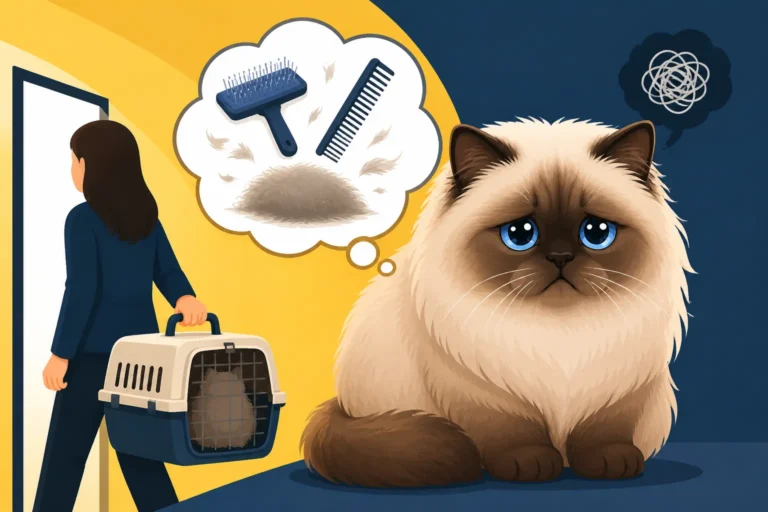
The certificate, by confirming your cat is a Himalayan, instantly communicates a significant daily commitment to grooming. It won't say "Requires daily combing" in bold letters, but the designation of "Persian type" or "Himalayan" (a longhaired breed) immediately flags this essential care requirement. Himalayans are famous for their luxurious, long, dense coats, complete with a massive ruff, feathered britches, and a plume-like tail. This beauty comes at a price: daily grooming.
Without consistent combing, their dense undercoat mats quickly and severely, leading to discomfort, skin issues, and even requiring professional shaving under sedation. The certificate, in essence, is a silent reminder that you've chosen a cat with a high-maintenance coat. It implies the need for specific grooming tools, such as a sturdy steel comb, and a routine that becomes a bonding experience rather than a chore. We've discussed What Daily Combing Costs a Himalayan Owner in Time and it's a considerable investment, but one that is absolutely necessary for their well-being.
Furthermore, the certificate's implicit acknowledgement of the Himalayan's distinctive flat face (especially for Peke-faced types) also implies the need for daily facial cleaning to manage tear stains and prevent skin irritation in the nose fold. This is a daily ritual that simply cannot be skipped. Products specifically for facial cleaning or tear stain removal might not be listed on the certificate, but they are an implied necessity for a healthy, happy Himalayan. Even an old Himalayan may stop washing its own face, requiring extra attention from you.
Leveraging Your Himalayan's Papers for Optimal Care and Planning
So, you've got your Himalayan's certificate, and now you understand what it all means. But what do you actually do with this information? These documents aren't just for looking pretty; they are practical tools that can significantly enhance your ability to provide the best possible care for your cat throughout its life. From vet visits to long-term planning, your certificate empowers you to be a more informed and proactive owner.
Working with Your Veterinarian
One of the most immediate and impactful uses of your Himalayan's certificate is in your relationship with your veterinarian. When you first bring your kitten for its initial check-up, present all the paperwork, especially the health clearances for PKD and PRA-b. This isn't just to impress your vet; it provides them with crucial background information about your cat's genetic predispositions.
Knowing that your cat comes from PKD-clear lines can help your vet establish a baseline and guide future monitoring. While a cat from clear lines is highly unlikely to develop PKD, regular kidney function checks are still part of good senior cat care. If there were any carrier parents in the lineage (though ideally, a reputable breeder ensures clear offspring), it would inform your vet to be extra vigilant. Similarly, knowing about PRA-b clearances gives your vet confidence in your cat's ocular health and allows them to focus on other potential eye issues if they arise, rather than worrying about this specific genetic blindness. This detailed information allows your vet to tailor a preventative care plan specifically for your Himalayan, rather than taking a generic approach. It also helps your vet understand why a Himalayan's anesthetic needs a longer recovery, for example.
Planning for Longevity and Special Needs
Your Himalayan's certificate, by verifying its purebred status and genetic health, also becomes a foundation for planning its long, healthy life. Himalayans typically live between 9 to 15 years, with many living well into their teens. Knowing that your cat is free from major genetic health issues like PKD or PRA-b from the start means you can focus your long-term planning on general wellness, proper nutrition, and age-related care.
For instance, if your cat has a Peke Face, the certificate's implied facial structure can inform choices about appropriate food bowls (wide and shallow to accommodate their flattened face) and a diet that supports their generally lower activity level to prevent obesity. The insights from the certificate allow you to proactively address potential breed-specific needs, rather than reacting to problems later on. Thinking ahead about The Nine to Fifteen Years a Himalayan Usually Gets means building a care routine from day one.
Insurance Considerations
Pet insurance is a growing trend, and your Himalayan's certificate plays a role here too. When you apply for pet insurance, companies often ask about your cat's breed and any known pre-existing conditions. Having health clearances for PKD, PRA-b, or HCM from the breeder, documented on certificates, can be very beneficial.
For instance, if you apply for insurance with Healthy Paws, providing documentation that your cat's parents were clear of PKD before your kitten was born helps demonstrate that your cat did not have a pre-existing condition for this specific disease. While most policies have waiting periods and exclusions for conditions diagnosed before enrollment, having these genetic clearances can provide a clearer picture to the insurer regarding your cat's inherited health status. It can potentially help avoid disputes regarding coverage for certain hereditary conditions down the line, although policies vary greatly. Always read the fine print of any insurance policy to understand what is covered and what is not, but present your full dossier of health certificates to ensure they have all the information. Understanding Why a Himalayan Policy Excludes the Flat Face or certain other conditions can help you choose the right provider and plan.
By thoughtfully reviewing and understanding your Himalayan's certificate, you're not just archiving paperwork; you're gaining a powerful tool to advocate for your cat's health, happiness, and longevity. It transforms a piece of paper into a living document, guiding your journey as a responsible and loving Himalayan owner.
What a Himalayan's Certificate Actually Says
To make things clearer, let’s break down the common elements you might find on your Himalayan’s certificate and what each section typically means. This table provides a simplified overview, as exact layouts and terminology can vary slightly between registries.
| Section on Certificate | What It Might Say | What It Means for You |
|---|---|---|
| Breed / Division | "Himalayan" (TICA) or "Persian – Himalayan Division" (CFA) or "Colorpoint Persian" | This confirms your cat's official breed designation according to the registry. It defines the core characteristics (long coat, blue eyes, point coloration) that your cat is expected to exhibit. |
| Registration Number | A unique alphanumeric code (e.g., CFA 0123-456789, TICA 2023.CF.0701.01) | This is your cat's unique identifier within the registry's database. It's used to verify its identity, trace its lineage, and access its full pedigree history. |
| Sire (Father) | Registered name of the father (e.g., GC RW Purrfect Himalayans' Apollo) | Identifies the paternal lineage. Often includes show titles (GC=Grand Champion, RW=Regional Winner) indicating adherence to breed standards and show success. |
| Dam (Mother) | Registered name of the mother (e.g., CH Dolly's Dream Persian Pearl) | Identifies the maternal lineage. Titles (CH=Champion) indicate show success. Crucial for tracing genetic health and characteristics. |
| Date of Birth (DOB) | The kitten's birthdate (e.g., 01/15/2023) | Establishes your cat's exact age, important for health checks, vaccinations, and tracking developmental milestones. |
| Color / Point Color | "Seal Point," "Blue Point," "Flame Point," "Chocolate Point," etc. | Specifies the exact color of your cat's points, which is a genetic trait. It confirms the expected coloration and contrast. |
| Sex | "Male" or "Female" | Standard biological identification. |
| Breeder | Name of the cattery or individual breeder (e.g., Jane Doe, Happy Himmies) | Identifies the person or entity responsible for breeding your cat. Important for questions about lineage, health, and for supporting ethical breeders. |
| Owner (at time of registration) | Your name, once transferred | Confirms legal ownership of the registered cat. |
| Health Clearances (Separate Docs) | "PKD Negative/Clear," "PRA-b Clear," "HCM Normal" | These are often on separate certificates accompanying the main registration. They are critical proof that parent cats (and therefore your cat) are free from specific genetic diseases. These are perhaps the most vital documents for long-term health planning. |
Putting Your Himalayan's Papers to Good Use
Once you understand what your Himalayan's certificate actually says, you're in a much better position to appreciate your cat's unique heritage and provide tailored care. These documents are more than just formalities; they are tools that connect you to a larger community of dedicated breeders and owners, and they empower you with knowledge.
Storing Your Documents Securely
First and foremost, treat your Himalayan's certificates and pedigree like any other important legal document. Keep them in a safe place, such as a fireproof safe, a secure filing cabinet, or a waterproof document holder. Consider making digital copies (scans or clear photos) and storing them in a cloud service or on an external hard drive. This way, if the physical copies are lost or damaged, you have backups.
It's also a good idea to keep a working copy of the key documents (like the registration certificate and health clearances) in a readily accessible folder that you can easily grab for vet visits or in case of an emergency. This saves you from digging through important papers every time you need information. The peace of mind that comes from knowing your cat's history is secure is priceless.
Sharing Information with Your Extended Support Team
Your Himalayan isn't just a pet; they're a part of your family, and often, you have a support team that helps you care for them. This might include your primary veterinarian, a trusted pet sitter, or a professional groomer. Sharing relevant information from your cat's certificate can be incredibly beneficial for these individuals.
For your vet, as discussed, health clearances are paramount. For a pet sitter, knowing the breed and understanding its typical temperament (calm, affectionate) can help them provide better care and detect any unusual behavior. If your cat has a Peke Face, sharing this with a pet sitter is crucial so they understand potential breathing considerations or the need for specific feeding bowls. Even your groomer benefits from knowing the breed, as they'll be intimately familiar with the demands of a Himalayan's coat and the potential challenges of a flattened face for grooming around the eyes and nose. We've seen Why a Groomer Charges for a Himalayan Lion Cut, and it's because these cats require specialized care. By sharing information from your cat's certificate, you enable everyone involved in your Himalayan's life to provide the most informed and compassionate care possible. It makes you a truly responsible and proactive pet parent.
Disclaimer
This article is for general informational purposes only and does not constitute professional advice. Laws, prices and regulations vary by location and change over time. Consult a qualified professional for guidance on your specific situation.