Whether a Himalayan Policy Excludes the Flat Face
It’s a frustrating reality for many Himalayan cat owners: you adore your beautiful, sweet-tempered companion, but you’re constantly worried about their unique health needs, especially concerning that charming flat face. When it comes to pet insurance, the question often gnaws at you – will a policy actually cover your beloved Himmy’s brachycephalic quirks, or will you find yourself facing exclusions and unexpected bills? This guide is here to help you unravel the complexities of pet insurance for flat-faced breeds, shedding light on what to look for, what to avoid, and how to ensure your Himalayan receives the care they deserve.
Understanding Brachycephalic Breed Exclusions in Pet Insurance
Owning a Himalayan cat means you're already familiar with their distinct features – that adorable squished nose, those wide-set eyes, and their generally calm demeanor. While these traits make them incredibly endearing, they also come with a specific set of health considerations. Many pet insurance companies, unfortunately, view these unique characteristics through a lens of potential risk, leading to clauses and exclusions that can feel daunting and unfair to loving owners. It’s important to understand why these exclusions exist and what they typically target.
What "Brachycephalic" Actually Means for Insurers
The term "brachycephalic" simply refers to breeds with shortened heads, noses, and airways. For Himalayans, who inherited their flat face from their Persian lineage, this means a compact skull structure that can impact various bodily systems. Insurers use this term as a blanket category, often associating it with an increased likelihood of certain health issues. They're not singling out your beautiful Himmy personally, but rather categorizing them based on a widely recognized anatomical conformation that statistically presents more challenges. This can be a bitter pill to swallow when you know your cat is a cherished family member, not just a statistic.
It's not just the visible flatness, either. The internal structures are what really matter to insurers. This can include narrower nostrils, an elongated soft palate, and a constricted trachea, all contributing to what veterinarians call Brachycephalic Airway Obstructive Syndrome (BAOS). When an insurance company assesses your Himalayan, they are looking at these underlying structural predispositions, not just how cute their little nose is. They understand that these features, while breed standard, can necessitate more frequent veterinary visits or specialized care over the cat’s lifetime.
Common Conditions Associated with Flat-Faced Cats
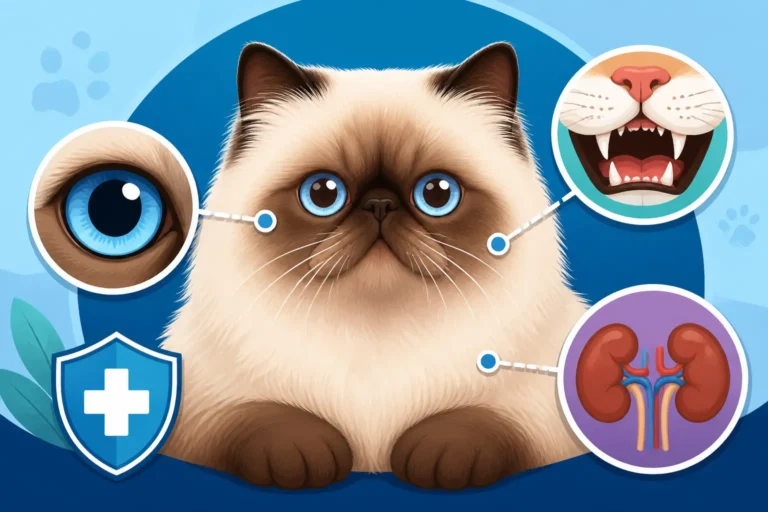
The shortened skull of a Himalayan can lead to a range of health issues that often become focal points for insurance exclusions. Respiratory problems are perhaps the most well-known, including noisy breathing, snoring, and even difficulty breathing during exercise or stress. You might notice your Himalayan snores louder than its Siamese ancestors, for instance, a direct result of their unique facial structure. Why a Himalayan Snores Louder Than Its Siamese Ancestors Beyond breathing, dental issues are incredibly common because the teeth are still full-sized but crammed into a much smaller jaw. This leads to overcrowding, abnormal alignment, and a higher risk of periodontal disease. How Crowded a Himalayan's Lower Jaw Gets
Eye problems are another significant concern. The prominent, often large eyes of a Himalayan can be more susceptible to injury, dryness, and conditions like entropion (inward-rolling eyelids) or epiphora (excessive tearing) due to compressed tear ducts. You might find yourself constantly wiping your Himmy's face to manage tear stains, a daily routine that hints at these underlying issues. Why a Himalayan's Eyes Water All Day Additionally, skin fold dermatitis can develop in the creases around their nose, which can stay damp and lead to infections if not diligently cleaned. What Happens If a Himalayan's Nose Fold Stays Damp These are all conditions that, while manageable, can lead to significant vet bills over the years, making them prime candidates for insurance companies to scrutinize.
The Rationale Behind Insurance Exclusions
From an insurance provider's perspective, exclusions are a way to manage risk and maintain affordability for the broader policyholder base. When a breed has a statistically higher incidence of certain conditions that require ongoing or expensive treatment, covering these conditions without specific clauses would drive up premiums for everyone. They assess actuarial data – essentially, the numbers tell them that brachycephalic breeds, on average, claim more for specific types of medical interventions. This isn't a judgment on your pet's worth or health, but a business decision based on probabilities.
It’s about balancing comprehensive coverage with sustainable pricing. If an insurer were to cover every single breed-specific predisposition without any caveats, the cost of pet insurance might become prohibitively expensive for most people. Therefore, they often delineate what they will cover versus what they won't, or what might come with a higher premium or specific waiting periods. Understanding this rationale, while perhaps not making it less frustrating, can help you approach policy selection with a more informed perspective, knowing what battles you might need to fight or compromises you might need to make.
Navigating Policy Fine Print and Breed-Specific Clauses
The world of pet insurance can feel like a maze of jargon and complicated clauses. For Himalayan owners, this complexity is amplified by the potential for breed-specific exclusions. It’s not enough to simply ask if they cover cats; you need to dig deep into the specifics, read the fine print, and understand how your Himalayan’s unique physiology might be treated within a policy. This often means being your own advocate and asking very direct questions before committing to any plan.
Deciphering the Language of Exclusionary Clauses
Insurance policies are notorious for their dense language, and pet insurance is no exception. When it comes to flat-faced breeds, you’ll often find clauses that explicitly mention "brachycephalic conditions," "respiratory issues related to breed conformation," or "hereditary conditions specific to Persian lineage." These aren't always easy to spot, sometimes buried deep in the terms and conditions. The key is to look beyond the general "what's covered" section and really scrutinize the "what's not covered" or "limitations" sections. Don't be shy about asking a representative for clarification, and if possible, get it in writing.
Sometimes, a policy might not explicitly exclude a condition but will impose a very long waiting period for hereditary conditions, or cap the payout for certain types of treatments. For instance, while some policies might cover entropion surgery, they might only do so after a year-long waiting period, or limit the total amount they'll pay for all eye-related issues. This level of detail is crucial for a Himalayan owner, as conditions like What Entropion Does to a Himalayan's Blue Eye are not uncommon and can require significant intervention. Always consider what percentage of the vet bill the insurer will cover and what annual maximums apply to specific conditions relevant to your cat.
Pre-existing Conditions vs. Breed-Specific Predispositions
This is a critical distinction to understand. A "pre-existing condition" is generally any illness or injury your cat had before your insurance policy started or during its waiting period. This is almost universally excluded by all insurance providers. For example, if your Himalayan already had a diagnosed heart murmur before you got a policy, treatment for that specific murmur would likely be excluded. However, breed-specific predispositions are a bit different. These are conditions that a breed is known to be prone to, but your individual cat might not yet show symptoms.
Some policies may exclude certain breed-specific predispositions even if your cat hasn't shown symptoms yet, classifying them almost as "inherent" pre-existing conditions by virtue of their breed. Others may cover these conditions, but only if they develop after enrollment and after any applicable waiting periods, and might come with a higher premium. For a Himalayan, this could mean the difference between having coverage for an emergency breathing issue later in life or bearing the full cost yourself. It's essential to understand if BAOS, for instance, is treated as a blanket exclusion or if only diagnosed cases are considered pre-existing. This is where researching reputable pet insurance providers like Healthy Paws, known for their comprehensive coverage, becomes invaluable, as their specific wording around hereditary conditions can vary significantly from others.
The Importance of a Full Veterinary History
When you apply for pet insurance, especially for a breed like the Himalayan, your chosen provider will almost certainly request your cat's full veterinary history. This isn't just a formality; it's how they determine what might be considered a pre-existing condition and how they assess overall risk. Every visit, every diagnosis, every concern noted by a vet, will be reviewed. If your Himalayan kitten had a documented history of noisy breathing or had its nostrils graded by a vet before you got insurance, these might become grounds for exclusion related to respiratory issues later on. How a Vet Grades a Himalayan's Nostrils
This means that even seemingly minor issues noted in your cat's early life could impact future coverage. It highlights the importance of getting insurance as early as possible in your cat's life, ideally when they are a kitten and have a clean bill of health. The longer you wait, the more likely it is that something will have been noted in their records, which could then be flagged as pre-existing. Be prepared to provide accurate and complete information, as any discrepancies could invalidate your policy entirely down the line.
What to Look For in a Himalayan-Friendly Pet Insurance Policy
Finding the perfect pet insurance for your Himalayan can feel like searching for a needle in a haystack, but it’s far from impossible. The trick is knowing what questions to ask and which features are non-negotiable for a brachycephalic breed. It’s about prioritizing comprehensive coverage that addresses the specific vulnerabilities of your flat-faced feline friend, rather than just settling for the cheapest option.
Comprehensive Coverage Over Accident-Only Plans
For a Himalayan, an "accident-only" policy simply won't cut it. While these plans are generally more affordable, they offer very limited protection, typically only covering injuries from unexpected accidents like falls or getting hit by something. They will not cover illnesses, which is where most of the unique health challenges for Himalayans lie. You need a comprehensive "accident and illness" policy that provides coverage for a wide range of medical conditions, including those common to brachycephalic breeds.
Think about the long-term health of your Himmy. Conditions like dental disease from their crowded mouth, skin fold infections, or respiratory issues are considered illnesses, not accidents. If you rely solely on an accident-only plan, you'll be entirely out of pocket for these potentially expensive, but entirely predictable, health concerns. Investing in a robust accident and illness plan, even if it has a higher premium, is a much wiser choice for the peace of mind and financial security it offers when caring for a Himalayan.
Investigating Hereditary and Congenital Condition Coverage
This is arguably the most critical aspect for a Himalayan owner. Hereditary conditions are those passed down through genetics, like Polycystic Kidney Disease (PKD) which can reach the Himalayan from its Persian side PKD1 Came Down the Persian Side of a Himalayan, or certain eye conditions. Congenital conditions are present at birth, even if not immediately apparent, often linked to structural development, which certainly includes brachycephalic airway issues. Many insurers categorize these differently, and their coverage can vary wildly. Some may cover hereditary and congenital conditions with no extra cost, while others may offer it as an add-on, or have specific exclusions or limitations.
When comparing policies, explicitly ask about their stance on hereditary and congenital conditions. Confirm that the policy covers conditions that are prevalent in the Himalayan breed, such as BAOS, entropion, or dental issues, even if they are known breed predispositions. Look for policies that have a clear and favorable policy regarding these types of conditions, ideally with no separate waiting periods or low maximum payouts. A policy that doesn't adequately cover these areas is essentially inadequate for a Himalayan, leaving you exposed to the very risks you're trying to mitigate.
Tailoring Your Policy to Your Himalayan's Needs
Beyond just finding a comprehensive plan, you'll want to tailor the specific elements of the policy to best suit your Himalayan. Consider the deductible: a higher deductible means lower monthly premiums but more out-of-pocket expense before coverage kicks in. For routine, smaller issues common to Himalayans, a lower deductible might be more beneficial in the long run. Also, look at the reimbursement percentage. Most policies offer 70%, 80%, or 90% reimbursement. A higher percentage means you pay less of the vet bill yourself after the deductible.
Finally, pay attention to the annual limit. This is the maximum amount the insurance company will pay out in a policy year. For a breed with multiple potential health challenges, a higher annual limit gives you greater security. If your Himmy were to face a significant surgical procedure for their airway Whether Widening a Himalayan's Nostrils Helps or extensive dental work, those costs can quickly add up. Think about your personal financial comfort level and how much you're willing to pay out-of-pocket versus how much risk you want to transfer to the insurer. Resources like comparison sites can sometimes guide you, but always go directly to the insurer for the final policy document.
Major Pet Insurance Providers and Their Stance on Brachycephalic Breeds
When you're trying to find the right insurance for your flat-faced Himalayan, it quickly becomes clear that not all providers are created equal. Some may be more accommodating, while others have stricter clauses regarding brachycephalic breeds. Doing your homework and directly comparing what’s on offer is crucial, as what one company covers, another might explicitly exclude.
How Leading Insurers Address Flat-Faced Cats
Many prominent pet insurance companies have recognized the growing popularity of brachycephalic breeds, but their approaches to coverage for conditions like BAOS, dental overcrowding, or entropion can still vary significantly. Companies such as Healthy Paws, for example, are often praised for their comprehensive coverage that includes hereditary and congenital conditions, provided these aren't pre-existing before enrollment or during the waiting period. However, you'll still need to meticulously review their terms specific to brachycephalic breeds and understand their waiting periods for such conditions. It’s never safe to assume.
Other insurers might have specific riders or require a higher premium to include coverage for conditions directly linked to the flat-faced conformation. Some might cover treatments for breathing difficulties but cap the lifetime payout for such issues, which can be a concern for a chronic condition. The key is to directly contact the insurance providers and ask explicit questions about how they handle conditions common to Himalayans, such as respiratory distress, eye issues, and severe dental disease. Don't rely on general statements; ask for examples of what would and would not be covered for a Himalayan with potential brachycephalic issues.
Comparing Deductibles, Reimbursement Rates, and Annual Limits
Once you've confirmed that a policy generally covers hereditary and congenital conditions relevant to your Himalayan, the next step is to dive into the financial details. This involves a careful comparison of deductibles, reimbursement rates, and annual limits across different providers.
| Feature | Description | Impact on Himalayan Owner |
|---|---|---|
| Deductible | The amount you pay out-of-pocket before the insurance company starts reimbursing. Can be annual or per-incident. | For a Himalayan, who might have multiple, smaller recurring issues (like eye infections or skin fold irritation), a lower annual deductible might be more cost-effective. If you opt for a high deductible, you might pay for many of these smaller vet visits entirely yourself before meeting it. |
| Reimbursement Rate | The percentage of the eligible vet bill that the insurance company pays after the deductible is met. | Common rates are 70%, 80%, or 90%. A higher reimbursement rate (e.g., 90%) is highly beneficial for the potentially expensive treatments associated with brachycephalic conditions, such as surgery for elongated soft palates or extensive dental extractions. It significantly reduces your out-of-pocket share for major procedures. |
| Annual Limit | The maximum amount the insurance company will pay out for covered conditions within a policy year. | Given the potential for complex and chronic conditions in Himalayans (e.g., ongoing respiratory management, multiple dental procedures over their lifetime), a higher annual limit, or even an unlimited one if available, provides greater financial security. Lower limits can be quickly exhausted, leaving you to cover subsequent costs entirely. |
Looking at this table, it's clear that these three factors heavily influence your financial exposure. For instance, if your Himalayan needs significant care, like an emergency visit for When a Himalayan's Open Mouth Breathing Needs a Vet or extensive dental work Why a Himalayan Needs Dentals Earlier Than a Siamese, having a higher reimbursement rate and a generous annual limit can make a world of difference. Always ask for specific examples of how these apply to common Himalayan health issues during your policy research.
Utilizing Online Resources for Comparisons
The internet is a powerful tool for comparing pet insurance policies, but remember that general comparison sites might not always highlight the nuanced details critical for brachycephalic breeds. While pet supply retailers are fantastic for finding supplies and food, when it comes to insurance, you'll want to focus on dedicated insurance comparison platforms or go directly to the insurers' websites.
Many insurance companies offer instant quote tools that allow you to input your cat's breed and age. Use these tools, but always follow up with a direct call to a representative. Prepare a list of very specific questions regarding brachycephalic conditions. Ask about waiting periods for conditions like BAOS or entropion. Inquire whether their policies cover diagnostic tests like x-rays or CT scans for respiratory issues, and post-surgical care. Don't hesitate to get detailed answers in writing if possible, to avoid any misunderstandings later.
Proactive Health Management to Complement Your Insurance
Even with the most comprehensive pet insurance policy, prevention and diligent daily care remain paramount for your Himalayan's health and well-being. Insurance is a safety net for the unexpected and the unavoidable, but your everyday actions play a huge role in mitigating risks and ensuring your flat-faced feline friend lives a long, comfortable life. Think of your daily routine as your first line of defense.
Regular Vet Check-ups and Early Detection
Consistent veterinary care is non-negotiable for a Himalayan. Regular check-ups, even when your cat seems perfectly healthy, are vital for early detection of potential issues. Your vet can monitor their breathing, assess their dental health, and check their eyes for any signs of developing problems. Because Himalayans are a harder anesthetic than a Siamese Why a Himalayan Is a Harder Anesthetic Than a Siamese, catching issues early might allow for less invasive procedures or preventative measures, potentially reducing the need for extensive surgeries later on.
During these visits, discuss any subtle changes you've noticed – perhaps a slight increase in snoring, more tear staining, or difficulty eating. What might seem minor to you could be an early indicator of a developing condition for your vet. Early detection can lead to better outcomes, less discomfort for your cat, and potentially lower overall treatment costs, even with insurance. This proactive approach ensures that your insurance coverage, when needed, is there for well-managed, rather than emergency, situations.
Daily Care to Mitigate Flat-Faced Challenges
The daily grooming routine for a Himalayan is more than just about keeping them beautiful; it's a critical component of their health management, directly addressing the challenges posed by their flat face. Regular cleaning of their facial folds is essential to prevent skin infections like How Fold Dermatitis Starts Beside a Himalayan's Nose. Use soft, damp cloths or specialized pet wipes to gently clean these areas, ensuring they are thoroughly dried afterward to prevent moisture buildup. Similarly, daily eye wiping is a must to manage tear staining and keep the delicate eye area clean and free from irritation.
Beyond face care, dental hygiene is crucial. Given their crowded mouths, Himalayans are prone to dental disease. Regular brushing, if your cat tolerates it, can significantly reduce plaque and tartar buildup. While not all cats will cooperate, introducing it early can make a difference. Getting a Toothbrush Into a Himalayan's Crowded Mouth Additionally, providing appropriate food and water bowls can help. Flat-faced breeds often struggle with deep bowls; a wide, shallow dish can make eating and drinking more comfortable and reduce the amount of food or water that ends up on their ruff. Brands found on platforms like Chewy offer a wide variety of ergonomic bowls designed for flat-faced cats, making daily life easier for your Himmy.
Lifestyle Adjustments for a Healthy Himalayan
Because of their brachycephalic structure, Himalayans are particularly susceptible to overheating and respiratory distress in warm weather or during strenuous activity. It’s crucial to create an environment that supports their unique needs. Keep your home cool, especially during warmer months, and ensure they always have access to fresh water. Avoid vigorous play that could lead to panting or labored breathing, and never leave your Himalayan in a hot car, even for a few minutes. The Temperature a Himalayan Starts to Struggle At
Consider their overall activity levels. While Himalayans enjoy a good play session, they are not typically high-energy cats. They're more likely to claim a favorite chair and enjoy watching the world go by. What a Himalayan Does All Day in One Chair Encourage gentle exercise, but be mindful of their limits. If you have an outdoor catio, ensure it provides ample shade and cool resting spots. Making these simple but critical lifestyle adjustments can significantly reduce the risk of acute respiratory crises, keeping your beautiful Himmy healthier and happier, and potentially reducing the frequency of insurance claims for heat-related or respiratory emergencies.
Disclaimer
This article is for general informational purposes only and does not constitute professional advice. Laws, prices and regulations vary by location and change over time. Consult a qualified professional for guidance on your specific situation.