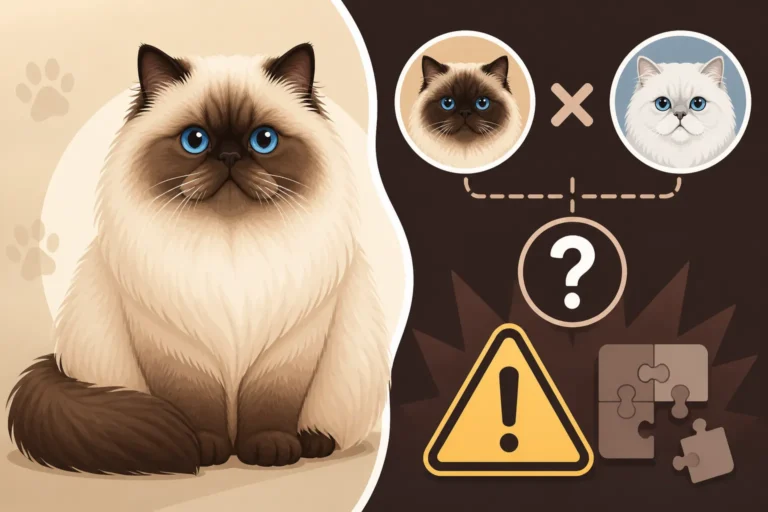
Which Registry Prints Persian on a Himalayan’s Papers
It's a common moment of confusion and sometimes even a little alarm for new Himalayan cat parents: you finally get your precious kitten's official registration papers, excitedly scanning them for "Himalayan," only to find the word "Persian" staring back at you. It can feel like a bait-and-switch, leaving you wondering if you truly have the breed you thought you adopted. This guide is here to untangle that knot of paperwork and history, explaining why your beautiful, blue-eyed, colorpoint companion might be officially designated as a Persian by some major registries, and what that truly means for you and your feline friend.
The Historical Roots of Himalayan Registration Confusion
To understand why your Himalayan's papers might say "Persian," we need to take a little trip back in time to the very beginnings of this magnificent breed. The journey of the Himalayan isn't quite as straightforward as some other pedigreed cats, and its history is deeply intertwined with another, much older, beloved breed.
The Himalayan's Unique Origin Story
The Himalayan cat, with its stunning colorpoint pattern and luxuriant long coat, wasn't discovered in some remote mountain range; it was intentionally bred by dedicated geneticists and cat fanciers. The goal was to combine the striking blue eyes and point coloration of the Siamese with the docile temperament and long, flowing coat of the Persian. Imagine the sheer dedication and careful planning required to bring together these two distinct breeds, each with its own strong characteristics, to create something entirely new and captivating. It was a true labor of love and scientific curiosity, aimed at producing a cat that offered the best of both worlds.
The early crosses were quite literally Siamese-Persian hybrids, and it took generations of selective breeding to stabilize the desired traits: the long, flowing Persian coat, the cobby body, the round head, and those piercing blue eyes, all adorned with the distinct Siamese-like points. This intentional creation meant that from its very inception, the Himalayan carried the genetic blueprint of both its parent breeds, creating a unique challenge for how it would ultimately be categorized by the cat fancy world.
Early Recognition and Separate Status
When the Himalayan first made its grand entrance into the cat world, it was often recognized as a distinct and separate breed. Breeders and enthusiasts celebrated its unique combination of traits, seeing it as more than just a variation of an existing breed. They had poured their hearts and souls into developing these cats, ensuring they bred true to type, with consistent appearance and temperament. The cat fancy community, at least initially, agreed that this beautiful new creation deserved its own spotlight.
In those early days, gaining recognition as a separate breed was a significant achievement. It meant the breed had its own written standard, its own specific criteria for judging in shows, and a clear identity that distinguished it from its ancestors. Owners proudly registered their cats as Himalayans, and the breed began to carve out its own niche among the pedigreed felines, adored for its gentle nature and striking beauty.
The Pivotal 1984 Decision by CFA
However, this separate status wasn't universally or eternally maintained. The biggest shift came with the Cat Fanciers' Association (CFA), one of the largest and most influential cat registries in the world. In 1984, CFA made a decision that forever changed the way many people viewed and registered Himalayans: they folded the Himalayan into the Persian breed. This wasn't a sudden, arbitrary move; it was the culmination of years of discussion, debate, and sometimes heated arguments within the cat fancy community. The rationale was that genetically, the Himalayan was essentially a colorpoint Persian – a Persian with the gene for point coloration. Many felt that their similarities, particularly in body type, head structure, and coat, outweighed their differences.
This decision meant that under CFA, Himalayans were no longer recognized as a distinct breed. Instead, they became a "Colorpoint Persian" division of the Persian breed. For breeders and owners who had long championed the Himalayan as its own entity, this was a significant and sometimes controversial change. It meant that their beloved cats, while still identifiable as Himalayans, would now be registered and shown under the umbrella of the Persian breed, with all the implications that entailed for pedigree, showing, and identity. If you're wondering Why CFA Folded the Himalayan Into the Persian in 1984, it really boiled down to a genetic and phenotypic argument that they were essentially the same cat with one gene difference.
Understanding the Cat Fanciers' Association (CFA) Approach
For many prospective Himalayan owners in North America, understanding the Cat Fanciers' Association (CFA) is crucial because it's one of the most prominent registries and the one most likely to print "Persian" on your cat's papers. Their approach stems from a specific interpretation of breed genetics and standards, which has deeply influenced the perception and official categorization of Himalayans.
The "Colorpoint Persian" Designation
Under the CFA, if you have a Himalayan, its official breed designation on its registration papers will be "Persian," with a specific division or color class identifying it as a "Colorpoint Persian." This terminology is key to understanding the CFA's stance. They don't see the Himalayan as a separate breed; rather, they view it as a color pattern within the Persian breed. Think of it like different coat colors in a dog breed – a Golden Retriever is still a Golden Retriever, whether its coat is light cream or dark gold. In CFA's eyes, a Himalayan is a Persian, just with the unique 'pointed' coloration and blue eyes.
This designation reflects the strong genetic ties between the Himalayan and the Persian. Beyond the striking points, Himalayans possess the classic Persian physique: the cobby body, the broad, round head, the small, rounded ears set low, and the luxuriant, flowing coat. These shared characteristics are why CFA grouped them together. It's not a slight against the Himalayan, but rather a classification based on their core breed features, with the colorpoints being a specific, beautiful variation.
Judging and Showing Under the Persian Standard
For those interested in showing their beautiful Himalayan cats, the CFA's classification has direct implications. In CFA shows, a Himalayan doesn't compete in its own breed category; it competes as a Colorpoint Persian within the larger Persian Division. This means your Himalayan is judged against other Persians, including the solid colors, tabbies, bi-colors, and other patterns, all evaluated according to the overarching Persian breed standard. This standard emphasizes specific traits like head shape, eye placement, nose break, body structure, and coat quality.
This can be a fascinating experience, as judges will be looking for the quintessential Persian characteristics, ensuring that the Himalayan's unique coloration doesn't overshadow its fundamental Persian type. It also means that breeders striving for show success must focus on breeding Himalayans that adhere strongly to the Persian standard in every aspect, not just their points. It truly highlights the concept that these cats are indeed "Persians" first, with the added beauty of the colorpoint gene. Many people wonder Whether a Himalayan Competes Against Persians in the Ring, and the answer, in CFA, is a resounding yes, they do so as a specific division within the Persian breed.
Implications for Pedigree and Breeding
The CFA's designation as a Colorpoint Persian also has significant implications for pedigree records and breeding programs. A Himalayan's pedigree in CFA will trace back through lines of Persians, some of which may have carried the colorpoint gene recessively, and others which may have been solid-colored Persians. This interbreeding with solid Persians is actually how many breeders introduce new genetic diversity and strengthen overall Persian type in their Himalayan lines. A "Himalayan carrier Persian" is a solid Persian that carries the recessive gene for colorpoint, and when bred to another carrier or a Himalayan, can produce Himalayan kittens.
For breeders, this means a broader genetic pool to work with, allowing them to focus on health, temperament, and conformity to the Persian standard, while still producing the stunning pointed cats that are so adored. It also means that when you receive your cat's pedigree, you might see a mix of "Persian" and "Colorpoint Persian" designations in its ancestry, reinforcing the unified classification. This system aims to prevent the genetic isolation that can sometimes occur when a breed is kept strictly separate, ensuring a robust and healthy future for these magnificent felines.
The International Cat Association (TICA) and Independent Recognition
While CFA went one way with the Himalayan, not all registries followed suit. The International Cat Association (TICA), for instance, has a different perspective, maintaining the Himalayan as its own distinct breed. This divergence in classification can sometimes add to the confusion for new owners but also highlights the varied philosophies within the world of cat fancy.
TICA's Stand-Alone Himalayan Breed
The International Cat Association (TICA), founded in 1979, takes a different path from CFA when it comes to the Himalayan. TICA officially recognizes the Himalayan as a distinct breed, separate from the Persian. For TICA, the unique combination of the Persian's long coat and body type with the Siamese's colorpoint pattern and piercing blue eyes warrants its own breed status. This means that if your cat is registered with TICA, its papers will proudly state "Himalayan" as its breed. It's a clear, unambiguous designation that many owners and breeders appreciate, as it honors the breed's distinct characteristics and history.
This separate recognition allows for a breed standard that specifically addresses the unique traits of the Himalayan, without being solely confined by the broader Persian standard. While there are certainly similarities in desired conformation, TICA's approach acknowledges the Himalayan as an established breed in its own right, with its own dedicated group of fanciers who believe it stands apart. This is a crucial distinction for many, providing a clear identity for these beautiful cats within the cat fancy world. Indeed, TICA Still Registers the Himalayan as a Breed of Its Own, offering an alternative for those who prefer this clarity.
Other Registries and Regional Differences
Beyond CFA and TICA, there are other cat registries around the world, and their approaches to the Himalayan can vary. Some smaller national or regional registries might also recognize the Himalayan as a separate breed, much like TICA. Others might follow CFA's lead, classifying it as a colorpoint variant of the Persian. For instance, in some parts of Europe and the UK, what we commonly call a Himalayan might be referred to as a "Colorpoint Persian" or even a "Himalayan Persian," though the latter often implies a distinct breed. If you're looking into cats from different regions, you might find that Whether Britain Calls the Himalayan a Colorpoint Persian reveals a similar nomenclature to the CFA system, sometimes leading to even more linguistic variation.
These regional differences can sometimes create a patchwork of recognition statuses, making it even more important for prospective owners to understand which registry their breeder uses and how that registry classifies the Himalayan. It's not uncommon for a cat to be registered with multiple organizations, especially if its lines are active in both CFA and TICA, which further complicates the paperwork but ultimately gives owners a choice in how their cat's breed is formally recognized.
The Advantage of Separate Breed Status
For many breeders and owners, the advantage of separate breed status, as offered by TICA and some other registries, lies in identity and focus. Having "Himalayan" clearly printed on the papers and being judged in its own breed category reinforces the perception of the Himalayan as a unique creation, rather than just a variation of an existing breed. This distinct identity can foster a stronger sense of community among Himalayan enthusiasts, who feel their cats are being recognized for their specific blend of traits.
Furthermore, a separate breed standard allows for the specific nuances of the Himalayan to be celebrated and preserved. While the Persian influence is undeniable, the colorpoint gene brings its own set of characteristics, from the blue eyes to the pointed pattern, which are central to the Himalayan's appeal. By having its own standard, judges can specifically evaluate how well a Himalayan embodies its own ideal form, rather than constantly comparing it to its solid-colored Persian cousins. This distinct recognition helps maintain the integrity of the Himalayan as a unique and cherished breed in the cat world.
What Your Himalayan's Papers Will Actually Say
Receiving your Himalayan's official papers is a big moment, and knowing what to expect can save you from unnecessary confusion or worry. The exact wording will depend entirely on which registry the breeder uses, and understanding this can help you decipher the details.
Deciphering Registration Certificates
When you receive your Himalayan's registration certificate, the first thing to note is the name of the issuing organization. If it's from the Cat Fanciers' Association (CFA), you can almost certainly expect to see "Persian" listed as the breed. Within the Persian designation, there will typically be a color division or class that indicates "Colorpoint." So, while it doesn't say "Himalayan" directly, the "Colorpoint Persian" category is indeed your Himalayan. This is often the source of initial bewilderment for new owners, who might feel they've been sold a different cat.
On the other hand, if your cat is registered with The International Cat Association (TICA) or another registry that recognizes the Himalayan as a standalone breed, the papers will explicitly state "Himalayan." This is usually much clearer for owners, as it aligns with the common name of the breed. It’s always a good idea to ask your breeder in advance which registry they use and to see a sample of the paperwork. Knowing What Your Himalayan's Certificate Actually Says before it arrives can prevent a lot of head-scratching. Regardless of the wording, a legitimate certificate provides proof of lineage and registration, which is important for understanding your cat’s background.
Understanding Breed Codes and Divisions
Beyond the breed name itself, registration papers often include specific codes or abbreviations that further define your cat's characteristics. For a CFA-registered Himalayan, the "Persian" breed might be followed by a particular code indicating its Colorpoint status and specific point color (e.g., Seal Point, Blue Point). These codes are internal to the registry system and help track specific traits for breeding and show purposes. For example, a seal point color might have one code, while a flame point has another, all under the "Persian" umbrella.
In TICA, while the breed might be simply "Himalayan," there will still be codes to denote the specific point color and pattern, such as "Seal Point Himalayan" or "Blue Point Lynx Point Himalayan." These codes ensure accuracy in record-keeping and allow breeders to maintain precise records of their lines. Don't be overwhelmed by the alphanumeric jargon; your breeder should be able to walk you through what each part of your cat's certificate means, especially regarding its breed and color classification.
Potential for Dual Registration
It's actually quite common for reputable breeders to register their cats with more than one organization, especially if they show their cats in both CFA and TICA, or if they have international lines. This is known as dual registration. A cat that is registered as a Colorpoint Persian with CFA could also be registered as a Himalayan with TICA, provided it meets the standards of both. This offers flexibility for breeders and owners, allowing them to participate in a wider range of shows and connect with a broader community.
While dual registration might seem to complicate things further, it often works to an owner's advantage, as it means their cat's lineage is recognized and documented by multiple authoritative bodies. If you’re ever unsure about your cat's papers, or curious about the possibility of dual registration, your breeder is the best resource. They can explain the reasoning behind their choices and clarify any discrepancies between different registration systems. This flexibility is another reason why Whether a Himalayan Can Be Registered With Two Bodies is often a practical consideration for breeders.
Navigating Breeder Claims and Paperwork
When you're bringing a new Himalayan into your home, the paperwork from the breeder is more than just official validation; it's a window into the health, lineage, and responsible practices behind your new family member. Understanding how to navigate breeder claims and the intricacies of their paperwork is essential.
Asking the Right Questions About Registration
Before you even commit to a kitten, it's absolutely crucial to have an open conversation with your prospective breeder about their registration practices. Don't be shy about asking direct questions. Inquire about which cat registries they use – is it CFA, TICA, both, or another organization? Ask to see sample pedigrees and registration certificates, so you know exactly what to expect when your kitten's papers arrive. A responsible breeder will be transparent and happy to explain their affiliations and how they register their cats.
Specifically, ask if their Himalayans are registered as "Persians" or "Himalayans" and why. This conversation can help you understand their breeding philosophy and ensure you're on the same page about the identity of your future cat. It's an opportunity for them to educate you about the breed's history and the registry distinctions, and for you to feel confident in your choice. Knowing Which Papers a Himalayan Buyer Should Insist On is vital for securing a legitimately bred cat. Insist on seeing not just proof of registration for the kitten, but also the health clearances for the parents.
Verifying Pedigrees and Health Testing
Beyond just the breed name, a complete set of papers from a reputable breeder should include a multi-generation pedigree and proof of health testing for the parent cats. This is where the real value of the paperwork lies. A pedigree shows your kitten's family tree, allowing you to trace its lineage and understand its genetic background. This information can be incredibly valuable, especially for recognizing potential hereditary health issues down the line.
Even more critical is proof of health testing. Himalayans, like Persians, are prone to certain genetic conditions, such as Polycystic Kidney Disease (PKD) and Progressive Retinal Atrophy (PRA). Reputable breeders will test their breeding cats for these conditions and will be able to provide clear certificates. Don't just take their word for it; ask to see the official test results. This due diligence is paramount for the long-term health and well-being of your cat. Considering pet insurance from providers like Healthy Paws, which often offers comprehensive coverage, becomes a smart move here, as they may cover hereditary conditions if symptoms weren't present before enrollment. It's always wise to look into such options early to mitigate potential future costs.
The Impact of "No Papers"
You might encounter situations where a breeder offers a Himalayan kitten "without papers," often at a significantly reduced price. While the lower cost might be tempting, this is a major red flag and usually indicates an irresponsible breeding practice. A cat sold without papers almost certainly means the breeder hasn't registered their cats, hasn't invested in health testing, and isn't adhering to ethical breeding standards. Without papers, you have no verifiable proof of your cat's lineage, health history, or even its true breed.
Purchasing a kitten without papers effectively means you're buying into an unknown. You could be getting a cat with significant health issues, genetic predispositions to diseases, or a compromised temperament due to poor breeding choices. While a lower initial cost might save you money upfront, the potential vet bills and heartache down the road can be far more expensive. It's far better to invest in a properly registered, health-tested kitten from a reputable breeder, even if it means a higher initial outlay. Understanding How Much a Himalayan With No Papers Costs isn't just about the cash, but the hidden costs of uncertainty.
The Practical Impact on Himalayan Ownership
Beyond the initial confusion of paperwork, the way your Himalayan is registered can have several practical implications for you as an owner, from finding community to navigating health concerns.
Community and Breed-Specific Resources
Whether your cat is registered as a "Colorpoint Persian" or a "Himalayan" can subtly influence the communities and resources you gravitate towards. If your cat is CFA-registered as a Persian, you might find yourself exploring Persian cat clubs, forums, and events. These communities are rich with information about grooming the long, luxurious Persian coat, managing the specific needs of a brachycephalic (flat-faced) cat, and understanding the Persian temperament. You'll gain insights from experienced Persian owners who have navigated many of the same challenges and joys you will.
Conversely, if your cat is registered as a Himalayan with TICA or another standalone registry, you'll likely connect with dedicated Himalayan breed groups. These groups offer a focused perspective on the unique blend of traits in Himalayans – perhaps discussions on their slightly more vocal nature inherited from the Siamese side, or specific grooming tips tailored to maintaining contrast in their points. Ultimately, both communities are invaluable, and many Himalayan owners will draw from both, recognizing the dual heritage of their beloved cats.
Health Concerns and Breed-Specific Insurance
Regardless of how your Himalayan is registered, understanding their breed-specific health concerns is paramount. Both the Persian and Siamese lineages contribute to potential predispositions. As mentioned earlier, Polycystic Kidney Disease (PKD) and Progressive Retinal Atrophy (PRA) are significant concerns inherited from the Persian side. The brachycephalic facial structure, also a Persian trait, can lead to respiratory issues, dental crowding, and eye irritation. It's crucial to find a vet who is experienced with flat-faced breeds and their unique needs.
When considering pet insurance, it's vital to research policies carefully. Some insurance providers might have specific exclusions or higher premiums for certain breed-related conditions, especially those common in brachycephalic cats. Providers like Healthy Paws are known for their comprehensive coverage, but it's always best to read the fine print and confirm what is and isn't covered for breed-specific issues before you enroll. Similarly, discuss dietary needs with your vet. A high-quality diet can support overall health, but any specific dietary interventions for kidney or dental health should be vet-guided. Ensuring your pet is insured before any conditions manifest can provide peace of mind and financial support should health issues arise.
Understanding the "Himalayan" Identity
At the end of the day, the name on your cat's papers, whether "Persian" or "Himalayan," doesn't change the magnificent cat purring on your lap. It doesn't alter their sweet, docile nature, their playful moments, or their stunning beauty. For most owners, their cat will always be a Himalayan, regardless of bureaucratic classifications. The name "Himalayan" has a strong cultural presence and continues to be used widely by breeders, owners, and the general public, even in regions where the official registry calls them Colorpoint Persians. It really speaks to Why Breeders Still Use the Name Himalayan even when the official papers say otherwise.
This ongoing popular usage underscores the strong identity the breed has forged since its creation. Your Himalayan is a unique blend of elegance and charm, a testament to careful breeding and a beloved companion in your home. The papers are important for lineage and official recognition, but the bond you share with your unique, colorpoint feline is what truly defines its place in your life.
Navigating the Registry Landscape: CFA vs. TICA for Himalayans
Understanding the nuances of cat registration can be quite a maze, especially when a beloved breed like the Himalayan has different classifications across major organizations. Let's break down the key differences between how the Cat Fanciers' Association (CFA) and The International Cat Association (TICA) handle the registration of Himalayan cats, which directly impacts what you'll see on your cat's papers.
The Great Divide: Breed Classification
The fundamental difference lies in how CFA and TICA classify the Himalayan.
CFA's "Colorpoint Persian" Approach:
The Cat Fanciers' Association, as we've discussed, considers the Himalayan to be a division of the Persian breed, specifically termed a "Colorpoint Persian." This means that in CFA's eyes, a Himalayan is a Persian cat that expresses the colorpoint gene, giving it the distinctive darker points and blue eyes. They share the same breed standard as other Persians, with the colorpoint pattern being the primary differentiator for this division. This philosophy emphasizes the genetic and structural similarities between the Himalayan and the broader Persian type.
TICA's "Himalayan" as a Separate Breed:
In contrast, The International Cat Association recognizes the Himalayan as a distinct and separate breed. TICA's view is that the unique combination of the Persian's body type and long coat with the Siamese's colorpoint genetics creates a cat that is sufficiently distinct to warrant its own breed status. For TICA, the Himalayan has its own breed standard, though it naturally shares many conformational similarities with the Persian. This approach celebrates the Himalayan's unique heritage as a hybrid of two distinct breeds.
Pedigree and Certification Wording
The difference in classification directly translates to the wording on official registration papers.
CFA Papers: If your Himalayan is registered with CFA, its certificate will clearly state "Persian" as the breed. Within the document, there will be an indication, often a specific code or a "division" section, that specifies "Colorpoint" or "Colorpoint Persian." This can be a source of confusion for new owners expecting to see "Himalayan" explicitly written.
TICA Papers: For a TICA-registered Himalayan, the papers will explicitly and unequivocally state "Himalayan" as the breed. There is no ambiguity; it's recognized as its own breed category. This straightforward designation often aligns better with the common perception and name used for these cats by the public.
Impact on Shows and Judging
For those involved in the show circuit, the registry's classification dictates how a Himalayan is presented and judged.
CFA Shows: In CFA cat shows, Himalayans compete as Colorpoint Persians within the Persian breed division. This means they are judged against the overall Persian standard, which focuses heavily on the conformation of the head, body, and coat, ensuring they meet the classic Persian "type." The colorpoint pattern is then evaluated for clarity, contrast, and depth within that Persian framework.
TICA Shows: In TICA shows, Himalayans compete in their own breed class. This allows judges to evaluate them against the specific Himalayan breed standard, which, while similar to the Persian standard in many aspects, specifically acknowledges the characteristics developed for the Himalayan breed. This separate judging ensures that the unique aspects of the Himalayan are directly considered in competition.
Here's a quick comparison table to help visualize the differences:
| Feature | Cat Fanciers' Association (CFA) | The International Cat Association (TICA) |
|---|---|---|
| Breed Classification | Division of Persian (Colorpoint Persian) | Separate Breed (Himalayan) |
| Wording on Papers | "Persian" (with "Colorpoint" division specified) | "Himalayan" |
| Show Competition | Competes as Colorpoint Persian within Persian Division | Competes as Himalayan in its own breed class |
| Breed Standard Emphasis | Adherence to overall Persian standard with colorpoint variant | Adherence to specific Himalayan breed standard |
| Interbreeding with Solids | Common and accepted (to improve Persian type) | Less common, focus on pure Himalayan lines (though still possible) |
This table should help clarify why you might see different names on your Himalayan's papers depending on the breeder's chosen registry. Both approaches are valid within their respective organizations, and neither diminishes the beauty or quality of your beloved Himalayan cat. It's simply a matter of differing classifications within the pedigreed cat world.
Why Your Himalayan is Still a Himalayan (Regardless of Papers)
It's easy to get caught up in the technicalities of breed registration, especially when the official paperwork doesn't seem to match the name you know and love. But at the end of the day, the spirit and identity of your Himalayan cat go far beyond what's printed on a certificate.
The Enduring Popularity of the "Himalayan" Name
Despite the varying classifications by registries, the name "Himalayan" has a deeply ingrained place in the hearts and minds of cat lovers worldwide. When people describe these cats, they rarely say "Colorpoint Persian" in casual conversation. They say "Himalayan." This popular usage is a powerful testament to the breed's distinctiveness and its beloved characteristics. The name itself evokes images of their stunning pointed coats and piercing blue eyes, and it has stuck for a reason.
This enduring popularity means that in everyday life, your cat is a Himalayan. Friends, family, and even your vet will likely refer to them as such. The general public recognizes them as a unique and beautiful breed, and that recognition often carries more weight than any official designation. The specific qualities and personality that define the Himalayan have created an identity that transcends any single registry's decision.
Celebrating the Unique Blend of Traits
The Himalayan cat truly is a marvel, a successful blend of two iconic breeds. From the Persian, it inherits that glorious long, flowing coat, the gentle, docile temperament, and the distinct cobby body. From the Siamese, it gets those striking blue eyes and the captivating colorpoint pattern that darkens in cooler parts of the body. This combination isn't just a color variation; it's a carefully curated set of traits that creates a cat with its own unique personality and appearance.
Celebrating this unique blend means appreciating all aspects of your Himalayan's heritage. It's understanding that the deep purr and calm demeanor come from its Persian side, while a tendency for more vocal communication might hint at its Siamese ancestry. It's this beautiful synthesis that makes a Himalayan a Himalayan, regardless of whether a piece of paper identifies it primarily as one parent breed or another. Your cat is a living, breathing testament to successful genetic artistry.
What Truly Matters: Your Bond with Your Cat
Ultimately, the most important "certification" your Himalayan has is the one written in your heart. The official papers are valuable for tracing lineage, confirming health testing, and for breeders who participate in showing or breeding programs. But for you, the owner, what truly matters is the loving bond you share with your feline companion. It's the soft rumble of their purr, the gentle head nudges, the way they curl up on your lap, and the unique quirks that make them an irreplaceable part of your family.
Whether their papers say "Persian" or "Himalayan," your cat is still the same individual you brought home and fell in love with. Focus on providing them with a loving environment, proper care, good nutrition (perhaps from a brand like Chewy, which offers a wide variety of high-quality foods and accessories that cater to long-haired breeds), and regular vet check-ups. These are the things that will ensure your Himalayan lives a long, happy, and healthy life, embodying all the wonderful traits that make this breed so cherished. The paperwork might be a little confusing, but the love for your cat is perfectly clear.
Disclaimer
This article is for general informational purposes only and does not constitute professional advice. Laws, prices and regulations vary by location and change over time. Consult a qualified professional for guidance on your specific situation.