Why a Collar Presses on a Himalayan’s Narrow Airway
It’s a natural instinct to want to protect our beloved feline companions, and often, that includes putting a collar on them for identification or charm. However, for those of us who share our homes with the magnificent Himalayan cat, the seemingly simple act of choosing a collar can inadvertently lead to serious health complications due to their unique facial structure and respiratory anatomy. This guide will delve into why a standard collar can be problematic for a Himalayan, exploring their physical characteristics, the risks involved, and offering safer alternatives to ensure your furry friend's comfort and well-being.
The Himalayan's Distinctive Anatomy and Airway Vulnerabilities
Himalayan cats, with their luxurious coats, striking blue eyes, and sweet dispositions, are truly a sight to behold. But beneath all that beauty lies a physiology that requires specific consideration, especially when it comes to anything that restricts their neck or airway. Unlike many other cat breeds, Himalayans are a brachycephalic breed, meaning they have a shortened, "flat-faced" or "peke-face" structure that they inherited from their Persian ancestors. This isn't just a cosmetic feature; it profoundly impacts their internal anatomy, particularly their respiratory system.
Imagine trying to breathe through a perpetually squashed straw – that's often what it can feel like for a Himalayan. Their shortened muzzle means that the soft tissues within their nose and throat are compressed into a much smaller space. This can lead to a host of issues, from stenotic nares (narrow nostrils) that restrict airflow at the very entry point, to an elongated soft palate that can partially obstruct the windpipe. Their windpipe itself can sometimes be narrower than that of a long-nosed cat of similar size. When you combine these inherent structural challenges, you begin to understand why any external pressure on their neck can become a critical problem. Why a Himalayan Snores Louder Than Its Siamese Ancestors touches on some of these inherent breathing challenges.
The Impact of a Shortened Muzzle
The adorable, compact face that defines the Himalayan breed is a double-edged sword when it comes to their health. Their flattened nose and often tiny, slit-like nostrils are the most visible signs of their brachycephalic nature. While charming, these features mean that every breath they take requires more effort than it would for a cat with a longer muzzle. The nasal passages are shorter and often convoluted, and the internal structures, like the turbinates, can be abnormally formed, adding to the resistance.
This isn't just about sounding a bit snuffly; it impacts their ability to efficiently take in oxygen and expel carbon dioxide. Any added restriction, such as that caused by a collar, can exacerbate this pre-existing challenge. It's like trying to run a marathon with your hand clamped over your mouth and nose – incredibly difficult and potentially dangerous.
Understanding the Narrow Airway
Beyond the visible facial features, the entire upper respiratory tract of a Himalayan can be predisposed to narrowing. Their pharynx and larynx, the areas at the back of the throat and voice box, may have excess tissue or be congenitally smaller. The trachea, or windpipe, can also be narrower in diameter compared to other breeds. This combination means that their entire breathing apparatus operates with less reserve.
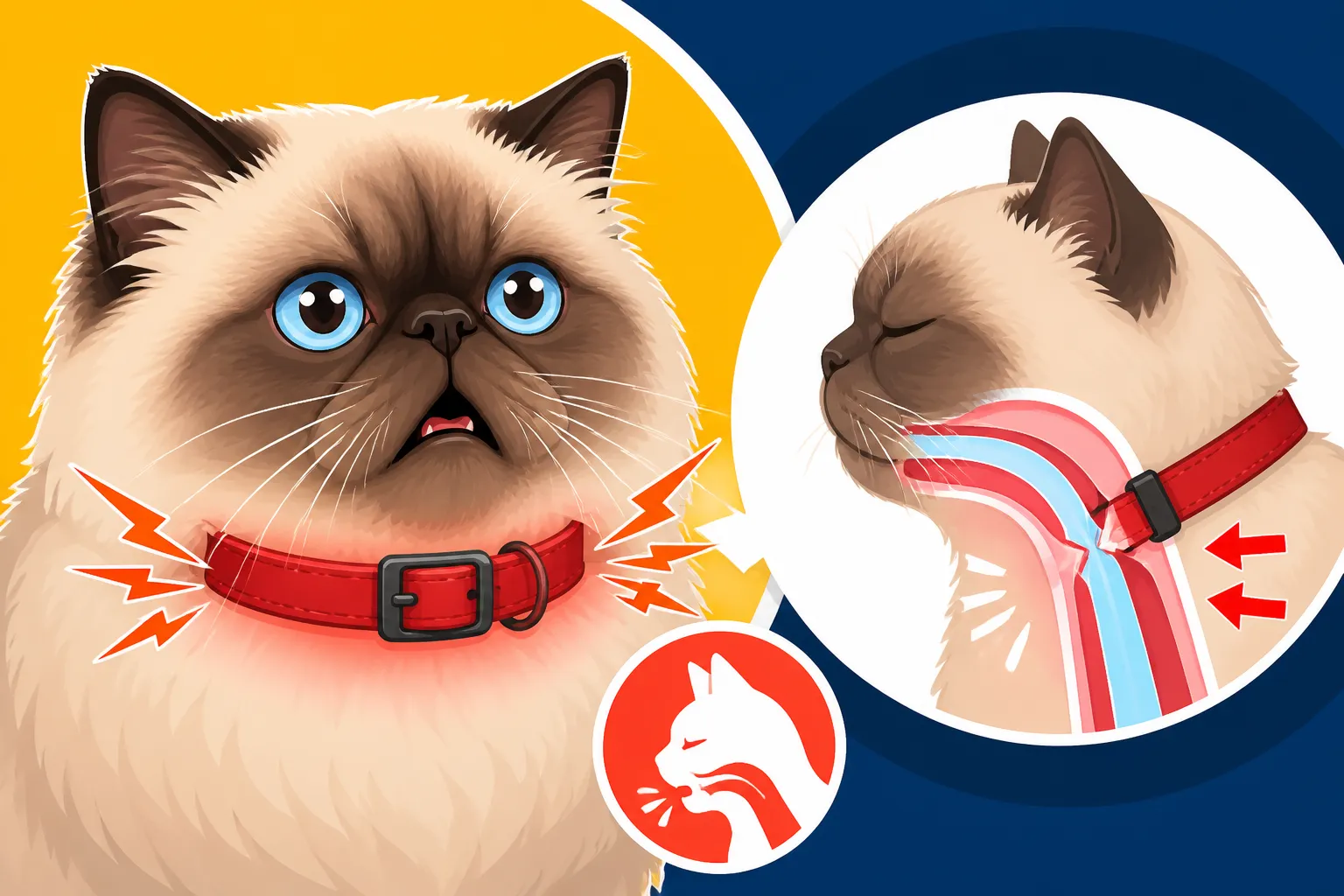
When a collar applies even gentle pressure, it can compress these already tight passages, further reducing the space available for air to move. This can lead to increased breathing effort, panting, and in severe cases, outright respiratory distress. It's a constant, delicate balance for these cats, and we, as their caregivers, must be acutely aware of how our choices can disrupt that balance. You might even notice your Himalayan sleeping with its neck stretched out, a subtle sign it's trying to optimize its airflow. Why a Himalayan Sleeps With Its Neck Stretched Out can provide more insight into this behavior.
The Hidden Dangers of Collars for Himalayans
While a collar might seem harmless, or even beneficial for identification, for a Himalayan, it can pose significant, often overlooked, risks. These dangers stem directly from their unique anatomy and the way a collar interacts with their neck and airway. It's not just about comfort; it's about life-sustaining function.
Many owners don't realize the extent of these risks until a problem arises, but understanding them proactively can help prevent unnecessary distress or emergencies for your beloved cat. It's critical to remember that what works for a Siamese or a Domestic Shorthair simply doesn't apply to a brachycephalic breed like the Himalayan.
Respiratory Distress and Suffocation Risk
The most immediate and severe danger of a collar on a Himalayan is the increased risk of respiratory distress, or even suffocation. As discussed, their airways are already compromised. A collar, especially one that fits snugly, can press on the trachea and soft tissues of the throat, narrowing the passage for air even further. This is particularly problematic during times of stress, excitement, or exertion, when the cat's breathing naturally becomes heavier.
Imagine your Himalayan getting a burst of the zoomies, or perhaps trying to bat at a favorite wand toy. Their breathing rate will increase, and if a collar is compressing their airway, they won't be able to get enough oxygen. This can lead to panicked open-mouth breathing, gasping, and even collapse. In extreme cases, if the collar gets caught on something and tightens, the risk of suffocation is very real. It's a terrifying thought, but one we must consider for their safety. When a Himalayan's Open Mouth Breathing Needs a Vet is a related concern, as this type of breathing can be exacerbated by collar pressure.
Exacerbated Brachycephalic Obstructive Airway Syndrome BOAS Symptoms
Many Himalayans, particularly those with a very flat face (sometimes referred to as "peke-face"), exhibit varying degrees of Brachycephalic Obstructive Airway Syndrome (BOAS). This syndrome encompasses all the structural abnormalities that impede breathing, such as stenotic nares, elongated soft palate, and everted laryngeal saccules. A collar acts as an external aggravator to these internal issues.
Even if your Himalayan only has mild BOAS symptoms, a collar can push them into the severe category. The constant pressure can lead to inflammation and swelling of the already crowded tissues in the throat, further narrowing the airway over time. This can cause chronic snoring, noisy breathing, and a general reduction in their quality of life. It also makes them more susceptible to overheating, as effective panting (their primary cooling mechanism) is compromised when breathing is restricted. Why a Himalayan Overheats Twice as Fast as a Siamese highlights this critical vulnerability.
Discomfort and Skin Irritation
Beyond the serious respiratory risks, collars can simply be incredibly uncomfortable for a Himalayan. The constant pressure on their neck can be irritating, especially for a breed known for its calm and somewhat sedentary nature. They might spend their days subtly trying to adjust, scratch, or even bite at the collar, leading to skin irritation, hair loss, or even open sores under their dense ruff.
Their luxurious long fur, a hallmark of the breed, can also get caught under collars, pulling and tugging at the skin. This isn't just painful; it can create hot spots where bacteria can thrive, leading to secondary skin infections. Given the challenges of keeping a Himalayan's coat pristine, adding a potential source of matting and irritation around their neck is a step we should strive to avoid.
Safe and Effective Alternatives to Collars
So, if collars are such a risk, what are the safe alternatives for identification, restraint, and even walking your Himalayan? Thankfully, there are several excellent options that prioritize your cat's health and comfort without compromising their safety or your peace of mind. The key is to think beyond the traditional collar and embrace solutions designed with feline anatomy in mind, especially for brachycephalic breeds.
It’s about making smart choices that acknowledge your Himalayan's unique needs. You want something that allows them to breathe freely, move comfortably, and still carry vital information if they ever wander. This section will explore the best alternatives, helping you choose the right gear for your cherished cat.
Harnesses: The Superior Choice for Restraint and Walks
For any situation requiring restraint, such as vet visits, car travel, or supervised outdoor time in a catio, a harness is hands down the superior choice for a Himalayan. A well-fitting harness distributes pressure across the cat's chest, back, and shoulders, completely bypassing the delicate neck and throat area. This eliminates the risk of airway compression and allows your cat to breathe normally, even if they pull or struggle.
When selecting a harness, look for designs specifically made for cats, not small dogs. Key features to consider include:
- Vest-style or H-style: These designs tend to be more secure and distribute pressure most effectively. Avoid thin, strap-only harnesses that might bunch up or dig in.
- Adjustability: Ensure it can be adjusted snugly but comfortably around the chest and girth. You should be able to fit two fingers underneath any strap.
- Material: Lightweight, breathable materials are best to prevent overheating under their thick coat. Many options are available on platforms like Amazon.
- Escape-proof: Cats are notorious escape artists! Look for harnesses with multiple points of adjustment or a secure fit that prevents them from backing out.
Introducing a harness should be a gradual process, starting with short periods indoors, rewarding with treats, and always supervising. Fitting a Harness Under a Himalayan's Ruff is an excellent resource for making this transition smooth and successful.
| Harness Type | Pros | Cons | Best For |
|---|---|---|---|
| H-Style | Good pressure distribution, lightweight, adjustable | Can sometimes be backed out of if not fitted properly | Casual walks, vet visits |
| Vest-Style | Excellent pressure distribution, very secure, comfortable for many cats | Can be bulkier, some cats may initially resist the full coverage | Long walks, car travel, "escape artist" cats |
| Step-In | Easy to put on, no overhead pulling required | Less secure than vest-style, can be backed out of easily | Cats who tolerate minimal handling, short trips |
Microchips: Permanent and Reliable Identification
For identification purposes, a microchip is by far the safest and most reliable method for your Himalayan. Unlike a collar, a microchip is permanently implanted under the skin, usually between the shoulder blades, and cannot be lost, removed, or cause any physical discomfort or respiratory issues.
Should your Himalayan ever get lost, a quick scan by a vet, shelter, or rescue organization will reveal your contact information, facilitating a swift reunion. It’s a one-time procedure, typically done during a routine vet visit, that offers lifelong peace of mind. Most reputable breeders will have their kittens microchipped before they go to their new homes, and it's an essential part of responsible pet ownership.
Engraved ID Tags for Carriers and Home Belongings
While a collar with an ID tag is out for your Himalayan, the information on those tags is still invaluable. Instead of attaching it to your cat, consider attaching an engraved ID tag to their carrier. This ensures that if you're traveling or at the vet, your contact information is readily available on their primary mode of transport.
You can also have ID tags for specific items like their favorite cat bed or travel bag. If you need a temporary, non-restrictive form of external identification for a specific event (e.g., a trip to a cat show), you might consider a small, lightweight tag attached to a bandana that loosely ties around their neck, ensuring it's extremely loose and supervised at all times. But for day-to-day identification, stick to microchips and tags on their gear.
Choosing the Right Gear: Prioritizing Your Himalayan's Well-being
Making the switch from collars to appropriate alternatives is a critical step in ensuring your Himalayan lives a comfortable and healthy life. It's not just about avoiding harm, but about actively choosing gear that supports their unique physiological needs. This means being a discerning shopper and understanding what makes certain products safer than others for brachycephalic cats.
Remember, your Himalayan is relying on you to make these informed decisions. Investing in the right kind of gear is an investment in their long-term health and happiness, reducing the daily strain on their delicate respiratory system.
How to Select a Cat-Specific Harness
When you're browsing for a harness, whether in a local pet store or online on a site like Amazon, remember that not all harnesses are created equal, especially for cats. Look for the following features:
- Wide Straps: Thin straps can dig into the fur and skin. Wider straps distribute pressure more evenly and are less likely to cause irritation or rub spots under that thick Himalayan coat.
- Soft, Breathable Fabric: Materials like soft mesh, padded nylon, or even fleece lining can provide comfort and prevent chafing. Avoid stiff or abrasive materials.
- Secure Fastenings: Double buckles or strong Velcro closures (in addition to buckles) can offer extra security, especially for cats who are prone to wiggling out of harnesses.
- Correct Sizing: This is paramount. Measure your cat's girth (around the widest part of their chest, just behind the front legs) and their neck circumference, and compare it to the manufacturer's sizing chart. A harness that is too loose can be escaped from, and one that is too tight can still restrict movement or breathing, even if it's not directly on the throat. It should be snug enough that your cat can't slip out, but loose enough to allow full range of motion and comfortable breathing.
Don't be afraid to try a few different styles to see what your individual Himalayan tolerates best. What one cat finds comfortable, another might protest against. Patience and positive reinforcement are key during the fitting process.
Ensuring Proper Harness Fit and Usage
Once you have a harness, proper fitting is essential. An improperly fitted harness can still cause discomfort or allow your cat to escape.
- Introduce Gradually: Let your cat sniff and explore the harness. Place it near their food bowl or favorite sleeping spot.
- Short Sessions: Start by putting the harness on for just a few minutes indoors, rewarding with treats and praise. Gradually increase the duration.
- Two-Finger Rule: After fastening, ensure you can comfortably slide two fingers under all straps of the harness. This indicates it's snug enough to be secure but not so tight as to restrict movement or blood flow.
- Check Range of Motion: Observe your cat's movement. They should be able to walk, stretch, and lie down naturally without the harness impeding them.
- Never Leave Unattended: Even the best-fitting harness should never be left on an unsupervised cat, especially outdoors. They can still get caught on objects, and even if it's safe for their airway, it can still pose a strangulation risk if snagged.
By taking these steps, you can ensure that your Himalayan is not only safe but also comfortable in their new, collar-free life. It’s a small change that can make a monumental difference to their daily breathing and overall well-being.
Final Thoughts on Protecting Your Himalayan's Airway
Understanding why a collar poses a risk to your Himalayan's narrow airway is truly the first step in responsible ownership for this beautiful breed. Their brachycephalic physiology means that seemingly innocuous items can become serious threats to their health and comfort. By recognizing the inherent vulnerabilities of their respiratory system, we can make informed decisions that actively protect them.
Opting for a properly fitted harness for walks and restraint, embracing microchipping for permanent identification, and utilizing ID tags on carriers and personal items are all simple yet profound ways to safeguard your beloved cat. It's about prioritizing their ability to breathe freely, ensuring they can enjoy their calm, affectionate lives without unnecessary struggle. As dedicated Himalayan guardians, our role is to provide an environment and care regimen that supports their unique needs, allowing them to thrive.
Disclaimer
This article is for general informational purposes only and does not constitute professional advice. Laws, prices and regulations vary by location and change over time. Consult a qualified professional for guidance on your specific situation.