Why a Himalayan Travels More Quietly Than a Siamese
Anyone who has ever tried to travel with a cat knows the unique challenge it presents. You're bracing yourself for a symphony of yowls, meows, and frantic cries from the carrier, especially if your cat tends to be quite vocal at home. It's a common concern, and the stress it causes both you and your beloved feline can make what should be a simple journey feel like a cross-country epic. If you've ever wondered why your Himalayan seems to handle car rides or trips to the vet with a bit more grace and quietude than, say, a boisterous Siamese, you're not alone. This guide will delve into the fascinating reasons behind this difference, exploring the genetic, physical, and behavioral factors that make a Himalayan cat a significantly quieter travel companion.
The Vocal Heritage: Siamese Influence on the Himalayan
The Himalayan cat, a stunning blend of Persian serenity and Siamese points, carries the genetic echoes of both its ancestors. However, when it comes to vocalization, the Siamese influence is present but dramatically dialed down, especially in situations that might induce stress, like travel. It's truly a testament to how selective breeding can shape even the most ingrained traits over generations.
The Siamese Shout Versus the Himalayan Whisper
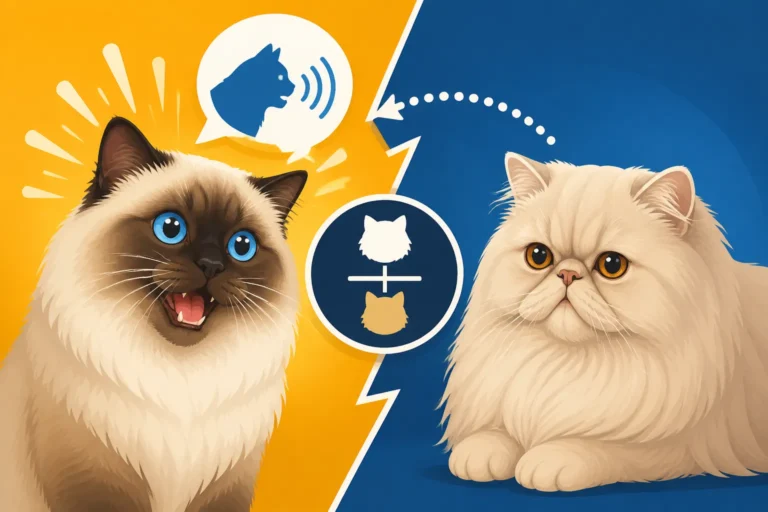
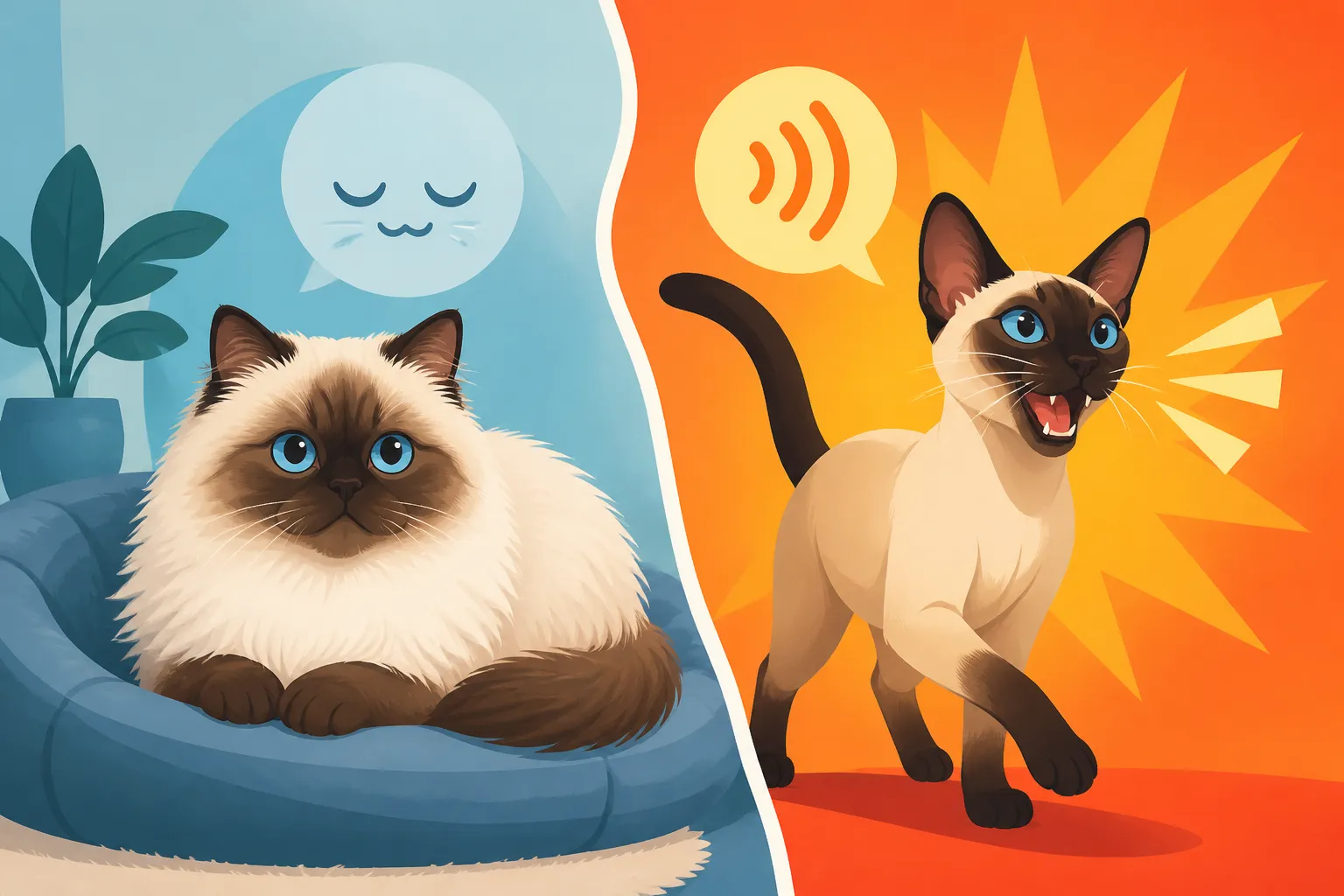
Let's be honest, the Siamese cat has a reputation for being quite the conversationalist. Their distinctive, loud, and often insistent vocalizations are legendary among cat enthusiasts. They don't just meow; they talk, they yell, they yowl, often to express every thought, desire, or complaint that flits through their active minds. This isn't just a quiet "mew" for attention; it's a full-bodied pronouncement that can easily carry across a room, or indeed, a car.
Contrast this with the typical Himalayan, whose voice, while present, is usually far softer and more melodic. While they do retain a conversational streak from their Siamese heritage, it's as if a genetic "dimmer switch" was installed somewhere along the line. They might chirp or offer a soft trill when they want something, or a gentle murmur when greeting you, but rarely do they unleash the full, ear-splitting siren call that a Siamese is capable of. This quiet demeanor translates directly into their travel habits. When a Siamese is unhappy in a carrier, you'll know it from blocks away. A Himalayan, on the other hand, might voice a few initial complaints, but they're generally much less prone to sustained, high-volume protests.
Selective Breeding for a Mellower Temperament
The quiet nature of the Himalayan wasn't just a happy accident; it was a deliberate outcome of careful breeding. When the Himalayan was first developed, the goal was to combine the stunning color points of the Siamese with the long, luxurious coat and placid temperament of the Persian. Breeders intentionally selected for cats that exhibited the calm, sweet disposition of the Persian, ensuring that the more intense, high-strung aspects of the Siamese personality were softened.
This meant actively choosing breeding cats that were less vocal, less prone to anxiety, and more content with a quiet, sedentary lifestyle. Over many generations, this selective pressure significantly reduced the volume and frequency of vocalizations in the breed. Imagine the sheer dedication of those early breeders, meticulously tracking not just coat color and conformation, but also the nuances of temperament. It means that while your Himalayan might still have that charming "conversational" quality, it’s tempered by generations of careful selection to ensure a more laid-back personality. This focus on a mellow disposition is a primary reason why a Himalayan is usually a much calmer presence, even in a stressful travel situation. For a deeper dive into this, you might find The Himalayan Kept the Siamese Voice and Lost the Volume an interesting read.
Physical Factors Contributing to Quieter Travel
Beyond their genetic predisposition for a mellower voice, the Himalayan's unique physical characteristics also play a significant role in their quieter travel experiences. Their distinctive facial structure and overall body type contribute to a cat that is simply less inclined, and perhaps less able, to produce the kind of vociferous complaints common to other breeds.
The Persian Muzzle and Airway Structure
One of the most striking features of a Himalayan is its beautiful, often flat face, a direct inheritance from its Persian ancestors. This brachycephalic (short-nosed) structure, while undeniably charming, comes with a compacted upper airway. While this can lead to some challenges, such as Why a Himalayan Snores Louder Than Its Siamese Ancestors, it also affects their ability to produce loud, sustained vocalizations.
Think about it: a longer, more open airway, like that of a Siamese, acts like a natural amplifier, allowing for strong, resonant sounds to be produced with relative ease. The Siamese can project their voice with remarkable power precisely because their respiratory system isn't constricted. A Himalayan, with its shorter muzzle and often narrower nostrils, simply doesn't have the same aerodynamic setup for volume. Producing a loud, sustained yowl requires a good amount of breath and an open passage for sound to resonate. For a Himalayan, this physical limitation can make it more difficult and taxing to maintain a high level of vocal protest for extended periods. It's not that they can't be vocal; it's that their physical design subtly encourages a quieter demeanor.
The Cobby Body and Sedate Nature
Another significant physical difference between a Himalayan and a Siamese is their body type and the inherent activity level that often accompanies it. Himalayans are known for their "cobby" build – a stocky, heavy-boned body with short, thick legs. This contrasts sharply with the long, lithe, and athletic build of a Siamese. The Himalayan's physique is simply not designed for agile, high-energy antics; they are built for comfort and luxurious lounging.
This physical predisposition often translates into a more sedate, less frantic temperament. A Himalayan typically prefers observing the world from a comfortable perch, rather than darting around with boundless energy. When placed in a carrier, a Siamese might quickly become restless, constantly shifting, trying to find an escape route, and loudly vocalizing its displeasure at being confined. A Himalayan, on the other hand, is more likely to settle down, perhaps after an initial grumble, and simply watch its surroundings or even doze off. Their natural inclination is to conserve energy and remain calm, which means less frantic movement and, consequently, less noise during travel. This inherent calm really helps them cope with the unfamiliarity of being in a carrier, allowing them to rely on their placid nature rather than resort to loud protests. You can explore more about their conversational habits in How Much More a Himalayan Talks Than a Persian.
Environmental Adaptation and Stress Response in Travel
Even the calmest cat can experience stress during travel, but how they express that stress can differ vastly between breeds. Himalayans, with their inherent calm, tend to adapt to travel environments in a way that minimizes vocal output, especially when owners take proactive steps to ensure their comfort.
Carrier Comfort and Familiarity
For any cat, the carrier often represents the portal to the vet's office or other less-than-thrilling adventures. However, a Himalayan's generally placid nature can make them more amenable to accepting their carrier as a safe, familiar space, rather than an immediate source of alarm. The key, as with any cat, is positive association. If you introduce the carrier slowly, leave it out as part of the furniture, and occasionally place treats or toys inside, a Himalayan is often more willing to view it as "another of its chairs."
Their cobby build and preference for lounging mean that a sturdy, well-ventilated carrier that offers a comfortable, secure space is paramount. A carrier that feels too small or flimsy can heighten anxiety for any cat, but for a Himalayan, whose respiratory system is already a consideration, good airflow is critical. Many owners find success with top-loading carriers or those with ample mesh windows. Brands like Amazon offer a wide range of options, from soft-sided carriers for short trips to hard-sided ones that can double as a safe den at home. When the carrier itself isn't a source of discomfort or panic, the inclination to vocalize loudly diminishes significantly. Turning a Carrier Into Another of a Himalayan's Chairs offers more ideas for making the carrier a haven.
Managing Travel Anxiety for a Himalayan
While Himalayans tend to be quieter, it's crucial to remember that they are not immune to travel anxiety. The unfamiliar sounds, sights, and motions of a car ride or being in a busy waiting room can be genuinely unsettling. However, their generally laid-back personality often means their anxiety manifests as quiet withdrawal or subtle changes in behavior, rather than explosive vocal protests.
A Siamese, often more high-strung and reactive, might immediately launch into a distressed serenade when feeling anxious. A Himalayan, on the other hand, might simply huddle at the back of the carrier, wide-eyed and tense, but relatively silent. This doesn't mean they aren't stressed; it just means their coping mechanism is different. Owners can significantly help by creating a calming environment. Covering the carrier with a light blanket, for instance, can reduce visual stimuli. Pheromone sprays designed for cats, applied to the carrier before travel, can also help create a sense of security. Even playing soft, calming music during a car ride can make a difference. Understanding that their quietness doesn't always equate to zero stress allows you to be a more empathetic and effective travel companion. Learning strategies for Keeping a Himalayan Calm When It Panics can be incredibly useful.
Practical Tips for Silent Himalayan Journeys
Even with a naturally quieter cat like a Himalayan, preparing for travel is essential. A calm, well-prepared cat is a quiet cat, and with a few proactive steps, you can ensure your Himalayan's journeys are as peaceful as possible for everyone involved.
Pre-Travel Preparation for a Calm Cat
The secret to a silent journey often begins long before you ever leave the driveway. For Himalayans, whose routine means a lot to them, gradual introduction to the idea of travel can make all the difference. Start by getting your cat accustomed to the carrier. Leave it out in a common area of your home, with a soft blanket inside. Encourage them to explore it with treats and praise, making it a positive space rather than a "vet box."
Once they're comfortable with the carrier, introduce short, mock car trips. Start by simply putting them in the carrier in the car, without even turning on the engine, for a few minutes. Gradually increase the duration, driving around the block, then a bit further. This desensitization process helps them associate the car with a non-threatening experience. It's also wise to limit food intake a few hours before a long journey to prevent motion sickness, but always ensure access to water right up until departure and immediately upon arrival. Hydration is key, especially for a brachycephalic cat.
During the Journey: Keeping the Peace
Once you're on the road, your actions can continue to promote a quiet and stress-free environment for your Himalayan. Keeping the carrier covered with a light towel or blanket can reduce visual overstimulation, which can be a major source of anxiety for many cats. The enclosed space can make them feel more secure, like a little den.
Maintaining a cool, well-ventilated temperature in the vehicle is also paramount, especially for a long-haired, brachycephalic breed like the Himalayan. They can overheat much faster than other cats, and discomfort will certainly lead to distress, even if it's expressed quietly. Avoid direct sun on the carrier and consider using portable fans if needed. Minimize loud noises and sudden movements, and resist the urge to constantly check on them or take them out of the carrier mid-journey. While it's tempting to offer comfort, too much interference can actually increase their stress. Remember, a quick, smooth journey is often the quietest one. It's also important to note that Why a Himalayan Should Not Fly in Cargo and Which Carrier Gives a Himalayan Enough Air are crucial considerations for longer distance travel.
Here's a quick comparison of typical travel behaviors:
| Feature | Himalayan Cat | Siamese Cat |
|---|---|---|
| Vocalization Level | Generally quiet, soft murmurs, trills | Loud, insistent, frequent yowls and "talk" |
| Response to Carrier | May protest initially, then often settles | Active protest, attempts to escape, persistent vocalization |
| Energy Level in Transit | Calm, observant, prone to napping | Restless, agitated, constantly shifting |
| Stress Indicators | Quiet withdrawal, wide eyes, tension, drooling | Loud vocalizations, frantic movements, aggression, urination/defecation |
| Physical Build Influence | Brachycephalic muzzle reduces volume, cobby body promotes calm | Long, open airway amplifies sound, athletic build promotes restlessness |
In conclusion, the Himalayan cat's tendency to travel more quietly than its Siamese counterpart is a fascinating interplay of genetics, physical attributes, and temperament. Their inherited calm from the Persian side, coupled with a subtly attenuated Siamese voice and a physical structure that makes loud vocalizations less efficient, all contribute to a more peaceful journey. This isn't to say a Himalayan won't ever make a peep or experience stress during travel; every cat is an individual. However, with their inherent disposition and your thoughtful preparation, your Himalayan is likely to be a far more serene, and certainly quieter, travel companion, turning what could be a stressful ordeal into a relatively tranquil excursion.
Disclaimer
This article is for general informational purposes only and does not constitute professional advice. Laws, prices and regulations vary by location and change over time. Consult a qualified professional for guidance on your specific situation.