How a Himalayan Asks to Be Let Into a Room
Himalayan cats use soft vocal cues and quiet patience to ask for entry into closed rooms, combining Persian calm with Siamese vocal traits.
Change the room, not the cat.
Litter box avoidance, scratching and furniture, multi-cat tension and night activity — and the vertical space, play routines and feeding puzzles that solve more than correction does.
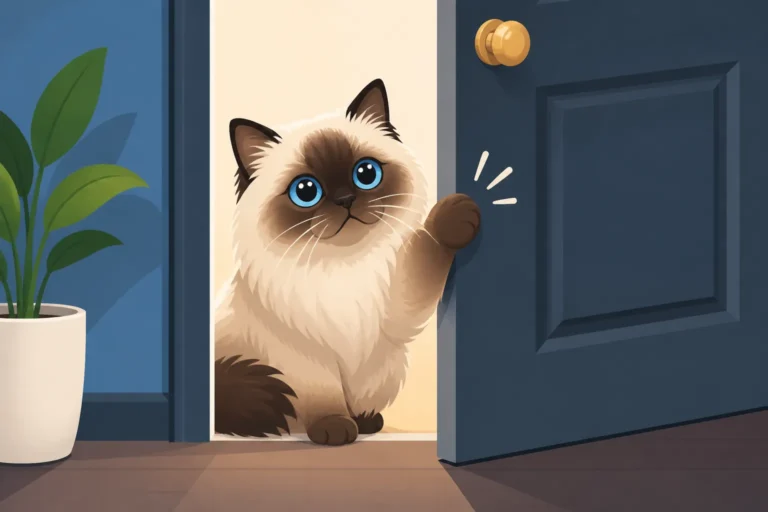
Himalayan cats use soft vocal cues and quiet patience to ask for entry into closed rooms, combining Persian calm with Siamese vocal traits.

Himalayan cat vocalization blends Siamese ancestry and Persian quietness to create soft, nuanced communication sounds you can learn.
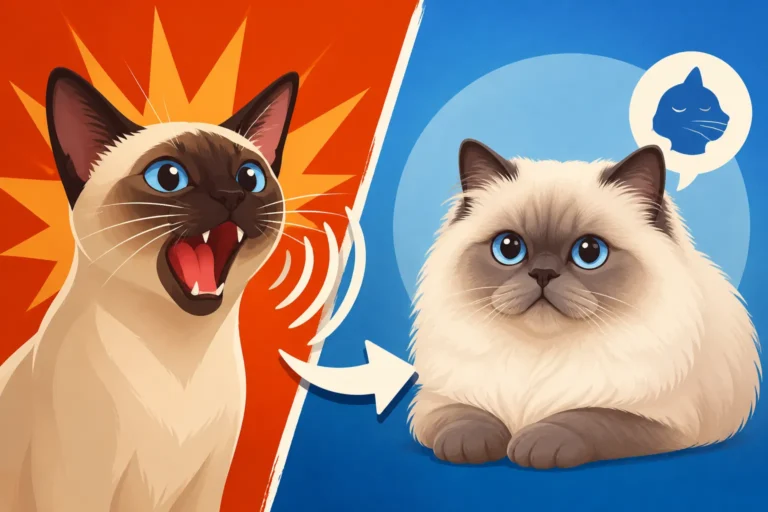
Himalayan cat vocalization genetics explain why this hybrid breed remains significantly quieter than its noisy Siamese ancestors.

Himalayan cats inherit vocal traits from Siamese and Persian ancestors, producing soft chirps and trills instead of loud demands.

H Himalayan cat vocalization blends loud Siamese traits with quiet Persian tendencies, creating a moderate talking style.
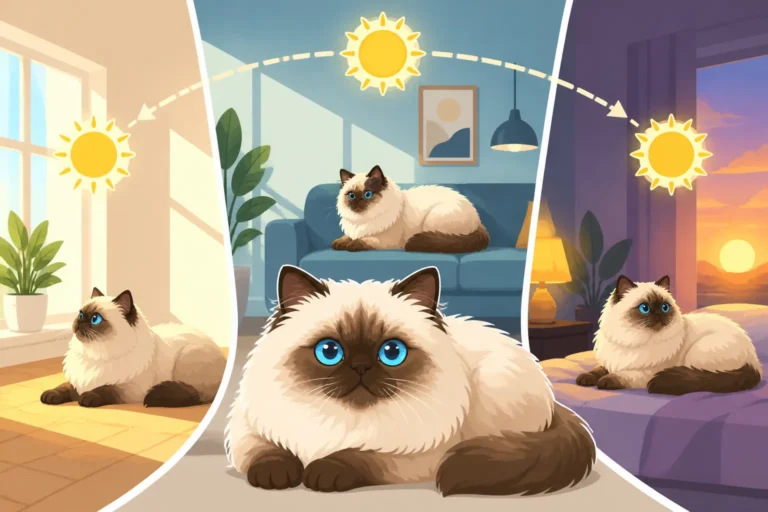
Himalayan cat behavior and dense double coats explain why pets constantly migrate between sunbeams and cool indoor rooms.

Himalayan cat thermal regulation explains why heavy double coats and flat faces make these pets seek cold kitchen tile floors.
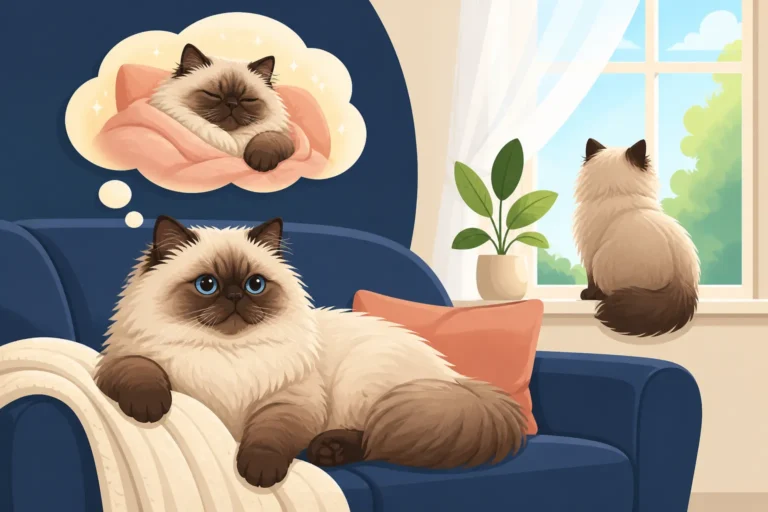
Himalayan cat lounging preferences explain why they choose soft sofas over sunny windowsills due to their heavy build and thick coats.
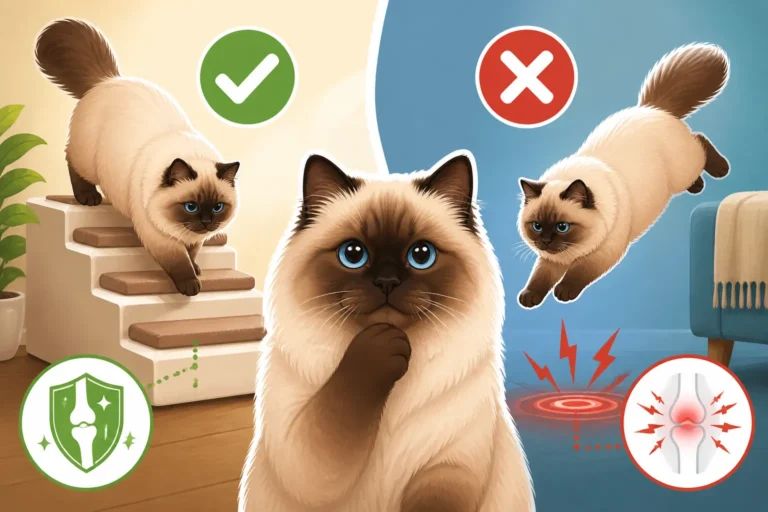
Himalayan cats use steps instead of jumping because their cobby body, short legs, and dense coat limit vertical agility.
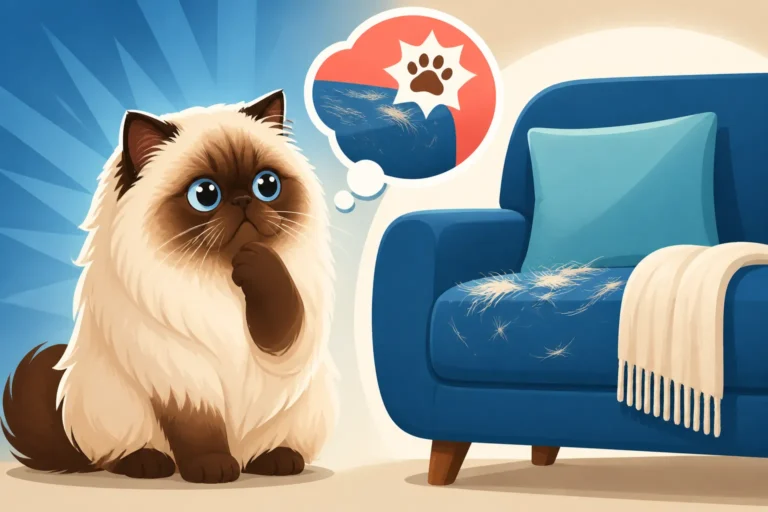
Himalayan cat coat density blocks vision and tangles paws, causing poor sofa jumps and clumsy landings for their compact bodies.