Why a Himalayan Gives Way to a Faster Cat
Himalayan cat behavior in multi-cat homes explains why stocky cobby bodies and brachycephalic faces yield to faster companions.
Change the room, not the cat.
Litter box avoidance, scratching and furniture, multi-cat tension and night activity — and the vertical space, play routines and feeding puzzles that solve more than correction does.

Himalayan cat behavior in multi-cat homes explains why stocky cobby bodies and brachycephalic faces yield to faster companions.

Two Himalayan cats divide warm spots because dense Persian coats make them seek heat sources and manage body temperature.

Himalayan cat social needs and physical limitations explain how to choose a compatible feline companion for your calm pet.

Practical steps for Himalayan cats and owners explain how introducing a second feline creates a peaceful multi-cat household.

Himalayan cats with calm, serene temperaments struggle when fast, energetic dogs disrupt their quiet routines with high-speed play.

Dog breeds compatible with Himalayan cats share a calm temperament, respecting the feline need for routine and safe spaces.

Himalayan cats ignore new dogs because their calm Persian and Siamese heritage values predictable routines and quiet comfort over frantic energy.
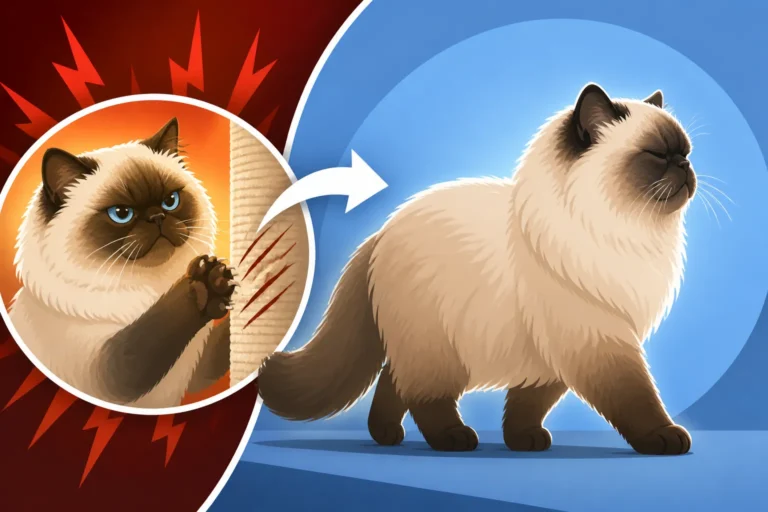
Himalayan cat genetics and Persian ancestry explain why these gentle cats choose retreat over scratching during conflict.
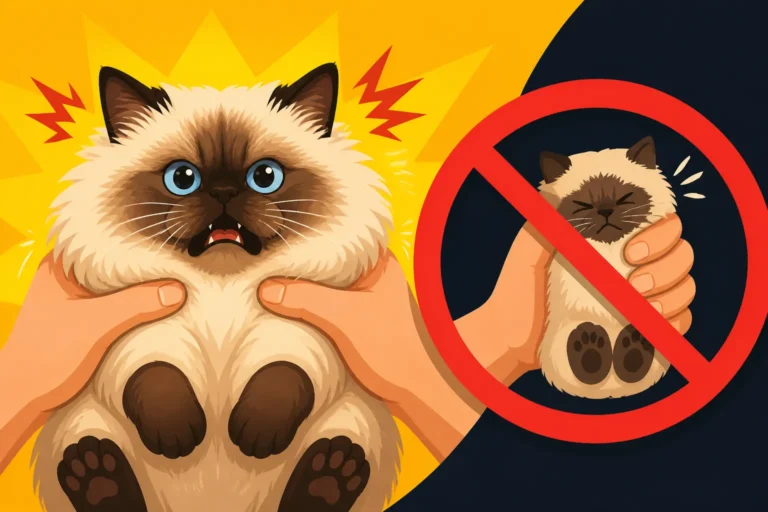
Himalayan cats possess cobby frames and brachycephalic airways that make squeezing them dangerous to their internal organs and breathing.

Proper handling techniques protect a cobby Himalayan cat from back strain and safeguard its delicate flat face and sensitive airways.