Why the Himalayan Is Described as Cobby
Himalayan cat body proportions, featuring a compact sturdy build with short legs, broad chests, and thick coats.
Is this the right one for you?
Origins and temperament, size and coat, what living with one is actually like, and how it compares to the breeds people weigh against it.
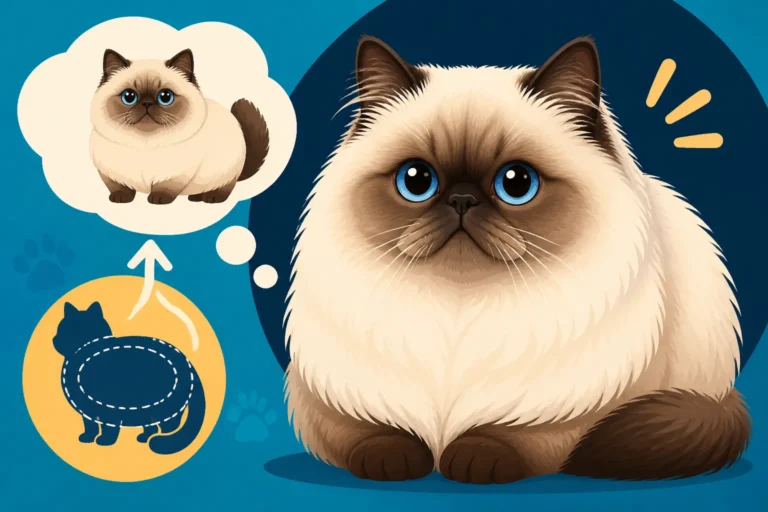
Himalayan cat body proportions, featuring a compact sturdy build with short legs, broad chests, and thick coats.
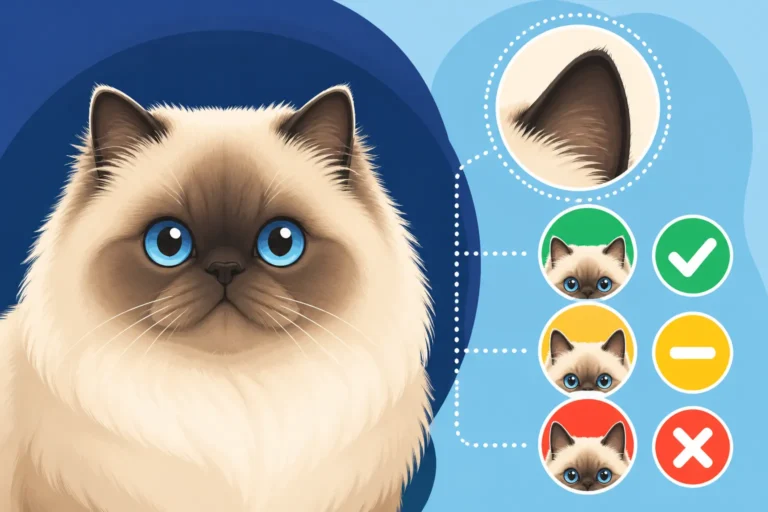
Himalayan cat ear size standards require small, rounded, low-set features judged proportionally to a broad head and wide spacing.

Himalayan blue eyes should look large, round, and bright, sitting in a balanced position on the broad, rounded face.

CFA judges a Himalayan as a Persian because the organization classifies the cat as a colorpoint division rather than a separate breed.
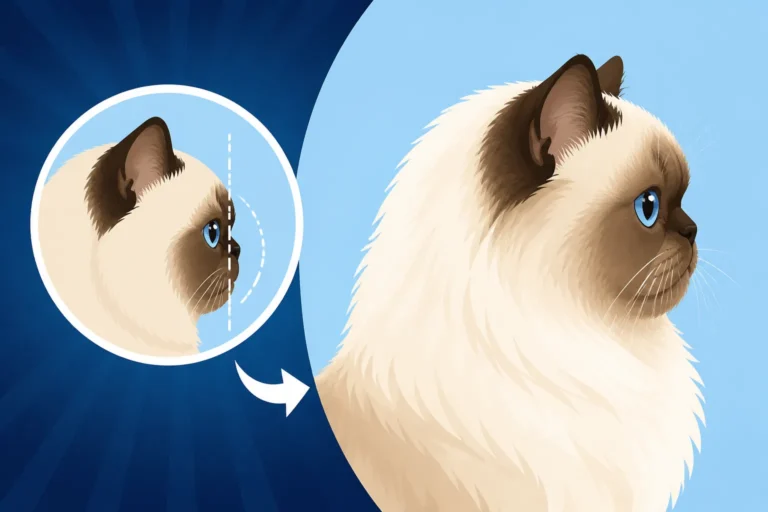
Himalayan cat side profiles, including forehead, nose break, muzzle, and chin proportions, compared to breed standards.
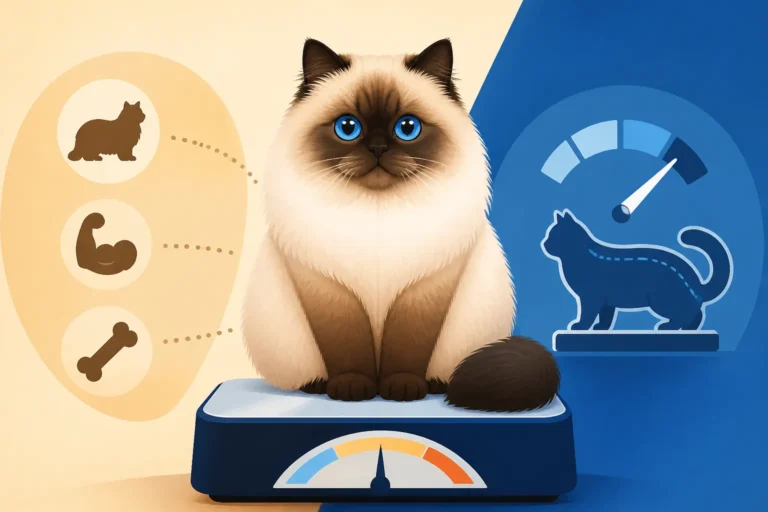
Himalayan breed show standards prioritize Persian type, head shape, coat, and point color over body scale weight.
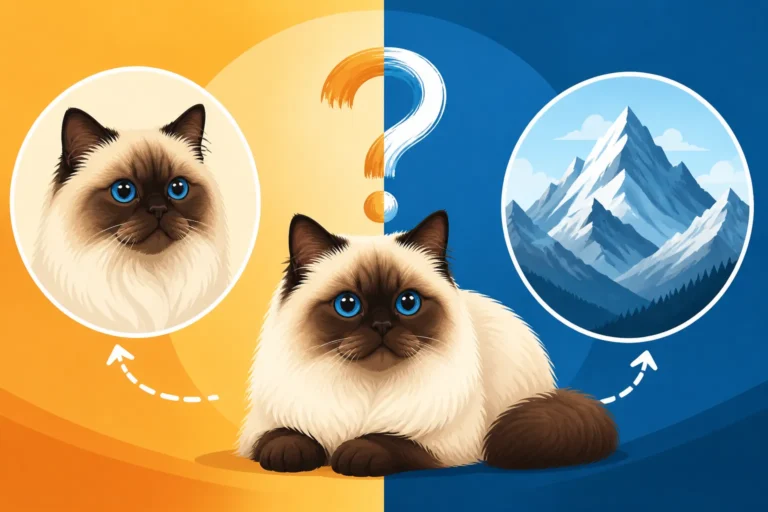
The Himalayan cat name describes a pointed coat pattern borrowed from rabbits, not any geographic mountain origin.

The Himalayan color pattern appears in rabbits, mice, rats, and guinea pigs, showing pale bodies and dark extremities.

Himalayan rabbits and cats share temperature-sensitive tyrosinase genes and coat patterns, yet inherit distinct genetic variants within each species.

The Himalayan rabbit and cat share a temperature-sensitive color pattern that creates dark points on cooler body areas.