Where a Himalayan’s First Mat Forms
Himalayan cat armpits form the first stubborn mats because constant friction and movement tangle dense undercoat fur.
The daily stuff, done right.
Feeding amounts by life stage, coat and skin routines, dental and nail care, exercise needs, and what changes as they age.
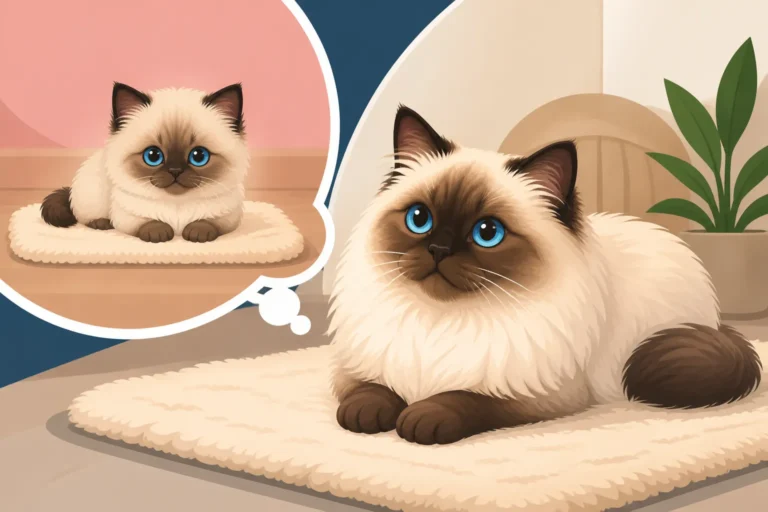
Himalayan cat armpits form the first stubborn mats because constant friction and movement tangle dense undercoat fur.
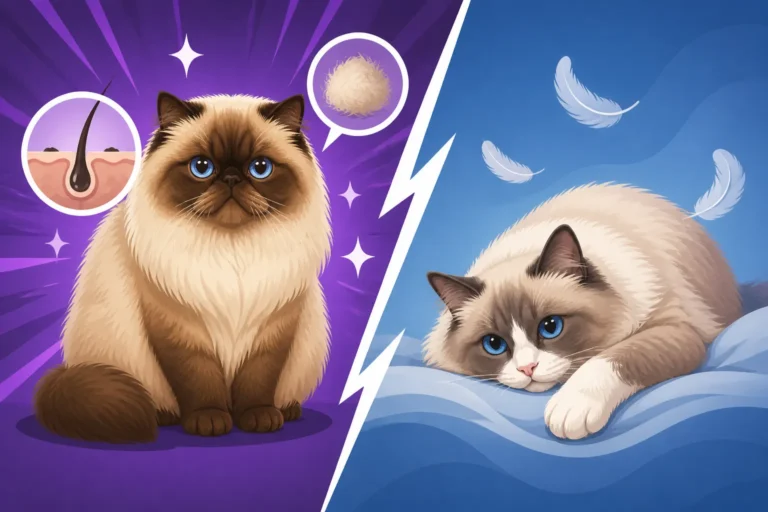
Himalayan cat fur genetics and double-layer undercoat structures compared to Ragdoll single coats explaining matting risks.
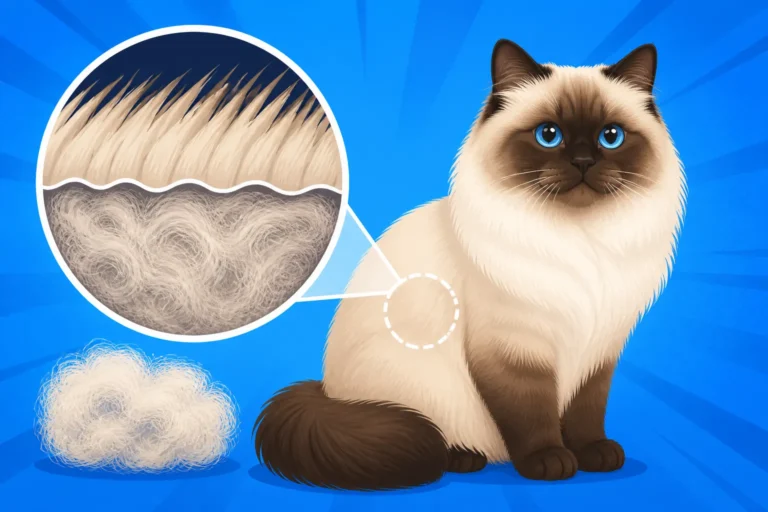
Himalayan cats carry a dense double coat inherited from Persian ancestors, requiring consistent grooming during seasonal shedding.

Himalayan cat coat length, featuring guard hairs exceeding four to six inches and a thick undercoat inherited from Persian ancestors.
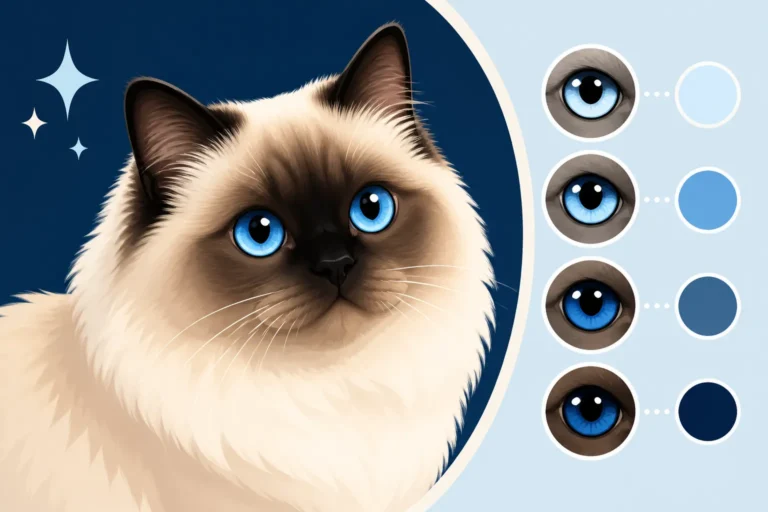
Himalayan cat eye color genetics, influenced by the point gene, explains why melanin absence creates their distinct blue eyes.
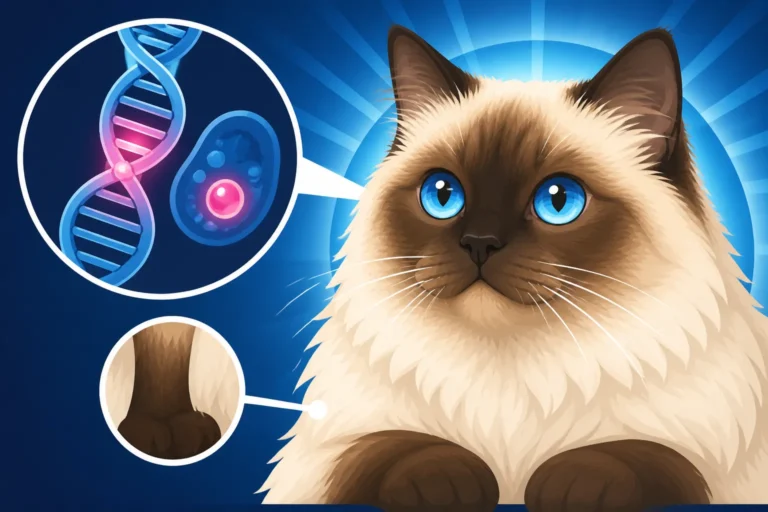
The Himalayan cat gene mutation controls temperature-sensitive melanin production, directly determining both pointed coat coloration and blue eyes.
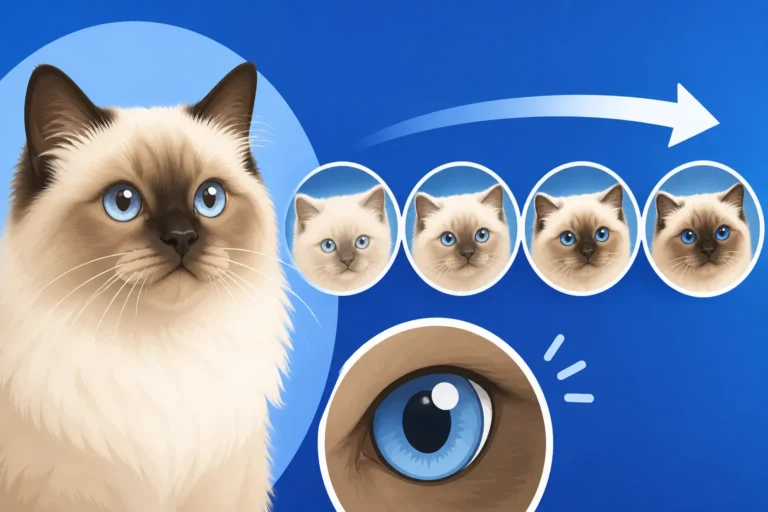
Himalayan kitten blue points develop gradually over the first few weeks as temperature-sensitive enzymes respond to cooler ambient air.

Himalayan kitten points darken month by month because a temperature sensitive enzyme produces melanin in cooler areas like ears and paws.
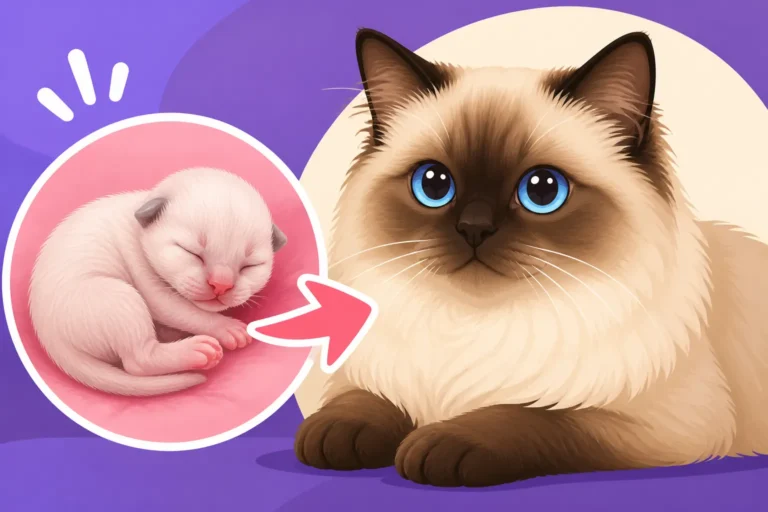
Himalayan kittens are born entirely white or pale cream because warm body temperatures deactivate their melanin enzyme.
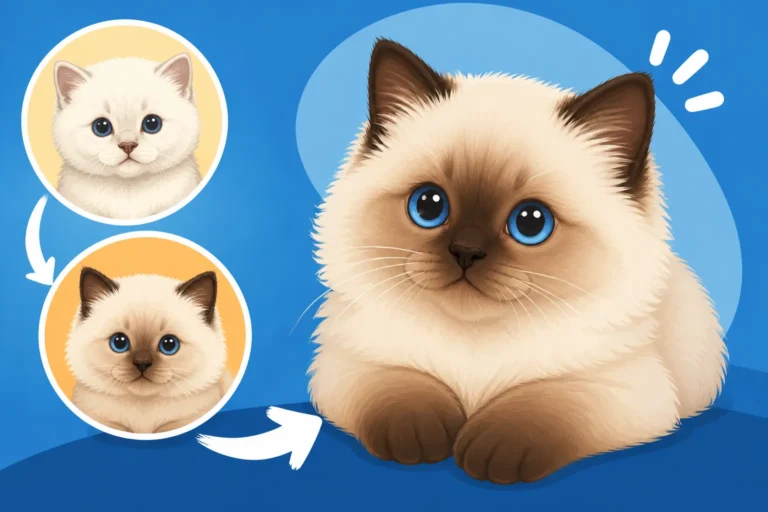
Himalayan kitten point coloration emerges gradually through a temperature-sensitive enzyme that darkens ears, nose, paws, and tails.