Whether a Himalayan’s Points Can Hide a Skin Problem
Oh, the sheer beauty of a Himalayan cat's coat is undeniable, isn't it? That glorious long fur, those striking point colors – it’s what draws so many of us in. But let's be honest, that very same lush, dense coat can be a massive headache when it comes to keeping an eye on their skin underneath. It’s incredibly frustrating when you suspect something isn't quite right, but you just can't get a clear look. This guide is here to walk you through why a Himalayan’s points and thick fur can effectively hide skin problems, and how you can become a super-sleuth for your beloved furball's health.
The Deceptive Nature of Himalayan Points and Coat Density
It’s easy to get lost in the silky softness of a Himalayan's coat, but beneath that luxurious exterior lies a challenge for pet parents: a perfect camouflage for skin issues. Their unique fur characteristics, inherited from their Persian lineage, make detecting problems a true art form.
The Thick Undercoat: A Perfect Hiding Place
Imagine trying to find a tiny needle in a haystack, or a small rash under a particularly fluffy, multi-layered wool blanket. That’s a bit like trying to spot a skin problem on a Himalayan. These cats boast a truly magnificent double coat, a gift from their Persian ancestors, which includes a dense, soft undercoat beneath a longer, silkier outer layer. This incredible volume of fur is fantastic for warmth and aesthetics, but it creates a formidable barrier.
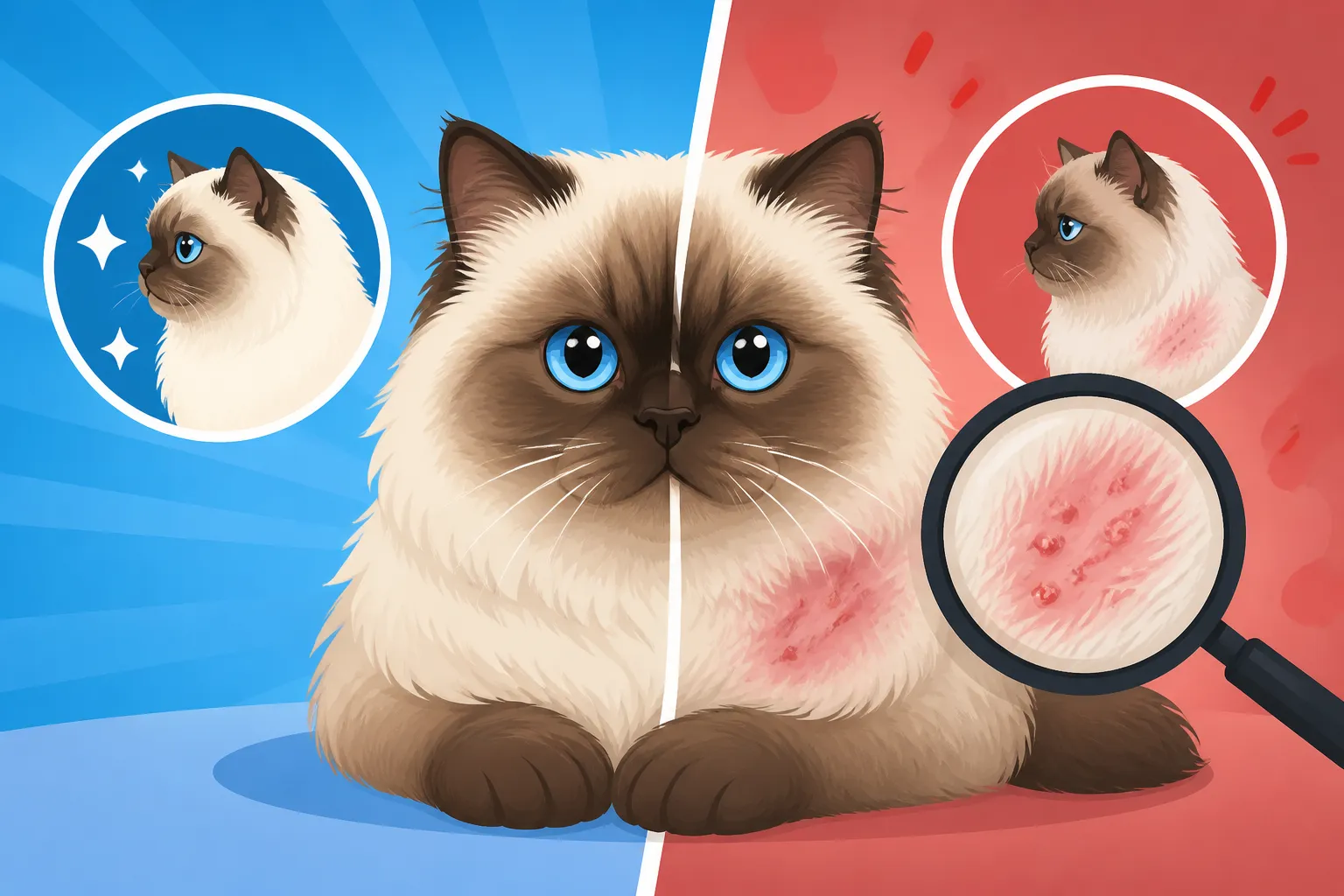
Matted fur is the ultimate culprit here, often forming close to the skin, especially in areas of high friction or neglect like the armpits, behind the ears, or under the tail, which are usually hidden from plain view. These mats don't just pull on the skin, causing pain and discomfort; they also trap warmth and moisture against the skin. This creates a dark, damp, and often overlooked microclimate that is absolutely ideal for bacterial and fungal growth. By the time a mat is obvious from the outside, the skin underneath can already be a red, inflamed, and painful mess, well beyond the early stages where it could have been easily treated. It's a classic case of out of sight, out of mind, until the problem has really taken root.
Darker Pigmentation: A Visual Camouflage
Beyond the sheer volume of fur, a Himalayan's signature point coloration adds another layer of concealment. Their ears, mask, paws, and tail are darker due to the temperature-sensitive gene that gives them their distinctive look. While beautiful, this darker pigmentation means that classic signs of skin irritation – redness, small scabs, or even minor inflammation – can simply blend into the darker fur, becoming visually indistinguishable until the condition is quite advanced.
Think about trying to spot a red scratch on a dark brown surface versus a pale cream one. On their pale body coat, a pink patch or a fleck of dried blood might jump out at you, but on a seal point's dark paw or a blue point's ear, these same indicators might be completely hidden. Owners might only notice a problem when the fur starts to thin, the cat begins to excessively lick or scratch an area, or a noticeable foul odor arises. This visual camouflage means that a meticulous, hands-on approach is absolutely essential, rather than relying solely on what you can see at a glance.
Common Skin Problems That Hide Within the Coat
The challenges posed by the Himalayan's coat mean that several common feline dermatological issues can become sneaky, hidden problems, often escalating before they're noticed.
Mat-Related Skin Irritations and Dermatitis
Mats are more than just a grooming nuisance; they are a serious health concern for Himalayans. When that dense fur tangles and clumps together, it creates a tight, unforgiving pull on the skin beneath. This constant tension can lead to painful irritation, redness, and even open sores where the skin is repeatedly stretched and inflamed. And because these mats are so good at trapping everything – shed hair, dander, moisture from baths or even humidity – they become breeding grounds for bacteria and yeast. This often results in a secondary skin infection known as dermatitis.
You might not see the raw skin or the pustules developing because they're buried deep within the mat. Instead, you might notice a change in your cat's behavior: they might flinch when touched in certain areas, become less active, or stop trying to groom the affected spot because it's too painful. Often, the first real clue for many owners is a distinct, unpleasant smell – a yeasty or sickly sweet odor emanating from the matted area, signaling an infection. This is a critical time to act, as a seemingly small mat can hide a very significant and painful infection that requires veterinary attention and possibly even sedation for removal. Indeed, Why a Matted Himalayan Becomes a Medical Case is a stark reminder of the serious consequences of neglected grooming.
Parasites and Fungal Infections: Stealthy Invaders
Parasites like fleas and mites, and fungal infections like ringworm, absolutely thrive in the hidden depths of a Himalayan's coat. Flea dirt, which looks like tiny specks of black pepper, is a classic sign of fleas, but it can be incredibly hard to spot against darker points or within the voluminous fur. Similarly, the tiny scabs and intense itching associated with mites might go unnoticed until the infestation is quite severe, or the cat develops secondary bacterial infections from constant scratching.
Ringworm, a fungal infection, often presents as circular patches of hair loss, redness, and scaling. On a short-haired cat, these lesions are quite obvious. On a Himalayan, however, the initial patches of hair loss can be completely obscured by the surrounding thick fur, especially if they start on the flanks or under the limbs. Your cat might not even show intense itching, or if they do, the act of scratching might be hidden by their immense coat, making detection even more challenging. Thorough, routine inspection, right down to the skin, is the only way to catch these stealthy invaders early.
Allergic Reactions and Hot Spots
Just like us, cats can suffer from allergies – whether it's to food, environmental allergens like pollen, or even certain grooming products. These allergies often manifest as itchy skin, leading to excessive licking, chewing, and scratching. On a Himalayan, where the coat is so dense, this constant self-trauma can quickly escalate into what vets call a "hot spot," or acute moist dermatitis. These are rapidly developing, painful, red, and often weeping lesions that appear suddenly.
A hot spot can go from a small irritation to a significant, open wound in a matter of hours, all hidden beneath the fur. The cat might only show subtle signs of discomfort, like persistent licking in one area that you assume is just regular grooming. By the time you notice matted fur that feels damp or find a sticky patch in the coat, the hot spot beneath could be quite large and severely infected. This is a situation where the generous coat becomes a liability, allowing serious inflammation and infection to take hold before you even realize there's an issue. It really highlights Why a Himalayan's Coat Hides a Wound for Days and the need for vigilance.
Proactive Detection and Prevention Strategies
Preventing and catching skin issues early in a Himalayan is all about consistency, attention to detail, and knowing what you're looking for, even when you can't see it directly.
The Importance of Daily Grooming Beyond Aesthetics
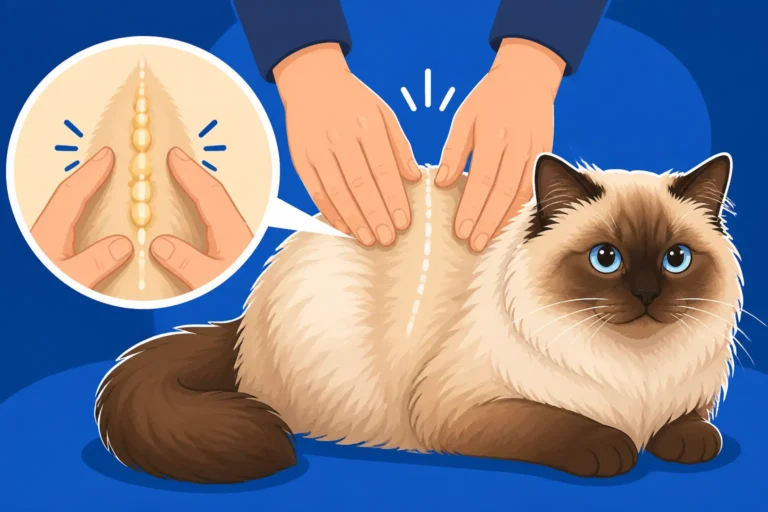
Let's be real, daily grooming for a Himalayan isn't just about keeping them looking regal; it's a vital health check. When you commit to What daily combing costs a Himalayan owner in time, you're not just preventing mats; you're performing a full-body tactile inspection that can literally save your cat from prolonged discomfort and expensive vet visits. Running a steel comb or your fingers right down to the skin in every area – especially the typically overlooked spots like armpits, inner thighs, belly, behind the ears, and around the tail and britches – allows you to feel for anything abnormal.
Are there any small bumps, scabs, areas of tenderness, or changes in skin texture? Is the skin unusually warm or damp in one spot? You'll also feel if a mat is starting to form deep in the undercoat, long before it becomes a visible problem. If you feel any resistance or a small knot, investigate it immediately. Don't just skim the surface of the coat; you need to part the fur and truly examine the skin. This hands-on approach is your first and best line of defense against hidden skin problems. In fact, Which Grooming Tools a Himalayan Owner Cannot Skip is a must-read for any Himalayan parent serious about their cat's skin health.
Visual Checks and Olfactory Cues
While your Himalayan's coat can hide a lot, a keen eye and a sensitive nose are still invaluable tools. Make it a routine to lift and part the fur, especially in areas with darker points, to visually inspect the skin. A good, bright light or even a small flashlight can help you penetrate the dense coat and get a clearer view. Look for any discoloration, redness, flakiness, or tiny scabs. Pay particular attention to the nose fold, where moisture can accumulate and lead to irritation, and around the eyes, where tear staining can cause dermatitis. Understanding Why a Himalayan's Nose Fold Smells can give you a heads-up on potential issues.
Beyond what you can see, your nose is a powerful detector. A healthy cat should smell clean and fresh. Any persistent, unusual odors – be it a yeasty smell, a foul stench from a damp area, or an acrid scent from an infection – should prompt an immediate, thorough investigation. This is often the first indicator that something is amiss beneath that beautiful fur, especially when visible signs are still absent. Differentiating between regular tear staining and an actual infection around the eyes is also important, so consider learning Telling Ordinary Himalayan Tear Staining From an Infection.
Regular Vet Check-ups and Early Intervention
No matter how diligent you are with home grooming and inspections, nothing replaces the trained eye and hands of a veterinarian. Regular vet check-ups are absolutely crucial for Himalayans, as they can spot subtle signs or feel irregularities that you might miss, even with your best efforts. During these visits, your vet will perform a comprehensive physical exam, including a thorough skin and coat check, which might involve parting the fur in ways you can't easily do at home. They can also provide advice on specific grooming techniques or products for your cat's unique coat needs.
If you do notice anything concerning – even a tiny bump, a persistent lick, or a faint odor – don't hesitate to bring it to your vet's attention. Early intervention is key, as many skin problems, if caught early, are far easier and less costly to treat. Some pet insurance providers, like Healthy Paws, offer coverage that can help ease the financial stress of unexpected vet visits, diagnostic tests, and treatments for skin conditions, making it easier to pursue early intervention without delay. Thinking ahead about coverage can be a real lifesaver when those hidden issues eventually surface. Keeping track of What a Himalayan's Yearly Bloods Should Cover After Eight can also help monitor overall health, which often reflects in skin and coat condition.
Common Hidden Skin Problems in Himalayans: A Quick Guide
Here's a handy table summarizing some common skin issues that can hide in a Himalayan's coat, the subtle clues you might pick up, and your best detection methods.
| Skin Problem | Common Hiding Spots | Hidden Signs (Beyond Visual) | Key Detection Methods |
|---|---|---|---|
| Mat-Induced Dermatitis | Armpits, britches, behind ears, belly | Pain/flinching on touch, unusual odor (yeasty/foul), reduced grooming of area | Daily full-body comb to skin, tactile inspection, smell |
| Parasitic Infestations | Base of tail, inner thighs, neck | Excessive scratching (often hidden), restlessness, tiny scabs (felt not seen) | Fine-toothed comb through fur, tactile inspection for scabs |
| Fungal Infections | Flanks, belly, under limbs | Minor flakiness, subtle hair texture change, sometimes no itch initially | Daily deep grooming, tactile inspection for small lesions |
| Allergic Reactions | Paws (licking), belly, inner thighs | Persistent licking/chewing, restlessness, often accompanied by soft coat mats | Observe behavior, tactile inspection, smell |
| Hot Spots | Neck, cheeks, top of head, base of tail | Sudden damp patch in fur, strong odor, acute pain on touch | Immediate, thorough parting of fur, smell |
Disclaimer
This article is for general informational purposes only and does not constitute professional advice. Laws, prices and regulations vary by location and change over time. Consult a qualified professional for guidance on your specific situation.