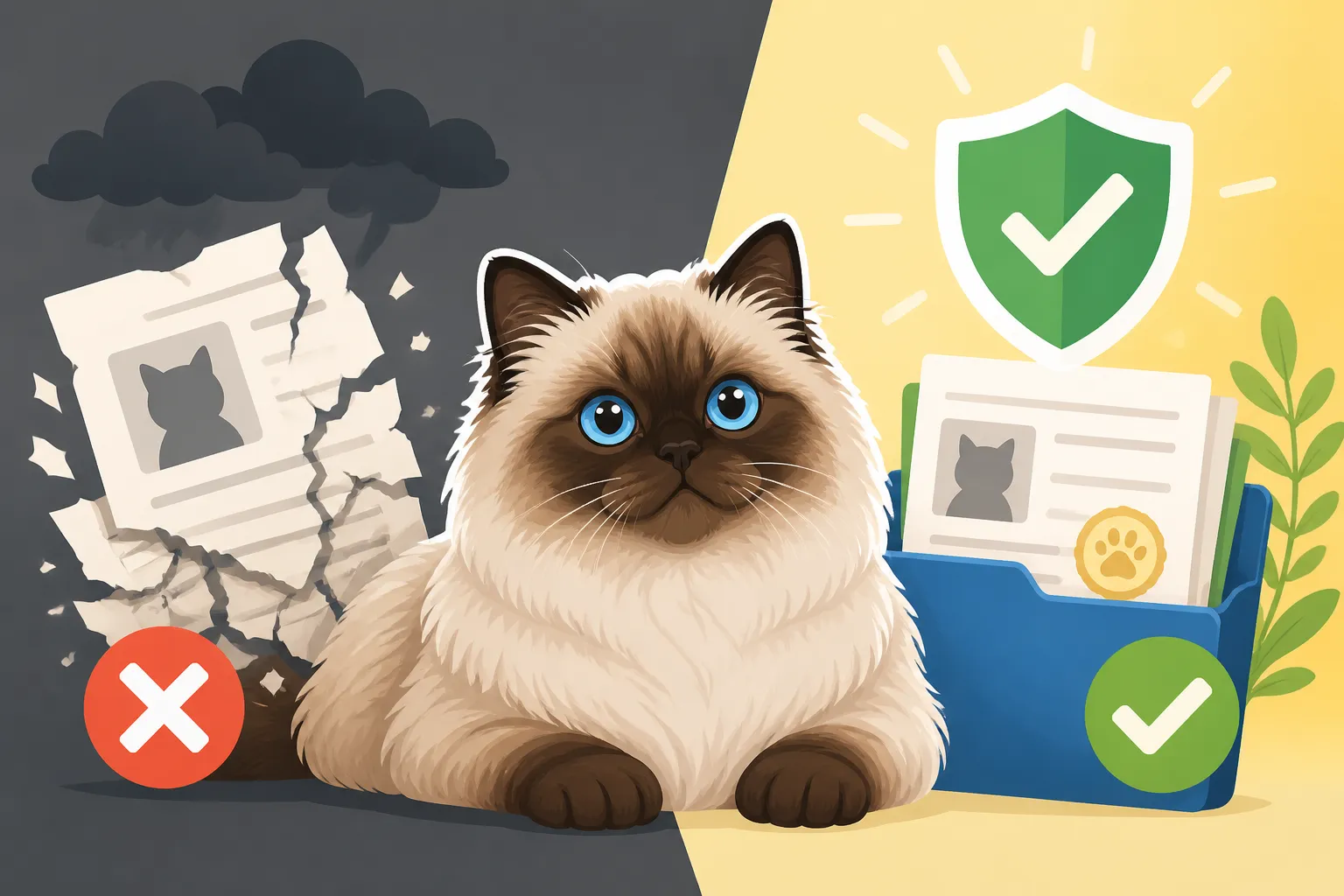
Whether a Rescue Himalayan’s Papers Survive
Bringing a rescue Himalayan into your home is an incredibly compassionate act, but it often comes with a unique set of uncertainties. One common worry new rescue parents face is the question of their cat's past: whether any official paperwork, known as "papers," from their previous life has survived. This guide will explore what typically happens to a Himalayan's papers when it enters the rescue system, what information you might still be able to uncover, and why, ultimately, the love you offer is far more valuable than any documentation.
What "Papers" Actually Mean for a Himalayan Cat
When we talk about a cat's "papers," it's not always a single, simple document. For a purebred cat like a Himalayan, "papers" can encompass several types of documentation, each providing different insights into the cat's lineage, health, and origins. Understanding what these various documents entail helps set realistic expectations for what might be available in a rescue situation.
Pedigree and Registration Documents
At the heart of a purebred cat's papers is often its pedigree and registration certificate. A pedigree is essentially a family tree, detailing several generations of the cat's ancestors. It lists the names of the sire (father) and dam (mother), along with their parents, often including titles they may have earned in the show ring. The registration certificate, issued by a cat fancy association like the CFA or TICA, officially recognizes the cat as belonging to the breed and, in the case of a Himalayan, often lists it under the Persian breed with a Colorpoint division in some registries. A CFA Himalayan Is a Persian on Its Own Paperwork These documents are vital for breeders to track lines, ensure genetic diversity, and maintain breed standards. For an owner, they offer a fascinating look into their cat's heritage and confirm its purebred status.
However, it's crucial to understand that these papers primarily pertain to the cat's lineage and show potential. They don't necessarily guarantee health or temperament, though a reputable breeder often provides health clearances alongside them.
Health Certificates and Test Results
Beyond pedigree, true "papers" for a responsible Himalayan breeder would also include significant health documentation. This typically means proof of genetic testing for common breed-specific conditions. For Himalayans, Polycystic Kidney Disease (PKD1) is a major concern, inherited from their Persian lineage. A responsible breeder will provide certificates proving both parent cats (and ideally the kitten itself, if old enough) are negative for the PKD1 gene. Which Two Certificates a Himalayan Breeder Owes You Similarly, documentation for eye health, such as Progressive Retinal Atrophy (PRA), might be included. These health records are incredibly valuable, as they offer peace of mind regarding potential hereditary diseases and can inform future veterinary care. They tell you what genetic predispositions your cat might carry, allowing you and your vet to be proactive.
These health certificates are distinct from a general vet record, which simply chronicles vaccinations, spay/neuter status, and any treatments. While general vet records are immensely helpful, genetic test results dive deeper into the cat's inherent health profile.
Microchip Registration and Ownership Records
Another important form of "paperwork" relates to the cat's identity and ownership. A microchip certificate confirms the unique identifier implanted under the cat's skin, which is crucial for reunification if the cat ever gets lost. This certificate typically links to a national database where the owner's contact information is registered. While not a pedigree, it’s a modern form of identification that directly ties a specific cat to its human.
Ownership records might also include a bill of sale or adoption contract from a previous owner or breeder. These documents, though less common in rescue scenarios, would historically confirm who legally owned the cat. For a rescue, the primary ownership record will likely be the adoption contract you sign with the shelter or rescue organization, transferring legal guardianship to you.
Why a Rescue Himalayan's Papers Might Be Missing
It's a common, and very understandable, disappointment when you bring home a beautiful rescue Himalayan only to find there's no official paperwork about its past. The reasons for this are varied, and often heartbreaking, reflecting the circumstances that led the cat into the rescue system in the first place.
The Cat Was Abandoned or Lost
Sadly, many purebred cats, including Himalayans, end up in shelters because they were abandoned. In such cases, the former owner has made a deliberate choice to cut ties, and any personal documents, including pedigrees or health certificates, are almost certainly left behind or destroyed. The cat is found as a stray, with no collar, no microchip, and certainly no neatly filed paperwork. Even if a cat is simply lost, rather than abandoned, and picked up by animal control, if it's not microchipped or wearing identification, its history becomes a mystery. The people who find them or take them in are focused on immediate care and finding a home, not on retrieving lost documents.
These cats often arrive at the rescue with no background information whatsoever, a blank slate for their new family to write upon. The focus shifts entirely to their immediate well-being and finding them a safe, loving home, rather than reconstructing their past.
Owner Surrender Without Documentation
Sometimes, a Himalayan is surrendered by its owner to a shelter or rescue organization. While this might seem like a prime opportunity for papers to accompany the cat, it often doesn't happen. Owners might be experiencing a crisis—financial hardship, illness, relocation, or a death in the family—and the cat's papers are simply not a priority amidst the chaos. They might not even know where the papers are, or they might believe that the papers are only relevant for breeding or showing, and since the cat is being surrendered as a pet, they're no longer needed. They might just drop off the cat and disappear.
Occasionally, an owner might intentionally withhold papers if they're trying to hide something, like a known health issue or a past behavioral problem that they fear would make the cat harder to rehome. This is particularly frustrating but is a reality in some surrender situations.
The Previous Owner Lacked Proper Documentation
It's also possible that the previous owner never had comprehensive papers to begin with. Perhaps they acquired the Himalayan from a less-than-reputable breeder who didn't provide proper registration or health certificates. Why a Cheap Himalayan Was Never Kidney Tested This is especially true for cats purchased online or through informal channels where the focus is on appearance rather than verifiable lineage or health testing. They might have simply been sold as "purebred without papers," a common phrase that often means there's no traceable lineage or health screening.
In these cases, even if the previous owner wanted to provide documentation, there might have been very little to give. This leaves the rescue and subsequent adoptive family with a genuine purebred Himalayan, but one whose past is inherently undocumented.
Investigating a Rescue Himalayan's Background Without Papers
While the absence of formal papers can be frustrating, it doesn't mean you're entirely in the dark about your rescue Himalayan's background. There are several proactive steps you can take, often with the help of your veterinarian and the rescue organization, to piece together some valuable information about your new feline friend.
Checking for a Microchip and Previous Vet Records
The very first thing to do, if it hasn't already been done by the rescue, is to have your Himalayan scanned for a microchip. This tiny device, usually implanted between the shoulder blades, can be a lifesaver. If a chip is present and registered, it could lead you to previous owners, who might, in turn, have records or at least some anecdotal history about the cat. Even if the previous owner is unreachable or unwilling to help, the chip registry might show the name of a past vet clinic. Contacting that clinic (with permission from the chip registrant or the rescue, if necessary) could potentially yield past vaccination records, notes on any illnesses, or even a record of spay/neuter surgery.
Even without a microchip, the rescue itself should have some intake notes. They often perform an initial vet check, vaccinations, and deworming. These initial records, though brief, are your starting point and establish a baseline for your cat's health in your care.
Observing Physical Traits and Behavior
Your Himalayan's physical appearance and behavior can tell you a surprising amount, even without formal papers. A Himalayan has distinct characteristics: the long, luxurious coat, the flattened face (which can range from "doll face" to "peke face"), the blue eyes, and the "pointed" coloring where the cooler extremities (ears, face, paws, tail) are darker. The Himalayan Is Named After a Rabbit Observing these traits can confirm its breed. The condition of their coat, their body weight, and any signs of past neglect (like missing teeth or old scars) can hint at their previous living conditions.
Their behavior is also a window into their past. Is your Himalayan shy and reserved, or immediately affectionate? Does it vocalize a lot, a trait inherited from its Siamese ancestors? The Himalayan Kept the Siamese Voice and Lost the Volume Does it seem used to being handled, or does it flinch at touch? A vet might be able to assess aspects like their breathing quality, which is particularly relevant for flat-faced breeds. Observing these things closely, and discussing them with your vet, can help you understand any potential challenges or special needs.
Discussing Potential Genetic Health Concerns with Your Vet
While you might not have official genetic test certificates, your vet can be an invaluable partner in assessing potential breed-specific health concerns. Knowing your cat is a Himalayan means your vet will already be thinking about conditions like PKD and breathing issues common to brachycephalic (flat-faced) breeds. They can recommend screening tests, such as an abdominal ultrasound to check for kidney cysts An Ultrasound Still Backs Up a Himalayan's Gene Test, or blood work to establish baseline organ function.
Even without prior papers, being proactive about these tests can give you crucial insights into your cat's health. You can also discuss dietary needs, appropriate grooming routines (perhaps picking up specialized brushes at a retailer like Chewy), and consider pet insurance from providers like Healthy Paws, especially since a rescue's full health history is unknown. This way, you're not waiting for problems to arise; you're actively monitoring and mitigating risks. What a Himalayan's Yearly Bloods Should Cover After Eight
The Enduring Value Beyond Papers
It's easy to get hung up on the lack of official documentation for a rescue Himalayan, especially when you compare it to the pristine pedigrees and health certificates some purebred kittens come with. However, it's vital to remember what truly matters when you open your heart and home to a cat in need. The love, companionship, and joy a rescue Himalayan brings are immeasurable, far outweighing any piece of paper.
Focus on Health and Well-being Moving Forward
The primary goal for any responsible pet parent, especially one of a rescue, is to ensure their cat lives the happiest, healthiest life possible from this day forward. This means establishing a strong relationship with a veterinarian, maintaining regular check-ups, providing high-quality nutrition (perhaps a personalized meal plan if dietary needs are specific), and committing to their daily care. Regular grooming is non-negotiable for a Himalayan The Daily Comb a Himalayan Cannot Skip, and proactive dental care is often needed due to their crowded jaws. Why a Himalayan Needs Dentals Earlier Than a Siamese
Instead of regretting what you don't know from the past, focus your energy on creating a healthy future. Work with your vet to address any current health concerns and to set up a preventative care plan. This includes things like managing their weight, monitoring their breathing, and keeping a close eye on their eyes, which are prone to watering. Why a Himalayan's Eyes Water All Day Your active involvement in their well-being is the best "paperwork" they could ever ask for.
Understanding the Cat Fancy vs. Pet Ownership Perspective
It's helpful to understand that "papers" have a different weight depending on whether you're involved in the competitive cat fancy world (showing, breeding) or simply seeking a beloved family pet. For breeders and exhibitors, pedigrees and detailed health genetics are absolutely essential. They need to track lines for breeding integrity, to avoid genetic pitfalls, and to prove their cat meets specific breed standards for competition.
For pet owners, while knowing a cat's background is certainly interesting, its practical importance diminishes significantly once the cat is spayed or neutered and settled into a loving home. Your Himalayan isn't going to care if it has a championship lineage or a perfect health certificate; it only cares about your affection, a warm lap, and a full food bowl. The joy of a rescue cat lies in the present moment, the quiet purr on your chest, and the unique personality that unfolds over time. The act of giving a second chance is a reward in itself, a connection that transcends any official documentation.
The True Value of Your Himalayan
Ultimately, the value of your rescue Himalayan isn't measured by a breeder's certificate or a long pedigree. It's measured in the happy meows, the affectionate head-butts, the comfortable presence on your favorite chair, and the unconditional love it brings into your home. Rescuing a cat, especially one with a potentially unknown past, means you're providing a safe haven, a second chance, and a future filled with care and devotion.
Many purebred Himalayans find themselves in rescue situations through no fault of their own, and they deserve every bit of love and attention a pedigreed cat receives. The connection you build with your rescue Himalayan is unique and profound, built on trust and companionship, regardless of what documents (or lack thereof) accompanied them on their journey to you. So, while "papers" might provide a historical snapshot, your present and future with your beloved cat are what truly define its worth.
| Aspect of "Papers" | What It Typically Provides | What You Can Discover Without Papers (Rescue Context) |
|---|---|---|
| Pedigree/Registration | Lineage, purebred status, show titles, breeder information | Breed confirmation via physical traits, potential ancestry anecdotes from rescue intake |
| Genetic Health Certs | Proof of testing for PKD, PRA, etc., parental health status | Vet-recommended screening (ultrasound for PKD, blood work), observation of physical health |
| Microchip/Ownership | ID for lost cats, previous owner contact, vet history | Microchip scan at vet/rescue, rescue intake records, new adoption contract |
| Vaccination Records | History of shots, dates for boosters | Rescue intake vaccines, new vet establishing current vaccine schedule |
| Temperament Notes | Breeder observations, early socialization details | Direct observation in your home, discussions with rescue staff about their assessment |
Disclaimer
This article is for general informational purposes only and does not constitute professional advice. Laws, prices and regulations vary by location and change over time. Consult a qualified professional for guidance on your specific situation.