Why a Himalayan’s Chip Record Should Not Say Persian
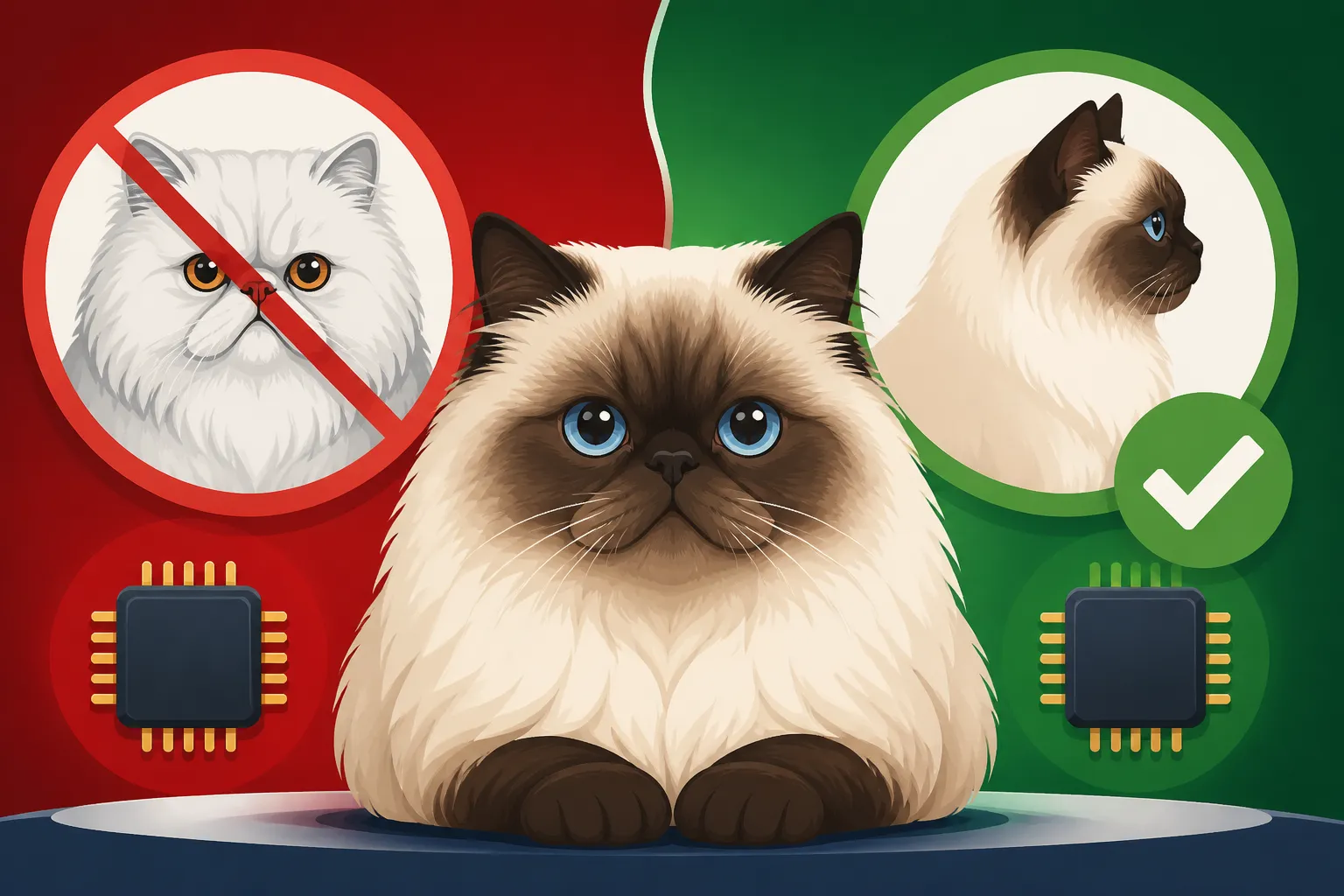
You've brought home your beautiful Himalayan, with that distinctive squishy face, striking blue eyes, and luxurious coat. You know exactly what you have – a Himalayan! But then, you go to register the microchip, or perhaps you're checking your existing records, and you see "Persian" listed as the breed. It's enough to make you pause and wonder, why the discrepancy? And more importantly, does it even matter? This guide will dive deep into why ensuring your Himalayan's chip record accurately reflects their breed is more important than you might think, covering historical context, health implications, and practical steps to ensure your beloved feline friend is correctly identified.
The Historical Blending of Breeds and Its Impact on Identification
The journey of the Himalayan cat is a fascinating tale of deliberate breeding and complex registry decisions that ultimately led to the very confusion we sometimes encounter with microchip records. Understanding this history is key to appreciating why your cat, a Himalayan through and through, might occasionally be lumped under the "Persian" umbrella.
The Origin Story: Himalayan as a Persian-Siamese Hybrid
Our gorgeous Himalayans didn't just appear out of nowhere; they were the result of a scientific quest! Back in the 1930s, brilliant minds at Harvard Medical School embarked on an experiment. They wanted to understand how certain traits, like colorpoint patterns and long fur, were inherited. To do this, they crossed a Siamese cat, known for its striking points and vocal nature, with a Persian cat, famed for its long, flowing coat and placid demeanor. The goal wasn't initially to create a new breed, but rather to observe genetic inheritance.
These early experimental crosses produced kittens that had the long hair of a Persian but the distinct colorpoint markings of a Siamese. It was a groundbreaking moment. While the scientific community focused on the genetics, cat fanciers quickly saw the immense potential for a new, beautiful breed. Indeed, many credit The Himalayan Was Made at Harvard in the 1930s for paving the way. After some dedicated breeding efforts, refining the look and temperament, the Himalayan was officially recognized as its own distinct breed in the United States in 1957, largely thanks to the tireless work of breeders like Marguerita Goforth. Marguerita Goforth and the Himalayan's 1957 Recognition marked a significant milestone, solidifying the Himalayan's place in the cat fancy world. For decades, it stood proudly as a unique entity, celebrated for its captivating blend of two beloved breeds.
When Registries Merged and Confusion Began
Despite its initial recognition as a separate breed, the Himalayan's distinct status became entangled in the politics of cat registries. The most significant shift occurred in 1984 when the Cat Fanciers' Association (CFA), one of the largest and most influential cat registries in the world, made a controversial decision. They opted to fold the Himalayan into the Persian breed group, designating it as a "Colorpoint Persian Division." This meant that while Himalayans retained their name in common parlance, on official CFA paperwork, they were now simply a color variety of Persian.
This move was met with mixed feelings among breeders and owners. On one hand, it acknowledged the strong Persian heritage of the Himalayan and aimed to streamline the registration process. On the other hand, it erased decades of work establishing the Himalayan as its own distinct breed, leading to confusion that persists to this day. The logic behind it, as explored in Why CFA Folded the Himalayan Into the Persian in 1984, was often tied to how these cats were being bred and shown, but for many, their beloved "Himmie" was no longer recognized by name on official documents. This historical decision is a major reason why, when you interact with systems that pull from these older or combined registry classifications, your Himalayan might automatically be categorized as a Persian.
How Other Registries Maintained the Distinction
Fortunately, not all cat registries followed CFA's lead. Many other prominent organizations, recognizing the unique characteristics and dedicated breeding history of the Himalayan, chose to maintain its status as a separate and distinct breed. The International Cat Association (TICA), for example, continues to register the Himalayan as its own breed. TICA Still Registers the Himalayan as a Breed of Its Own, providing a clear lineage and identity for these cats.
This split in registry philosophy means that the official "breed" of your Himalayan can literally depend on which organization issued its papers, or which database your microchip company primarily consults. If your cat came from a breeder who registered with TICA or a similar organization, their paperwork would clearly state "Himalayan." However, if their lineage traces back through CFA, or if the microchip company defaults to the broadest category, "Persian" might be the default. This divergence highlights the ongoing debate within the cat community about what truly defines a breed and how important historical and genetic distinctions are for identification purposes. It also underscores why, as an owner, you might need to be proactive in clarifying your cat's breed for various services.
Why Accurate Breed Identification Matters for Your Himalayan's Well-being
Beyond the historical nuances and registry politics, accurately identifying your Himalayan on their chip record has real-world implications for their health, care, and even their safety. It's not just about semantics; it's about ensuring your cat receives the most appropriate and informed care throughout their life.
Medical Specifics Tied to Breed Recognition
Himalayans, being a blend of Persian and Siamese, inherit a unique set of predispositions and characteristics that directly impact their health. Their flattened facial structure, a hallmark of the "Peke-face" or "Doll-face" types, means they often have brachycephalic airway syndrome, which can lead to breathing difficulties, snoring (far louder than their Siamese ancestors, as you might read in Why a Himalayan Snores Louder Than Its Siamese Ancestors), and a tendency to overheat quickly. You can explore the specific measurements and profiles in articles like What a Doll Face Himalayan's Profile Measures and What a Peke Face Himalayan's Profile Measures.
When your cat's microchip record simply states "Persian," a veterinarian unfamiliar with the specific nuances of Himalayans might not immediately consider these breed-specific concerns. For instance, if your cat has an emergency and is brought to an unknown vet, a "Persian" label might not flag the same urgent considerations regarding their airway that a "Himalayan" label would. Anesthetic protocols, for example, are often different for brachycephalic breeds, as detailed in Why a Himalayan Is a Harder Anesthetic Than a Siamese. If the vet is solely relying on the chip record for initial identification, this critical information could be missed.
Furthermore, Himalayans inherit genetic predispositions from both sides of their family tree. They carry a "disease list" from both Persians and Siamese, which means they are prone to conditions like Polycystic Kidney Disease (PKD) from their Persian lineage and Progressive Retinal Atrophy (PRA). Every Himalayan Inherits Two Disease Lists, Not One elaborates on this. For insurance providers like Healthy Paws, having the correct breed listed can be crucial when assessing coverage for breed-specific conditions, ensuring there are no misunderstandings or delays if you need to make a claim related to these inherited issues. Accurate identification helps ensure that any medical professional treating your cat understands these inherent vulnerabilities and can tailor their approach accordingly, even if it's just a routine check-up.
Grooming and Care Expectations
Anyone who shares their home with a Himalayan knows that their opulent coat isn't just for show – it's a commitment! Himalayans require daily grooming to prevent matting, especially around their britches, armpits, and neck ruff. This isn't just for aesthetics; severe matting can lead to skin infections and discomfort. The Daily Comb a Himalayan Cannot Skip is a testament to this essential routine.
Their distinctive flat faces also come with unique grooming demands. Many Himalayans experience tear staining, which requires daily cleaning around their eyes and nose folds to prevent irritation and skin issues. This daily face routine, as outlined in The Morning Face Routine Every Himalayan Needs, is non-negotiable for their comfort and hygiene.
If your microchip record, and subsequently other pet service records, consistently lists your cat as a “Persian,” there's a subtle risk that the specific, intensified grooming needs of a Himalayan might be overlooked or underestimated by those providing temporary care, such as a pet sitter or a boarding facility. While Persians also have long coats, the particular combination of coat density, facial structure leading to tear staining, and activity level (a Himalayan plays longer than a Persian) makes the grooming commitment quite specific. A sitter, for instance, might assume a “Persian” coat needs less attention than a Himalayan's. When you're ordering specialized food bowls for their flattened face or exploring tailored nutrition, ensuring the breed is correctly identified helps ensure you're getting the right product recommendations too. Correct breed identification reinforces the need for meticulous, breed-specific care, ensuring your cat's comfort and well-being.
Insurance and Emergency Services
Imagine a scenario where your beloved Himalayan, who perhaps struggles with breathing on hot days, suddenly shows signs of distress. You rush them to an emergency vet, one you haven't visited before. The first thing they might do is scan the microchip for your contact information and basic pet details. If that record merely says "Persian," it might not immediately trigger the specific brachycephalic breed protocols that a "Himalayan" designation would. This could lead to a slight, but potentially critical, delay in recognizing the urgency of their airway assessment or in selecting the most appropriate sedation.
Similarly, pet insurance companies, like Healthy Paws, often categorize breeds based on known health predispositions. While many policies are broad, having an accurate breed on record can smooth the claims process, especially if your cat develops a condition that is more common in Himalayans due to their unique genetic makeup or conformation. If the insurance company sees "Persian" on your initial enrollment but a claim comes in for a condition heavily associated with the Himalayan's specific characteristics, it could potentially lead to questions or requests for clarification that would be avoided with precise identification from the start.
In a lost pet situation, accurate breed information on the chip record can also be vital. While distinguishing a Himalayan from a Persian might seem straightforward to an owner, to someone less familiar, the subtle differences can be lost. A microchip database with "Himalayan" clearly stated offers a more precise description to aid in identification and recovery, particularly if the cat is found in a distressed or dirty condition where its characteristic points or facial features might be obscured. It’s about leaving no room for doubt when it matters most, ensuring your cat's unique identity is recognized across all platforms and by all care providers.
Practical Steps for Ensuring Your Himalayan's Chip Record is Correct
It's clear that accurate breed identification on your Himalayan's microchip record is more than just a matter of pride; it's a practical step for their lifelong health and safety. But what can you, as a dedicated owner, actually do to make sure this information is correct?
Reviewing Your Microchip Registration
The first and most important step is to proactively review your cat's microchip registration details. Many owners get their pets chipped as kittens and then don't think about the paperwork again until there's an issue. Don't be that owner!
Start by locating the microchip registration papers you received when your Himalayan was first chipped. These documents should have a unique identification number for the chip and instructions on how to access your pet's online profile or contact the registry directly. If you can't find the papers, your veterinarian can scan the chip and provide you with the number, and often point you to the correct registry.
Once you have access to your pet's online profile or the registry's customer service, carefully check every detail. Look specifically for the "Breed" field. Does it say "Himalayan," "Colorpoint Persian," or simply "Persian"? Sometimes, there might even be an option for "Mixed Breed" if the specific distinction isn't available, but always aim for the most precise identification possible. If you registered directly with the microchip company (e.g., through a service like PetLink or HomeAgain), their online portals often allow you to edit these details yourself. Take the time to ensure your contact information, emergency contacts, and, crucially, your cat's breed are all accurately represented.
Communicating with Your Microchip Provider
If you discover that your Himalayan is incorrectly listed as a "Persian" or another generic breed, don't despair! Most microchip registries are very helpful and understand the nuances of breed identification.
Your next step is to contact the microchip registry directly. Be prepared with your cat's microchip number, your contact information, and any supporting documentation you might have – such as your cat's pedigree papers (if they exist) or a letter from your breeder or veterinarian confirming the breed.
When you speak to a representative, clearly explain your concern. Emphasize that while Himalayans are a type of Persian, for medical and care purposes, the specific "Himalayan" designation is preferred due to their unique characteristics (brachycephalic features, specific coat needs). Ask if they can update the breed field to "Himalayan" or, if that's not an option in their system, if they can add a note in the comments section of your cat's profile that clarifies their identity as a Himalayan. Many registries have mechanisms for adding detailed notes, which can be invaluable for vets or shelter staff who look up the chip. Follow up with an email if necessary to have a written record of your request.
Here's a quick comparison of breed identification scenarios:
| Record Type | Common Entry | Preferred Entry | Why It Matters |
|---|---|---|---|
| Microchip Record | Persian | Himalayan | Flags specific health needs (breathing, eyes) and grooming requirements. |
| Vet Clinic Chart | Persian | Himalayan | Informs anesthetic protocols, dental care, and general health monitoring. |
| Insurance Policy | Persian | Himalayan | Ensures accurate assessment for breed-specific claims (e.g., respiratory, PKD). |
| Online Food Profile | Persian | Himalayan | Helps recommend appropriate food for brachycephalic jaws. |
| Pet Sitter Notes | Persian | Himalayan | Highlights unique grooming (tear stains) and temperature sensitivity. |
Informing Your Veterinarian and Pet Sitter
Even after updating your microchip record, it’s vital to ensure that all individuals involved in your Himalayan's care are aware of their specific breed identity. Your veterinarian should be your primary partner in this. At every annual check-up, remind them that your cat is a Himalayan, not just a Persian. Ensure their internal patient records reflect this distinction. This consistent communication helps them stay vigilant for breed-specific issues like potential respiratory concerns, Why a Himalayan Overheats Twice as Fast as a Siamese, or the unique dental challenges that come with a shortened jaw.
Similarly, if you use a professional pet sitter or board your cat at a kennel, make sure they understand the unique care requirements of a Himalayan. When you prepare instructions for them, explicitly state “Himalayan” and outline the daily grooming routine for their long coat and face. Detail their sensitivity to heat, their preference for specific bowl types (which you might source from Chewy for their flat face), and any other quirks related to their breed. A knowledgeable pet sitter will appreciate this detail, as it helps them provide the best possible care. Be sure to also note any specific dietary needs for your flat-faced cat.
Consistency across all points of care – from microchip databases to vet charts to pet sitter notes – creates a robust safety net for your Himalayan. It ensures that regardless of who is looking after them, their unique needs are understood and met, leading to a healthier, happier life for your cherished companion.
Disclaimer
This article is for general informational purposes only and does not constitute professional advice. Laws, prices and regulations vary by location and change over time. Consult a qualified professional for guidance on your specific situation.