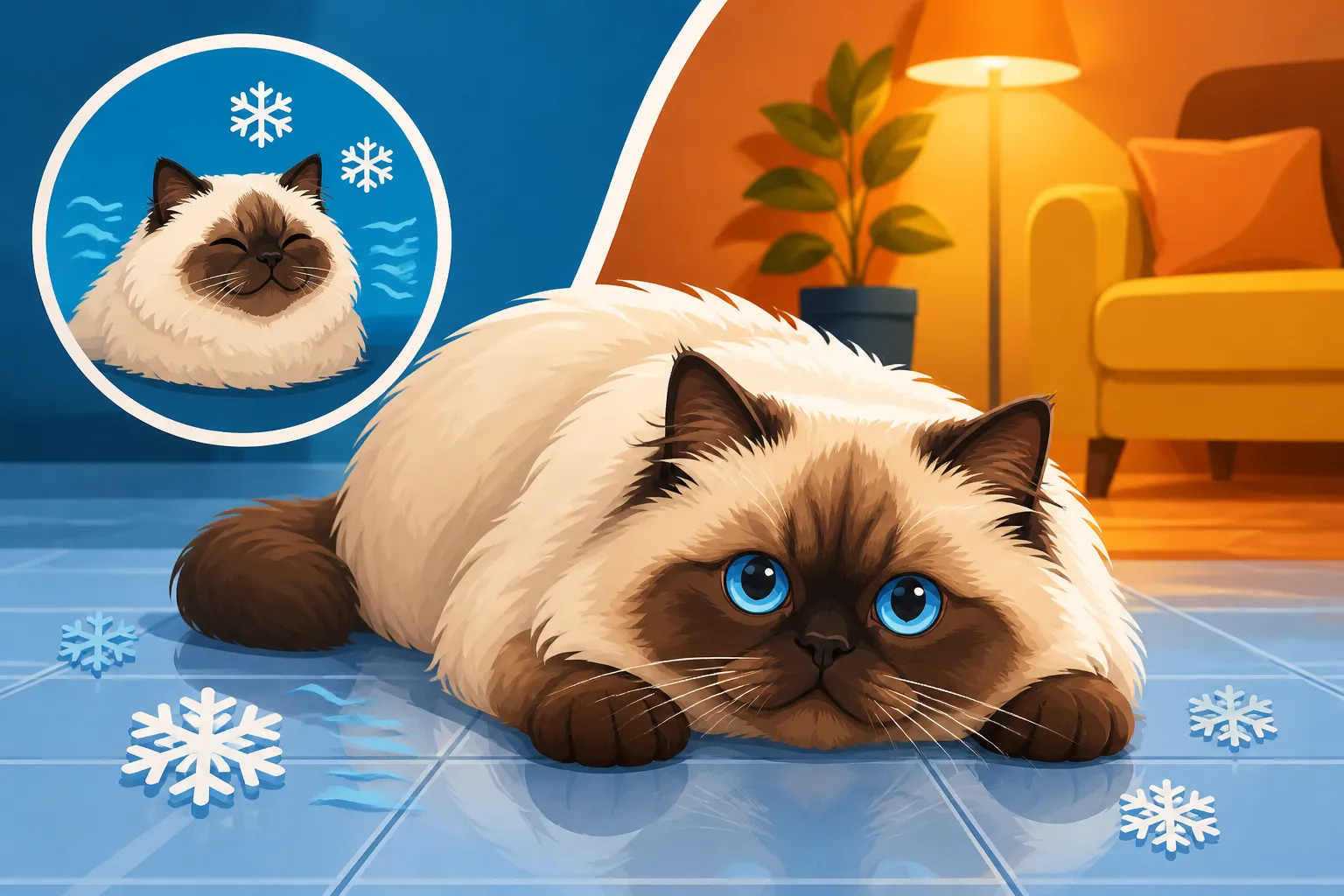
Why a Himalayan Lies on the Coldest Tile in the House
It’s a sight familiar to many Himalayan cat owners: you walk into a room on a warm day, and there they are, stretched out like a fluffy rug on the coldest patch of tile, marble, or even the bathroom linoleum. It’s not just a quirky preference; it's a vital, instinctual response to their unique physiology. This guide will delve into exactly why your beautiful Himalayan seeks out those cool spots and what you can do to ensure they remain comfortable and healthy, especially as temperatures rise.
The Himalayan's Internal Thermostat: A Unique Challenge
Understanding why your Himalayan feels the heat more intensely than other breeds begins with appreciating their very distinct physical characteristics. These traits, while contributing to their stunning appearance, also present specific challenges when it comes to regulating their body temperature.
Inheriting the Persian's Luxurious, Yet Challenging Coat
The most striking feature of a Himalayan is undoubtedly their magnificent, dense coat, a direct inheritance from their Persian ancestors. This isn't just a single layer of fur; it's a double coat, comprised of a long, flowing outer guard coat and a thick, woolly undercoat. While this provides unparalleled insulation in colder climates, it becomes a significant burden when the mercury rises. Think of wearing a heavy wool sweater and an insulated jacket in summer – that’s essentially what your Himalayan is doing all the time.
This luxurious fur acts like a personal, non-removable blanket, efficiently trapping a layer of warm air close to their body. During cooler months, this is fantastic, keeping them snug and cozy. But when it's warm, that trapped air becomes a heated zone they can't easily escape. The sheer volume of fur means that ambient heat struggles to dissipate from their skin, and their own body heat, generated from basic metabolic processes, has nowhere to go. This makes them incredibly prone to overheating, even indoors in what you might consider a comfortable room temperature. You can feel the sheer density of it when you try to comb through it – it's a lot of fur! How Much Undercoat a Himalayan Carries Under Its Points explains just how much there is.
The Flat Face and Compromised Cooling System
Beyond the coat, the Himalayan's distinctive brachycephalic, or "flat," face, also inherited from the Persian side, plays a critical role in their struggle with heat. While undeniably adorable, this facial structure comes with anatomical limitations that severely impact their ability to cool down. Their nostrils are often very narrow, sometimes mere slits, restricting the amount of air they can take in with each breath. Furthermore, many Himalayans have an elongated soft palate that can partially obstruct their airway at the back of their throat.
For most cats, panting is a primary mechanism for dissipating heat. As they pant, air moves rapidly over the moist surfaces of their tongue and respiratory tract, evaporating water and carrying heat away from the body. However, for a Himalayan, this process is significantly less efficient. The constricted airways make it harder to move enough air to achieve effective evaporative cooling. They have to work much harder to pant, which in itself generates more body heat, creating a vicious cycle. Imagine trying to breathe through a very narrow straw during a workout; it's exhausting and doesn't get you enough air to cool down properly. This is precisely Why a Himalayan Cannot Cool Itself by Panting as effectively as a long-nosed cat. This combination of a heat-trapping coat and an inefficient cooling system means they start to feel uncomfortable at temperatures many other cats would barely notice.
Why Temperature Decides a Himalayan's Point Color
Interestingly, your Himalayan's struggle with heat is also intrinsically linked to what makes them so visually unique: their stunning color points. The striking contrast between their pale body and darker extremities (ears, face, paws, and tail) is due to a temperature-sensitive gene. This gene produces pigment only in cooler areas of the body.
This means that parts of their body that are naturally cooler, like their ears and paws, develop darker fur, while warmer areas, like their core, remain lighter. When your Himalayan gets too warm, this temperature-sensitive gene can even be affected, potentially leading to a slight dulling or lightening of point color over time if they are consistently too hot. Conversely, a consistently cool environment helps maintain those sharp, vibrant points. It's a fascinating biological feedback loop where their comfort level is literally reflected in their coat color. Understanding that their coat is a living thermometer can give you even more insight into their comfort. How Temperature Decides a Himalayan's Point Color is a truly remarkable genetic quirk that defines the breed.
Recognizing the Signs of Overheating and Seeking Relief
Because Himalayans are so susceptible to overheating, knowing the subtle and not-so-subtle signs that they're getting too warm is absolutely critical. Catching these cues early can prevent a minor discomfort from escalating into a serious health issue.
Early Warning Signals Your Himalayan is Too Warm
Your Himalayan, being a master of stoicism, might not overtly complain when they're starting to feel too warm. Their early warning signs are often subtle shifts in behavior. You might notice them becoming more lethargic than usual, even for a breed known for its calm demeanor. Playtime, which might normally involve a brief burst of activity, becomes even shorter or ceases altogether. They'll actively seek out cooler spots, like the aforementioned tile floor, or perhaps even an empty bathtub or the sink, trying to press their body against a cold surface. You might see them lying completely stretched out, maximizing contact with the cool area, rather than curled up.
As their discomfort increases, their breathing might become heavier or faster, even without exertion. They might start panting, which, as we discussed, is an inefficient cooling mechanism for them, but it’s their body’s attempt. This panting will typically be shallow and rapid, often with an open mouth. Their ears might feel warm to the touch, and you might notice their paw pads feel sweaty. Ignoring these signs can lead to more serious symptoms like drooling, staggering, vomiting, or even collapse, all of which require immediate veterinary attention. Don't wait for these extreme signs; pay close attention to the subtle cues. The Signal a Himalayan Gives Before It Overheats can be very quiet and easily missed.
The Allure of Cold Surfaces: Why Tiles Are Their Sanctuary
For a Himalayan experiencing rising body heat, those cool, uncarpeted surfaces are nothing short of a sanctuary. This isn't just about feeling a little bit nicer; it's physics in action. Heat naturally transfers from a warmer object to a cooler object through a process called conduction. When your Himalayan stretches out on a cool tile floor, their warm body is directly shedding heat into the cooler surface. The larger the surface area of their body making contact, the more efficient this heat transfer becomes.
This is why you'll often find them splayed out, tummy down, rather than curled up in a ball. Stone, ceramic tiles, marble, and even linoleum are excellent conductors of heat and typically remain several degrees cooler than the ambient air or carpeted surfaces. Many owners report finding their Himalayans lounging in the laundry room on the bare concrete, or even taking up temporary residence in an empty shower stall, perfectly content because it offers that essential, life-saving coolness. This instinct is so strong that even if you move furniture around, they'll often find the new coldest spot, demonstrating just how vital it is to their comfort. It's a behavior that often intensifies when Why a Himalayan Moves Rooms as the Sun Does, following the shade and the coolest patches as the day progresses.
Creating a Cooler Environment Indoors
Since your Himalayan can't easily cool themselves, it falls to us, their devoted guardians, to create an environment that minimizes their heat stress. Air conditioning is, of course, the gold standard for maintaining a cool home. Even keeping the thermostat a few degrees lower than you might for yourself can make a world of difference for your cat. If central air isn't an option, strategically placed fans can help circulate air, especially if aimed at those tiled floors where your cat loves to rest. Just be sure the fan isn't blowing directly onto your cat for extended periods, as some find this uncomfortable.
Beyond active cooling, consider passive strategies. Keep blinds or curtains drawn during the hottest parts of the day to block direct sunlight. Placing ceramic tiles or stone slabs in their favorite lounging spots can provide portable cool zones. Cooling mats are another excellent option; these typically contain a non-toxic gel that absorbs and dissipates heat, staying cool without needing refrigeration or electricity. You can find a wide variety of these, from simple pressure-activated mats to more advanced models, readily available on online retailers like Amazon. When choosing one, ensure it’s durable and puncture-resistant, as those long claws can be surprisingly sharp. Always provide access to multiple cool areas so your Himalayan has choices.
Practical Steps for Keeping Your Himalayan Comfortable
Beyond simply managing the ambient temperature, there are several hands-on care and nutrition strategies you can implement to ensure your Himalayan stays comfortable and avoids overheating, making their life much more pleasant.
Strategic Grooming and Hydration
Grooming isn't just about aesthetics for a Himalayan; it's a vital part of their thermoregulation. Their dense double coat can become a heavy, insulating trap if not meticulously maintained. Regular, ideally daily, combing is essential to remove loose undercoat and prevent mats. Mats not only pull on their skin and cause discomfort, but they also further impede air circulation, trapping even more heat. A good metal comb with both wide and narrow teeth is your best friend here. Focus on areas prone to matting like behind the ears, armpits, and britches. Removing this dead, insulating hair allows their skin to breathe a little better. The Daily Comb a Himalayan Cannot Skip is truly a non-negotiable part of their care.
Hydration is equally important. When a cat gets hot, they need to drink more to help their body function efficiently and prevent dehydration, which can compound heat stress. Always ensure your Himalayan has access to fresh, cool water in multiple locations throughout your home. Consider wide, shallow bowls that won't irritate their sensitive whiskers or flat face, making it easier for them to drink comfortably without drenching their magnificent ruff. Some Himalayans even enjoy drinking from pet fountains, which can encourage them to drink more by providing circulating, aerated water. Why a Wide Shallow Water Bowl Suits a Himalayan goes a long way in encouraging proper hydration.
Adjusting Play and Routine During Warmer Weather
Himalayans aren't typically known for being extreme athletes, but even their modest bursts of play can be too much when it's hot. During warmer months, it's wise to adjust their play schedule to the cooler parts of the day. Early mornings, just after sunrise, or late evenings, once the sun has set and temperatures have dropped, are ideal times for any interactive play. During the peak heat of the day, encourage quiet activities that don't involve much exertion, or simply let them rest in their favorite cool spot.
It's paramount that a Himalayan remains an indoor-only cat, especially in warmer climates or during heatwaves. Allowing them outdoors exposes them to uncontrolled environmental temperatures, direct sunlight, and hot pavement, which can quickly lead to dangerous overheating. Even a screened-in patio or catio needs to be heavily shaded and well-ventilated to prevent heatstroke. Observe your cat's response to play; if they start to breathe heavily or pant, it's time to end the session immediately. How Soon a Himalayan Starts Panting During Play should be your cue to stop the fun.
Dietary Considerations for Managing Heat
Your Himalayan's diet can also play a role in their internal temperature regulation. Digestion generates metabolic heat, so the type and frequency of meals can impact how warm your cat feels. Feeding smaller, more frequent meals throughout the day, rather than one or two large meals, can reduce the immediate thermal load on their system.
Wet food is a fantastic choice for Himalayans, especially when managing heat. It has a much higher moisture content than dry kibble, providing essential hydration that contributes to overall cooling and prevents dehydration. This is particularly beneficial for cats who might not drink as much water as they should. You can find excellent quality wet food options on platforms like Chewy, offering a wide range of textures and flavors that cater to even the pickiest flat-faced eaters. Some pet parents even explore fresh, human-grade food options, which also offer high moisture content and nutrient density, though always consult your vet before making significant dietary changes. Ensuring they are well-hydrated through their food is an easy win for their comfort.
Emergency Measures for an Overheating Himalayan
Despite all preventative measures, sometimes a Himalayan can still become overheated, and knowing what to do in an emergency is vital. If you notice severe signs like heavy, labored breathing, excessive drooling, lethargy, staggering, vomiting, or collapse, immediate veterinary attention is required. This is a medical emergency.
While you are getting your cat to the vet, you can take some immediate steps to help them cool down. Move your Himalayan to the coolest possible area, ideally with air conditioning or a fan. Gently apply cool (not ice cold) water to their paw pads, ears, and groin area. You can use a damp towel or a cloth soaked in cool water. Never use ice or ice water, as this can cause blood vessels to constrict, actually hindering cooling, and can be shocking to their system. Offer small amounts of water, but do not force them to drink. Keep monitoring their breathing and overall condition. Remember, these are first aid steps, not a cure; prompt veterinary care is non-negotiable for suspected heatstroke. This is especially true when learning How to Cool a Long Coated Himalayan in Summer; sometimes home remedies aren't enough.
Recognizing and Responding to Heat Stress in Himalayans
| Symptom Category | Early Warning Signs | Advanced Overheating Signs | Immediate Actions |
|---|---|---|---|
| Behavior | Increased lethargy, seeking cold surfaces, less play | Restlessness, staggering, collapse, disorientation | Move to coolest spot, offer water |
| Respiration | Faster breathing, shallow panting | Heavy, open-mouth panting, gasping, noisy breathing | Gentle cooling with water on paws/ears, calm environment |
| Physical Cues | Warm ears, sweaty paw pads | Bright red gums, drooling, vomiting, hot body to touch | Contact vet immediately, transport safely, continue cooling |
| Hydration/Diet | Reduced appetite, less active drinking | Dehydration (sunken eyes, poor skin elasticity), no interest in food | Ensure fresh, cool water access, consider wet food |
Disclaimer
This article is for general informational purposes only and does not constitute professional advice. Laws, prices and regulations vary by location and change over time. Consult a qualified professional for guidance on your specific situation.