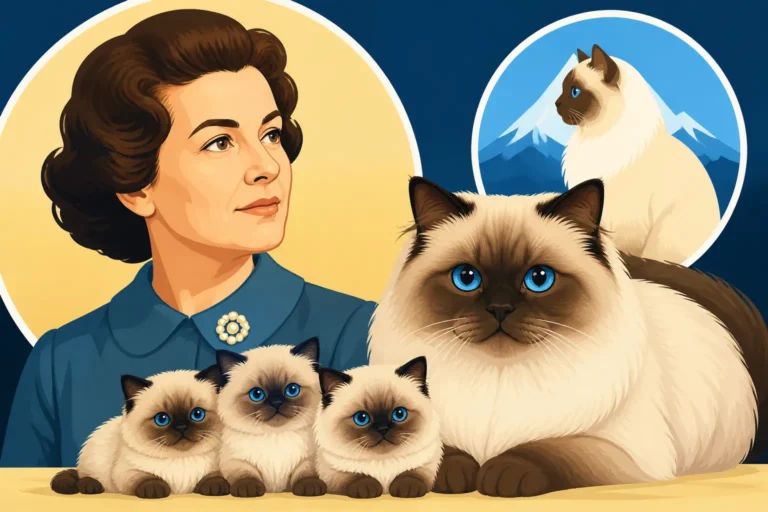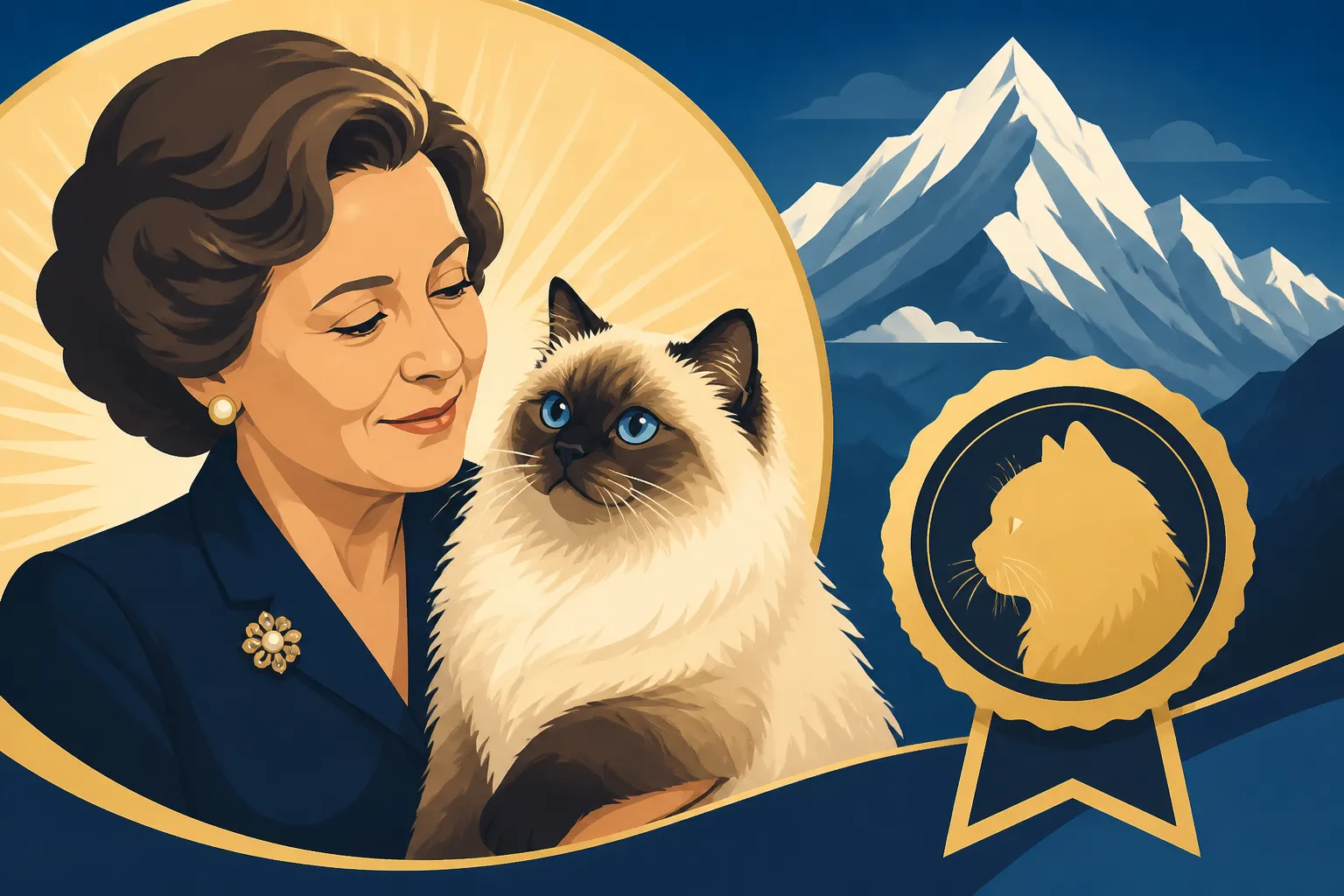
Marguerita Goforth and the Himalayan’s 1957 Recognition
Oh, the Himalayan! What a truly special, magnificent creature, isn't it? But for such a beloved and distinct breed, there can be a surprising amount of confusion, even today, about its origins and how it came to be officially recognized. Many people know they're a mix of Persian elegance and Siamese charm, but the journey to becoming a recognized breed was anything but simple, filled with dedicated individuals whose passion paved the way. This guide will delve into that fascinating history, focusing on the pivotal role of Marguerita Goforth and the landmark year of 1957, finally bringing clarity to the Himalayan's official debut in the cat fancy world.
The Early Days: Before Formal Recognition
Before Marguerita Goforth entered the scene, the concept of a long-haired, pointed cat was more of a scientific curiosity than a breed in its own right. Imagine the cat world in the early 20th century, largely dominated by established breeds with long, well-documented pedigrees. Introducing a "new" type of cat, especially one created through deliberate cross-breeding, was met with a fair bit of skepticism and certainly a lot of paperwork and proof. It wasn't enough to just have these beautiful cats; someone had to prove they were a consistent, healthy, and desirable addition to the cat fancy.
The Harvard Experiments and Early Siamese-Persian Crosses
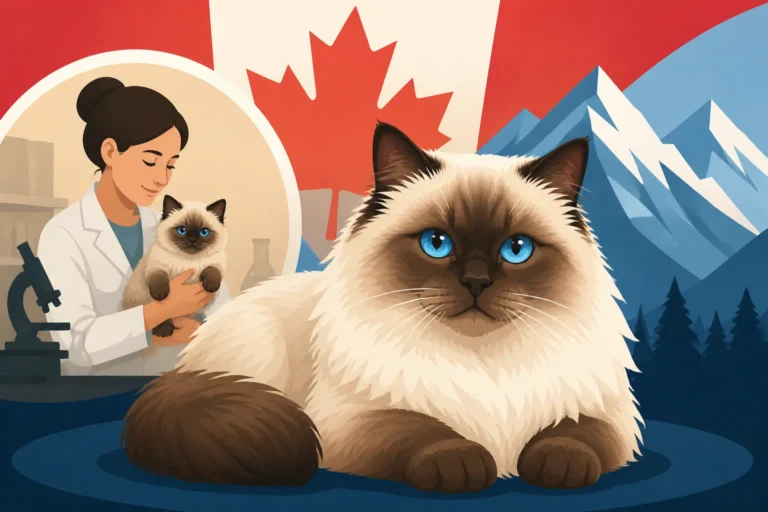
The story of the Himalayan truly begins not in a cattery, but in a laboratory. Back in the 1930s, at Harvard University, two researchers named Clyde Keeler and Virginia Cobb were deeply interested in genetics. They weren't necessarily setting out to create a new cat breed for show; their primary goal was to study how certain traits, like coat color and length, were inherited. To do this, they decided to cross a Siamese cat, known for its striking point coloration and short coat, with a Persian cat, famous for its luxurious long hair and solid colors. The result of these initial crosses was a fascinating blend: a long-haired cat with the distinctive point patterns of a Siamese.
These early "Siamese-Persian" hybrids were groundbreaking. They demonstrated that the point gene, responsible for the darker extremities on a lighter body, could be successfully introduced into a long-haired cat. It was a clear genetic achievement, proving a hypothesis about how genes worked across different breeds. However, while scientifically significant, these cats were not yet a "breed" in the traditional sense of the word, recognized by a cat registry with a specific standard. They were the foundation, the raw material, upon which a breed would eventually be built. It showed what was possible, but the hard work of standardization and acceptance still lay ahead. The 1936 Paper That Started the Himalayan explains more about these initial discoveries.
The American Cat Fancy's Initial Hesitation
Introducing a deliberately created hybrid into the established world of cat shows was, to put it mildly, an uphill battle. The cat fancy, particularly in North America, often valued breeds with long, natural histories. There was sometimes a purist view that new breeds should arise spontaneously or through careful selection within existing lines, rather than through intentional cross-breeding with a specific genetic goal in mind. Think of it like a new challenger trying to join a very exclusive club; they'd have to prove their worth, their stability, and their adherence to a set of unwritten, as well as written, rules.
Many breeders and judges were wary. Would these cats breed true? Would they carry undesirable traits from either parent breed? Was it truly a distinct type, or just a "fancy cross"? This skepticism meant that for years, despite the beauty and unique appeal of these long-haired, blue-eyed beauties, they struggled to gain official recognition. People loved them as pets, certainly, but the path to championship status in prestigious organizations like the Cat Fanciers' Association (CFA) was fraught with challenges. It required unwavering dedication from breeders who believed deeply in the potential of this new type of cat.
Enter Marguerita Goforth: A Visionary Breeder
Amidst this early skepticism and scientific experimentation, one name shines brightly in the story of the Himalayan's recognition: Marguerita Goforth. She wasn't just a breeder; she was a visionary, a meticulous planner, and a relentless advocate for what she saw as a truly magnificent and deserving new breed. Her commitment was instrumental in taking the Himalayan from a genetic experiment to a beloved and recognized champion. Her work wasn't merely about producing pretty kittens; it was about solidifying a type, a temperament, and a standard that would stand the test of time.
Goforth's Passion for the Pointed Persian
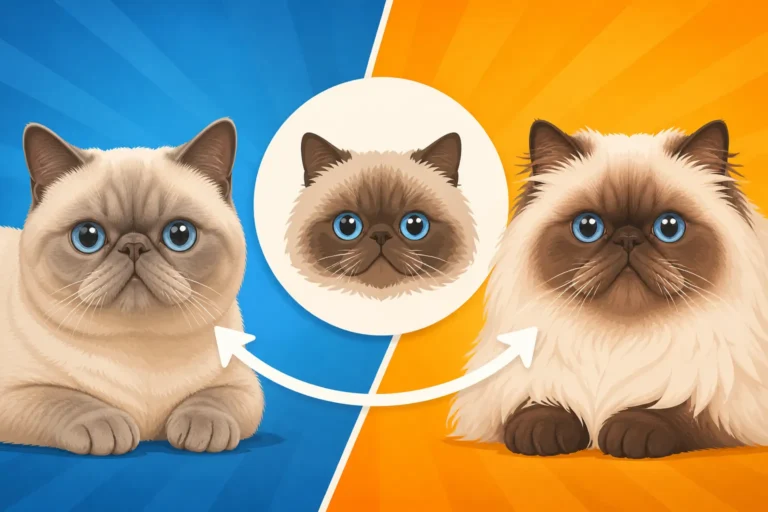
Marguerita Goforth didn't just stumble into breeding Himalayans; she had a profound passion for the concept of a long-haired, pointed cat. She was captivated by the elegance of the Persian's flowing coat and the striking color pattern and intense blue eyes of the Siamese. Her goal was to combine these two iconic looks into one harmonious animal. She didn't want just any long-haired cat with points; she wanted a cat that embodied the best of both worlds, particularly focusing on the cobby body, round head, and luxurious coat of the Persian, overlaid with the distinct point coloration.
Her cattery, known as 'Goforth's', became a hub of dedicated breeding. She understood that simply crossing a Siamese and a Persian once or twice wouldn't create a stable breed. It required generations of careful selection, documenting pedigrees, and making difficult breeding decisions to weed out undesirable traits and amplify those that aligned with her vision. This wasn't a quick process; it was a multi-year commitment, a true labor of love that demanded patience, a keen eye for genetics, and a deep understanding of what made a cat truly exceptional. Her detailed records and unwavering focus were critical to her success.
Establishing a Consistent Type
The biggest hurdle for any emerging breed, especially a hybrid, is establishing a consistent "type." This means that regardless of the specific parentage or litter, the cats should largely resemble each other in terms of physical characteristics, size, coat quality, and even temperament. Without this consistency, a breed can't have a standard, and without a standard, it can't be judged fairly in a show ring or recognized by registries. Marguerita Goforth understood this implicitly. She knew that showing a wide variety of cats that looked like Himalayans wasn't enough; they needed to be predictable.
Her breeding program focused on careful line breeding and outcrossing to solidify the desired traits. This involved painstakingly evaluating each kitten against her mental image of the ideal Himalayan. Were the eyes blue enough? Was the body truly cobby? Was the coat long and full? Did the points have good contrast? This meticulous work required a lot of dedication and a sharp eye, ensuring that each generation moved closer to a recognizable and repeatable standard. It was this unwavering focus on consistency that ultimately made the Himalayan viable for breed recognition. She essentially sculpted the breed from its diverse genetic origins into a cohesive, identifiable form that could be presented to the cat fancy as a legitimate, new entity.
The Path to 1957: Building Support and Proving the Breed
Goforth's dedication wasn't confined to her cattery; she was also a formidable advocate in the broader cat community. Getting a new breed recognized isn't just about breeding beautiful cats; it's also about convincing a sometimes conservative cat fancy establishment that your cats deserve a place at the table. This involved years of strategic effort, building alliances, and presenting undeniable proof of the Himalayan's legitimacy and appeal.
Navigating the Politics of Cat Registries
The world of cat registries, like any long-established institution, has its own set of traditions, rules, and politics. Introducing a hybrid breed, no matter how appealing, was a challenge that required careful navigation. Goforth and her fellow Himalayan enthusiasts had to present their case, often repeatedly, to various committees and boards. They had to demonstrate that their cats were healthy, fertile, bred true, and possessed a distinct enough identity to warrant their own classification. This meant compiling extensive pedigrees, providing photographic evidence, and bringing live examples to various shows and meetings.
It wasn't just about showing off pretty cats; it was about providing a rigorous genetic and breeding argument. They faced questions about the breed's long-term viability, its potential health concerns, and whether it was truly "new" or just a variation of existing breeds. This process required incredible patience and perseverance. They had to articulate a clear vision for the Himalayan, differentiating it sufficiently from both its Siamese and Persian ancestors to justify its independent standing. Goforth's leadership in this advocacy was crucial, as she was often the public face championing the breed's cause. What a Himalayan Costs From Kitten to Fifteen reminds us that this long-term commitment is still a factor today.
Presenting the Himalayan to the Cat Fanciers' Association (CFA)
The Cat Fanciers' Association (CFA) was, and remains, one of the most influential cat registries in the world. Gaining CFA recognition was the ultimate goal, as it would grant the Himalayan widespread legitimacy and open doors to championship competition. Marguerita Goforth, along with other dedicated breeders like Helen Fischer (who developed the breed simultaneously in North America), meticulously prepared their cats and their arguments for presentation to the CFA board. This wasn't a casual affair; it was a formal petition, backed by years of breeding data, health records, and consistent examples of the breed standard.
They brought their finest Himalayans, showcasing their luxurious coats, striking point colors, and docile temperaments. They explained the genetic principles behind the breed, detailing how they had managed to combine the desired traits from the Persian and Siamese lines. It was a rigorous examination, with judges and board members scrutinizing every aspect of the cats, from their physical conformation to their behavior. The sheer quality and consistency of the Himalayans presented, a direct result of Goforth's dedication to establishing type, ultimately won over the skeptics. It was a culmination of decades of work, all riding on these critical presentations.
The Landmark Year: Himalayan Recognition in 1957
Then came 1957. A year that marked a turning point, not just for Marguerita Goforth and her fellow breeders, but for the entire Himalayan breed. After years of meticulous breeding, tireless advocacy, and navigating the complexities of the cat fancy, their efforts bore fruit. The decision by the Cat Fanciers' Association to grant the Himalayan championship status was a monumental achievement, forever changing the trajectory of these beautiful cats.
The Significance of CFA Championship Status
When the CFA officially granted the Himalayan Championship status in 1957, it was akin to an aspiring athlete finally making it to the Olympics. It meant that Himalayans could now compete in cat shows for top honors, earning titles like Champion, Grand Champion, and ultimately, Best in Show. This wasn't just a symbolic victory; it had profound practical implications. It validated the breed as a distinct entity, worthy of inclusion alongside long-established breeds like the Persian and Siamese. This recognition instantly boosted the breed's profile and desirability.
For breeders like Goforth, it was the ultimate reward for their unwavering commitment. It meant their breeding programs were officially sanctioned, and their efforts to create a stable, consistent type were recognized at the highest level. It encouraged more serious breeders to invest in Himalayans, knowing there was a clear path to exhibiting and proving their cats' quality. This formal acceptance led to an explosion of interest, attracting new owners and breeders who wanted to be part of this exciting new development in the cat world. The Himalayan Was Made at Harvard in the 1930s is a great read to understand the full journey.
Initial Reception and Growing Popularity
The public's reception to the newly recognized Himalayan was overwhelmingly positive. People were immediately captivated by their unique appearance – the stunning blue eyes, the luxurious long coat, and the striking color points that combined the best of two beloved breeds. Himalayans quickly became a sensation, appearing in magazines, at cat shows, and becoming sought-after pets. The fact that they had achieved championship status added to their allure; it wasn't just a pretty cat, it was a recognized champion cat.
This newfound popularity meant an increase in demand for kittens, which in turn spurred more breeders to enter the field. Reputable breeders, inspired by the standards Goforth and others had helped establish, worked to produce high-quality Himalayans that adhered to the official breed standard. The breed's docile and affectionate temperament also played a huge role in its rapid adoption. These were not just beautiful show cats; they were gentle companions that fit perfectly into family life, cementing their place in the hearts of cat lovers across the country. They brought a unique blend of quiet elegance and playful spirit, a perfect combination for many homes.
The Himalayan's Enduring Legacy Post-1957
The 1957 recognition was not an end, but a powerful new beginning for the Himalayan. It laid the groundwork for decades of dedicated breeding, the expansion of the breed's genetic pool, and its secure place in the cat fancy. Marguerita Goforth's work ensured that the Himalayan would continue to thrive and evolve, delighting owners for generations.
How Recognition Boosted Breeding Efforts
With championship status, breeding Himalayans transitioned from a niche passion to a mainstream pursuit within the cat fancy. The recognition provided a clear framework: a breed standard to aim for, a show ring to compete in, and a community of fellow enthusiasts to collaborate with. This structure was incredibly motivating for breeders. It meant that careful breeding choices, focused on health, temperament, and adherence to the standard, could now earn tangible rewards in the form of titles and accolades.
The demand for Himalayans skyrocketed, encouraging more individuals to establish catteries dedicated to the breed. This expanded genetic diversity, helping to strengthen the breed and ensure its long-term health. Breeders could now more easily connect, share knowledge, and collaborate on improving lines. It created a vibrant, dedicated community committed to the Himalayan. This organized approach to breeding, directly spurred by the 1957 recognition, was vital for the breed's sustained growth and refinement over the subsequent decades. What the Himalayan Standard Asks of a Himalayan delves into the criteria breeders strive for.
The Influence of the Early Standard
The breed standard developed and refined by early pioneers like Goforth became the blueprint for all future Himalayans. It detailed everything from head shape and eye color to coat length and point distribution. This standard ensured that despite the increasing number of breeders, the core characteristics of the Himalayan remained consistent. It was a guide, a rulebook, and a vision all rolled into one. Breeders measured their cats against this standard, striving to produce animals that exemplified its ideals.
This early standard emphasized the round head, small, round ears, broad muzzle, and large, round blue eyes inherited from their Persian side, combined with the distinct color points. It also highlighted the cobby body and luxurious long coat. Without this clear standard, the breed might have fractured into many different types, losing its unique identity. Goforth's influence helped solidify these early parameters, ensuring that the Himalayan retained the elegance and charm that had captivated her in the first place. Even now, breeders look to these foundational principles to guide their pairings and evaluate their litters. For new owners, understanding these traits can help you choose the right grooming tools, which you can easily find on sites like Chewy.
The Shifting Sands of Breed Classification
While 1957 was a monumental year for the Himalayan, the story of its classification didn't end there. The cat fancy is a dynamic world, and breed classifications can sometimes evolve. For the Himalayan, this meant another significant change years later, one that continues to influence how the breed is perceived and registered by different organizations.
The 1984 CFA Reclassification
In 1984, the Cat Fanciers' Association made a controversial decision that deeply impacted Himalayan breeders: they folded the Himalayan into the Persian breed, reclassifying it as a "Colorpoint Persian." This meant that while Himalayans still maintained their distinct appearance, they were no longer judged as a separate breed but rather as a division within the Persian category. It was a move that sparked considerable debate and emotion among breeders. For many, it felt like a step backward, diminishing the independent identity that Goforth and others had worked so hard to establish.
The rationale behind this reclassification was largely genetic. Since Himalayans were essentially Persians carrying the Siamese point gene, CFA argued that they were fundamentally a variation of the Persian. They could be bred to Persians, and a Persian could carry the Himalayan gene without showing points itself. While genetically sound, this decision still felt like a loss of identity for those who championed the Himalayan as a distinct breed. It created a situation where a cat known as a "Himalayan" was officially registered as a "Persian" on its papers, leading to a lot of confusion for new owners. Why CFA Folded the Himalayan Into the Persian in 1984 provides more detail on this pivotal event.
Different Registry Approaches Today
The 1984 CFA decision highlighted a divergence in how different cat registries approach the Himalayan. While CFA continues to classify it as a Colorpoint Persian, other prominent organizations, such as The International Cat Association (TICA), still recognize the Himalayan as a standalone breed. This means that depending on which registry a breeder uses, your Himalayan kitten's papers might say "Persian" or "Himalayan." This can be a source of bewilderment for first-time owners who are trying to understand their cat's lineage.
This dual classification has created a somewhat unique situation for the breed. It means that judging standards and even the perception of the breed can vary slightly between organizations. However, regardless of the paperwork, the cat itself remains the same: a beautiful, long-haired, blue-eyed cat with striking points. It's a testament to the strong foundation laid by breeders like Marguerita Goforth that the Himalayan's distinctive type and enduring appeal transcend these administrative classifications. As an owner, it's always worth discussing registry specifics with your breeder, and knowing where you can find appropriate food dishes for a flat-faced cat, such as those available on Chewy, is always helpful.
| Year | Key Event | Significance for Himalayan |
|---|---|---|
| 1930s | Harvard experiments by Keeler & Cobb | First deliberate Siamese-Persian crosses, proving possibility of long-haired points. |
| 1936 | Publication of scientific paper | Documented the genetic basis for the Himalayan pattern. |
| 1950s | Marguerita Goforth's dedicated breeding | Focused on establishing consistent type and temperament for a new breed. |
| 1957 | CFA grants Championship Status | Official recognition of the Himalayan as a distinct breed, allowing it to compete for titles. |
| 1984 | CFA reclassifies as Colorpoint Persian | Himalayan folded into the Persian breed, leading to administrative changes in recognition. |
| Present | TICA recognizes Himalayan, CFA does not | Continued divergence in breed classification among major cat registries. |
Marguerita Goforth: A Lasting Legacy
Marguerita Goforth's role in the Himalayan's journey to recognition cannot be overstated. She was a driving force, a woman with a clear vision and the unwavering dedication to see it through. Her efforts, culminating in the 1957 recognition by CFA, transformed a scientific curiosity into a cherished and recognized breed that has brought joy to countless homes around the world.
Her legacy isn't just about a date on a calendar; it's about the very cats we adore today. It's in the consistency of their type, the striking beauty of their points, and their gentle, affectionate nature. Without her meticulous breeding program and her passionate advocacy, the Himalayan as we know it might never have achieved the widespread acceptance and popularity it enjoys. She truly shaped a breed, leaving an indelible mark on the cat fancy and creating a lasting testament to the power of a single breeder's vision. So, the next time you cuddle your beautiful Himalayan, remember the pioneering spirit of Marguerita Goforth, who saw the potential in a dream and made it a reality. You might even find yourself looking for specialized grooming tools or unique cat trees on Chewy, all for the comfort of a breed whose history is as rich and fascinating as its appearance. Why a Himalayan Is Less Common Than the Persian despite its beauty, is a testament to this unique journey.
Disclaimer
This article is for general informational purposes only and does not constitute professional advice. Laws, prices and regulations vary by location and change over time. Consult a qualified professional for guidance on your specific situation.