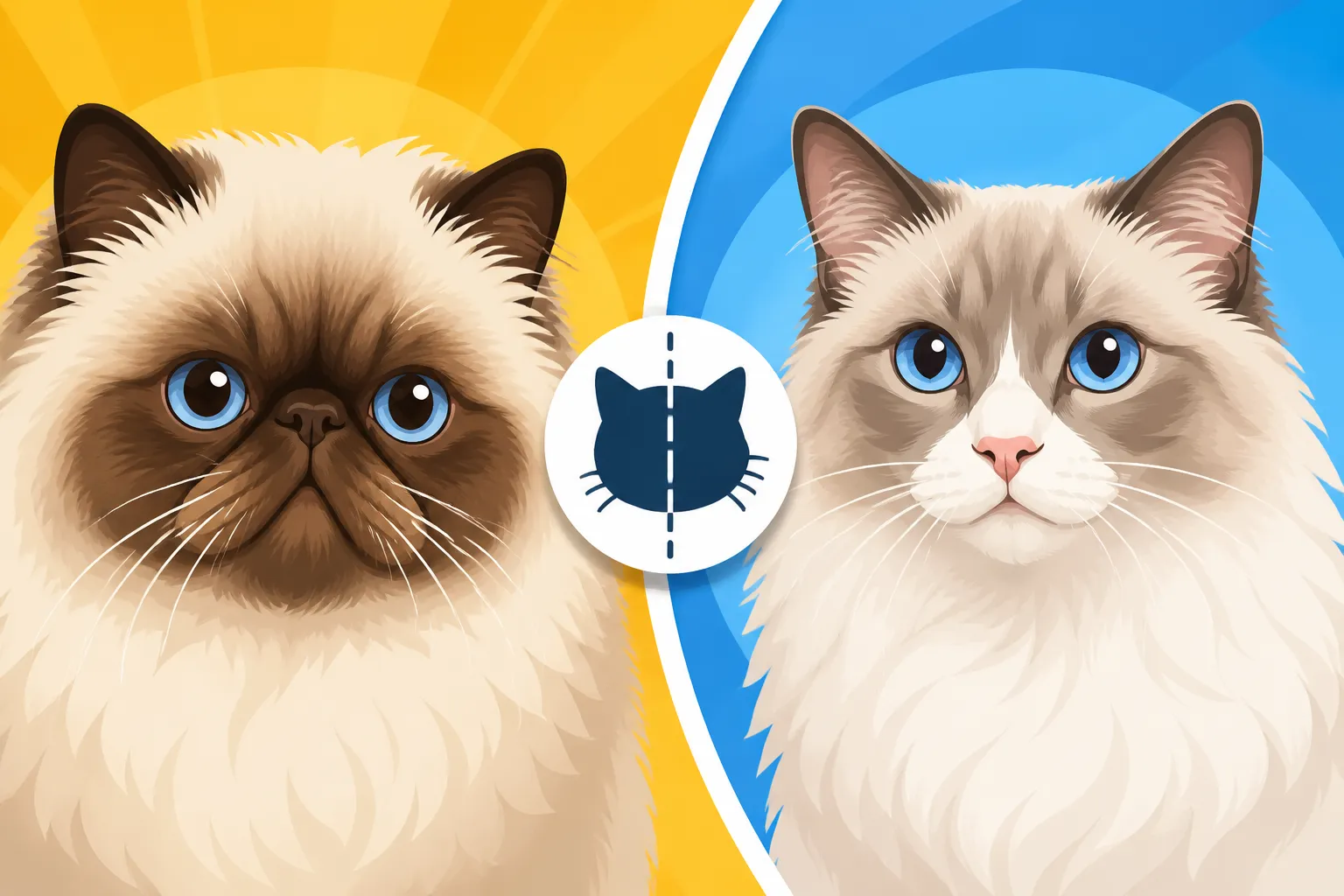
Why a Himalayan’s Face Is Flat and a Ragdoll’s Is Not
Have you ever looked at a fluffy, sweet-faced Himalayan cat and then a majestic Ragdoll, and wondered why their adorable countenances are so distinctly different, especially when it comes to their muzzles? It's a question many cat lovers ponder, feeling a bit confused about the stark contrast between these two popular long-haired breeds. This guide is here to unravel the fascinating history, genetics, and breeding choices behind why a Himalayan's face tends to be flatter, while a Ragdoll maintains its more traditional, longer profile, and what those differences mean for them in daily life.
The Distinctive Facial Features of Himalayans and Ragdolls
When you first encounter a Himalayan and a Ragdoll side-by-side, one of the most striking differences, beyond their colorpoint patterns, is undeniably their facial structure. These aren't just subtle variations; they are fundamental distinctions that stem from their very origins and the breeding goals that shaped them into the beloved companions we know today. Understanding these differences is key to appreciating each breed's unique beauty and anticipating their specific needs.
Himalayan's "Peke Face" or "Doll Face" Profile
The Himalayan cat, often lovingly called a "Himmie" by enthusiasts, inherited its characteristic facial structure primarily from its Persian ancestry. For decades, Persian breeders, and by extension Himalayan breeders, have often favored a more extreme, flattened face, leading to what is officially described in show rings as a "Peke-face" or "ultra-typed" profile. This means their nose is very short, often sitting no lower than their eyes, creating a distinct "break" in their profile. Imagine looking at their face from the side: you'll see a prominent forehead, then a sharp dip where the nose begins, almost as if it's pushed in. This "break" is a defining feature, giving them that famously sweet, almost perpetually surprised expression.
However, not all Himalayans exhibit this extreme flatness. There's also the "Doll Face" or "traditional" Himalayan, which presents a less severe facial structure. These cats have a nose that extends a bit further, sitting slightly below their eyes, with a gentler slope rather than a sharp indentation. They still have that luxurious, round-headed Persian look, but their profile is softer, more like the earlier Persians before the extreme brachycephalic traits became so popular in the show ring. The choice between a Doll Face or Peke Face Is the Himalayan Buyer's Real Decision for many prospective owners, as it profoundly impacts both aesthetics and potential health considerations.
Ragdoll's Moderate Wedge and Expressive Eyes
In stark contrast to the Himalayan, the Ragdoll boasts a much more traditional and moderately wedged head shape. Their profile is smoother, with a gentle slope from forehead to nose, without the dramatic "break" seen in many Himalayans. When you look at a Ragdoll's face, you'll see a medium-length muzzle that flows seamlessly from their forehead. Their cheeks are full, contributing to a soft, rounded appearance, but their nose is well-defined and proportionate, not short or pushed in. This moderate facial structure is a deliberate aspect of the Ragdoll breed standard, emphasizing a natural, healthy look rather than extreme features.
Their large, oval-shaped blue eyes are another hallmark, set wide apart and giving them an incredibly sweet and intelligent expression. Because their facial structure is not flattened, their tear ducts typically function more efficiently, leading to fewer issues with excessive tearing or tear staining that can be common in flatter-faced breeds. The Ragdoll's overall head shape contributes to their gentle, placid demeanor, a key characteristic that founders of the breed aimed to maintain from the very beginning.
A Look Back: The Origins of the Himalayan's Flat Face
To truly understand why the Himalayan often sports such a unique, flat face, we have to journey back in time and delve into the fascinating, and sometimes controversial, history of its development. The Himalayan isn't an ancient, naturally occurring breed; it's a meticulously crafted hybrid, the result of intentional breeding efforts to combine the best traits of two very different feline worlds.
The Intentional Breeding for the Persian Look
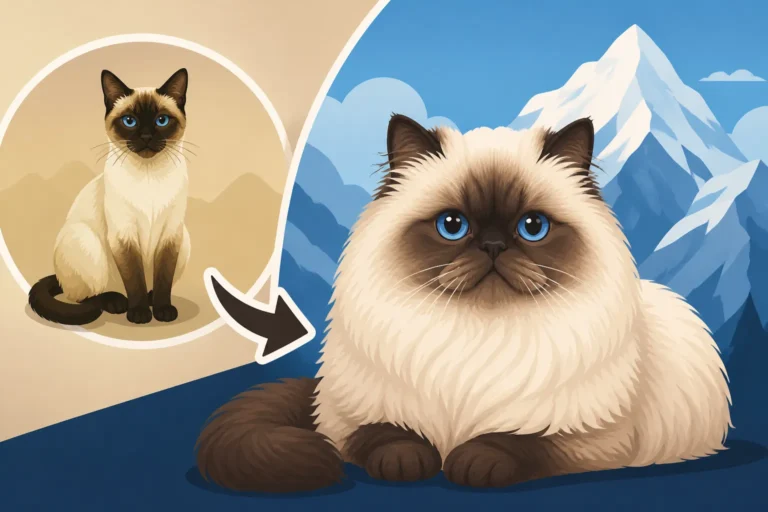
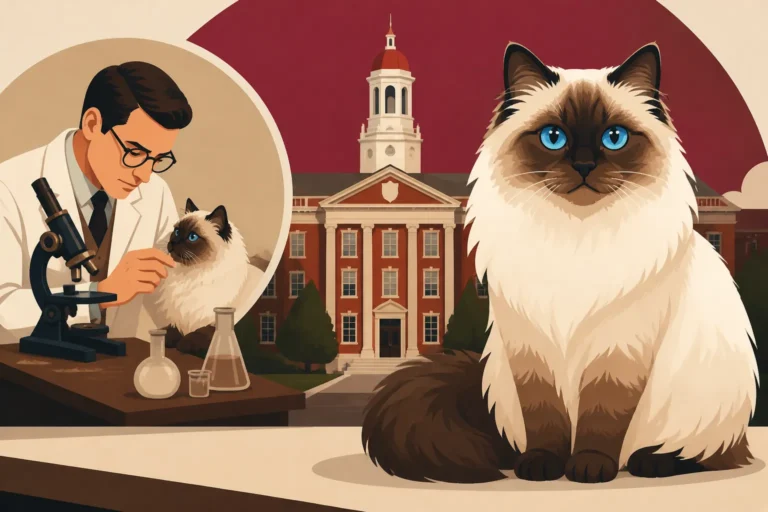
The Himalayan cat's story begins with a desire to merge the stunning colorpoint pattern of the Siamese with the luxurious long coat and cobby body of the Persian. The first recorded efforts to create what would become the Himalayan date back to the 1930s, specifically at Harvard University. Scientists like Clyde Keeler and Virginia Cobb embarked on a groundbreaking experiment, crossing Siamese cats with Persians. Their aim wasn't purely aesthetic; they were studying genetic inheritance, specifically how certain traits, like colorpoint, were passed down through generations. The Himalayan Was Made at Harvard in the 1930s is a testament to this scientific curiosity.
What they created, however, was a cat with the striking blue eyes and point coloration of the Siamese, but with the dense, flowing fur and robust build of the Persian. When these early "Colorpoint Persians" (as they were often called before the Himalayan name gained traction) started to be developed further for show purposes, breeders naturally looked to the existing Persian standard for guidance. At the time, the Persian breed was already well on its way to developing the flatter, rounder head that we associate with it today. Breeders, driven by popular trends and show ring preferences, began selecting for individuals that exhibited these Persian facial traits, unknowingly setting the stage for the Himalayan's distinctive profile.
Generational Selection for Brachycephalic Traits
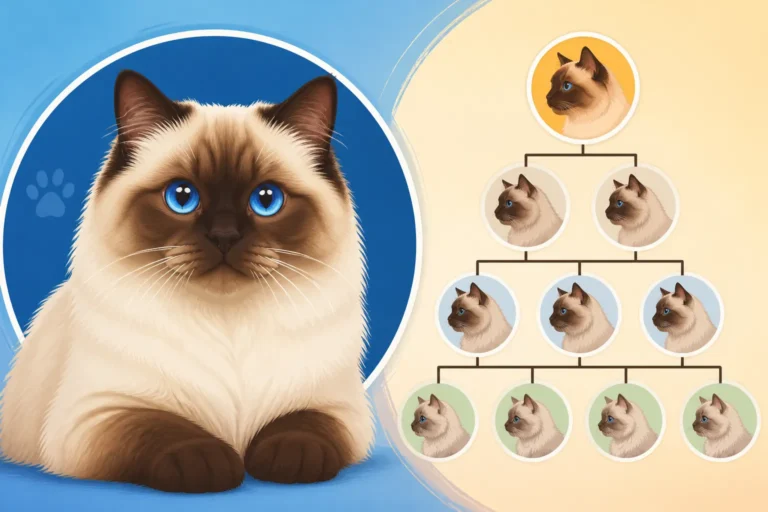
The journey from a traditional Persian face to the more extreme "Peke-face" seen in many modern Himalayans was a gradual process, spanning decades of selective breeding. Initially, Persians had more pronounced muzzles, but over time, breeders increasingly favored a shorter, broader head, with a "break" between the eyes and nose. This process, known as selecting for brachycephalic traits, was considered desirable within the show cat community. Judges often awarded cats with these extreme features, which further encouraged breeders to prioritize them in their breeding programs.
As the Himalayan gained recognition, first in the US in the 1950s thanks to breeders like Marguerita Goforth, and then internationally, its standard largely mirrored that of the Persian. This meant that the drive for a flatter face was also applied to Himalayans. Each generation, breeders would choose cats with slightly shorter noses, slightly rounder heads, and more pronounced "breaks" to carry on the line. This intense selection pressure, spanning many feline generations, gradually led to the pronounced flat-faced look that many Himalayans display today. It wasn't a sudden mutation but a deliberate, cumulative effort guided by specific aesthetic ideals. This is why you might see such variation in flatness even among Himalayans; some lines adhered more strictly to the extreme type, while others maintained a more moderate or [Doll Face] profile.
The Ragdoll's Journey: Maintaining a Traditional Muzzle
Now, let's pivot to the Ragdoll, a breed whose origins and development followed a remarkably different path, resulting in a facial structure that stands in stark contrast to the Himalayan's. The Ragdoll's story is one of a singular vision, prioritizing temperament, health, and a particular aesthetic that intentionally diverged from the extreme features popular in other long-haired breeds.
Ann Baker's Vision and Early Ragdoll Development
The Ragdoll breed began in the 1960s with Ann Baker, a breeder in Riverside, California. Her story, though shrouded in some mystery and folklore, paints a picture of a cat breeder with a very clear idea of the type of cat she wanted to create. She started with a white Persian-like cat named Josephine, and through careful breeding with her offspring and other local cats, she developed the foundation stock for the Ragdoll. What's crucial to understand is that Ann Baker wasn't aiming to replicate or modify the Persian look; she was creating something entirely new. She sought to produce large, docile, semi-longhaired cats with striking blue eyes and a tendency to go limp when held – hence the "Ragdoll" name.
Her breeding program focused heavily on temperament, size, and coat texture. While the exact lineage is still debated by some, the cats she used were not selected for extreme brachycephalic features. Instead, she favored a natural, healthy facial structure that aligned with her overall vision for a robust, affectionate companion animal. This meant selecting cats with well-proportioned muzzles and open, expressive eyes, rather than those with pushed-in noses. This foundational decision to move away from the prevailing trends of extreme facial types in other long-haired breeds is a cornerstone of why Ragdolls look the way they do today.
Focus on Health, Temperament, and a Standard Face
From its inception, the Ragdoll breed standard emphasized maintaining a balanced, healthy physical structure, with a particular focus on the head. Unlike the Himalayan, which often aligned its physical standard with the Persian, the Ragdoll developed its own distinct guidelines. The breed standard calls for a "broad, modified wedge" head, with a gentle curve to the forehead and a strong, medium-length muzzle. The nose is to be straight, with a slight, gentle dip rather than a sharp break. This careful description actively discourages the extreme flatness seen in some other breeds.
This focus on a "standard face" wasn't just about aesthetics; it was intrinsically linked to the breed's commitment to health and temperament. A proportionate muzzle and open nostrils contribute to good breathing, a critical factor for a large, long-haired cat that needs to regulate its body temperature effectively. Healthy eye structure, without the excessive tearing often associated with flat faces, also contributes to the cat's comfort and reduces the need for constant cleaning. Ragdoll breeders continue to prioritize these traits, ensuring that the breed remains known for its sturdy build, amiable personality, and naturally appealing, unexaggerated facial features. This steadfast adherence to a balanced look has safeguarded the Ragdoll from many of the health challenges associated with more extreme brachycephalic conformations.
Genetics at Play: Unpacking Facial Structure
Beyond the historical breeding choices, the fundamental reason for the difference in facial structure between Himalayans and Ragdolls lies deep within their genetic blueprints. It's a fascinating interplay of specific genes and how breeders have consciously, or perhaps at times unconsciously, amplified or diminished their expression over generations.
The Role of Brachycephalic Genes in Himalayans
The flatter face of the Himalayan is a result of selective breeding for brachycephalic traits, which are genetically inherited. "Brachycephalic" is a scientific term used to describe animals with short, broad heads. In cats, this manifests as a shortened muzzle, a distinct "break" in the nose, and often prominent, round eyes. These characteristics are governed by a complex set of genes that influence skull development. In Himalayans, because they are essentially colorpoint Persians, they inherited the genetic predisposition for these traits from their Persian lineage.
Over decades, breeders of Persians, and subsequently Himalayans, intentionally selected cats that displayed these shorter, flatter faces, believing them to be the epitome of the breed standard. This intense selection pressure effectively increased the frequency of these brachycephalic genes within the breeding population. What this means on a practical level is that a Himalayan kitten, from birth, is predisposed to developing a flatter face due to the genetic legacy passed down from its parents. These genes dictate the development of the skull bones, influencing everything from the length of the nasal passages to the placement of the eyes and the structure of the jaw. This genetic inheritance is why you can often tell how a Himalayan kitten's face will develop, even before its When a Himalayan Kitten's Face Finishes Developing.
Genetic Diversity and the Ragdoll's Standard Cranium
The Ragdoll, on the other hand, owes its more traditional and proportionate facial structure to a different genetic legacy and a deliberate breeding philosophy that avoided the extreme brachycephaly. The early foundation cats used by Ann Baker did not carry the same strong genetic markers for flattened faces that were being emphasized in Persian lines. Instead, they possessed a more varied genetic makeup that supported a mesocephalic (medium-headed) skull shape.
Ragdoll breeders have consistently maintained a broad genetic base, focusing on the overall health and well-being of the breed. This has meant consciously avoiding the selection for extreme features, including a shortened muzzle. The Ragdoll breed standard, upheld by organizations like TICA (The International Cat Association) which still registers the Himalayan as a separate breed, clearly describes a head that is a "broad, modified wedge," with a gently rounded forehead and a well-developed, medium-length muzzle. This standard encourages a facial structure that allows for clear breathing, proper dental alignment, and efficient tear drainage. By adhering to this vision, Ragdoll breeders have ensured that the genes for a healthy, unexaggerated facial profile continue to dominate within the breed, preserving the natural beauty and robust health that are hallmarks of the Ragdoll. This intentional genetic management is a key factor in why Ragdolls do not typically experience the same anatomical challenges as profoundly brachycephalic breeds.
Impact on Health and Care: Flat Face vs. Traditional
While the distinct facial structures of Himalayans and Ragdolls contribute greatly to their unique appearances, these differences also carry significant implications for their health and the daily care they require. Owning a flat-faced cat, while incredibly rewarding, comes with a unique set of responsibilities that owners must be prepared for.
Himalayan's Brachycephalic Challenges
The charming, flattened face of many Himalayans, particularly those with the Peke-face profile, is a direct result of their brachycephalic skull structure. While adorable, this conformation can lead to a number of health issues, often grouped under the term Brachycephalic Airway Obstructive Syndrome (BAOS). Their shortened nasal passages, often paired with narrow nostrils and an elongated soft palate, can make breathing more challenging, especially during periods of stress, heat, or exertion. Owners might notice their Himalayan Why a Himalayan Snores Louder Than Its Siamese Ancestors or even panting after just a few minutes of play, indicating they're struggling to take in enough air.
Beyond breathing, their facial structure can impact their eyes and teeth. The prominent, round eyes can be more exposed, making them prone to irritation, dryness, or even injury. Many Himalayans experience chronic epiphora, or excessive tearing, which can lead to unsightly tear stains on their light-colored fur. This requires daily cleaning, often with specialized wipes or gentle cleansers, to prevent skin irritation and infection in the folds around their nose. You might find great options for these on Chewy, alongside specialized food bowls. Furthermore, their shortened jaw often means their teeth are crowded, leading to dental issues like malocclusion, gingivitis, and early tooth loss. Regular dental care and vet check-ups are paramount for a Himalayan, and topics like How Crowded a Himalayan's Lower Jaw Gets become crucial knowledge for owners.
Ragdoll's General Robustness and Fewer Facial-Specific Issues
The Ragdoll's traditional, moderately wedged face, thankfully, means they generally avoid the specific health challenges associated with brachycephaly. Their proportionate muzzles and open nostrils allow for unhindered airflow, making breathing much easier and less strenuous. This means they are less prone to respiratory distress, snoring, or overheating during normal activity. While all cats need appropriate care to avoid heatstroke, a Ragdoll's respiratory system is typically more efficient at regulating body temperature compared to a flat-faced breed.
Their well-set eyes are less exposed to environmental irritants, reducing the incidence of dry eye, corneal ulcers, or chronic tearing. While they can still get tear stains, it's usually not as pronounced or persistent as in many Himalayans, making their daily facial care routine much simpler. Likewise, their normally aligned jaws and adequately spaced teeth mean dental crowding is less common, though regular dental hygiene is still important for any cat. A Ragdoll's general robustness in this area translates to fewer vet visits for facial-related problems and a more comfortable daily life for the cat, reducing some of the specific care demands often faced by Himalayan owners. This isn't to say Ragdolls are without their own genetic predispositions, but their facial structure itself is less often a source of chronic health concerns.
Breeding Standards and Recognition: What the Show Rings Say
The world of cat fancy, with its various registries and show rings, plays a pivotal role in shaping breed characteristics. The different approaches taken by these organizations regarding Himalayans and Ragdolls have directly influenced the perpetuation of their distinct facial features.
CFA and the Persian Standard for Himalayans
The Cat Fanciers' Association (CFA), one of the largest cat registries in the world, has a particularly interesting relationship with the Himalayan. For many years, the Himalayan was recognized as a separate breed. However, in 1984, CFA made the decision to fold the Himalayan into the Persian breed as a "Colorpoint Persian" division. This meant that Himalayans would now be judged against the Persian standard in the show ring, rather than a separate Himalayan standard. This decision had a profound and lasting impact on the breed's development.
The Persian standard, especially in CFA, has historically favored a very extreme, brachycephalic facial type, often referred to as the "Peke-face" or "ultra-type." Cats with broad, round heads, small, low-set ears, and a very short, well-defined "break" between the eyes were highly prized. By judging Himalayans under this same standard, breeders were essentially encouraged, and sometimes even felt compelled, to select for these same extreme facial features. If a Himalayan was to succeed in the CFA show ring, it needed to conform to the Persian ideal of flatness. This intensified the drive to produce Himalayans with increasingly flattened faces, contributing significantly to the prevalence of the Peke-face profile we see in many show-quality Himalayans today. For breeders, understanding What the Persian Standard Asks of a Himalayan became a necessity.
TICA and the Ragdoll's Breed-Specific Standards
In contrast to CFA's approach with Himalayans, The International Cat Association (TICA) maintains the Ragdoll as its own distinct breed with its own unique standard. TICA's Ragdoll standard emphasizes a head that is a "broad, modified wedge," with a gently rounded forehead, and a muzzle that is medium in length and proportionate to the head. Crucially, the standard calls for a nose that is "straight," with a "slight rise in the profile," explicitly avoiding any mention of a severe "break" or pushed-in appearance.
This breed-specific standard allows Ragdoll breeders to focus on maintaining the breed's natural, unexaggerated facial features without the pressure to conform to a different breed's more extreme aesthetic ideals. TICA's commitment to the Ragdoll's unique identity has enabled breeders to prioritize overall health, temperament, and a balanced physical structure, including a traditional muzzle. This independent standard has been instrumental in safeguarding the Ragdoll's distinctive look and ensuring that its facial structure remains healthy and functional, a stark divergence from the path taken by many Himalayan breeders under the CFA umbrella.
Choosing Your Companion: Beyond the Facial Profile
Deciding to bring a cat into your home is a big commitment, and when you're looking at breeds like the Himalayan and the Ragdoll, understanding their facial differences goes beyond mere aesthetics. It touches on daily care, potential health considerations, and ultimately, which cat will best fit into your lifestyle. It's about making an informed choice, not just about appearance, but about companionship.
Understanding the Commitment for a Himalayan's Unique Needs
If you're drawn to the sweet, round face of a Himalayan, especially one with a more pronounced Peke-face, you're signing up for a truly special feline friend. However, it's crucial to understand the unique commitment that comes with their distinctive facial structure and luxurious coat. Their flattened faces mean you'll likely need to perform daily facial cleaning. Those adorable big eyes can water, leading to tear stains that, if left unattended, can cause skin irritation or infections in the folds around their nose. You'll need soft cloths, special wipes (many are available on Chewy specifically for this purpose), and a routine. Why a Himalayan's Eyes Water All Day is a common question that leads to this daily care.
Furthermore, their breathing can sometimes be compromised, especially during warm weather or exertion. This means keeping them cool, monitoring their activity, and being aware of any signs of respiratory distress. Their crowded teeth also necessitate diligent dental care, potentially including more frequent professional cleanings at the vet. This isn't to say Himalayans aren't wonderful companions – they absolutely are, known for their calm and affectionate nature. But their particular facial features, combined with their dense Persian coat, demand a dedicated owner who is prepared to invest time and effort into their specific grooming and health needs. They thrive in quiet, indoor environments where their comfort and cleanliness can be consistently maintained.
Ragdoll's Easier Grooming and Less Intensive Facial Care
For those who adore the long-haired beauty but prefer a less intensive daily care routine related to facial features, the Ragdoll might be an ideal choice. While Ragdolls have a semi-long coat that requires regular grooming to prevent mats, their traditional muzzle and less extreme facial structure means significantly less daily facial upkeep. They generally don't suffer from the same level of tear staining or breathing issues as their flat-faced counterparts. Their eyes are typically clearer, and their noses are open, allowing for comfortable respiration without the need for constant monitoring or specialized intervention.
This isn't to say a Ragdoll requires no attention; their coats still need regular brushing, and like all cats, they benefit from good nutrition and routine veterinary care. But the specific challenges tied to brachycephalic faces are largely absent. This can be a huge relief for owners who might not have the time or feel equipped for the detailed facial cleaning and respiratory monitoring that a flat-faced cat often requires. Ragdolls are known for their docile, easygoing temperaments, making them fantastic family pets that fit well into many households, often tolerating handling and grooming with patience. The difference in facial structure, therefore, is not just a visual distinction but a practical one that truly impacts the daily rhythm of life with your feline companion.
Comparative Table: Himalayan vs. Ragdoll Facial Characteristics and Care
To help visualize the key differences and their implications, here's a comparative table summarizing the facial characteristics and associated care requirements for the Himalayan and Ragdoll breeds. This should give you a quick reference point for what to expect from each.
| Feature | Himalayan (Flat-faced) | Ragdoll (Traditional Muzzle) |
|---|---|---|
| Profile | "Peke-face" or "Doll Face"; pronounced "break" in nose | "Modified wedge"; gentle slope, no sharp break in nose |
| Nose | Very short, often level with eyes, pushed-in appearance | Medium length, proportionate, straight or slight curve |
| Eyes | Large, round, prominent; prone to irritation/tearing | Large, oval, well-set; less prone to irritation/tearing |
| Tear Stains | Common, often rust-colored; requires daily cleaning | Less common, usually mild if present; easier to manage |
| Breathing | Can be noisy (snoring), prone to BAOS, heat intolerance | Generally clear, unobstructed; better heat regulation |
| Dental Issues | Crowded teeth, malocclusion, higher risk of gum disease | Well-spaced teeth, lower risk of crowding-related issues |
| Facial Grooming | Daily cleaning of tear tracks and nose folds is essential | Occasional wiping around eyes if needed |
| Specialized Bowls | Often benefits from shallow, wide bowls to eat comfortably | Can use standard cat bowls comfortably |
| Origin Influence | Persian lineage (selected for brachycephaly) | Ann Baker's vision (selected for moderate, healthy features) |
Disclaimer
This article is for general informational purposes only and does not constitute professional advice. Laws, prices and regulations vary by location and change over time. Consult a qualified professional for guidance on your specific situation.