How the Himalayan Standard Divides Its Points
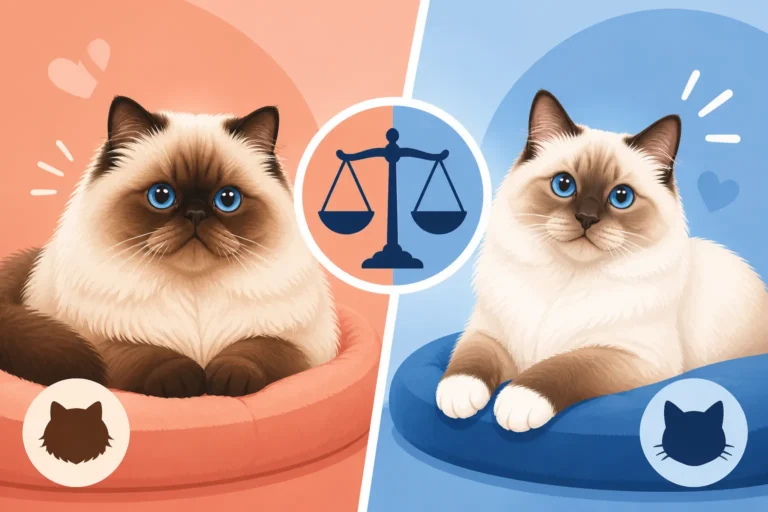
It can be incredibly confusing for new Himalayan owners, or even those considering bringing one of these magnificent felines into their home, to truly understand what makes their coat and color points so special, especially when you start looking at breed standards. You might hear terms like "Seal Point" or "Lilac Point" and wonder what they truly mean beyond just a pretty color. This guide will walk you through how the Himalayan breed standard meticulously categorizes and defines its distinctive point colors, helping you appreciate the nuanced beauty of these unique cats.
Understanding the Himalayan Point Pattern: A Genetic Marvel
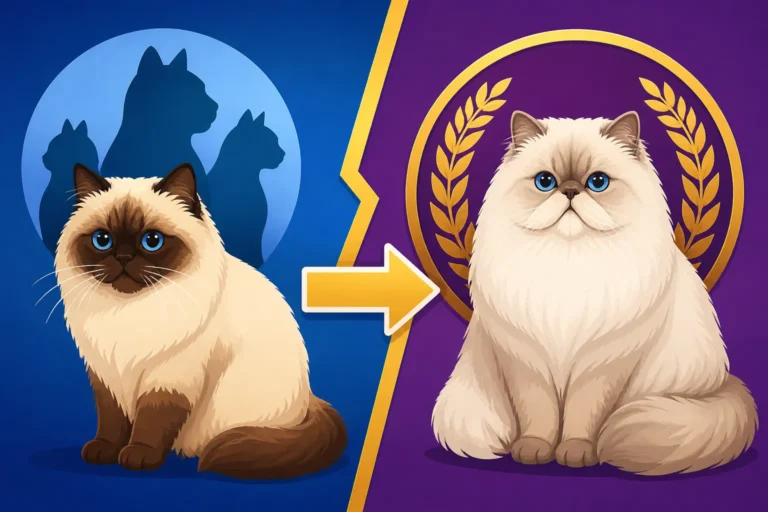
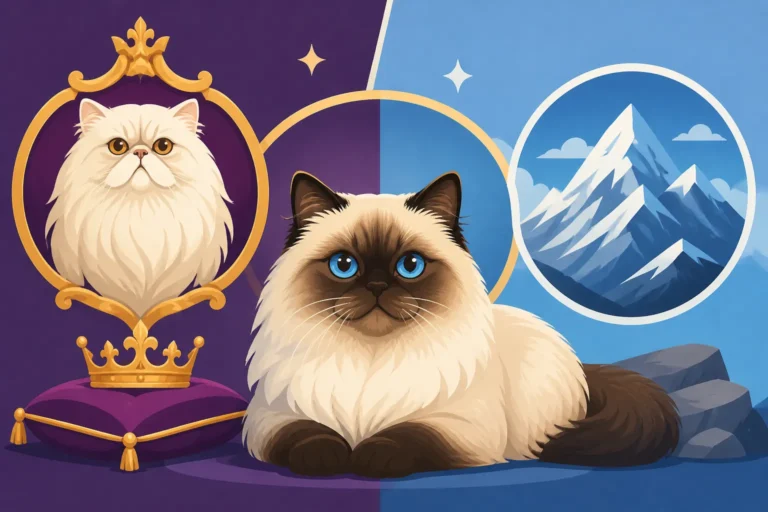
The Himalayan cat, often affectionately called a "Himmie," is renowned for its striking colorpoint pattern. This isn't just a random splash of color; it's a genetic masterpiece, a captivating blend of the Siamese cat's distinctive markings and the Persian cat's luxurious long coat and cobby body type. Understanding this pattern is key to appreciating why their points are so crucial to their breed standard.
The Thermosensitive Gene: Why Points Form
At the heart of the Himalayan's color lies a fascinating genetic trait: a temperature-sensitive enzyme. Essentially, this enzyme, responsible for producing pigment, only works efficiently in cooler parts of the cat's body. Imagine your Himmie's body temperature as a landscape, with warmer areas being the core and cooler areas being the extremities. This means that the warmer parts of their body – their torso, belly, and usually their chest – produce very little pigment, resulting in a pale, creamy, or even pristine white body coat.
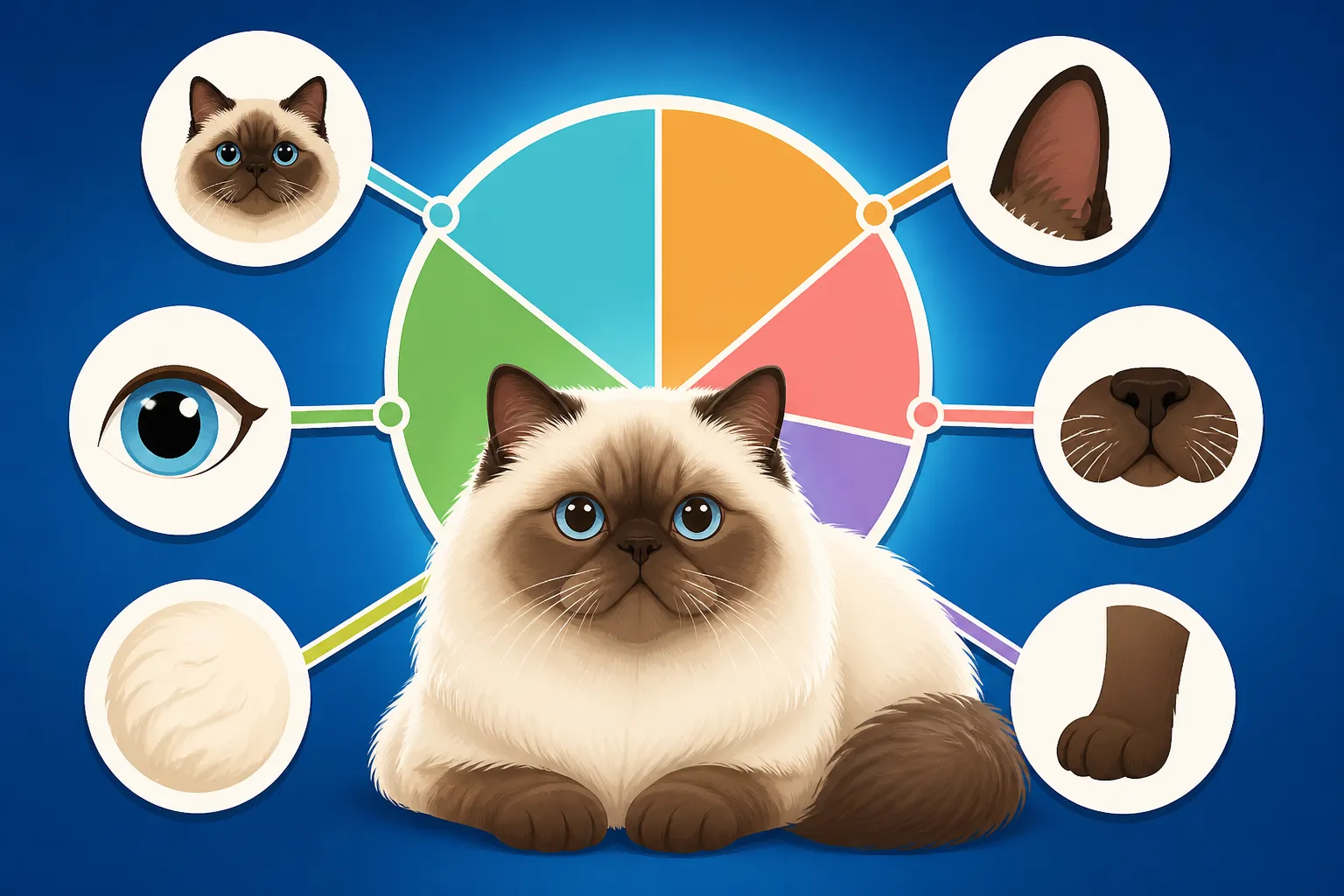
Conversely, the cooler regions – the ears, mask (face), paws, and tail – receive more pigment, creating those vivid, contrasting "points." It's a natural temperature map etched onto their fur! This also explains why every Himalayan kitten is born almost entirely white; they've been cozy and warm inside their mother's womb. It's only after they are exposed to the cooler outside world that their points gradually start to emerge and deepen, a magical transformation that unfolds over their first few weeks and months. You can almost see the science happening right before your eyes as their little ears and tails begin to show their true colors.
The Genetic Legacy: Siamese and Persian Contributions
The Himalayan's existence is a testament to selective breeding, merging the best of two beloved breeds. From the Siamese, they inherited that stunning colorpoint gene and those piercing blue eyes. The Siamese are, after all, the original masters of the point pattern in the cat world. Breeders specifically sought out the intensity of those deep, rich points and the captivating blue gaze that makes every Himmie so alluring.
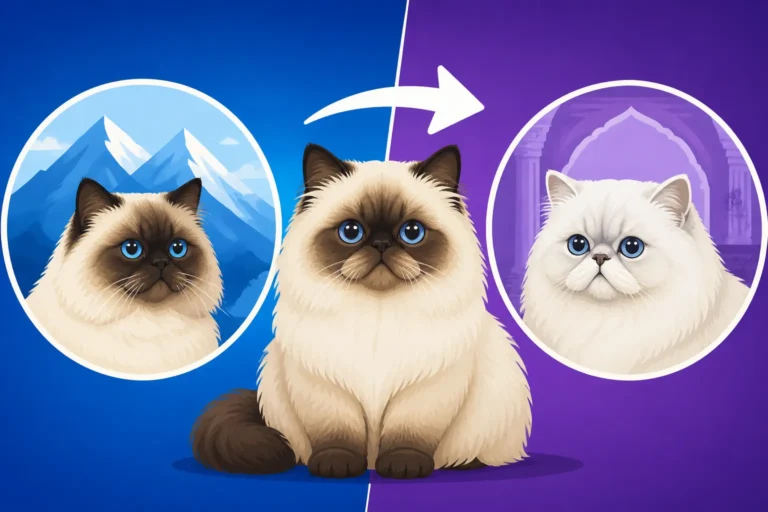
However, the Himalayan isn't just a long-haired Siamese. Oh no, far from it! The Persian lineage gifted them their signature long, flowing coat, their robust, cobby body, and that wonderfully docile, sweet temperament. When you look at a Himalayan, you're truly seeing a harmonious blend – the elegance of the Persian form combined with the exotic beauty of the Siamese coloring. This dual heritage means that while the points themselves are genetically Siamese, their presentation – the quality of the coat, the roundness of the eyes, the overall structure – is judged by the Persian standard. This can sometimes be a point of confusion for new owners or those unfamiliar with the breed's history, as their identity is intrinsically linked to both parent breeds. The Himalayan Was Made at Harvard in the 1930s is a fascinating read on this history.
The Core Point Colors: Traditional and Enduring
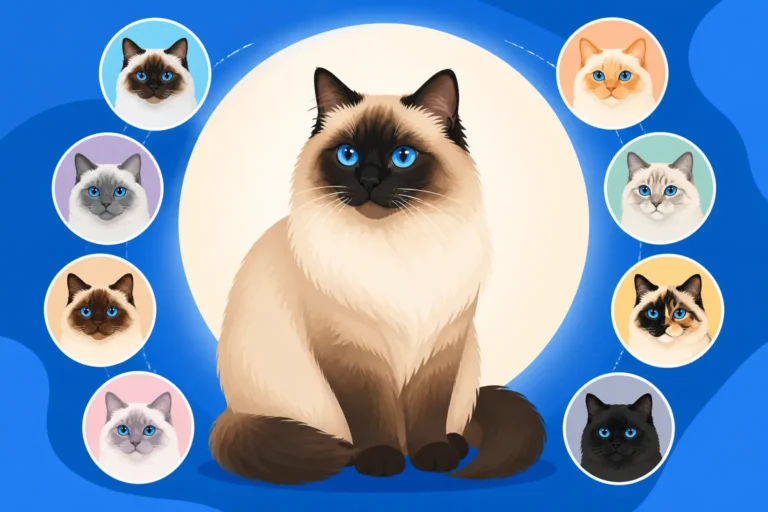
When we talk about Himalayan points, there are several foundational colors that are universally recognized and cherished. These are the classic hues that have defined the breed for decades, each with its own charm and appeal.
Seal Point: The Classic Dark Contrast
The Seal Point is arguably the most recognizable and traditional of all Himalayan colors. Imagine a cat with a creamy or fawn-colored body that provides a dramatic backdrop for intensely dark, almost black-brown points. The contrast is what truly makes a Seal Point pop. Their ears, face mask, legs, and tail are a rich, deep seal brown, sometimes so dark they appear black. The nose leather and paw pads will match this deep brown color, making for a truly cohesive and striking appearance.
What's really interesting about Seal Points is how their color develops. As kittens, their points start quite light, but they deepen significantly with age, often becoming almost solid by the time they reach adulthood, especially if they live in a cooler environment. This deepening of color isn't a flaw; it's a natural progression that adds to their majestic presence. A well-contrasted Seal Point is a true marvel, and it's a color that has captivated cat enthusiasts for generations. How Dark a Seal Point Himalayan's Mask Runs explores this in detail.
Blue Point: A Softer, Smoky Hue
For those who prefer a slightly less intense contrast, the Blue Point Himalayan offers a breathtaking alternative. Here, the points are a soft, smoky blue-gray, reminiscent of twilight. The body coat is typically a cool white or bluish-white, creating a gentle yet distinct contrast against the points. The nose leather and paw pads will reflect this cooler tone, appearing slate gray or bluish-gray.
Blue Points often have a serene, almost ethereal quality about them. Their lighter coloring can make their piercing blue eyes stand out even more. Just like Seal Points, the Blue Points will also deepen in color over time, but they maintain that characteristic soft, smoky blue rather than turning dark brown. They offer a beautiful, subtle elegance that many find incredibly appealing. The standard really looks for that clear, even blue tone in the points, without any muddiness or streaks, ensuring a clean and sophisticated look. How a Blue Point Himalayan's Body Coat Reads provides more insight into their unique coloring.
Chocolate Point: The Warm Brown Alternative
The Chocolate Point offers a beautiful, warm brown alternative to the classic Seal Point. Instead of the dark, almost black-brown of a Seal, Chocolate Points feature rich, milk chocolate-colored points. The body coat usually remains a warmer ivory or cream, providing a lovely, inviting contrast. Their nose leather and paw pads are a warm, cinnamon-pink or milk chocolate brown, tying the whole look together beautifully.
These Himalayans have a truly delectable appearance, often described as having a "mocha" or "cocoa" hue. The challenge with Chocolate Points, from a breeding perspective, is that the chocolate gene is a recessive dilute of black, meaning both parents must carry the gene to produce a chocolate kitten. This can make them a bit rarer and sometimes harder to find than Seal or Blue Points. Breeders strive for a clear, rich chocolate color, free from any hint of black or grayish tones, to meet the standard's exacting requirements.
Lilac Point: The Delicate Lavender Gray
If you’re looking for something truly exquisite and delicate, the Lilac Point Himalayan is a vision. This is the palest of all the point colors, featuring points that are a lovely, frosty pinkish-gray, often described as lavender-gray. Their body coat is an almost pure white, giving them an incredibly ethereal and refined appearance. The nose leather and paw pads are a delicate lavender-pink.
Lilac Points are a dilute of the chocolate color, making them quite rare and highly prized. They possess a soft, elegant beauty that is simply captivating. Because their points are so pale, breeders pay close attention to ensuring a clear, even tone, avoiding any creaminess or muddiness in the points that could detract from their delicate hue. A true Lilac Point Himalayan is a stunning example of selective breeding and a testament to the wide array of colors the point gene can produce. Why a Lilac Point Himalayan Is the Palest of All elaborates on the beauty and rarity of this color.
Beyond the Basics: Patterned and Dilute Points
While the core point colors are beautiful in their simplicity, the Himalayan standard also recognizes more complex patterns and additional dilute variations that add incredible depth and variety to the breed. These can be particularly striking and often lead to breathtakingly unique cats.
Flame Point: The Fiery Red-Cream Spectrum
The Flame Point, sometimes referred to as Red Point or Cream Point (though Cream Point is technically its own distinct category, we’ll dive into that next), brings a vibrant warmth to the Himalayan palette. These cats have points ranging from a warm apricot to a fiery red-orange. Their body coat is typically a creamy white, which can sometimes have patches of red or cream "blushing," especially on older cats. The nose leather and paw pads are usually a rose pink.
Flame Points often carry a certain spark of personality that matches their coloring. It's worth noting that due to the genetics of red coloration in cats, most Flame Point Himalayans are male. Females are possible but require specific genetic combinations. The intensity of the red can vary, from a softer, peachy tone to a deep, vibrant flame. The standard aims for good, clear color in the points with minimal "barring" or striping, although some degree of striping is often accepted given the genetic nature of red.
Cream Point: Soft, Subdued Elegance
Closely related to the Flame Point, the Cream Point Himalayan presents an even softer, more subdued version of the red gene. Instead of fiery red, their points are a delicate, pale cream, often described as a warm, buttery off-white. Their body coat is usually a pristine white, creating a subtle, almost monochromatic look with just a hint of warmth in the points. The nose leather and paw pads are a soft, rose-pink.
Cream Points exude an understated elegance. They don't have the dramatic contrast of a Seal Point or the vibrant intensity of a Flame Point, but their gentle beauty is captivating in its own right. Like Flame Points, many Cream Point Himalayans are male. Breeders work to ensure the cream points are clear and even, without any strong red patches or muddiness, maintaining that soft, harmonious overall appearance. This is a cat that really embodies quiet sophistication.
Tortie Point: The Marbled Mystery
Tortie Points are truly special, offering a kaleidoscope of colors within their points. "Tortie" refers to tortoiseshell, meaning their points display patches of red (or cream) mixed with either seal (black-brown), blue (gray), or chocolate (brown) colors. So, you might see a cat with Seal Tortie Points, Blue Tortie Points, or Chocolate Tortie Points. Their body coat typically remains a pale cream or white, providing a canvas for their unique point artistry. The nose leather and paw pads might be mottled pink and paw-color, reflecting the mix of colors.
Tortie Point Himalayans are almost exclusively female, a fascinating genetic quirk related to the X chromosome that carries the orange gene. Each Tortie Point is a unique work of art; no two will ever have the exact same distribution of colors in their points. The standard looks for a clear, distinct patching of color, rather than a muddy or blended appearance, creating a beautiful marbled effect. Owning a Tortie Point is like having a living, breathing abstract painting in your home. Why a Tortie Point Himalayan Is Always Female is a wonderful read to understand the genetics behind this.
Lynx Point: Stripes on the Extremities
For those who love a touch of the wild, the Lynx Point Himalayan is a truly captivating choice. "Lynx" refers to tabby markings, which means these cats have distinct tabby stripes (like those of a wild cat) on their points. You'll see rings on their tail, leg banding, and distinct "M" markings on their forehead, often with eye pencil lines and thumbprints on the back of their ears. The points themselves can be any of the primary colors: Seal Lynx Point, Blue Lynx Point, Chocolate Lynx Point, Lilac Lynx Point, Flame Lynx Point, or Cream Lynx Point. Their body coat will still be pale, but can sometimes show very faint ghost tabby markings. Their nose leather will be brick red rimmed with the point color, and their paw pads will match the point color.
Lynx Points offer a striking combination of the Himalayan's luxurious coat and docile nature with the exotic beauty of tabby markings. The standard seeks clear, well-defined striping in the points, ensuring the tabby pattern is evident and crisp. These cats are particularly stunning, adding another layer of visual interest to the already gorgeous Himalayan. You can imagine browsing cat supplies on Chewy and seeing one of these magnificent creatures on a package!
Judging Points: What the Standard Looks For
When a Himalayan steps into the show ring, its points are under intense scrutiny. It’s not just about having the right colors; it’s about the quality and presentation of those colors according to the specific breed standard.
Color and Contrast: The Pillars of Point Perfection
One of the most critical aspects judges evaluate is the richness and depth of the point color itself, alongside the starkness of the contrast with the body color. For a Seal Point, the judges want to see a deep, dark seal brown that is consistent across all points – ears, mask, legs, and tail – without any lighter patches or fading. More importantly, this deep color needs to stand out sharply against a pale, creamy body. There shouldn’t be a gradual blend; the transition from body to point should be clear and distinct.
Think of it like a perfectly composed photograph where the subject (the points) pops against a crisp background (the body). For Blue Points, it’s about that true, smoky blue, not a muddy gray or a faded shadow. For Chocolate Points, it's about the warm, rich milk chocolate, free from any blackish tones. Lilac Points need that delicate, frosty pinkish-gray. Any deviation from the pure, expected hue can lead to deductions. The ideal is a vibrant, clear, and unblemished point color that perfectly embodies its designated category. Why a Poorly Contrasted Himalayan Loses in the Ring highlights the importance of this.
Evenness and Distribution: Symmetry is Key
Beyond the color itself, the evenness and distribution of the points are paramount. Judges look for symmetry. The color should be uniform across all the points – the ears should match the mask, which should match the legs, and all should perfectly complement the tail. You wouldn't want one ear to be darker than the other, or one leg to have a weaker color than the rest.
Furthermore, the "mask" on the face needs to be well-defined and proportionate, extending gracefully from the nose, around the eyes, and ideally tapering slightly towards the cheeks, without creeping too far up the forehead or under the chin. The leg points should extend well up the leg, not just cover the paws. And the tail should be fully colored, with no lighter patches or rings (unless it's a Lynx Point, where the rings are part of the pattern!). Any unevenness or patchiness in color distribution across the points is considered a fault, as it detracts from the overall harmonious aesthetic that the standard demands.
Body Color: The Importance of a Pale Canvas
While all the focus is often on the dramatic points, the body color of a Himalayan is equally important, acting as the perfect canvas that allows the points to truly shine. The standard dictates that the body color should be as light as possible, providing maximum contrast with the points. For Seal, Blue, and Chocolate Points, the ideal body color is a creamy or fawn shade. For Lilac and Cream Points, a purer white or off-white is preferred.
Any "shading" or "smudging" on the body coat, especially down the back or flanks, is generally considered undesirable. This shading, often a result of the cat being in a cooler environment, can make the contrast less stark and blur the lines between body and points. Judges want that clean, clear separation. A pristine, unblemished pale body coat allows the rich point colors to truly pop and showcase the stunning genetic design of the Himalayan. Maintaining this pale body coat often involves careful environmental management to avoid darkening. Why a Himalayan's Body Coat Should Stay Light goes into more detail about this specific aspect of the standard.
Factors Influencing Point Expression
The beauty of a Himalayan's points isn't just about genetics; it's also a dynamic interplay with their environment and even their age. Understanding these factors can help owners appreciate why their Himmie's coat might change over time.
Temperature's Role: Darker in Colder Climates
As we touched on earlier, the Himalayan's colorpoint gene is thermosensitive. This means that the ambient temperature of their living environment plays a significant role in how dark their points become, and even how much shading appears on their body. A Himalayan living in a colder climate, or one that consistently seeks out cooler spots in the house (like a tiled floor or even an empty tub), will generally develop darker, more intense points and potentially more body shading than one living in a consistently warm environment.
This is why, for show cats, breeders might meticulously control the temperature of their cattery to ensure the ideal point and body color contrast. For pet owners, it simply means understanding that your cat's points might deepen naturally if your home is on the cooler side. It's not a flaw; it's just their unique genetics responding to their surroundings! It's a fun conversation starter, explaining to guests why your Himmie looks darker in winter. Why a Himalayan in a Cold House Darkens All Over explores this fascinating phenomenon in depth.
Age and Hormones: The Deepening of Color Over Time
It's a common observation among Himalayan owners: their cat's points don't stay the same color their entire life. As a Himalayan kitten matures into an adult, and then into a senior, their points will almost invariably deepen and spread. What started as light, delicate points on a kitten can become rich and intense in adulthood, and quite often, an old Himalayan might appear almost solid-colored with just a hint of its pale body coat remaining.
This deepening is a natural part of the aging process, influenced by a combination of minor temperature fluctuations over years, and hormonal changes. It's a gradual process, not a sudden shift. Similarly, a cat that has been spayed or neutered might also experience some changes in coat texture and point intensity. While breeders strive for excellent point contrast in young, mature adults for show purposes, pet owners should simply enjoy the evolving beauty of their cat's coat. It’s a wonderful journey to watch their coloring develop over the years. Why a Himalayan's Points Deepen Every Year It Lives delves into this natural progression.
Grooming and Health: Maintaining Point Vibrancy
While genetics and temperature lay the groundwork, proper care, grooming, and overall health also play a crucial role in maintaining the vibrancy and beauty of a Himalayan's points and coat. A healthy cat with a well-maintained coat will always look its best. This includes a balanced diet rich in essential fatty acids and proteins, which contribute to healthy skin and a lustrous coat. You'll find many specialized cat foods on platforms like Chewy that cater to long-haired breeds, often formulated to support coat health.
Regular grooming is non-negotiable for a Himalayan. Their long, dense coat can easily mat, and mats can pull on the skin, causing discomfort and even skin issues that affect coat quality. Daily combing helps distribute natural oils, remove loose hair, and prevent matting, ensuring the coat remains healthy and capable of displaying its beautiful point colors without obstruction. Beyond the coat, good overall health, including proper dental care and regular vet check-ups, ensures the cat's body can dedicate its resources to maintaining a splendid coat. A stressed or unhealthy cat may show dullness in their coat, or even changes in color in extreme cases. For a beautiful Himalayan, daily care is truly a labor of love that pays off in magnificent aesthetics. The Daily Comb a Himalayan Cannot Skip is an essential guide for any Himmie owner.
Himalayan Point Color Characteristics
Here's a quick overview of the main Himalayan point colors and their distinguishing features:
| Point Color | Point Hue | Body Coat Color | Nose Leather & Paw Pads | Common Characteristics |
|---|---|---|---|---|
| Seal Point | Dark, rich seal brown (almost black) | Cream to fawn | Dark brown / black | High contrast, deepens significantly with age. |
| Blue Point | Soft, smoky blue-gray | Cool white to bluish-white | Slate gray / bluish-gray | Gentle contrast, ethereal quality, maintains smoky tone. |
| Chocolate Point | Warm, milk chocolate brown | Ivory to cream | Cinnamon-pink / milk chocolate | Rich, warm tones, often rarer due to recessive gene. |
| Lilac Point | Frosty pinkish-gray (lavender-gray) | Pure white | Lavender-pink | Palest points, delicate, very refined, quite rare. |
| Flame Point | Apricot to fiery red-orange | Creamy white | Rose pink | Vibrant, warm points, most are male, can have body blushing. |
| Cream Point | Pale, delicate cream | Pristine white | Rose pink | Subtly elegant, softest tones, most are male. |
| Tortie Point | Patches of red/cream mixed with seal/blue/chocolate | Pale cream to white | Mottled pink and point color | Unique marbled pattern, almost exclusively female. |
| Lynx Point | Tabby stripes on points of any primary color | Pale, faint ghost tabby acceptable | Brick red rimmed with point color / point color | Distinct "M" on forehead, rings on tail, leg banding. |
Disclaimer
This article is for general informational purposes only and does not constitute professional advice. Laws, prices and regulations vary by location and change over time. Consult a qualified professional for guidance on your specific situation.