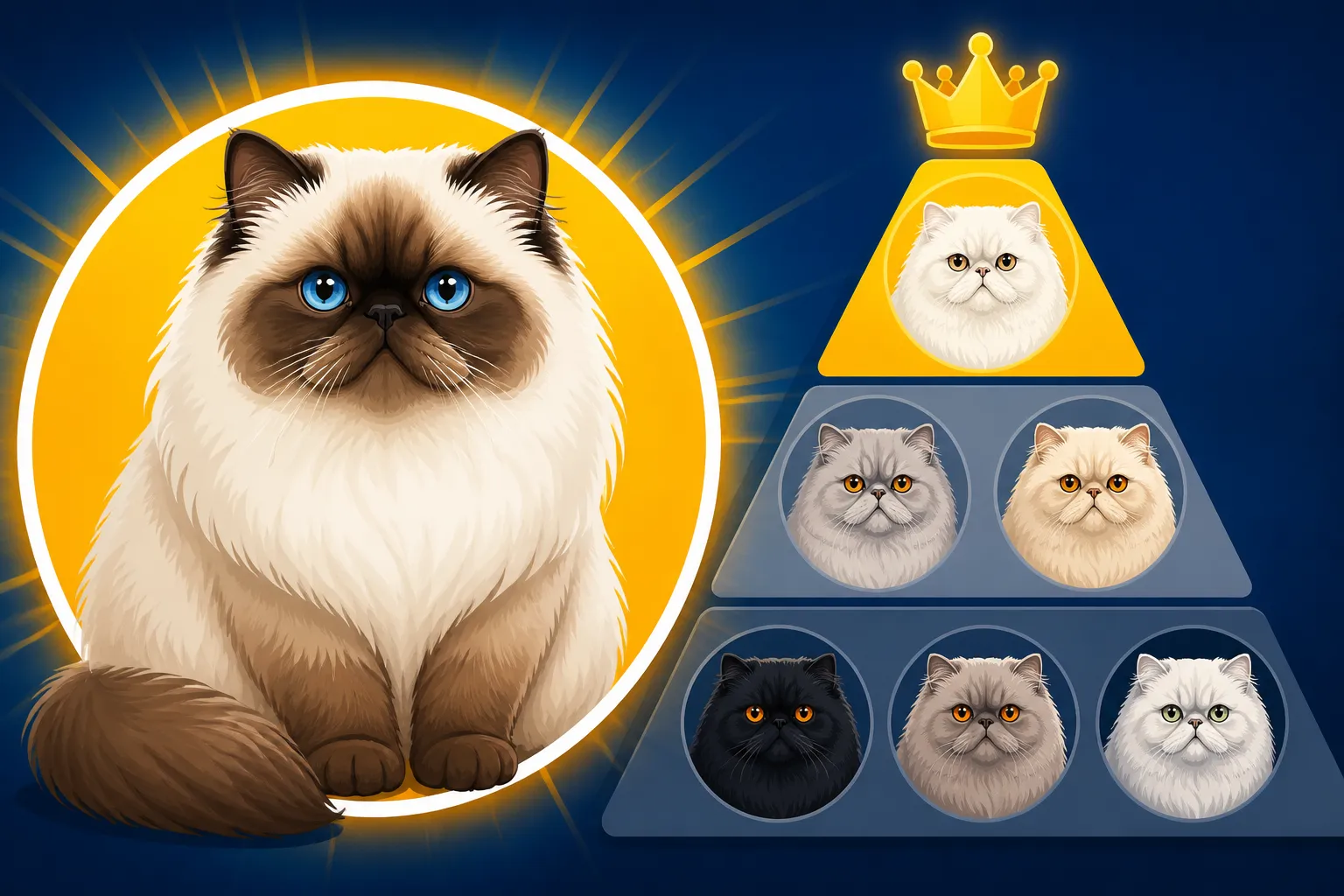
How the Himalayan Ranks Inside the Persian Breed
It can be incredibly confusing when you fall in love with a stunning Himalayan cat, only to hear conflicting information about its actual breed status. Is it a separate breed? Is it a fancy type of Persian? This guide is here to untangle all that jargon and explain exactly how the Himalayan is recognized and categorized within the larger world of pedigree cats, particularly its unique relationship with the Persian breed.
The Historical Blending: When Himalayans Became Persians
The story of the Himalayan's place within the Persian breed is a fascinating one, rooted deeply in the history of cat fancy and a desire for administrative simplification. For many years, the Himalayan was proudly recognized as its own distinct breed, celebrated for its unique combination of Persian type and Siamese colorpoint pattern. But then, things changed, and this change caused a bit of a stir, leading to the classification debates we still encounter today.
The Original Vision for the Himalayan
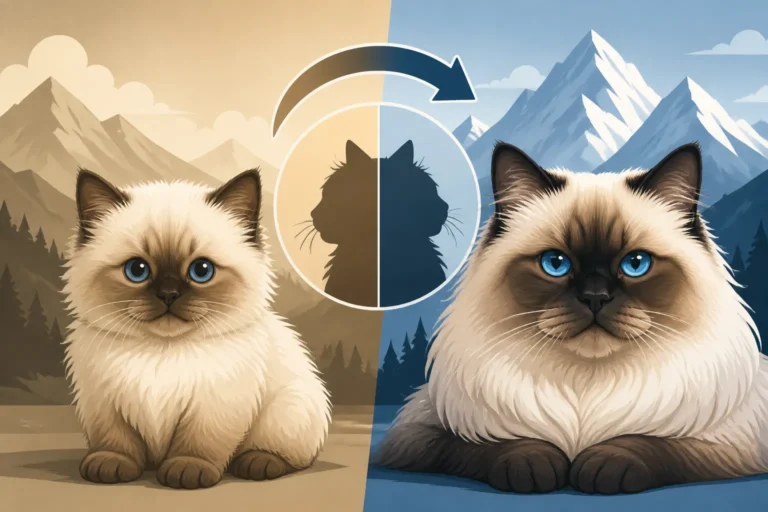
When the Himalayan was first intentionally developed in the 1930s, it was a groundbreaking achievement in feline genetics. Breeders like Clyde Keeler and Virginia Cobb, with later significant contributions from Marguerita Goforth, set out to create a cat that possessed the luxurious long coat, cobby body, and sweet expression of the Persian, but with the striking blue eyes and pointed coloration of the Siamese. This wasn't an accident; it was a deliberate, scientific endeavor. They saw it as a new, exciting breed, a harmonious blend of two beloved feline types. The Himalayan Was Made at Harvard in the 1930s dives deeper into this origin story. For decades, it thrived as its own entity, gaining popularity and a dedicated following of enthusiasts who adored its distinct characteristics.
The CFA Merger of 1984
The turning point for the Himalayan’s independent breed status in North America came in 1984, when the Cat Fanciers' Association (CFA), one of the largest cat registries, made a significant decision. They reclassified the Himalayan not as a separate breed, but as a "colorpoint division" of the Persian breed. This meant that from CFA's perspective, a Himalayan wasn't its own breed anymore; it was a Persian with a specific coat pattern and eye color. Imagine the surprise and, for some, the dismay among breeders who had worked so hard to establish the Himalayan as distinct!
This move was largely driven by a desire for consistency and simplification within the show system. The argument was that genetically, structurally, and temperamentally, the Himalayan was essentially a Persian, differing only in its color genes. The thinking went, why have two separate breeds when one is merely a color variant of the other? This administrative change, while perhaps logical on paper, profoundly impacted how the Himalayan was perceived and shown. Many long-time Himalayan breeders felt their unique creation had been absorbed, almost diluted, into the larger Persian umbrella. Understanding Why CFA Made the Himalayan a Persian Division in 1984 helps clarify the motivations behind this pivotal moment in cat fancy.
What Defines a "Persian-Himalayan" in the Show Ring
If you're looking at a Himalayan in a CFA show, you won't see it competing against other breeds. Instead, it's judged squarely within the Persian category. This means that when a judge looks at a stunning Flame Point Himalayan, they're not just evaluating its beautiful points; they're scrutinizing every aspect of its conformation against the strict Persian breed standard.
Conformation and Body Type
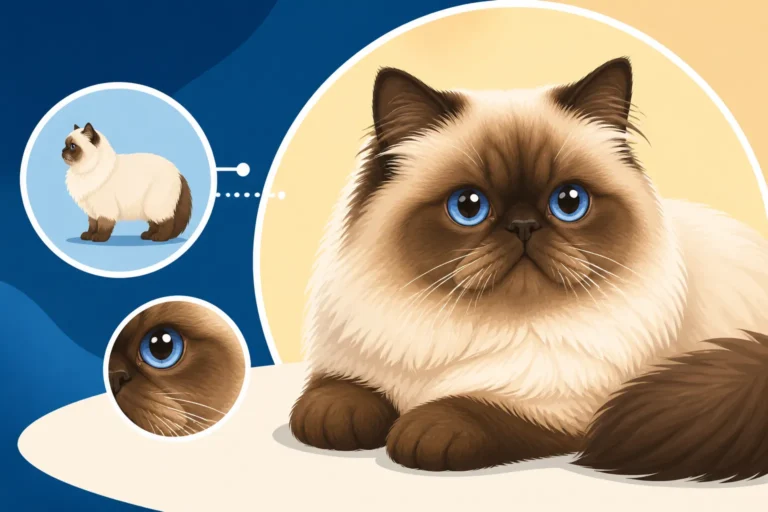
When it comes to the show ring, a Himalayan is expected to embody the classic Persian ideal. This means a cobby body, which is short, stocky, and well-rounded, with broad shoulders and rump. Think of a brick on short, thick legs. The head should be large and round, set on a short, thick neck. Judges are looking for substantial bone structure and a general impression of robustness and power. The short, heavily boned legs support a large, substantial cat. Even the tail, which should be relatively short and fluffy, needs to be in proportion to the cobby body. Every aspect of its physical presence is measured against the established Persian blueprint. This is crucial because a Himalayan that deviates too much from this core Persian structure, even if it has perfect points, will not fare well.
Beyond the overall build, the face is a huge part of the Persian standard, and by extension, the Himalayan. The breed standard calls for a dramatically flat face, or "peke face," with a short, broad nose that ideally sits no lower than the top of the lower eyelid. The eyes must be large, round, and full, set wide apart and giving a sweet, open expression. The ears are expected to be small, rounded at the tips, and set low on the head, far apart, fitting into the overall roundness of the head. Even the jaw and bite are assessed; a proper Persian-type bite is essential. What the Persian Standard Asks of a Himalayan delves into these precise details that are paramount for any show-quality Persian, including its Himalayan division.
Coat Quality and Colorpoint Pattern
While the body must be pure Persian, the coat is where the Himalayan truly distinguishes itself within that breed. It must possess the long, flowing, thick double coat characteristic of the Persian, but with the added element of the colorpoint pattern. This pattern means the cat's body is a lighter color, while the "points" – the ears, mask, paws, and tail – are darker. The contrast between the points and the body is paramount. Judges want to see a clear, distinct difference, not a muddy blend. A Himalayan's Point Color Is a Record of Where It Sleeps explains how temperature actually dictates the depth and distribution of these colors.
The specific point colors are also carefully evaluated. Himalayans come in a wide array of point colors, including seal, blue, chocolate, lilac, flame (red), cream, tortie, and lynx points. Each color has its own set of expectations for shade, richness, and consistency. For instance, a Seal Point should have dense, dark brown points, while a Blue Point should have slate blue points. The body color should be a corresponding shade of cream or fawn, with no shading or barring. The eyes must be vivid blue. Any other eye color is a disqualification. How Many Point Colors the Himalayan Division Recognizes illustrates the broad palette available. This makes the Himalayan a beautiful challenge for breeders, as they must produce a cat that excels in both Persian type and precise point coloration.
| Feature | Persian Standard Expectation (for Himalayan) |
|---|---|
| Body Type | Cobby, short, muscular, well-rounded |
| Head | Large, round, broad |
| Face | Flat (Peke-face type), short, broad nose |
| Eyes | Large, round, full, wide set, vivid blue |
| Ears | Small, rounded, low set, wide apart |
| Coat | Long, flowing, dense double coat |
| Color | Colorpoint pattern (dark points, light body) |
| Tail | Short, proportionate, full plume |
The Genetics: How a Persian Becomes a Himalayan
The classification of the Himalayan as a Persian division isn't just an arbitrary administrative decision; it's rooted in the fundamental genetics of these beautiful cats. Understanding the underlying genetic mechanisms helps clarify why the Himalayan is considered a variant rather than a completely separate species, and why Every Himalayan Inherits Two Disease Lists, Not One.
The Pointed Gene
At the heart of the Himalayan's unique appearance is the "pointed" gene, often referred to as the Siamese gene. This gene is responsible for the stunning colorpoint pattern – those darker extremities (ears, mask, paws, tail) and the lighter body. Genetically, this gene affects pigment production, making it temperature-sensitive. In colder parts of the cat's body, more pigment is expressed, leading to the darker points. In warmer areas (the body core), pigment production is inhibited, resulting in the paler cream or fawn body coat.
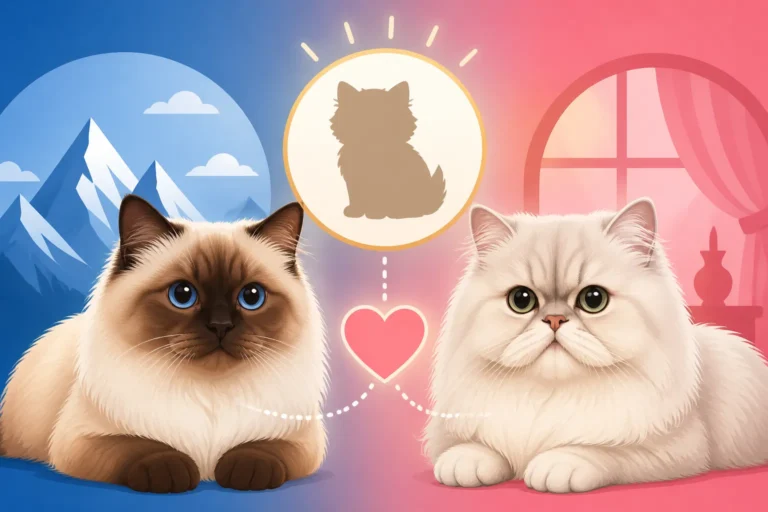
A Himalayan cat must inherit two copies of this recessive gene, one from each parent, to display the pointed pattern. If a cat inherits only one copy, it will not be pointed itself, but it will be a "carrier" of the gene. This is why a solid-colored Persian can sometimes produce Himalayan kittens if it carries the gene and is bred with another carrier or a Himalayan. This genetic link is precisely why CFA saw fit to merge the breeds; the Himalayan is, in essence, a Persian with a specific genetic switch flipped for color. It's a testament to the powerful influence of just a few genes on a cat's outward appearance.
Breeding Himalayans and Persians
Because of this genetic relationship, it's perfectly acceptable, and even common, for Himalayans to be bred with solid Persians within CFA-recognized breeding programs. In fact, such outcrosses are often encouraged to maintain genetic diversity, improve type, and ensure the health of the lines. When a Himalayan is bred to a solid Persian that carries the pointed gene, the resulting litter can contain both pointed (Himalayan) and solid-colored (Persian) kittens. This further cements the idea that they are two expressions of the same underlying breed. Why a Himalayan and a Persian May Be Mated goes into more detail on the benefits and considerations of these pairings.
However, the solid Persian parent used in such a cross must itself adhere to the Persian standard in every way, ensuring that the offspring maintain the desired conformation. This careful selection ensures that the hallmark Persian traits, from head shape to bone structure, are preserved across the colorpoint division. It's a delicate balance, requiring breeders to have a deep understanding of genetics and breed standards to consistently produce healthy, beautiful cats that meet the expectations of both point coloration and Persian type. When choosing a cat for breeding, many breeders will check its genetic background for health tests like PKD1 Came Down the Persian Side of a Himalayan to ensure the healthiest lines.
The Owner's Perspective: Living With a "Persian-Himalayan"
For the everyday owner, whether their beloved cat is classified as a "Himalayan" or a "Persian colorpoint division" might feel like a minor semantic detail. What truly matters is the experience of living with these affectionate, beautiful felines. And in that regard, owning a Himalayan definitely has its own set of joyful quirks and specific care requirements, regardless of what the registration papers say.
Daily Care and Grooming Needs
Let's be real, that glorious, flowing coat that makes a Himalayan so stunning is also a full-time commitment. This isn't a wash-and-wear kind of cat! Just like their solid Persian counterparts, Himalayans require daily grooming to prevent mats and tangles. Their dense double coat, especially around the ruff, armpits, and britches, can quickly become matted if neglected, leading to discomfort and potential skin issues. A good quality steel comb is an absolute necessity, and you'll spend a significant chunk of time each day gently working through their fur. Many dedicated Himalayan owners make this a bonding ritual, a quiet time shared with their furry companion. You might find yourself regularly restocking on grooming tools and special shampoos from your favorite pet supply retailer like Chewy, just to keep that magnificent coat pristine.
Beyond the coat, the unique facial structure inherited from their Persian lineage means special attention to their eyes and nose. Flat-faced cats are prone to tear staining, so a gentle daily wipe around the eyes is essential to keep them clean and prevent skin irritation. Their nasal folds, if present, also need regular cleaning and drying to avoid moisture buildup. It's not a chore, it's just part of their routine, and your cat will quickly learn to appreciate it.
Temperament and Personality
Despite the Siamese influence on their coloring, the Himalayan's personality leans heavily towards its Persian side. They are generally calm, sweet-natured, and incredibly affectionate cats. They love being close to their humans, often content to curl up on a lap or beside you on the sofa for hours. They're not typically high-energy, demanding attention with boisterous play like some of the more active breeds. Instead, they prefer quiet companionship and gentle interaction.
However, they do retain a touch of the Siamese vocalization, making them a little more talkative than a pure Persian. They might offer soft chirps or gentle trills to communicate their desires, a charming trait that delights many owners. While not as overtly "chatty" as a Siamese, they definitely have opinions and aren't shy about expressing them in their soft, melodious way. This balance of a quiet, loving nature with a hint of vocal personality makes them wonderfully engaging companions. The Himalayan Is a Lap Cat That Answers Back perfectly encapsulates this delightful mix.
Health Considerations and Lifespan
Just like any breed, Himalayans come with their own set of health considerations, many of which they share with the broader Persian breed. Their brachycephalic (flat-faced) structure can predispose them to respiratory issues, especially in hot weather, so keeping them cool and comfortable is vital. Their crowded dental structure often means they need earlier and more frequent dental care. And then there's the genetic concern of Polycystic Kidney Disease (PKD), which historically affected Persian lines and therefore can affect Himalayans. Responsible breeders meticulously test their breeding cats for PKD to ensure they are clear. Why a Himalayan Needs Dentals Earlier Than a Siamese and How Early Cysts Show on a Himalayan's Kidney Scan offer deeper dives into these specific health concerns.
Despite these potential challenges, with proper care, a well-bred Himalayan can live a long, fulfilling life, often spanning into their mid-teens. Regular veterinary check-ups, a balanced diet (perhaps with a specially designed bowl for flat-faced cats, easily found on Chewy or other pet sites), and diligent grooming all contribute to their overall well-being. Knowing their lineage means you can be proactive about their health, working closely with your vet to address any potential issues early.
The Continuing Debate: Breed vs. Division
Even decades after CFA's decision, the discussion around the Himalayan's classification hasn't entirely faded. For some, it remains a passionate argument about breed integrity, while for others, it's a matter of practicality and honoring history.
Different Registry Approaches
It's important to remember that not all cat registries around the world follow CFA's lead. While CFA classifies the Himalayan as a colorpoint division of the Persian, other major registries, such as The International Cat Association (TICA), continue to recognize the Himalayan as a distinct breed. This means if you have a Himalayan registered with TICA, its paperwork will explicitly state "Himalayan," whereas a CFA-registered cat's papers will likely say "Persian" with a designation for its colorpoint pattern. Which Registry Prints Persian on a Himalayan's Papers further illustrates this distinction.
This difference in approach can be a source of confusion for new owners and sometimes even for seasoned breeders navigating international show circuits. It highlights that "breed" definitions aren't universally fixed but can vary based on the historical context and administrative philosophy of individual organizations. Ultimately, whether a Himalayan is a "breed" or a "division" often depends on whose rulebook you're reading.
Why the Name "Himalayan" Persists
Despite the official reclassification by some major bodies, the name "Himalayan" has incredible staying power. Breeders, owners, and enthusiasts almost universally refer to these cats as Himalayans, rather than "colorpoint Persians." This isn't just stubbornness; it speaks to the distinct identity and history that the breed developed over decades. The name evokes its unique origins – a blend of two distinct breeds – and its striking appearance. It’s a name that has become synonymous with that specific look and personality.
For many, the distinction goes beyond mere paperwork. They see the Himalayan as a tribute to the dedicated breeders who painstakingly created it. The "Himalayan" name carries a legacy of genetic innovation and a recognition of a truly unique feline creation. While the administrative "ranking" places it within the Persian family, in the hearts and minds of its admirers, the Himalayan stands proudly on its own. It's a testament to the enduring appeal of these beautiful, gentle cats that their original, beloved name continues to thrive, regardless of how formal pedigrees are written.
Disclaimer
This article is for general informational purposes only and does not constitute professional advice. Laws, prices and regulations vary by location and change over time. Consult a qualified professional for guidance on your specific situation.