Why a Himalayan Needs Two Copies of the Point Gene
It can be incredibly confusing to understand why some cats have those distinctive, darker "points" – on their ears, face, paws, and tail – while others don't, even when they come from similar lineage. Many assume it's just a simple color trait, but for a Himalayan to display that stunning, iconic pattern, it's not enough for the gene to just be present; it needs to be there twice over. This guide will walk you through the fascinating genetic mechanics behind the Himalayan's unique coloration, explaining why two copies of the special point gene are absolutely essential for your beloved furball to have its characteristic look.
Understanding the Himalayan Pointed Pattern
When you look at a beautiful Himalayan cat, one of the first things that strikes you is that incredible color contrast: a pale, creamy body offset by darker, richer hues on the extremities. This isn't just a random genetic roll of the dice; it's the result of a very specific, recessive gene working its magic. These darker areas – the "points" – are a hallmark of the breed, giving them that sophisticated, almost regal appearance.
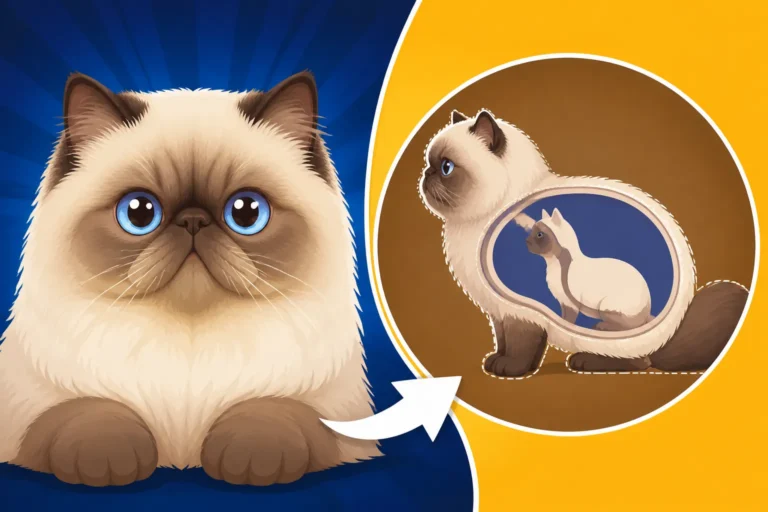
The pointed pattern, often referred to as colorpoint, is a form of temperature-sensitive albinism. What does that mean, exactly? Well, it means the enzymes responsible for producing pigment in the fur only function properly at cooler temperatures. In a Himalayan, the core body temperature is usually warm enough to inhibit this pigment production, resulting in that wonderfully pale body coat. However, the cooler parts of the body – the tips of the ears, the nose and mask area, the lower legs and paws, and the tail – are just cool enough for the pigment to develop, creating those striking, darker points. It's a truly remarkable genetic quirk that makes each Himalayan a living work of art. This is why Why the Cold Parts of a Himalayan Grow Dark Fur is so interesting to explore.
The Basics of Coat Color Genetics in Cats
To truly grasp why two copies are needed, we need a quick dive into basic cat genetics. Think back to your high school biology class – remember dominant and recessive genes? Most traits in cats, from coat length to color, are determined by pairs of genes, with each parent contributing one copy. These copies are called alleles. If an allele is dominant, only one copy is needed for that trait to show up. If it's recessive, a cat needs two copies of that allele – one from each parent – for the trait to be expressed. If a cat only has one copy of a recessive allele and one dominant allele, the dominant trait will show, but the cat will "carry" the recessive one, meaning it can pass it on to its offspring. This foundational understanding is crucial to appreciating the specific genetic journey that led to the Himalayan. It's quite different from what researchers were initially trying to prove when the breed was first developed, as detailed in What the Himalayan Experiment Was Trying to Prove.
The Specific Point Gene (cs) Responsible for Himalayan Coloring
The gene responsible for the Himalayan's pointed pattern is often denoted as 'cs' (for colorpoint, temperature-sensitive). This 'cs' allele is recessive. Now, here's where it gets interesting: the 'cs' allele is part of a larger series of alleles that govern albinism and pigment production. The most "dominant" allele in this series is 'C', which codes for full color, meaning the cat will have a uniform coat color without points.
So, a cat with two 'C' alleles (C/C) will be a full-color cat. A cat with one 'C' and one 'cs' allele (C/cs) will also appear as a full-color cat because 'C' is dominant. However, this cat is a carrier of the point gene. It doesn't show the points itself, but it can pass the 'cs' allele on to its kittens. It's like having a secret, hidden superpower! Only when a cat inherits two copies of the recessive 'cs' allele (cs/cs) does the magic happen, and the temperature-sensitive albinism expresses itself, resulting in that classic Himalayan pointed pattern. This specific gene is the reason for Which Gene Makes a Himalayan Pointed, and it’s a critical piece of the Himalayan identity.
Why Two Copies of the Point Gene Are Absolutely Necessary for a Himalayan
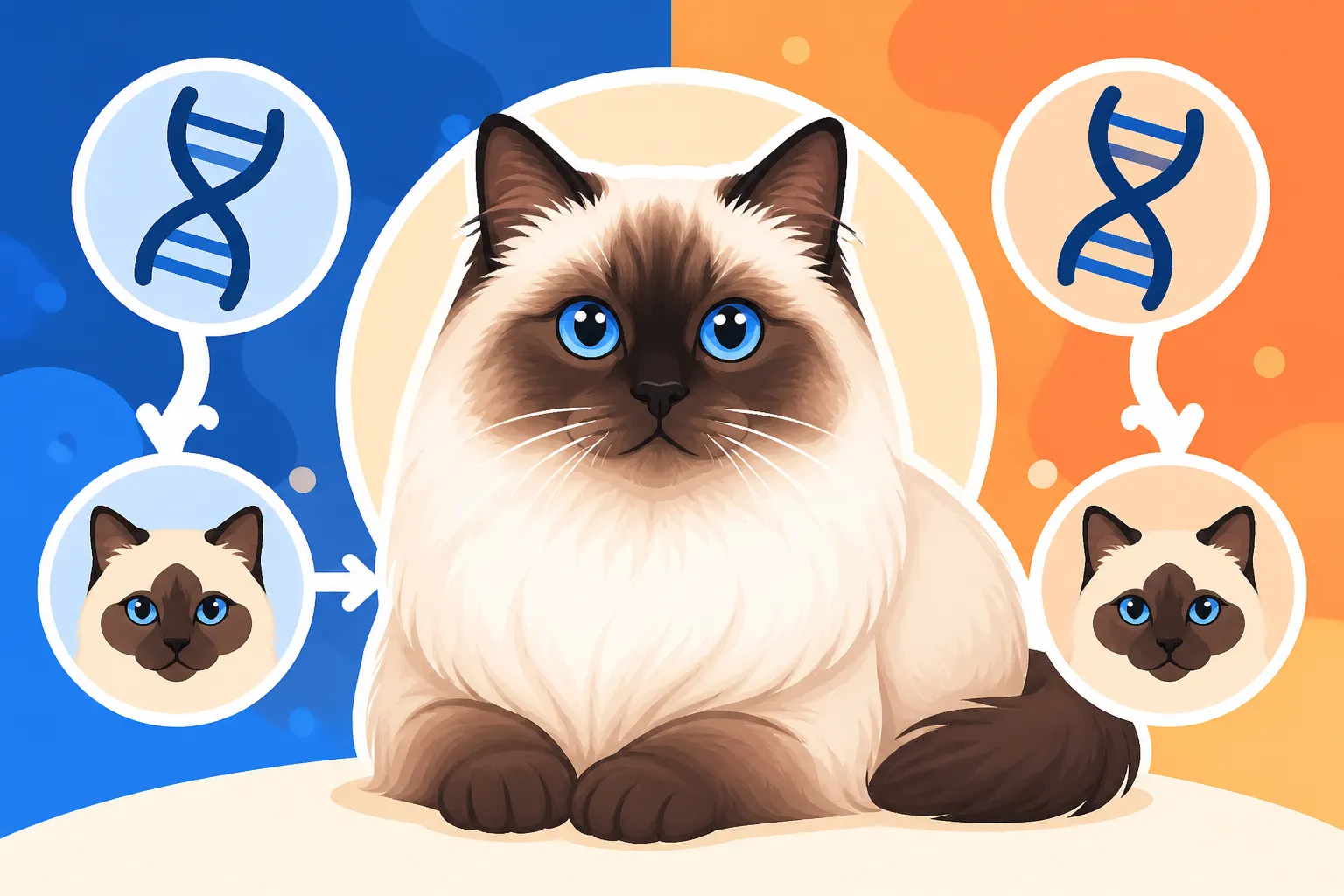
This brings us to the core of the matter: your Himalayan must inherit two copies of that special 'cs' allele to have its characteristic points. One simply isn't enough to override the dominant 'C' allele, which would result in a solid-colored cat. It’s a classic example of recessive inheritance, where both parents must contribute that specific genetic instruction for the trait to visibly manifest.
Imagine it like this: every cat gets two instruction manuals for coat color, one from mom and one from dad. If even one of those manuals says "full color" (the dominant 'C' gene), that's the instruction the cat's body will follow. But if both manuals say "temperature-sensitive points" (two 'cs' genes), then the cat will develop the stunning Himalayan pattern we all adore. Without both 'cs' genes, the beautiful contrast of a Himalayan simply won't appear, even if the cat carries the potential to pass it on. This is why you can sometimes have a solid Persian cat that carries the Himalayan gene hidden, which is a fascinating concept discussed in How a Persian Can Carry the Himalayan Gene Hidden.
The Role of Parental Genes in Point Color Inheritance
Understanding how parents pass on the point gene is vital for breeders and anyone curious about genetics. It's all about the combinations of those 'C' and 'cs' alleles. Let's break down the possibilities:
- Both Parents are Pointed (cs/cs x cs/cs): If both the mother and father are Himalayans and show the pointed pattern, every single kitten in their litter will also be pointed (cs/cs). There's no other allele for them to pass on. It’s a sure bet for pointed babies!
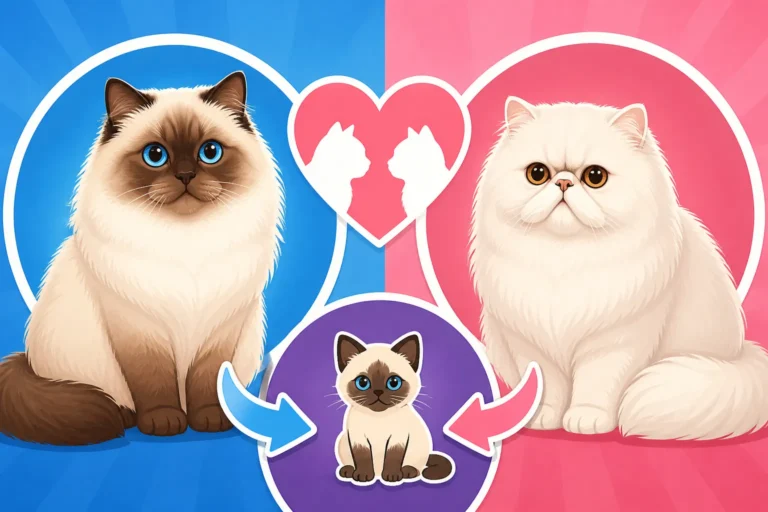
- One Parent is Pointed, One is a Carrier (cs/cs x C/cs): In this scenario, roughly half of the kittens will inherit two 'cs' alleles and be pointed Himalayans. The other half will inherit one 'C' and one 'cs' allele, meaning they will be full-color cats but will carry the point gene. These carriers look like regular Persians but have the potential to produce pointed offspring if bred with another carrier or a pointed cat.
- Both Parents are Carriers (C/cs x C/cs): This is where it gets truly interesting. Both parents appear as full-color cats, but they each carry one hidden 'cs' allele. On average, their litter would look something like this:
- 25% full-color cats (C/C) that do not carry the point gene.
- 50% full-color cats (C/cs) that do carry the point gene.
- 25% pointed Himalayans (cs/cs).
This explains how you can have a litter of kittens from two solid-colored parents, and suddenly, a surprise pointed kitten appears! It's why Whether Two Persians Can Produce a Himalayan is a question with a fascinating answer rooted in recessive genetics.
It’s a beautiful dance of genetics that results in the gorgeous array of kittens we see, and it perfectly illustrates the power of recessive genes.
Distinguishing a Himalayan from a Carrier Cat
Here's the rub: you can't tell a 'carrier' cat just by looking at it. A cat that carries one copy of the point gene (C/cs) will look exactly like any other full-color cat (C/C) in terms of its coat pattern. It won't have the darker points, the pale body, or the signature blue eyes associated with the Himalayan. This is why, for many years, the presence of the point gene could only be inferred by breeding experiments – if a supposedly solid-colored cat produced pointed kittens, you knew it had to be a carrier.
A true Himalayan, on the other hand, displays the points (cs/cs). Their entire appearance shouts "Himalayan" with their light body coat, dark extremities, and piercing blue eyes. The distinction is purely phenotypic (what you see) for the Himalayan, and genotypic (what genes it carries) for the carrier. For breeders, recognizing the difference is paramount for planning litters and understanding the genetic makeup of their cattery.
Implications for Breeding and Genetic Testing
The recessive nature of the point gene has significant implications, especially for ethical breeding practices. Knowing whether a cat is a carrier (C/cs) or a full-color non-carrier (C/C) is crucial for predicting litter outcomes and ensuring that specific traits, like the beautiful Himalayan points, are passed on intentionally. This isn't just about color, but about maintaining breed standards and health.
Responsible breeders utilize genetic testing to confirm the genetic status of their breeding cats. This takes the guesswork out of mating pairs and helps them avoid unexpected outcomes, ensuring the health and desirable traits of future generations. It's not just about the point gene; many other genetic conditions are recessive, making testing an indispensable tool for responsible animal husbandry. This dedication to understanding genetics goes hand-in-hand with ensuring the overall health of the breed, which is why Which Two Tests Belong on Every Himalayan Pedigree is such an important topic for prospective owners and breeders alike.
The Impact on Breeder Decisions and Transparency
For Himalayan breeders, understanding and testing for the point gene (and other genetic markers) isn't just good practice; it's a moral imperative. Imagine a breeder wanting to produce a litter of all pointed kittens. If they unknowingly breed a pointed cat (cs/cs) with a full-color non-carrier (C/C), they will get a litter of beautiful, full-color kittens – but none of them will have points! All those kittens will, however, be carriers (C/cs). This can lead to frustration, wasted breeding cycles, and unexpected results down the line.
Conversely, if a breeder wants to ensure genetic diversity while still having the option for pointed offspring, they might intentionally breed a pointed cat with a known carrier. This allows them to produce both pointed and carrier kittens, expanding their genetic pool while keeping the potential for the signature look. Transparency is key here. Ethical breeders should always be willing to discuss the genetic background of their breeding cats and provide documentation of genetic testing. This gives potential kitten buyers peace of mind and confidence in their new family member's lineage and health. Which Two Certificates a Himalayan Breeder Owes You speaks directly to this level of transparency and trust.
How Genetic Testing Works for the Point Gene
Thankfully, we live in an age where genetic testing for cats is readily available and relatively simple. Gone are the days of guessing! For the point gene, a breeder can typically get a genetic test done with just a simple cheek swab. This non-invasive sample is then sent to a specialized veterinary genetics laboratory.
The lab analyzes the DNA from the swab to determine which alleles of the point gene the cat carries. The results will typically come back as one of three genotypes:
- C/C: This means the cat has two copies of the dominant full-color gene and does not carry the point gene. It will be a full-color cat and cannot produce pointed offspring unless bred with a pointed cat, in which case all offspring will be carriers.
- C/cs: This cat has one dominant full-color gene and one recessive point gene. It will appear as a full-color cat but is a carrier of the point gene. If bred with another carrier or a pointed cat, it can produce pointed offspring.
- cs/cs: This cat has two copies of the recessive point gene. It is a Himalayan, displaying the characteristic pointed pattern and blue eyes. All its offspring will inherit at least one copy of the 'cs' gene.
Many reputable labs offer these tests, and you might even find breed-specific genetic panels through online pet supply retailers like Chewy that can include the point gene testing. This quick, affordable test provides invaluable information for breeders and owners alike. It’s similar in simplicity to Why a Cheek Swab Clears a Himalayan for PKD, though the specific genes being tested are different.
The Broader Significance of the Point Gene Beyond Color
While the visually stunning colorpoint pattern is the most obvious manifestation of the 'cs' gene, its presence in the Himalayan (a trait inherited from its Siamese ancestors) also subtly links to other breed characteristics. The gene isn't just about pigment; it's part of the Siamese legacy that shaped the Himalayan into the distinct breed it is today.
For instance, the gene responsible for the pointed pattern is also inextricably linked to the requirement for blue eyes. Every true Himalayan with the cs/cs genotype will have those captivating blue eyes. It's part of the same genetic package. This genetic link is so strong that Why a Himalayan's Required Blue Eyes Carry No Penalty is a recognized aspect of their breed standard. So, when you admire your Himalayan's rich points and deep blue gaze, remember that it's all thanks to those two perfectly matched 'cs' genes working in harmony.
To help visualize these genetic possibilities, here’s a quick summary of the point gene combinations:
| Cat's Genotype | Cat's Appearance (Phenotype) | Can it Produce Pointed Kittens (with appropriate mate)? |
|---|---|---|
| C/C | Full-color (non-carrier) | No (unless bred with a pointed cat, then all carriers) |
| C/cs | Full-color (carrier) | Yes |
| cs/cs | Pointed (Himalayan) | Yes |
This table clearly illustrates why having those two copies of the 'cs' gene is absolutely foundational to the Himalayan identity. It's the reason they look the way they do, a testament to the elegant simplicity and complex interactions of feline genetics.
Understanding why a Himalayan needs two copies of the point gene unravels much of the mystery behind their captivating appearance. It’s a beautiful example of how specific genetic instructions, when paired correctly, create the stunning traits we adore in our pets. This knowledge empowers breeders to make informed decisions and helps owners appreciate the unique genetic heritage of their pointed companions.
Disclaimer
This article is for general informational purposes only and does not constitute professional advice. Laws, prices and regulations vary by location and change over time. Consult a qualified professional for guidance on your specific situation.