Whether the Himalayan Was Ever a Separate CFA Breed
A Himalayan owner may be told that the cat is a Persian, a Himalayan, or a Colorpoint Persian, depending on the registry and the paperwork being discussed. That apparent contradiction has a history: the Cat Fanciers’ Association once recognized the Himalayan as a separate breed, then folded it into the Persian breed. Here’s what changed and what that means for today’s cats.
The Himalayan Was a Separate CFA Breed
CFA recognized the Himalayan as its own breed
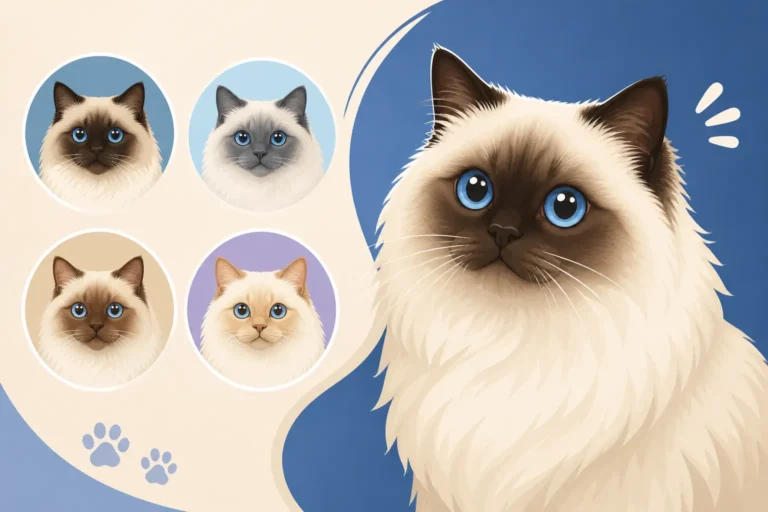
Yes. The Himalayan was recognized by the Cat Fanciers’ Association as a distinct breed in 1957. That recognition followed decades of breeding and development aimed at combining the Persian’s long coat and body type with the Siamese colorpoint pattern and blue eyes. The resulting cat was not simply a Persian with an unusual coat color in CFA’s eyes at the time; it had its own breed identity.
The date can be confusing because people may encounter different milestones in accounts of the Himalayan’s history. Early breeding experiments and the development of a recognizable cat came before CFA recognition. The year 1957 refers to CFA accepting the Himalayan as a breed, not to the first time a pointed Persian-type cat was bred or shown. For more on that distinction, see The Year CFA First Accepted the Himalayan.
CFA’s decision meant that the Himalayan could be treated as its own breed within the association’s system. It had a recognized name and a standard by which cats could be judged. That status lasted for decades, which is why older records, histories, and breeder references may describe the Himalayan as a separate CFA breed.
Separate breed did not mean unrelated to the Persian
The Himalayan’s separate status did not mean it had no close relationship to Persians. The breed had been developed with Persian traits as a central part of its type, alongside the colorpoint pattern associated with Siamese ancestry. Its long, dense coat, round head, and substantial build were all part of the Persian-like appearance that became familiar to Himalayan enthusiasts.
That shared ancestry and appearance helped set up the later debate about classification. Some breeders and registry officials favored treating the Himalayan as a separate breed because its pointed coloring and blue eyes made it visibly distinctive. Others viewed it as a color variety within the Persian family. The argument was about how to organize and name the cats in the registry, not whether Himalayan cats existed as a recognizable type.
This is also why a description on a retail site or general breed page may not settle the question. A listing on Chewy, for example, might use “Himalayan” as the familiar breed name, but a retailer’s wording is not the same as a CFA registration classification. The cat’s papers and the registry’s rules are the relevant records when the question is official status.
Why CFA Changed the Classification
The 1984 decision placed Himalayans in the Persian breed
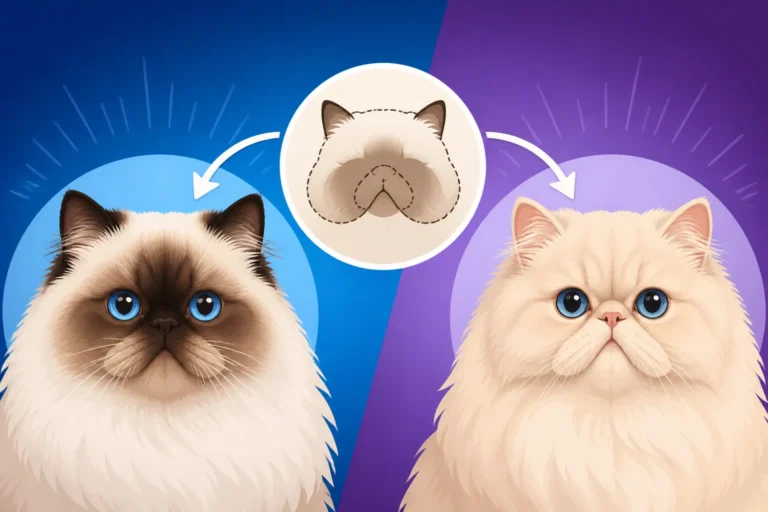
In 1984, CFA changed its treatment of the Himalayan and made it a Persian division rather than a separate breed. The Himalayan did not disappear, and the cats did not suddenly become a different kind of animal. Instead, CFA reorganized the breed classification, placing the pointed cats within the Persian breed structure.
That change is often described as CFA “merging” the Himalayan with the Persian. It is a useful shorthand, but it can sound more dramatic than the actual effect. The cats remained recognizable as Himalayans in everyday conversation and among breeders, while CFA’s formal framework treated them as Persians in a particular colorpoint division. Why CFA Made the Himalayan a Persian Division in 1984 explains the classification change in more depth.
The change affected how CFA categorized and judged the cats, and it changed the language people might see on formal records. It did not mean every Himalayan suddenly had the same coat color as a solid Persian. The pointed pattern remained a defining feature, and it continued to distinguish these cats within the Persian breed framework.
The change was about registry structure, not a new cat
A registry is an organization that records pedigrees and sets rules for breed categories, registration, and competition. Its decisions can shape the official name printed on paperwork, but they do not alter a cat’s ancestry or appearance. When CFA moved the Himalayan into the Persian breed, it changed its own classification system.
That is why people can honestly use different terms while referring to the same kind of cat. A family may call their pet a Himalayan. A breeder may describe a kitten as a Himalayan or Colorpoint Persian. CFA paperwork may identify the cat under the Persian breed framework. These labels can sound inconsistent, but they answer different questions: what people commonly call the cat, what a breeder calls the variety, and how a specific registry classifies it.
Retail descriptions can add another layer of confusion. Chewy or another pet retailer may use “Himalayan” in a breed-related description because that is the term shoppers recognize. That kind of wording can help people find general care information, but it should not be mistaken for proof that CFA currently lists the cat as a separate breed. What CFA Decided About the Himalayan in 1984 looks specifically at the consequences of the decision.
| Question | Practical answer |
|---|---|
| Did CFA ever recognize the Himalayan as a separate breed? | Yes. CFA recognized it as a separate breed in 1957. |
| Is it still a separate CFA breed? | No. CFA placed it within the Persian breed structure in 1984. |
| Did the cat itself change in 1984? | No. The registry classification changed, not the cat’s ancestry or appearance. |
| Can people still call the cat a Himalayan? | Yes. The familiar name remains widely used. |
| What should settle a question about an individual cat’s CFA status? | The cat’s registration papers and the current rules of the relevant registry. |
What the CFA Classification Means for Registration and Shows
Paperwork may use Persian terminology
A buyer looking at a pedigree may expect the word “Himalayan” to appear prominently. Depending on the registry, the form, and the way a variety is recorded, the paperwork may instead use Persian-related terminology. That does not automatically mean the breeder has misrepresented the cat. It means the registry’s classification needs to be read in context.
If you are evaluating a kitten or adult cat, ask the breeder which organization issued the paperwork and what exact name appears on the registration. Then look at the record itself rather than relying only on a sales description, a social media post, or a general breed label. The guide How the Himalayan Is Registered by CFA Today explains why CFA records may use Persian wording, while What Your Himalayan’s Certificate Actually Says focuses on how to interpret the document.
This is particularly useful when comparing a breeder’s description with an online listing. A Chewy search result or retailer category can use a common breed name to help shoppers browse, but it is not a pedigree record. If a seller claims that a cat has CFA registration, ask for documentation showing the registering body and the cat’s recorded details. A clear answer should not depend on guessing from the cat’s appearance.
Registration and show identity are related but not identical
People often assume that if a cat is called a Himalayan, it must compete in a separate Himalayan class at every show. That conclusion does not necessarily follow. Show classes and breed divisions depend on the organization’s own rules. CFA’s Persian classification and another registry’s treatment of Himalayans can differ, even when both organizations are referring to pointed, longhaired cats with similar features.
For that reason, it helps to separate three ideas: the cat’s familiar breed name, the wording on its registration, and the category used for competition. Those may align, but they are not guaranteed to. If showing or breeding is important to you, check directly with the registry that will handle the cat’s records or event entry. How to Read the Breed Line on a Himalayan Pedigree is a helpful next step when the paperwork’s wording seems surprising.
The classification can also matter when breeders discuss pedigrees and permitted matings. A Persian and a Himalayan may be closely connected within a registry’s rules, but what is allowed and how offspring are recorded depends on that registry’s policies. Avoid assuming that two cats can be paired, registered, or shown in a particular way just because their everyday breed names sound compatible.
Why the Himalayan Name Still Matters
Other registries may classify the breed differently
CFA is not the only cat registry, and its decision does not automatically set the rules for every organization. TICA, for example, has kept the Himalayan distinct within its own breed framework. That difference is one reason buyers may see more than one official description for the same kind of cat. Why TICA Kept the Himalayan Separate explores that contrast.
When two registries use different systems, neither description necessarily makes the other false. Each organization maintains its own standards and records. A cat’s classification depends on which registry is being discussed, so a careful answer should name the organization rather than saying only that the Himalayan “is” or “is not” a separate breed.
This distinction is useful when browsing breeder websites. One breeder may register cats with CFA, another with TICA, and a third may refer to the Himalayan by the common name without emphasizing registry details. Before paying a deposit or making plans around showing or breeding, ask which registry applies and request the relevant paperwork. Whether a CFA Himalayan Is Registered as a Persian covers the CFA-specific question directly.
The familiar name remains useful for owners
For most pet owners, “Himalayan” remains a practical, widely understood name. It signals a recognizable type of longhaired, colorpoint cat and helps people find information about coat care, eye cleaning, feeding, and other everyday needs. The name is still meaningful even when a particular registry places the cat within the Persian breed.
That distinction can be reassuring if you have found conflicting answers online. You do not need to choose between calling your pet a Himalayan at home and acknowledging that CFA classifies it within the Persian breed. Those statements describe different kinds of identity: familiar breed language on one hand, formal registry organization on the other.
When using online care advice, pay attention to the actual trait being discussed rather than relying on a label alone. A Chewy product page or breed overview can be a convenient starting point for browsing, but practical questions about a cat’s health, grooming needs, or pedigree should be checked against the details that apply to that individual cat. If the question is official registration status, go to the registration papers and the registry’s own classification rules.
The clearest answer, then, is that the Himalayan was once a separate CFA breed, from its recognition in 1957 until CFA’s 1984 reclassification. CFA now places it within the Persian breed structure, while the Himalayan name continues to be used by owners, breeders, and other registries. When the distinction matters, specify whether you mean the cat’s everyday name, its CFA paperwork, or another organization’s breed system.
Disclaimer
This article is for general informational purposes only and does not constitute professional advice. Laws, prices and regulations vary by location and change over time. Consult a qualified professional for guidance on your specific situation.