Whether Himalayan Rabbits and Cats Share the Gene
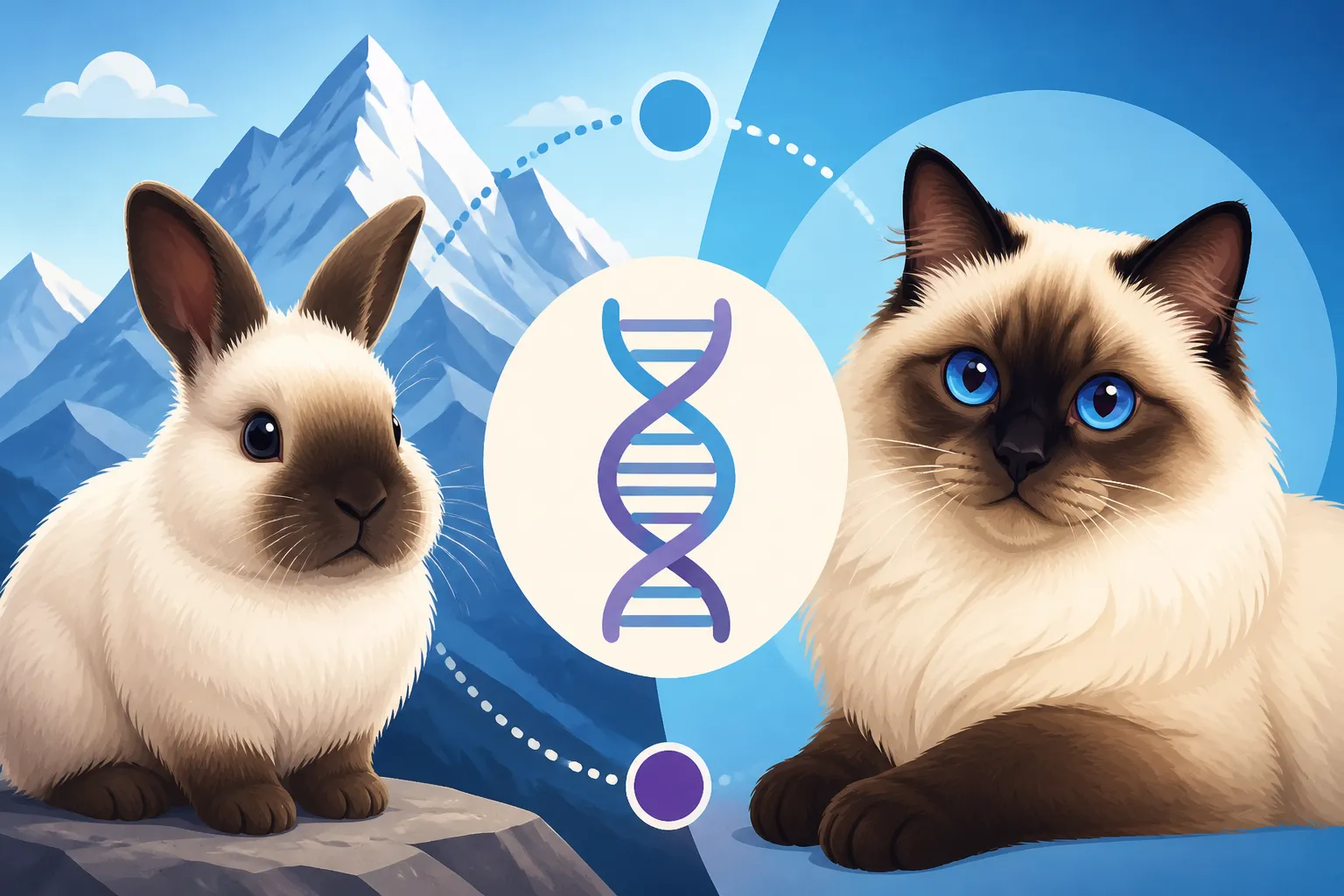
Himalayan rabbits and Himalayan cats share a striking color pattern, but they do not share one identical gene. Both have temperature-sensitive pigment production controlled by versions of the tyrosinase gene, inherited separately within each species. That distinction explains why their coats can look remarkably alike while their genetic variants, inheritance details, and breeding lines remain different.
What the Himalayan pattern means in each species
The shared look comes from temperature-sensitive pigment
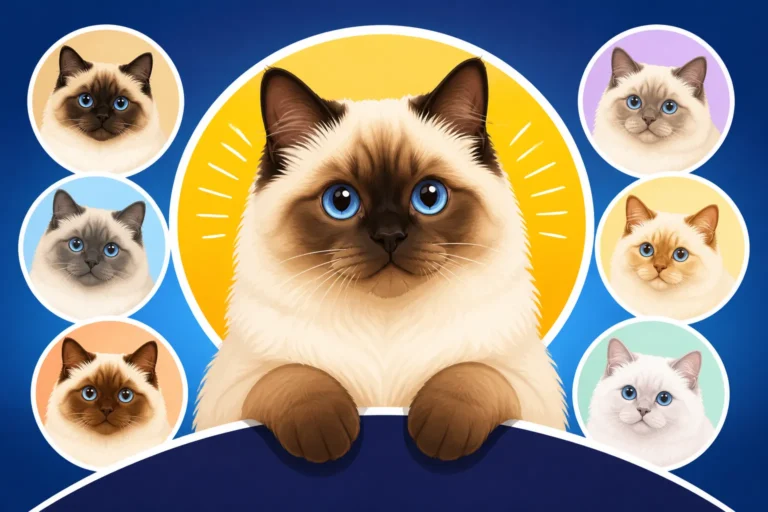
A Himalayan-patterned animal has darker fur on its cooler body areas and a lighter coat on warmer areas. In cats, the darker regions usually include the face, ears, legs, and tail. In rabbits, the classic pattern is also dark at the ears, nose, feet, and tail against a pale body.
The difference in color is connected to temperature-sensitive melanin production. Tyrosinase is an enzyme involved in making pigment. In these color patterns, a temperature-sensitive form of the enzyme works more effectively in cooler areas of the body than in warmer ones. As a result, cooler skin can produce darker hair, while warmer skin produces less pigment.
This is why a Himalayan cat’s points may deepen with age or after a shaved patch regrows, and why temperature can influence the appearance of the coat. The pattern is not paint-like coloring placed only on the extremities; it reflects how pigment production responds to conditions in different parts of the body. For more on the cat version, see Which Gene Makes a Himalayan Pointed and Why the Cold Parts of a Himalayan Grow Dark Fur.
The names refer to a pattern, not a cross-species lineage
“Himalayan” describes a recognizable color pattern in both animals, but it does not mean that Himalayan rabbits and Himalayan cats come from the same breed or share a recent ancestor. The name is used in different animal-breeding contexts to describe similar-looking coloration.
In cats, “Himalayan” generally refers to a longhaired, colorpoint cat associated with Persian and Siamese ancestry. In rabbits, “Himalayan” refers to a rabbit breed with a distinctive pale body and colored extremities. The animals have separate histories, and their breeding records are maintained within their own species.
That shared name can understandably make it sound as though the same specific gene was passed between them. It was not. The pattern is a useful example of how similar biological effects can arise in different species through related versions of genes that perform comparable jobs. The naming history is explored in Why the Himalayan Borrowed a Rabbit’s Name and Which Rabbit Shares the Himalayan Pattern.
Do they have the same gene or just a similar one
Cats and rabbits have corresponding tyrosinase genes
Cats and rabbits each have a tyrosinase gene. These are corresponding, or orthologous, genes: they perform a related biological function in different species and share an evolutionary origin. In both animals, changes affecting tyrosinase can influence pigment production and create a temperature-sensitive color pattern.
But a cat’s version and a rabbit’s version are not one interchangeable gene. Each animal inherits its genetic material from its own species’ parents. The particular variants responsible for a color pattern can differ between species, even when the genes involved are corresponding genes and the visible result is similar.
A helpful comparison is to think of two makes of car that both use a cooling system. The systems have the same general purpose, but their parts are not necessarily identical or interchangeable. Likewise, the rabbit and cat versions of the pigment pathway can work in comparable ways without being the same specific genetic variant.
Their inheritance is species-specific
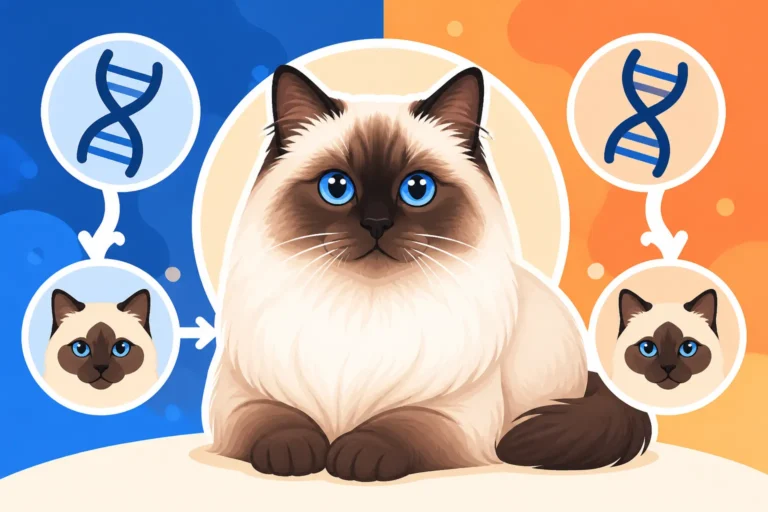
In cats, the familiar Siamese-style colorpoint pattern is associated with a temperature-sensitive tyrosinase variant. The pattern is generally inherited as a recessive trait, meaning a kitten typically needs to inherit the relevant colorpoint variant from both parents to show the classic pattern. A cat may carry a variant without displaying the full colorpoint appearance, depending on its other inherited color genes.
Rabbit coat-color genetics use their own allele system and breeding terminology. The Himalayan rabbit pattern is also associated with a temperature-sensitive form of pigment production, but the rabbit’s inheritance rules and genetic notation belong to rabbit genetics. A rabbit’s allele cannot be treated as the same allele as a cat’s simply because both animals have dark points and pale bodies.
| Feature | Himalayan-patterned cat | Himalayan-patterned rabbit |
|---|---|---|
| Gene pathway involved | Tyrosinase and pigment production | Tyrosinase and pigment production |
| General effect | Darker color on cooler body areas | Darker color on cooler body areas |
| Inheritance details | Follows cat colorpoint genetics | Follows rabbit coat-color genetics |
| Same exact variant as the other species | No | No |
| Can the pattern be bred across species | No | No |
So, do they “share the gene”? In a broad biological sense, they have corresponding tyrosinase genes involved in a similar process. In the everyday sense of sharing one identical colorpoint mutation, no. The pattern is comparable; the inherited variants and breeding systems are species-specific. For another look at how the pattern appears in other animals, see Which Other Species Show the Himalayan Pattern.
Why the pattern changes with warmth and age
Cooler areas can become darker
Because pigment production is temperature-sensitive, cooler body regions may grow darker hair than warmer regions. The ears, face, paws, and tail are often exposed to cooler conditions than the central body, which helps explain the familiar points. A cold environment can affect overall coat appearance, though the amount and distribution of color depend on the animal’s genetics as well as its surroundings.
This does not mean an owner should deliberately chill a pet to make its points darker. Cold exposure can be uncomfortable or unsafe, and coat color is not a reason to compromise an animal’s comfort. The sensible goal is a stable, comfortable home environment, not manipulating temperature for a particular shade.
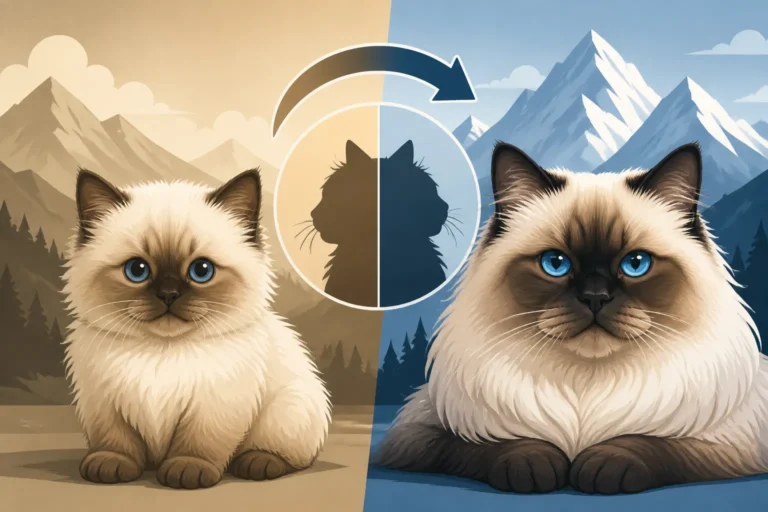
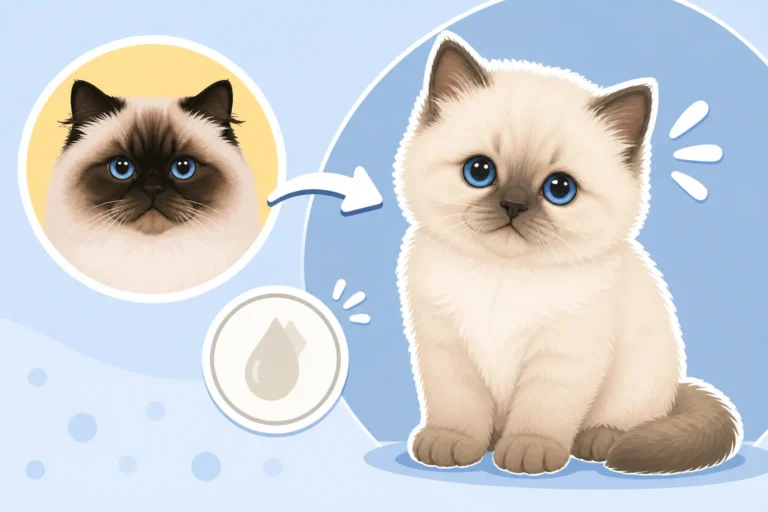
A cat’s appearance can also change as it matures. Himalayan kittens are born very pale, and their points become more apparent as they grow. That gradual change is part of the normal colorpoint pattern, not evidence that a rabbit gene or another animal’s genes are involved. See Why Every Himalayan Kitten Is Born Almost White for more about that early coat development.
Shaving and local changes can affect regrowth
If a veterinarian needs to clip a patch of a Himalayan cat’s coat, the regrown hair may appear darker than the surrounding fur. The skin under the clipped area can be cooler than it was beneath the insulating coat, which may influence pigment production while the new hair grows. The result can look surprising, especially on a pale-bodied cat, but it does not mean the cat’s underlying breed or genetic identity has changed.
Coat changes can also be affected by age, health, and normal variation. If a color change appears alongside skin irritation, sores, itching, or hair loss, it is worth asking a veterinarian about the skin itself rather than assuming the change is only related to temperature-sensitive pigment.
For ordinary care, keep your cat comfortable and monitor its coat as part of routine grooming. If you are putting together basic supplies, retailers such as Chewy offer categories of grooming items to compare; choose tools suited to a long coat and your cat’s tolerance rather than buying something for color control. A comb and gentle handling help you notice tangles or skin changes without trying to alter the pattern.
What this means for owners and breeders
Similar coats do not make the animals interchangeable
A Himalayan rabbit and a Himalayan cat may look like they share a genetic trick, but their care needs are very different. Their diets, housing, veterinary care, grooming routines, and breeding decisions must be based on the species. A rabbit’s coat-color information should not be used to predict a cat’s genetic test results, and a cat’s pedigree does not provide information about rabbit coat inheritance.
The distinction matters when talking with breeders, veterinarians, or prospective owners. If a breeder describes a cat as carrying a colorpoint gene, ask which cat-specific trait or test they mean and how the claim is documented. A resemblance to a Himalayan rabbit is not proof of ancestry, and a shared pattern name is not evidence of a shared individual mutation.
A prospective cat owner may also want to understand how colorpoint genetics fit into a broader Persian or Siamese lineage. The practical questions are about the cat’s own pedigree, health history, and care—not whether a rabbit with a similar coat has the same genetic variant. Whether Two Persians Can Produce a Himalayan offers a related look at how the cat pattern is inherited within its own species.
Keep color questions separate from welfare questions
It is easy to get absorbed in whether a coat will become darker or how sharply defined the points may look. But the animal’s comfort and health matter more than preserving a particular shade. For a cat, that means a comfortable indoor environment, regular grooming, and veterinary attention for breathing, skin, eye, or appetite concerns. The pattern itself does not tell you whether an individual animal is healthy.
If you are organizing routine care, Chewy can be one place to compare practical items such as combs or carriers, but a product choice cannot replace advice from your veterinarian. For a rabbit, ask a rabbit-experienced veterinarian about appropriate housing and daily care. For a cat, follow cat-specific guidance and avoid applying rabbit-care advice simply because the coats look alike.
The clearest answer is that Himalayan rabbits and cats share a similar temperature-sensitive pigment mechanism involving corresponding tyrosinase genes, not one identical colorpoint gene. Their matching pattern is a fascinating parallel between species, but each animal’s genetics remain its own. If you are researching a particular pet, focus on its species-specific pedigree and health information; Chewy or another pet retailer may help with everyday supplies, while a qualified veterinarian is the right person for individual health questions.
Disclaimer
This article is for general informational purposes only and does not constitute professional advice. Laws, prices and regulations vary by location and change over time. Consult a qualified professional for guidance on your specific situation.