What a Corneal Ulcer Looks Like on a Blue Eyed Himalayan
It's incredibly distressing when you notice something isn't quite right with your beloved Himalayan's eyes. Their striking blue gaze is one of their most captivating features, but their unique facial structure, while adorable, can unfortunately make them prone to certain eye issues. Among these, a corneal ulcer is a serious concern that requires immediate attention. This guide will walk you through exactly what to look for, helping you identify the subtle and not-so-subtle signs of a corneal ulcer in your blue-eyed companion.
Understanding the Himalayan's Unique Eye Vulnerabilities
Himalayans, with their distinctive brachycephalic (flat-faced) features, are undeniably charming, but these very traits come with a predisposition to specific health challenges, particularly concerning their eyes. It's not just about their beauty; it's about understanding the mechanics of how their facial structure impacts their vision and overall ocular health.
The Impact of Brachycephalic Features on Eye Health
Think about that lovely, broad, rounded head and those large, prominent, widely set blue eyes that melt your heart. While gorgeous, this specific conformation means that a Himalayan's eyes often protrude slightly more than those of other cat breeds. This can leave the cornea, the clear outer layer of the eye, more exposed to the environment, making it more vulnerable to dust, debris, and accidental scrapes. Imagine walking around all day with your eyes just a little bit more 'out there' – it's easy to see how something could irritate them.
Beyond the prominence, many Himalayans also contend with issues like entropion, where the eyelids roll inward, causing the eyelashes or fur to constantly rub against the delicate surface of the eye. This constant irritation is like having a tiny brush scrubbing your eye all day, every day, and it's a prime setup for corneal damage. If you've ever wondered about What Entropion Does to a Himalayan's Blue Eye, it’s a direct pathway to discomfort and potential ulcers. Additionally, their tear ducts can sometimes struggle to drain properly, leading to Why a Himalayan's Eyes Water All Day, which creates a perpetually moist environment around the eye that can also contribute to irritation and secondary issues. It's a delicate balance, and their adorable face just doesn't always provide the best protective housing for their beautiful eyes.
Why Blue Eyes Can Mask Early Symptoms
One of the beautiful hallmarks of the Himalayan breed is those stunning, vivid blue eyes. They are truly captivating, isn't it? However, this very characteristic, while aesthetically pleasing, can sometimes inadvertently make it harder for owners to spot early signs of a corneal ulcer. Most people associate eye problems with dramatic redness or a cloudy white film that contrasts sharply with a dark iris. But with a Himalayan's pale blue eyes, these subtle changes can blend in more.
When the cornea develops a haze or a cloudy patch due to an ulcer, it might not stand out as starkly against a light blue background as it would against a dark brown or amber iris. The initial cloudiness might simply appear as a slight dullness or a less vibrant blue, which can be easy to overlook in the early stages, especially in certain lighting conditions. You might initially dismiss it as a reflection or just how their eye looks. This is why paying extremely close attention to any minor shifts in clarity, shine, or the overall presentation of their eyes is so crucial for us Himalayan owners.
Identifying the Signs of a Corneal Ulcer in Your Himalayan
Spotting a corneal ulcer isn't always as straightforward as you might hope, especially because cats are masters at hiding pain. But as a vigilant Himalayan owner, you'll become attuned to the subtle cues. It's about looking for changes, both visually and behaviorally, that signal something more serious than just a bit of morning sleep crust.
Visual Changes You Might Spot
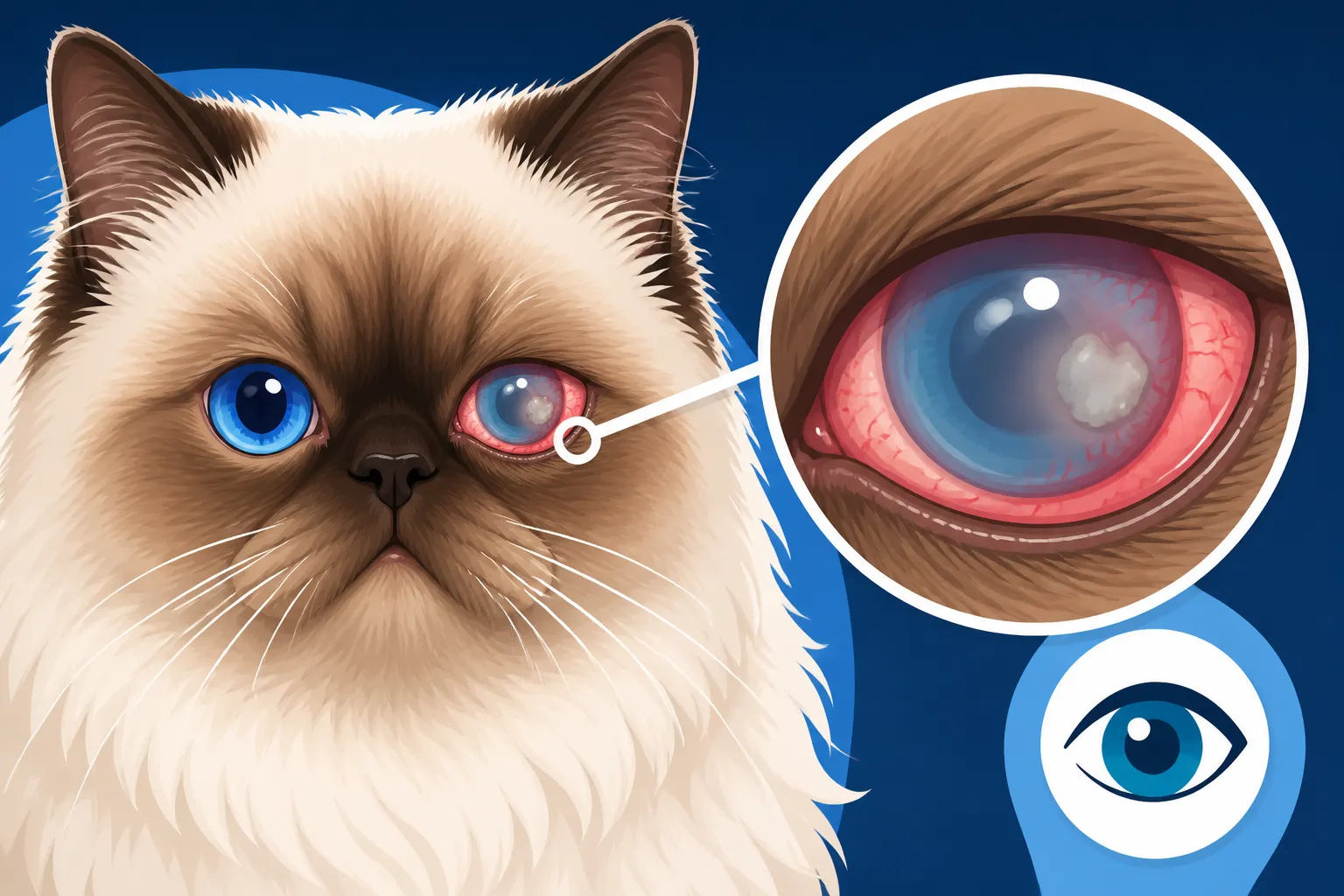
The most direct way to identify a corneal ulcer is by carefully observing your Himalayan's eye itself. You're looking for anything that deviates from its usual clear, sparkling appearance. One of the primary visual indicators is a change in the transparency of the cornea. You might notice a cloudiness or haziness, perhaps a dull, grayish, or milky patch on the surface of the eye. This isn't just a surface film; it's a change within the cornea itself. It could be small and localized, or it might cover a larger area, making the blue of their iris appear less vibrant and distinct.
Beyond cloudiness, look for redness or inflammation. This can manifest as blood vessels becoming more apparent in the white of the eye (the sclera) or the conjunctiva (the pink tissue lining the eyelids) appearing more inflamed than usual. While Himalayans are prone to Why Tear Stains Are Worse on a Cream Bodied Himalayan, which can cause reddish-brown discoloration of the fur around the eyes, this redness will be in the eye itself. Another key visual sign is excessive tearing. Your Himalayan might naturally have a bit of moisture around their eyes, but with an ulcer, the tearing will likely be more profuse, almost as if they're constantly crying, and it might be clear or slightly discolored.
Crucially, watch for squinting or holding the eye partially closed. This is your cat's way of telling you they're in pain and trying to protect the sensitive area. They might also show sensitivity to light (photophobia), seeking out darker corners of the room or turning their head away when in bright light. In more advanced or deeper ulcers, you might even notice a visible 'dent' or irregular surface on the cornea. This is a severe sign, indicating that the ulcer has eroded a significant layer of tissue. Finally, sometimes the third eyelid (nictitating membrane) might protrude more than usual, partially covering the affected eye as a protective mechanism. Any of these signs, especially in combination, should raise immediate red flags.
Behavioral Clues Indicating Eye Pain
Cats are notoriously stoic creatures, often masking their discomfort until an issue is quite advanced. However, even with their poker faces, there are behavioral shifts that can signal an underlying problem like a corneal ulcer. Learning to read these subtle cues can make all the difference in getting your Himalayan the prompt care they need.
One of the most concerning behavioral signs is paw rubbing or scratching at the eye. While it might seem like they're trying to relieve an itch, this action can be incredibly detrimental, as it can worsen the ulcer, introduce bacteria, and turn a minor problem into a major infection. If you catch your cat attempting this, gently redirect them and consider an Elizabethan collar (the dreaded "cone of shame") even before a vet visit if you can't get an immediate appointment. Another key indicator is a general change in their demeanor. You might notice lethargy or changes in appetite. A cat in pain often doesn't feel like eating, playing, or engaging, preferring to retreat.
Your usually social Himalayan might start hiding more than usual, seeking out quiet, dark places under beds or in closets. This is a classic cat behavior when they're feeling unwell or vulnerable. They might also become reluctant to be touched around the head or even flinch when you approach them from that side. This isn't aggression; it's a protective instinct because they anticipate pain. Sometimes, you might even notice a change in their grooming habits; they might stop grooming themselves as meticulously, especially around their face, because the pain makes it too uncomfortable. Remember, your Himalayan, like many cats, might Why a Himalayan Hides Illness Behind an Expressionless Face, making these behavioral shifts even more critical to observe. Trust your gut if your cat just "isn't acting like themselves."
| Visual Sign | What it Looks Like (Normal) | What it Looks Like (Corneal Ulcer) | Urgency |
|---|---|---|---|
| Cornea Clarity | Crystal clear, bright, reflective | Hazy, cloudy, dull, milky patch, less reflective | High |
| Eye Color | Vibrant, deep blue | Less vibrant, murky, duller blue | High |
| Redness | Minimal, healthy pink conjunctiva | Red veins in white of eye, inflamed pink tissue around eye | High |
| Tearing | Normal moisture, tear stains on fur (common) | Excessive, watery discharge, often constant | High |
| Eye Position | Fully open, alert, symmetric | Squinting, holding eye partially closed, asymmetrical | High |
| Light Sensitivity | Tolerant of normal household light | Avoiding bright light, seeking dark spots (photophobia) | High |
| Eye Surface | Smooth, even, consistent curvature | Visible 'dent,' rough texture, irregular surface | Very High |
| Third Eyelid | Barely visible, retracted | Protruding, partially covering the eye | High |
| Behavior | Engaged, playful, social | Pawing at eye, lethargy, decreased appetite, hiding | High |
The Urgency of Veterinary Care and Treatment Options
Discovering what appears to be a corneal ulcer in your Himalayan can be frightening, and it’s natural to feel worried. But the most important thing to remember is that these are not "wait and see" injuries. The delicate nature of the eye and the potential for rapid deterioration mean that prompt veterinary attention is paramount.
Why Immediate Vet Attention is Non-Negotiable
Seriously, if you suspect your Himalayan has a corneal ulcer, do not delay. This isn't something that will just "get better on its own" or with home remedies. A corneal ulcer, left untreated, can rapidly worsen, leading to serious complications such as deeper infections, a rupture of the eyeball, permanent vision loss, or even the tragic necessity of eye removal. Think of the cornea as a very thin, clear window. An ulcer is like a scratch that's starting to dig into that window. If it gets deep enough, the whole window could break. This is Why a Himalayan's Eye Injury Cannot Wait Until Monday.
When you get to the vet, they will likely perform a fluorescein stain test. This is a simple, quick procedure where they apply a special orange dye to your cat's eye. The dye adheres to any areas where the outermost layer of the cornea (the epithelium) has been damaged or lost, making the ulcer glow bright green under a cobalt blue light. It's a definitive diagnostic tool that helps the vet assess the size, depth, and severity of the ulcer. This test is crucial because it allows your vet to tailor the most appropriate and effective treatment plan. Don't worry about the cost, many pet insurance plans, like those from Healthy Paws, will cover the diagnostics and treatment for such emergencies, giving you peace of mind.
Common Treatments and What to Expect
Once a corneal ulcer is diagnosed, your veterinarian will develop a treatment plan aimed at promoting healing, preventing infection, and managing pain. The good news is that many corneal ulcers, especially if caught early, respond well to medical management. The cornerstone of treatment often involves medicated eye drops or ointments. These typically include topical antibiotics to prevent or treat bacterial infections, as the damaged cornea is highly susceptible. Your vet might also prescribe pain relief drops, or even atropine drops, which help to dilate the pupil and reduce painful muscle spasms inside the eye. Administering these drops can be a bit of a challenge, as your Himalayan may be uncomfortable, but consistency is key.
You will almost certainly be sent home with an E-collar, often referred to as the "cone of shame." While your cat will undoubtedly hate it, this collar is absolutely essential. It prevents your Himalayan from rubbing or scratching at the injured eye, which, as we discussed earlier, can drastically worsen the ulcer and delay healing. It's tough love, but it's vital for their recovery. Follow-up appointments will be frequent and necessary. Your vet will want to monitor the ulcer's progress, often repeating the fluorescein stain test to ensure it's healing properly and not getting worse. These regular checks are crucial for adjusting medication as needed. For particularly deep or non-healing ulcers, surgical intervention might be necessary. This could involve procedures like a conjunctival flap, where a piece of the conjunctiva is surgically moved to cover the ulcer, providing blood supply and protection to aid healing. Again, understanding your pet's coverage with providers like Healthy Paws can help alleviate the financial stress during such a challenging time.
Prevention and Long-Term Eye Care for Himalayans
While we can't completely eliminate the risk of all eye issues in Himalayans, especially given their unique anatomy, there's a lot we can do to minimize their vulnerability and promote long-term eye health. Proactive care is truly the best defense when it comes to those precious blue eyes.
One of the most important daily routines for any Himalayan owner is regular daily face cleaning. Those flat faces and deep tear troughs mean they're prone to tear staining and moisture buildup. Gently wiping the area around their eyes each morning with a soft, damp cloth or a pet-safe eye wipe helps prevent irritation from dried tears and keeps the area clean. It's part of The Morning Face Routine Every Himalayan Needs. Additionally, keeping the fur trimmed around the eyes is incredibly helpful. Long hairs constantly brushing against the cornea can be a source of chronic irritation, which over time, can make the eye more susceptible to ulcers. A quick, careful trim by you or a professional groomer can make a big difference.
Consider environmental factors too. While it's unlikely your indoor Himalayan will face extreme elements, try to avoid strong drafts from fans or open windows that can dry out their eyes. Dust can also be an irritant, so a relatively clean living environment is beneficial. Most importantly, regular routine vet check-ups are non-negotiable. During these visits, always bring up any eye concerns, no matter how minor they seem. Your vet can perform thorough examinations and address potential issues before they escalate. Discussing things like Which Drops Suit a Himalayan's Exposed Blue Eyes with your vet can also be part of a preventative routine. Finally, investing in pet insurance, such as a plan from Healthy Paws, can be an invaluable part of long-term care, ensuring you can always afford the best treatment for unexpected eye issues or other health concerns as your Himalayan ages.
Disclaimer
The information provided in this article is for general educational purposes only and should not be considered a substitute for professional veterinary advice. If you suspect your Himalayan has a corneal ulcer or any other eye injury, please consult with a qualified veterinarian immediately. Early diagnosis and treatment are crucial for the best possible outcome.