How a Himalayan Asks Without Raising Its Voice
Himalayan cat communication relies on soft trills, slow blinks, and quiet stares instead of loud meows to express daily needs.

Himalayan cat communication relies on soft trills, slow blinks, and quiet stares instead of loud meows to express daily needs.

Himalayan cat behavior explains why this specific breed follows one person throughout the house using Siamese and Persian traits.

Himalayan cat behavioral changes and stress reactions happen when a daily feeding schedule or predictable home routine breaks.

Himalayan cats claim one specific chair for psychological security, scent marking, and physical comfort suited to their cobby body.

Himalayan cats divide their daily routine between deep slumber in sun-drenched spots and gentle bids for human affection.

Siamese ancestry explains why Himalayan cats have unexpected energy and vocalizations instead of remaining completely sedentary lap ornaments.

Himalayan cat chirps stem from 1930s Siamese ancestry, functioning as quiet greetings and subtle hunting alerts for owners.
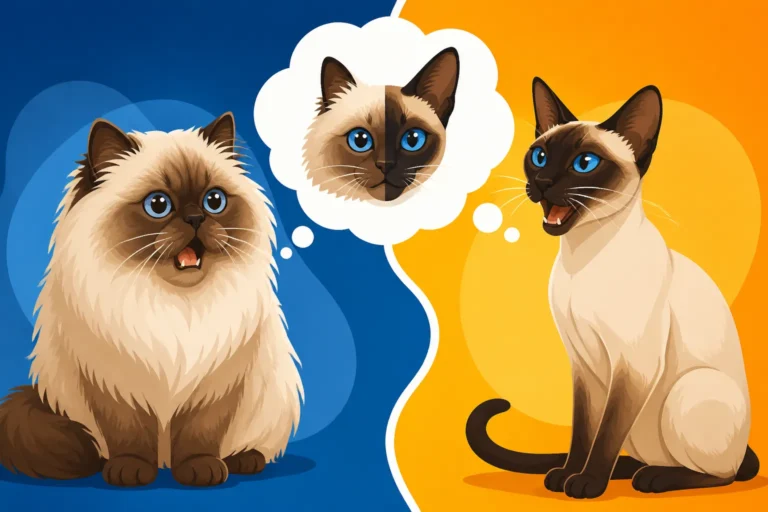
Himalayan cat vocalization compared to the Siamese breed, explaining whether Himalayans yowl like their loud relatives.

Himalayan cat vocal tendencies compared to Persian cats, explaining how the Siamese heritage affects their volume and talking habits.

The genetic history of Himalayan cat vocalizations explains how Siamese and Persian ancestors shaped their unique sounds.