Whether a Himalayan Greets You at the Door
It’s a common fantasy for many cat owners: you walk through the door after a long day, keys jingling, and your beloved feline friend is right there, weaving through your legs, purring up a storm, a furry exclamation mark on your arrival. With their striking blue eyes and luxurious coats, Himalayan cats certainly look like the kind of companion who would offer such a grand welcome. But the reality for many Himalayan parents can be a bit more subtle, leaving you wondering if your elegant fluff-ball even noticed you were gone. This guide is here to shed some light on the unique ways Himalayans typically greet their humans, helping you understand their nuanced expressions of affection and what to expect when you return home.
The Himalayan's Unique Welcome Wagon (or Lack Thereof)
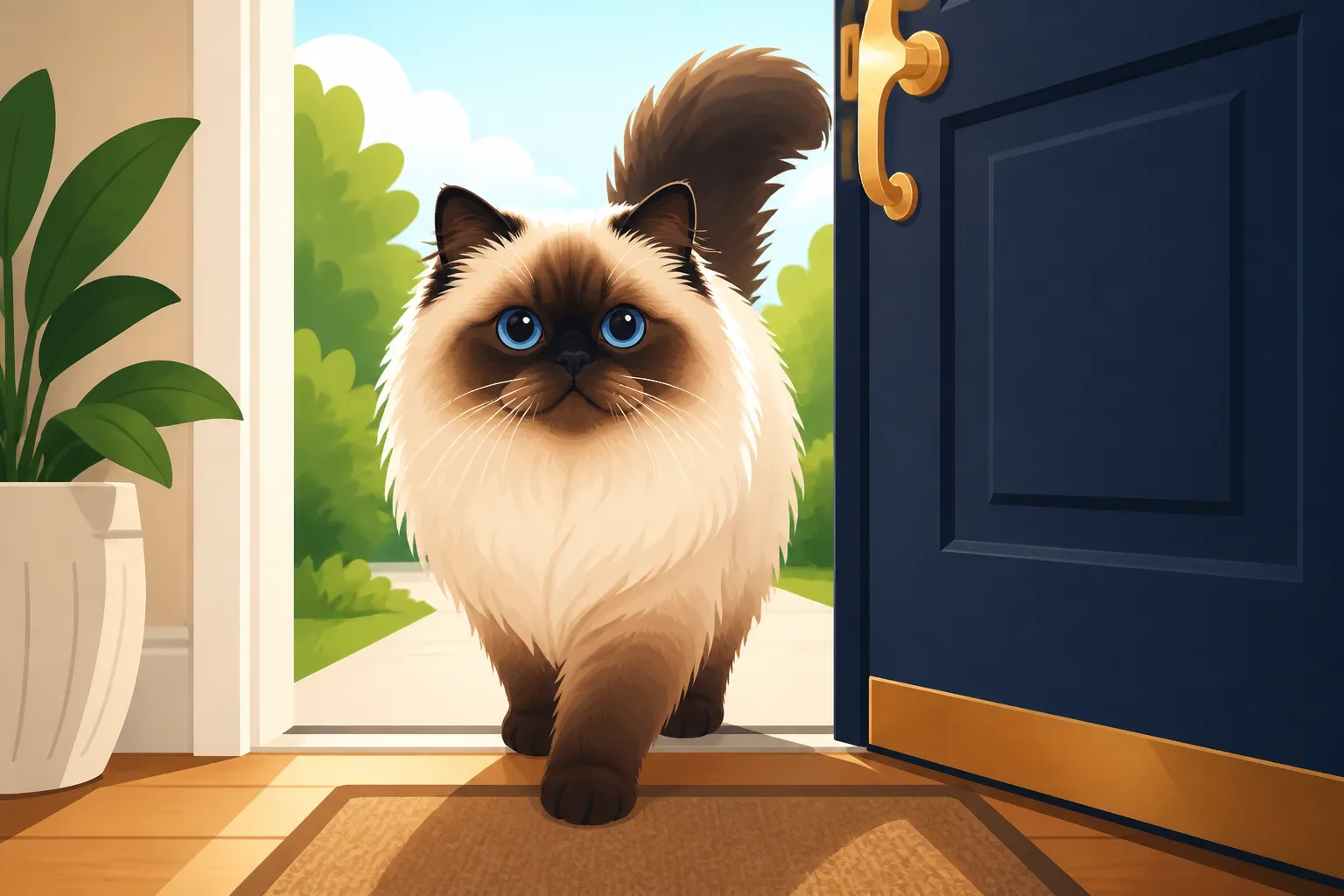
Let's be honest, if you're expecting a theatrical, tail-thumping, meowing-at-the-top-of-their-lungs greeting from your Himalayan, you might be setting yourself up for disappointment. These beautiful creatures aren't typically known for their grand, boisterous welcomes. Their heritage, a delightful blend of the calm, dignified Persian and the vocal, energetic Siamese, often results in a cat that expresses its joy in more understated ways. They're not usually the type to sprint to the door, demanding attention the moment the key turns.
Inherited Traits: Persian Calm Meets Siamese Curiosity
The Himalayan cat is a fascinating genetic tapestry, combining the luxurious long hair and placid temperament of the Persian with the striking point coloration and vocal tendencies of the Siamese. This unique mix means they often inherit a more laid-back disposition from their Persian ancestors. Persians are known for their calm, almost regal demeanor, often preferring to observe from a comfortable perch rather than be in the thick of things. They aren't generally the "door dashers" of the cat world.
However, the Siamese influence does bring a touch of curiosity and a tendency towards vocalization, albeit usually in a more subdued form than a full-blooded Siamese. Your Himalayan might have a quiet chirp or a soft trill when they eventually deign to acknowledge your presence, rather than the insistent, demanding yowl often associated with their Siamese relatives. It's a gentle murmur, a quiet acknowledgment that says, "Oh, you're back. Good." They often retain some of the Siamese intelligence and interest in their humans, but filtered through a Persian lens of quiet dignity. For instance, while a Siamese might be underfoot, a Himalayan might just eye you from their favorite sunbeam, a subtle tail flick being your only clue they've registered your return. Many owners find their The Himalayan Is a Lap Cat That Answers Back, but usually on their own terms and with a refined volume.
Reading the Subtle Signals of Affection
Because their greetings aren't always overt, learning to "read" your Himalayan's subtle cues is key to understanding their affection. They may not leap into your arms, but that doesn't mean they aren't thrilled to see you. Often, their welcome is a slow, unfolding process.
Think about it: after a long day alone, a Himalayan's world has been perfectly ordered, often centered around a particular favorite chair or sunny spot. Suddenly, you arrive, bringing noise, movement, and disruption (albeit welcome disruption!). Many Himalayans need a moment to process this change. You might walk in and find them seemingly asleep, but notice a slight twitch of an ear, or a slow, deliberate blink. That slow blink, often called a "cat kiss," is a huge sign of trust and contentment. It’s their way of saying, "I see you, I acknowledge you, and I feel safe with you."
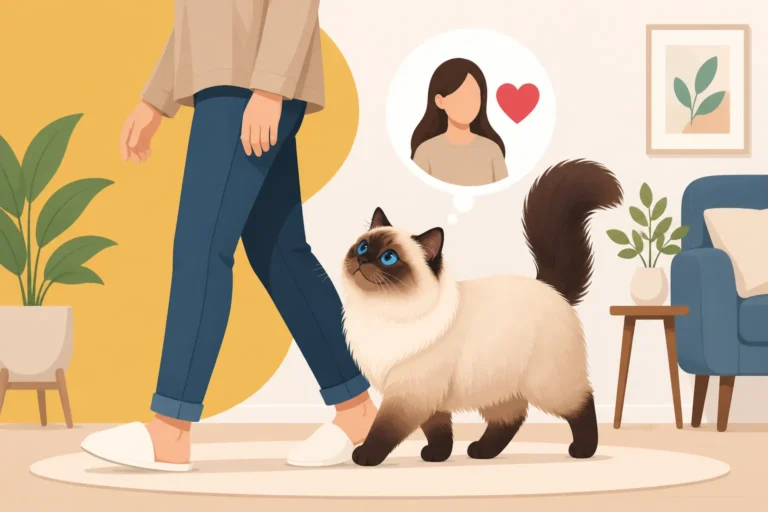
Once you've settled down, perhaps on the sofa, that's when your Himalayan might make their move. They might slowly stretch, descend from their perch, and then begin a circuitous route to your side. They might brush past your legs, gently rub their head against your hand, or even hop onto your lap for a leisurely knead and purr session. This delayed, deliberate approach is very typical. They're not rushing; they're choosing to engage. Their affection is often expressed through quiet proximity rather than enthusiastic fanfare. They might even engage in How Much More a Himalayan Talks Than a Persian, offering soft chitters or trills as they approach for a head scratch.
The Importance of Routine in a Himalayan's World
Himalayans, like many cats, are creatures of habit. They thrive on predictability, and their greeting behavior can often be tied into their established daily routine. If you consistently arrive home at a certain time, and perhaps that time usually coincides with their dinner or a favorite play session, you might find them slightly more "present" upon your return.
For a Himalayan, an unexpected change can be a minor earthquake in their perfectly ordered universe. If your schedule is erratic, they may simply adapt by not having a fixed expectation of your arrival, leading to less consistent "greetings." They are keen observers, noticing every shift in their environment and schedule. A Himalayan really does How Often a Himalayan Notices Anything Has Changed, and this applies directly to their human's comings and goings.
Consider their comfort zones. A Himalayan often has a specific spot they retreat to when they want peace or when something new is happening. If your arrival is usually a flurry of activity, they might simply observe you from a safe, comfortable distance until the initial excitement settles. This isn't disinterest; it's just their way of maintaining their sense of calm. They prefer a predictable environment, and a consistent arrival routine from you can actually help them feel more secure and, in turn, more openly affectionate when you come home.
Factors Influencing a Himalayan's Greeting Style
While there are general tendencies for Himalayans, it's vital to remember that every cat is an individual. Just like people, they have unique personalities, preferences, and ways of interacting with the world. What one Himalayan considers a warm welcome, another might find completely overwhelming.
Personality: Not All Himalayans Are Created Equal
Even within the same breed, you'll find a spectrum of personalities. Some Himalayans are naturally more outgoing and curious, while others are incredibly shy and reserved. A more confident, "brave" Himalayan might actually come to the door, maybe not with a full-blown party, but certainly with a more immediate presence. They might sit a few feet away, watching you intently, perhaps even giving a soft trill. This is as close as some Himalayans get to an enthusiastic welcome.
Then there are the more timid ones, who might take refuge under the bed or behind the sofa until the coast is clear and you’ve settled into your routine. These cats aren't being unfriendly; they simply need more time to feel secure enough to approach. They might emerge only once the house is quiet again, seeking you out for a gentle head bunt or a quiet moment on your lap. Recognizing and respecting your individual cat's personality is crucial. Don't force interaction; let them come to you on their terms, and you'll build a stronger, more trusting bond. It’s part of why Why a Himalayan Follows One Person Around the House often describes their selective bond.
The Environment: A Peaceful Home is Key
The overall atmosphere of your home plays a significant role in how your Himalayan behaves, especially when it comes to greetings. Himalayans generally prefer a calm, predictable, and peaceful environment. Loud noises, constant comings and goings, or a chaotic household can make them more withdrawn and less likely to offer an immediate welcome.
Imagine walking into a bustling, noisy house versus a quiet, serene one. Your cat feels the same way. If your return often involves children running, dogs barking, or loud conversations, your Himalayan might opt to wait out the initial commotion from a safe distance. They are, after all, creatures who cherish their tranquility. A calm arrival, where you speak softly and move gently, is much more likely to encourage them to make an appearance sooner rather than later. They will typically choose a comfortable, quiet spot, sometimes even Why a Himalayan Sits Where the Floor Is Coldest on a warm day, and wait for you to approach them.
Your Own Arrival Habits
Believe it or not, your own behavior when you arrive home can shape your Himalayan's greeting ritual. If you consistently make a big fuss – loud greetings, immediate attempts to pick them up, or overwhelming attention – a shy Himalayan might learn to retreat. Conversely, if you enter quietly, calmly go about your initial tasks (putting away your bag, getting a drink of water), and then settle down, your cat might feel more comfortable approaching you.
Consistency is also important. If you're sometimes loud and sometimes quiet, they won't have a clear expectation, which can lead to more reserved behavior. Establishing a gentle, predictable routine for your own arrival can help your Himalayan feel more secure and understand what to expect. Perhaps you always drop your keys, then head to the kitchen, and then settle in your favorite chair. Over time, your cat might learn this pattern and be waiting nearby when you reach that chair, ready for their quiet cuddle time.
| Aspect of Arrival | Typical Himalayan Reaction | Less Typical Himalayan Reaction |
|---|---|---|
| Sound Level | Prefers quiet entry | May tolerate soft vocalization |
| Immediate Action | Observes from a distance | Approaches slowly, after you settle |
| Affection Display | Slow blink, tail twitch, quiet purr | Gentle head bunt, perhaps a soft meow |
| Response Time | Delayed, after initial commotion | May appear more quickly if routine is established |
| Energy Level | Calm, deliberate movement | Rare playful dash (unless a very young kitten) |
Cultivating Connection: Encouraging Your Himalayan to Engage
While you shouldn't expect your Himalayan to turn into a door-greeting enthusiast overnight, there are certainly ways to foster a deeper connection and encourage them to show their affection more openly upon your return. It’s all about building trust and understanding their unique communication style.
Establishing Predictable Routines
As we've discussed, Himalayans thrive on routine. Creating a predictable sequence of events around your arrival can help them feel more secure and anticipate your presence. Try to come home around the same time each day if possible. When you walk in, follow a consistent pattern: put your keys down, take off your shoes, perhaps put away your bag, and then head to a designated "cat time" spot.
This could be your favorite armchair, a specific rug, or even a soft bed on the floor. When you sit there, call their name softly. Don't rush over to them immediately; let them come to you. This predictability reduces anxiety and signals to your Himalayan that it’s safe to emerge and seek interaction. Over time, you might find them waiting closer to your "cat time" spot, ready for your arrival. Why a Himalayan Minds Its Routine More Than Its Address perfectly encapsulates how much they rely on this consistency, even more than the physical location.
Creating Inviting Spaces
Consider where your Himalayan likes to spend their time. If you want them to be more present when you come home, make sure there's a comfortable, safe spot for them near the entry area, but not right in the path of heavy traffic. This could be a sturdy cat tree near a window, a soft bed tucked into a corner of the living room, or even just a warm blanket on a chair.
Having these designated spaces allows them to observe your arrival from a position of comfort and security. They can see you, process your presence, and decide to approach when they feel ready, without feeling cornered or overwhelmed. A cat tree offers height, which many cats find reassuring, giving them a sense of control over their environment. Look for cat trees with wide platforms, as a cobby Himalayan often prefers a stable surface. You can find many suitable options on Amazon that cater to a Himalayan's preference for spacious perches.
Positive Reinforcement and Gentle Play
Associating your arrival with positive experiences can gradually encourage a more engaging greeting. Keep a few small, highly coveted treats near the door or in your designated "cat time" spot. When your Himalayan eventually comes to you, offer a treat and gentle praise.
Another fantastic way to engage them is through gentle play. Himalayans aren't typically high-energy athletes, but they do enjoy short, focused play sessions. A wand toy, which allows them to chase and "hunt" without too much exertion, can be a great way to bond. When you arrive home, after your initial routine, you could spend a few minutes enticing them with a feather wand or a crinkly ball. This turns your arrival into a fun, anticipated event. You can easily find a variety of engaging wand toys on Amazon that cater to their more relaxed play style. Remember, Why a Himalayan Watches a Toy Rather Than Chase It often, so choose toys that move slowly and allow for ambushing.
When a Change in Greeting Behavior is a Red Flag
While Himalayans are creatures of routine, and their greetings are generally subtle, a sudden or drastic change in their behavior can be a cause for concern. As a responsible cat parent, it's important to be vigilant for these shifts, as they can sometimes indicate an underlying issue.
Sudden Aloofness or Hiding
If your normally somewhat reserved but present Himalayan suddenly starts hiding or becomes completely aloof upon your return, this is a significant red flag. A cat that usually acknowledges you with a slow blink or a gentle head rub, but now disappears the moment you walk through the door, might be telling you something is wrong.
This change could be due to pain, illness, or stress. Cats are masters at masking discomfort, and retreating is a common coping mechanism. They might be trying to hide their vulnerability. Consider if there have been any recent changes in the home environment, such as new pets, furniture, or a disruption to their routine, which might cause stress. If there's no obvious environmental cause, a vet visit is warranted to rule out any health problems. This is especially true as Himalayans, like many cats, can be subtle about showing signs of illness, often just becoming withdrawn. A significant change in greeting behavior can be a sign of What a Himalayan Does When It Is Unsettled.
Over-the-Top Anxiety
On the flip side, if your previously calm Himalayan suddenly develops extreme anxiety around your arrival (or departure), this also warrants attention. This might manifest as excessive meowing, destructive behavior while you're gone, or frantic greetings upon your return, where they seem desperate for attention and clingy.
While some cats can develop separation anxiety, it's less common for Himalayans to express it in such an overt, distressed manner, given their generally placid nature. If you notice signs like excessive drooling, inappropriate urination or defecation when you're gone, or a sudden, dramatic increase in vocalization upon your return, it’s worth investigating. This could indicate a significant stressor, a change in their health that makes them feel insecure, or even a cognitive issue if they are an older cat. Sometimes, such a change in behavior, like becoming more anxious, can be linked to physical discomfort that makes them feel vulnerable. It's also vital to be aware that Why a Himalayan Hides Illness Behind an Expressionless Face, so outward signs of anxiety might be their way of signaling an internal problem.
Seeking Professional Guidance
Any marked, uncharacteristic change in your Himalayan's greeting behavior, especially if it persists for more than a couple of days, should prompt a consultation with your veterinarian. They can perform a thorough physical examination and suggest diagnostic tests to rule out underlying medical conditions. Changes in appetite, litter box habits, or activity levels often accompany behavioral shifts and can help your vet pinpoint the issue.
If health issues are ruled out, a certified feline behaviorist can offer invaluable advice. They can help you identify environmental stressors, develop behavior modification plans, and provide strategies to ease your cat's anxiety or encourage more positive interactions. Remember, addressing behavioral changes early can prevent them from becoming more ingrained and can significantly improve your Himalayan's quality of life. For instance, sometimes a decline in sight, described in How a Himalayan Behaves as Its Sight Goes, can lead to behavioral changes as they feel less secure in their environment.
Disclaimer
This article is for general informational purposes only and does not constitute professional advice. Laws, prices and regulations vary by location and change over time. Consult a qualified professional for guidance on your specific situation.