Why a Himalayan Cannot Cool Itself by Panting
One of the most heartbreaking realities for a Himalayan cat owner is seeing their beloved furry friend struggle in even moderately warm temperatures. You might notice them trying to pant, looking distressed, or seeking out cold spots, and it's natural to wonder why this mechanism, so effective for dogs, just doesn't seem to work for our beautiful, fluffy Himalayans. This guide will delve deep into the unique physiology of Himalayan cats, explaining precisely why panting is an inefficient cooling method for them and offering comprehensive, actionable strategies to keep your cherished companion safe and comfortable when the mercury rises.
The Unique Physiology of Himalayan Cats and Heat
When you look at a Himalayan, you're looking at a stunning combination of two distinct breeds: the majestic Persian and the vocal Siamese. This genetic blend gives them their striking appearance and enchanting personality, but it also gifts them with certain physical traits that make heat management a real challenge. Understanding these inherent traits is the first step to becoming a truly responsible and empathetic Himalayan parent.
The Legacy of Their Persian Ancestry
The most significant contributor to a Himalayan's heat sensitivity comes directly from their Persian lineage. Persians are renowned for their magnificent, long, dense coats. This isn't just a surface layer; it's a double coat with a soft, thick undercoat that provides incredible insulation. In colder climates, this is a huge advantage, keeping them warm and cozy. However, in warmer environments or even just inside a comfortable home on a summer day, that insulation becomes a significant burden.
Imagine wearing a heavy wool sweater and a thick winter coat on a hot day – that's essentially what your Himalayan is dealing with. Their bodies are designed to retain heat, not easily dissipate it. This deep, luxurious fur traps a layer of warm air close to their skin, making it incredibly difficult for their natural cooling mechanisms to function effectively. It's not just the length; it's the sheer density and the type of hair that makes all the difference. While other long-haired breeds might have a more breathable coat, the Persian-derived coat of a Himalayan is almost like a thermal blanket. You might think about How Much Undercoat a Himalayan Carries Under Its Points and realize just how much insulation they truly have. This magnificent coat is a defining feature, but it’s also a constant challenge when it comes to regulating body temperature.
How the Brachycephalic Skull Affects Respiration
Another crucial physiological factor is the Himalayan's brachycephalic (or "flat-faced") skull structure, inherited from the Persian side. This characteristic, while considered adorable by many, severely impacts their ability to breathe efficiently, especially when they are trying to cool down. Unlike longer-snouted cats or dogs, Himalayans have shortened nasal passages, a compressed muzzle, and often an elongated soft palate. These anatomical quirks create what is known as Brachycephalic Airway Syndrome (BAS).
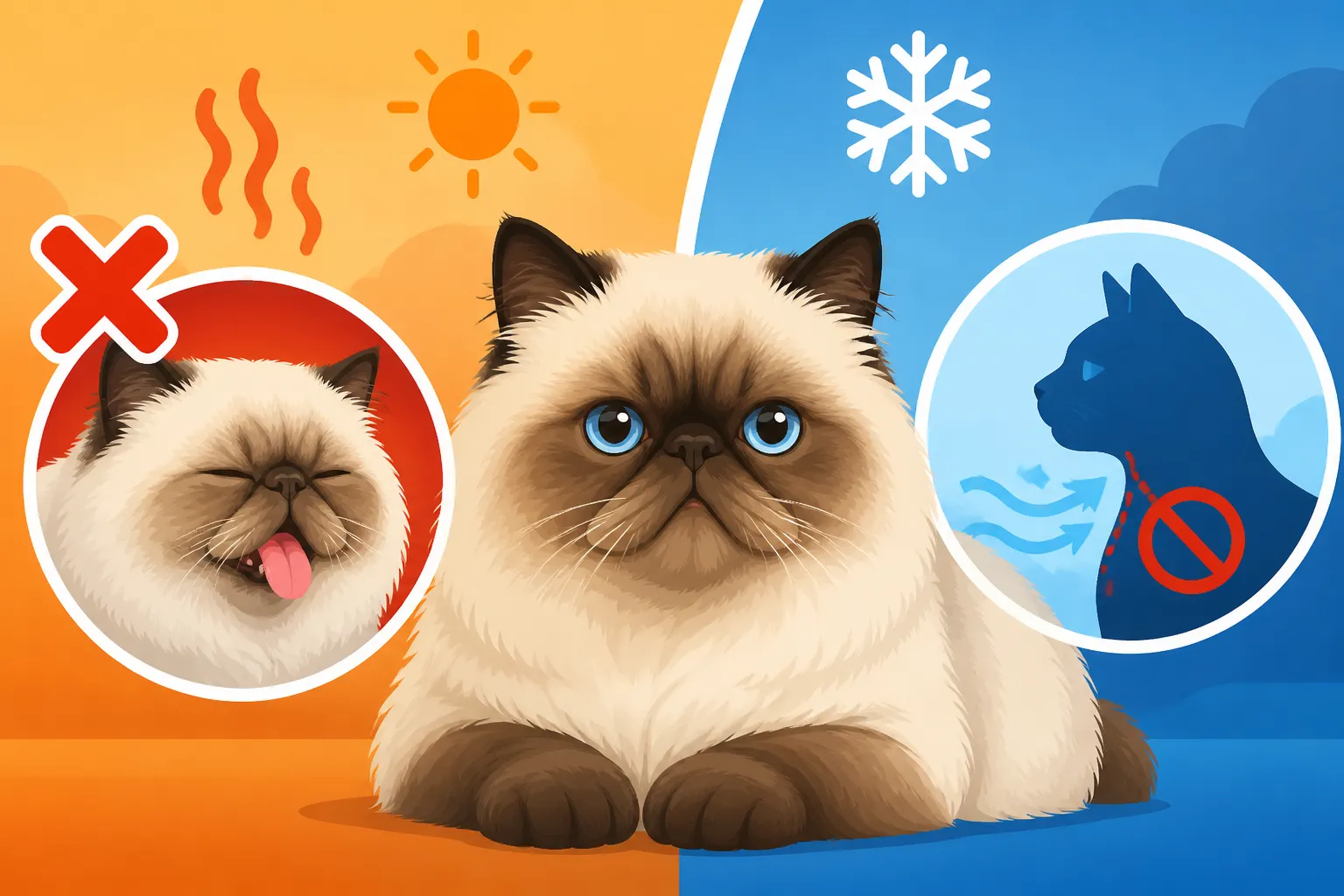
When a Himalayan attempts to pant to cool itself, it struggles to move enough air quickly and deeply through its constricted airways. The effort required to breathe more rapidly and effectively can actually generate more heat, creating a vicious cycle. Their nostrils might be too narrow, their soft palate can vibrate and obstruct airflow, and their windpipe might be smaller than average. This isn't just about sounding a bit snorty; it's a fundamental limitation on their primary cooling mechanism, which for felines (and canines) relies on evaporative cooling from the tongue and respiratory tract. A Himalayan trying to pant effectively is like trying to breathe deeply through a pinched straw – it's exhausting and inefficient. You might find yourself observing Why a Himalayan Snores Louder Than Its Siamese Ancestors and understanding that this isn't just a cute quirk, but a sign of constricted airways impacting their breathing even at rest.
Why Panting Isn't an Effective Cooling Mechanism for Himalayans
So, we've established that Himalayans are naturally predisposed to heat retention and have compromised airways. Now, let's dive into why, specifically, the act of panting, which works so well for many other animals, just falls short for these exquisite cats.
The Mechanics of Feline Panting and Its Limitations
Panting in cats is a physiological response designed to increase airflow over moist surfaces in the mouth and respiratory tract. As water evaporates from these surfaces, it carries heat away from the body, thereby cooling the cat down. This is the same principle behind sweating in humans, but instead of skin, cats use their mouths and lungs. For most cats, rapid, shallow breaths can move a significant volume of air, leading to efficient evaporative cooling.
However, for a Himalayan, this process is severely hampered. Their unique facial structure means:
- Reduced Airflow Volume: The narrow nostrils and shortened nasal passages limit the amount of air that can be drawn in with each breath. It's like having a smaller fan that can't circulate enough air.
- Increased Resistance: The anatomical obstructions, such as an elongated soft palate or smaller trachea, create resistance to airflow. The cat has to work harder to pull air in and push it out. This extra muscular effort itself generates heat, counteracting the cooling effect they're trying to achieve.
- Inefficient Evaporation: With less airflow and more resistance, the rate of evaporation from the tongue and oral membranes is diminished. The "moist surfaces" simply aren't exposed to enough moving air to cool down effectively.
- Oxygen Debt: Because breathing is so inefficient, a panting Himalayan might also struggle to get sufficient oxygen, leading to further distress and physiological strain, even as they attempt to cool.
It’s a cruel irony that the very act of trying to cool down can make them hotter and more stressed. This limitation means that relying solely on panting to manage their body temperature is not only ineffective but potentially dangerous.
The Role of the Long, Dense Coat in Heat Retention
Beyond the respiratory issues, the Himalayan's luxurious coat plays a massive role in exacerbating heat stress. We talked about it earlier, but it’s worth reiterating how fundamentally this coat works against effective cooling when panting. When a cat pants, it tries to cool its core body temperature. For a cat with a thin, sleek coat, the slight air movement from panting, combined with heat radiating from their skin, can create a minor cooling effect.
But a Himalayan's coat acts as an insulating barrier, preventing heat from easily escaping the body. Even if they could pant perfectly, the heat they are trying to dissipate is trapped close to their skin by that dense fur. The air they draw in during panting doesn't penetrate the coat deeply enough to cool the skin surface, and the heat radiating from their body struggles to pass through the thick layers of fur to reach the cooler air (if any) around them. This means the evaporative cooling from their mouth and lungs has to work incredibly hard to compensate for the trapped heat. It's a bit like trying to cool a thermos bottle by blowing on the opening – the insulation prevents the outside air from having much effect on the internal temperature. Why a Himalayan Overheats Twice as Fast as a Siamese is a stark reminder of how significant this coat and facial structure combination truly is.
Recognizing the Signs of Overheating in Your Himalayan
Since panting isn't a reliable indicator or an effective solution for your Himalayan's heat stress, it's absolutely vital that you become adept at recognizing the more subtle, and then the more urgent, signs that your cat is overheating. Early detection can literally save their life.
Subtle Indicators of Discomfort
Your Himalayan is a creature of habit and comfort, and changes in their usual behavior can be a huge red flag. Keep an eye out for these more understated signs:
- Restlessness and Frequent Position Changes: They might be constantly shifting, trying to find a cooler spot on the floor, moving from one patch of tile to another. They may get up and lie down repeatedly, never seeming to settle.
- Seeking Cool Surfaces: You might find them sprawled out on bathroom tiles, a cold kitchen floor, or even trying to squeeze into the bathtub or shower basin. Any cool, hard surface becomes a magnet.
- Reduced Activity and Lethargy: While some cats get restless, others become noticeably less active, even lethargic. They might not greet you at the door as usual or decline their favorite play session. Their normal bursts of energy might be completely absent.
- Increased Thirst: This is a key indicator. They will be drinking more water than usual, trying to rehydrate and cool down internally. Make sure their water bowl is always fresh and full.
- Open-Mouth Breathing (but not frantic panting): This is different from the heavy, frantic panting of heatstroke. It might be a slight open-mouth breath, especially after a very short burst of activity. It's a subtle way their body is trying to increase airflow. If you see this, it’s a warning sign that they are struggling. When a Himalayan's Open Mouth Breathing Needs a Vet helps distinguish serious concerns from milder ones.
- Moist Paw Pads: Cats sweat minimally through their paw pads. If you feel their pads and they are noticeably damp or clammy, it could indicate they are trying to release heat.
- Less Grooming: An overheated cat may put less effort into their meticulous grooming routine. Grooming requires energy, and if they're focused on cooling, this can fall by the wayside.
Urgent Symptoms Requiring Immediate Action
If you observe any of the following symptoms, your Himalayan is likely in a state of heatstroke, and you need to act immediately and seek veterinary care. These are not signs to wait out.
- Rapid, Heavy Panting (especially with open mouth and spread legs): This is distinct from subtle open-mouth breathing. It's frantic, labored, and often noisy breathing. Their tongue might be hanging out, and they might spread their front legs wide to maximize chest expansion, trying desperately to get more air.
- Bright Red or Pale Gums: Check their gums. If they are an alarming bright red, it indicates increased blood flow as the body tries to cool. If they are very pale or bluish, it indicates a lack of oxygen, which is extremely serious.
- Excessive Drooling: As they pant, they might produce a lot of thick, ropey saliva, sometimes accompanied by foaming. This is due to their body trying to cool through evaporation.
- Vomiting or Diarrhea: Heatstroke can affect the digestive system, leading to gastrointestinal upset.
- Wobbling, Stumbling, or Disorientation: Their central nervous system is being affected. They might appear clumsy, disoriented, or even collapse.
- Muscle Tremors or Seizures: In severe cases, uncontrolled muscle spasms or full-blown seizures can occur.
- Unresponsiveness: They may become unresponsive to your voice or touch, indicating a critical state.
- Body Temperature Above 105°F (40.6°C): While you might not have a rectal thermometer handy, if you suspect heatstroke, this is the range you're looking at. Their ears might feel very hot, and their fur can feel unusually warm to the touch.
Practical Strategies for Keeping Your Himalayan Cool
The key to a Himalayan's comfort and safety in warm weather is proactive management. You can't rely on them to cool themselves, so it's up to us, as their dedicated caretakers, to create an environment where they can thrive without fear of overheating.
Environmental Adjustments at Home
Creating a cool haven is paramount. Think about how you keep yourself comfortable, and apply those principles, amplified, for your heat-sensitive cat.
- Air Conditioning is Your Best Friend: This is truly the most effective method. If you have air conditioning, keep it running, especially during peak heat hours. Aim for a comfortable room temperature, typically between 70-75°F (21-24°C). If you don't have central air, consider a window unit in the room your Himalayan spends the most time in. This is not a luxury for them; it's a necessity.
- Fans for Air Circulation (with caution): While fans don't cool the air, they can create airflow which helps with evaporative cooling if the cat is slightly damp (e.g., from misting) or if the ambient air isn't too hot. However, never point a fan directly at an already overheated cat for extended periods, as it can sometimes push hot air around them, and if the air itself is hot, it won't help. Position them to circulate air generally.
- Shade and Block Sunlight: Keep curtains and blinds closed during the hottest parts of the day, especially on windows that get direct sunlight. South and west-facing windows can turn a room into an oven.
- Cooling Mats and Elevated Beds: Invest in cooling mats that contain gel or water, which stay cool without refrigeration. These can be lifesavers. Place them in your Himalayan's favorite resting spots. Elevated pet beds with mesh centers also help by allowing air to circulate underneath them, preventing heat from radiating up from the floor. You can find these easily on platforms like Amazon.
- Ceramic Tiles or Marble Slabs: Designate areas with ceramic tile, marble, or stone as "cooling zones." These materials naturally stay cooler than carpet or upholstered furniture. You can even place a few large tiles in a carpeted room.
- Limit Activity During Heat: Keep playtime to the cooler parts of the day – early morning or late evening. Intense play can quickly lead to overheating. When to End a Himalayan's Play Session is a crucial piece of knowledge here.
Grooming and Hydration as Cooling Aids
Beyond environmental controls, your daily care routine plays a significant role in helping your Himalayan manage heat.
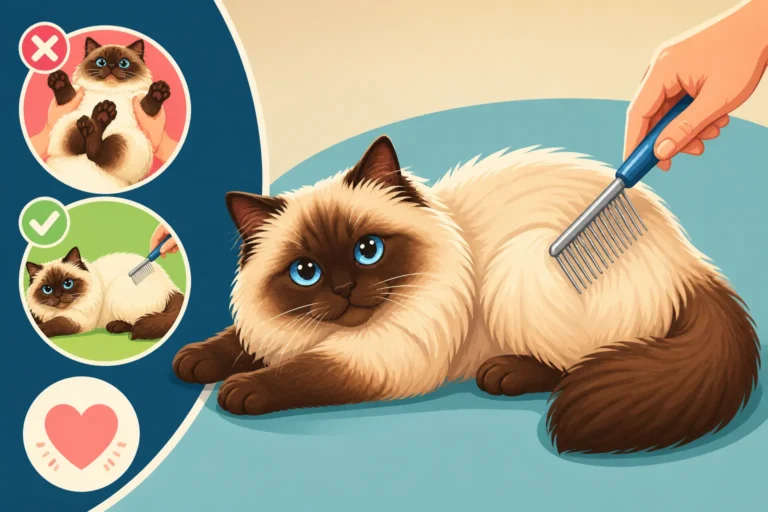
- Regular Grooming is Non-Negotiable: That dense undercoat we talked about? It needs to be regularly removed. Daily combing with a good quality steel comb is essential, not just for preventing mats, but for removing loose undercoat that traps heat. Think of it as thinning out their personal blanket. A matted coat is an even worse insulator and should be avoided at all costs. Removing dead hair allows air to circulate closer to the skin. Check out The Daily Comb a Himalayan Cannot Skip for more details on this vital routine.
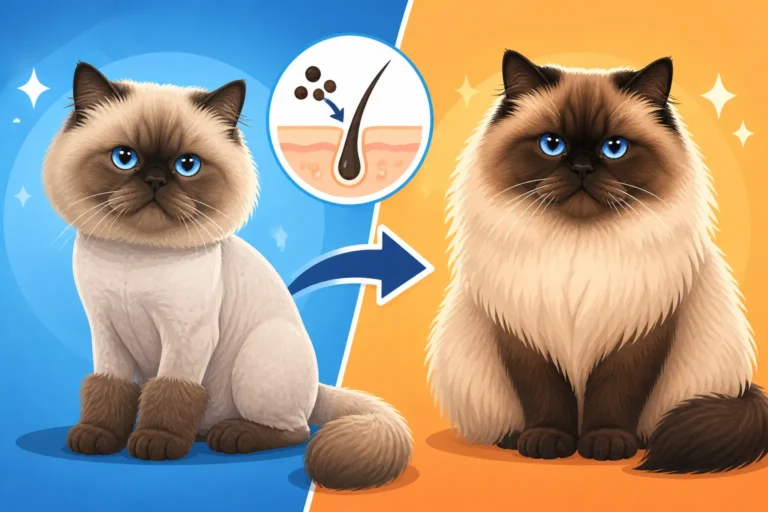
- Consider a Professional Groomer: Sometimes, especially if your cat mats easily or you struggle to get all the undercoat out, a professional groomer can be invaluable. They can give your Himalayan a "lion cut" or a "teddy bear cut" which significantly reduces the amount of fur, providing immense relief in hot weather. Just be aware that shaved fur can sometimes grow back darker due to temperature changes affecting the point gene.
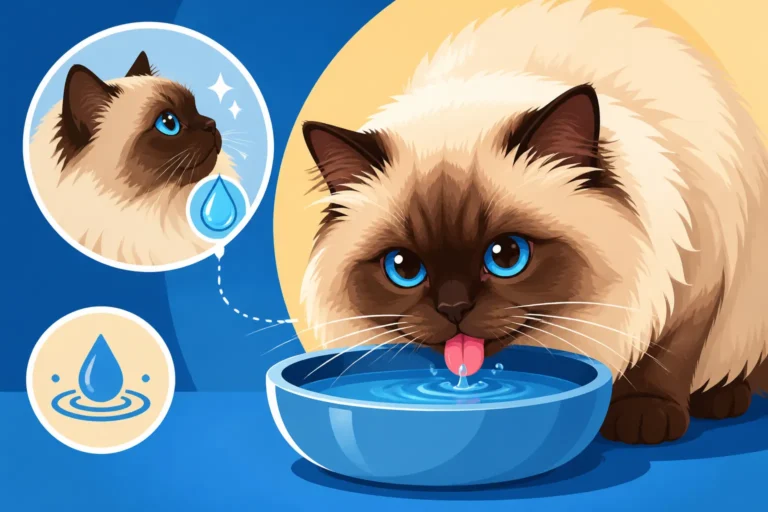
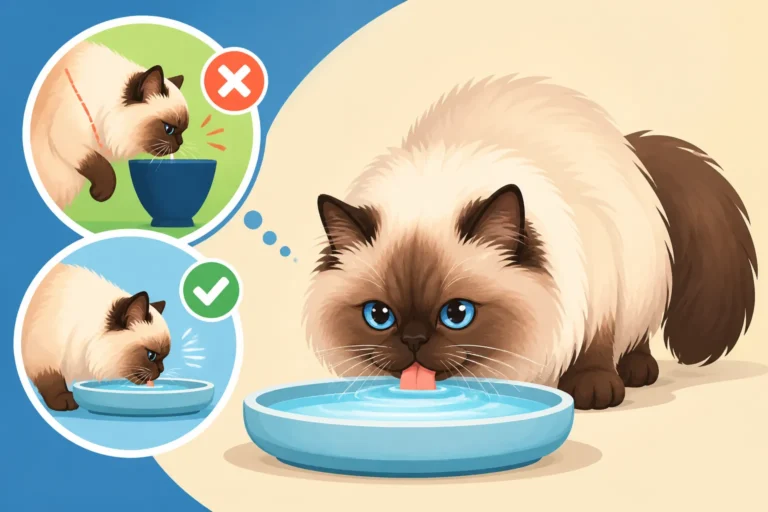
- Hydration, Hydration, Hydration: Always provide multiple sources of fresh, cool water.
- Water Bowls: Have several wide, shallow ceramic or stainless steel bowls placed strategically around the house. Some Himalayans might prefer to drink from a running faucet, so consider a pet fountain. Brands like Chewy offer a variety of options that might encourage your cat to drink more.
- Ice Cubes: Add a few ice cubes to their water bowl to keep it extra cold. Some cats even enjoy batting at the ice cubes.
- Wet Food: Incorporate wet food into their diet, as it has a much higher moisture content than dry kibble, helping with overall hydration. Fresh, high-moisture food options can be great for this.
- Misting with Cool Water: A light misting of cool (not cold) water on their fur, especially on their paws or belly, can provide temporary evaporative cooling. Do this sparingly and gently, as some cats dislike getting wet. Never spray directly at their face.
- Damp Towels: You can gently drape a cool, damp (not soaking wet) towel over your Himalayan's back or place it for them to lie on. This can offer direct cooling relief.
Here's a quick comparison of effective cooling strategies:
| Strategy | Description | Benefits | Considerations |
|---|---|---|---|
| Air Conditioning | Mechanical cooling of ambient air. | Most effective, reduces overall temperature, creates comfortable environment. | Cost of electricity, availability. |
| Fans | Circulates air, aids evaporative cooling. | Inexpensive, can be placed anywhere. | Only effective if ambient air is not too hot; does not cool air. |
| Cooling Mats | Gel or water-filled mats that absorb body heat. | Provides direct, localized cooling; no electricity needed. | Cat must choose to lie on it; can be punctured. |
| Regular Grooming | Daily combing to remove excess undercoat. | Improves natural air circulation through coat, prevents heat trapping. | Requires daily commitment; can be challenging for matted cats. |
| Hydration (Wet Food/Water) | Increases internal fluid levels, aids body's natural temperature regulation. | Essential for all bodily functions, helps prevent dehydration. | Cats can be picky drinkers; ensure multiple fresh sources. |
| Lion Cut | Professional shaving of the coat. | Drastically reduces insulation, immediate relief. | Requires professional groomer; coat regrowth can be darker; risk of sunburn. |
| Shade & Closed Blinds | Blocks direct sunlight and radiant heat. | Simple, free, very effective at preventing heat buildup. | May make rooms darker; doesn't cool existing hot air. |
When to Seek Veterinary Intervention for Heat Stress
Despite all your best efforts, sometimes a Himalayan can still succumb to heat stress, especially if there's an unexpected heatwave or a sudden rise in indoor temperatures. Knowing when to escalate from home care to professional medical attention is critical.
Understanding Heatstroke and Its Dangers
Heatstroke, also known as hyperthermia, is a severe and life-threatening condition where a cat's body temperature rises to dangerously high levels, overwhelming its natural cooling mechanisms. For Himalayans, given their predispositions, it can progress very rapidly. The internal organs, including the brain, kidneys, liver, and heart, can be severely damaged when exposed to prolonged high temperatures. This damage can be irreversible and can lead to multi-organ failure and death.
The danger is that a Himalayan’s thick coat can mask a rising body temperature, and their inefficient panting means they can be in serious trouble before you even realize it. Unlike a dog that might pant profusely and visibly struggle, a Himalayan might become quietly lethargic, then suddenly crash. This is why vigilance is so incredibly important. The extreme flat-faced nature of some Himalayans can be particularly problematic, often grading poorly when vets assess their nostrils, leading to even greater risk. How a Vet Grades a Himalayan's Nostrils is a good read to understand the severity.
If you observe any of the urgent symptoms mentioned earlier – rapid, heavy panting, bright red or pale gums, excessive drooling, vomiting, disorientation, wobbling, or collapse – do not hesitate. This is an emergency. Every minute counts when dealing with heatstroke in a cat, especially a breed as vulnerable as the Himalayan.
Emergency First Aid Before Reaching the Vet
While getting to the vet is the absolute priority, there are a few things you can do on the way or while you're calling to help cool your cat down safely.
- Move to a Cooler Environment Immediately: The very first step is to get your cat out of the hot area. Carry them to an air-conditioned room, a shaded spot outdoors, or even into a cool car if you're heading to the vet.
- Apply Cool (Not Icy) Water: Use cool water, not ice-cold water. Icy water can cause peripheral vasoconstriction (narrowing of blood vessels), which actually traps heat in the body's core and can lead to shock.
- Gently wet their paw pads, ears (especially the inside flaps), and the belly area.
- You can use damp towels or sponges for this.
- If you have a spray bottle, a light misting of cool water can also help.
- Focus on areas with less fur, as water on their dense coat won't reach the skin effectively and can even trap heat if it doesn't evaporate.
- Use a Fan: Once damp, position a fan to blow gently towards them to encourage evaporative cooling. Remember, the key is airflow over damp surfaces.
- Do Not Force Water: Do not try to force your cat to drink water if they are disoriented or unconscious, as they could aspirate it (inhale it into their lungs).
- Monitor Temperature (If Possible): If you have a pet thermometer and know how to use it rectally, take their temperature. Stop active cooling once their temperature drops to around 103°F (39.4°C) to prevent overcooling, but keep heading to the vet.
- Call Ahead: As you're performing first aid, call your veterinarian or the nearest emergency animal clinic to let them know you're coming and describe your cat's symptoms. This allows them to prepare for your arrival, saving crucial minutes.
Remember, these are temporary measures to stabilize your cat. Professional veterinary care is essential to assess the extent of internal damage, rehydrate your cat, and provide supportive care to prevent organ failure. Living with a Himalayan means being extra mindful of their unique needs, especially when it comes to temperature control. By understanding their limitations and taking proactive steps, you can ensure your fluffy companion leads a long, happy, and comfortable life. How to Cool a Long Coated Himalayan in Summer can offer even more insights into daily management.
Disclaimer
This article is for general informational purposes only and does not constitute professional advice. Laws, prices and regulations vary by location and change over time. Consult a qualified professional for guidance on your specific situation.