Which Tooth Spacing Suits a Himalayan’s Undercoat
Living with a Himalayan cat means embracing a life filled with beauty, purrs, and, let's be honest, a good deal of grooming. That luxurious, dense coat is a hallmark of the breed, but it's also a constant challenge to keep free of tangles and painful mats. Many of us have stared at a wall of combs in a pet store, utterly bewildered, wondering which one will actually work. This guide is here to cut through the confusion and help you understand exactly which tooth spacing suits your Himalayan's unique undercoat, transforming grooming from a chore into a bonding experience.
Understanding the Himalayan's Unique Coat
Before we even talk about combs, it’s essential to appreciate the magnificent, yet demanding, coat your Himalayan wears. It’s not just long fur; it’s a complex tapestry of different hair types that require a specific approach to care. Ignoring this complexity is often the first step toward a matted mess.
The Double Coat Dilemma
Your Himalayan cat boasts what's known as a double coat. Imagine two distinct layers of fur working in tandem. The outer layer consists of longer, coarser guard hairs. These are the hairs you see, the ones that give your cat its stunning color points and overall majestic appearance. They're designed to offer protection from the elements, although for an indoor Himalayan, this translates more to looking fabulous.
Beneath this beautiful outer layer lies the true challenge: the undercoat. This is a dense, soft, downy layer of very fine hairs. Its natural purpose is insulation, keeping your Himalayan warm. However, it’s also incredibly prone to shedding, tangling, and ultimately, matting. It's almost like a thick woolen blanket underneath a silk robe. Without proper tools and technique, these soft undercoat hairs quickly felt together, forming tight, uncomfortable, and sometimes painful mats close to the skin. How Much Undercoat a Himalayan Carries Under Its Points is a good way to really appreciate the volume we're dealing with.
Why Mats Form So Easily
The sheer volume and texture of the undercoat are the primary culprits behind mat formation. Unlike single-coated breeds, where shed hairs often fall out relatively easily, a Himalayan's shed undercoat gets trapped within the longer guard hairs. As your cat moves, plays, or even just shifts in their favorite sunbeam, these trapped hairs begin to knot together. Add a bit of natural oil from their skin, some static electricity, or even just dust, and you have a perfect recipe for a mat.
Areas particularly prone to matting include the "armpits" (behind the front legs), the britches (around the hind legs), behind the ears, and especially the magnificent ruff around their neck. These are high-friction areas where movement constantly rubs the fur together. A small tangle can escalate into a dense, skin-pulling mat surprisingly quickly – sometimes in a matter of hours if the coat is particularly neglected. It’s a constant battle, and it's why Why a Himalayan Mats Faster Than a Ragdoll is a truth many owners quickly discover.
The Science of Comb Tooth Spacing
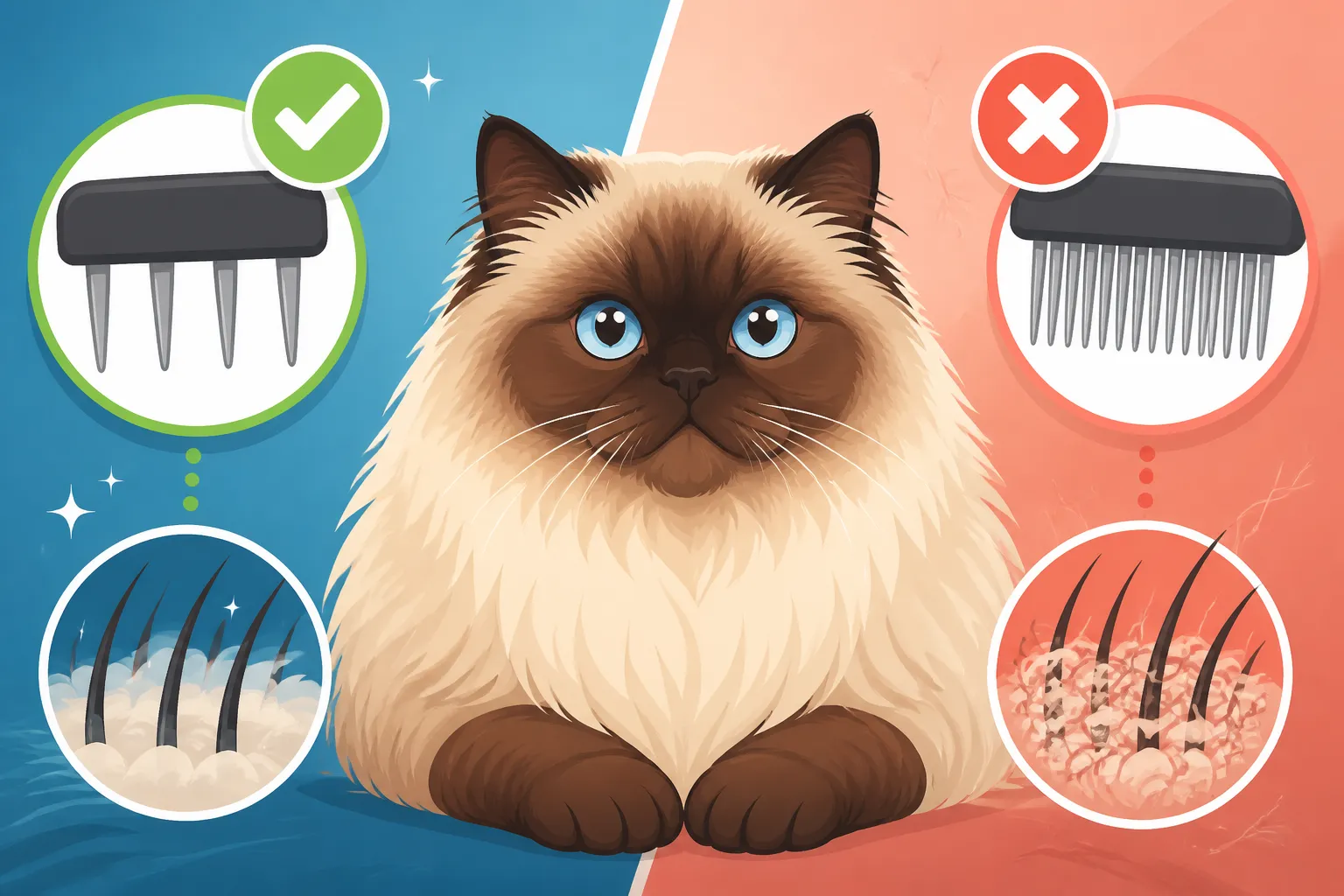
When you’re facing that luxurious, dense coat, the right tool truly makes all the difference. The "perfect" comb isn't a single item, but rather a strategic selection, with tooth spacing being the most critical factor. Different tooth spacings are designed to tackle specific layers and types of tangles.
Wide-Tooth Combs: For the Outer Guard Hairs
A wide-tooth comb is your first line of defense, like the opening act before the main event. These combs typically have teeth spaced about 1/4 to 1/2 inch apart, sometimes even wider. Their primary role is to gently glide through the longer, outer guard hairs. Think of them as the preliminary sweep, removing any large, loose debris, surface tangles, or shed hairs from the top layer of the coat.
You wouldn't use a wide-tooth comb to tackle a deep mat, nor would it be effective for truly separating the fine undercoat hairs close to the skin. Its job is to prepare the canvas, so to speak. Using a wide-tooth comb first helps to prevent snagging and pulling when you move on to a finer comb, which can be very uncomfortable for your cat. It's particularly useful around the ruff and tail, where the fur is longest and most prone to superficial tangles. When you’re just starting your daily grooming, this is often the comb you reach for first to get a quick, gentle pass over the entire body.
Medium-Tooth Combs: The All-Rounder
If the wide-tooth comb is the opener, the medium-tooth comb is your reliable workhorse. These combs usually feature teeth spaced between 1/8 to 1/4 inch apart. This spacing strikes a balance, allowing the comb to penetrate deeper into the coat than a wide-tooth comb, without getting immediately stuck in dense undercoat.
Medium-tooth combs are excellent for general daily grooming once the surface tangles have been addressed. They help to tease out smaller knots and begin the process of separating the undercoat from the guard hairs. This is the comb you’ll likely spend the most time with, steadily working through sections of your Himalayan's coat. It’s effective for maintaining overall coat health and preventing the escalation of small tangles into full-blown mats. Many owners find a good quality, sturdy metal comb with both wide and medium-spaced teeth on opposing sides to be an indispensable tool, readily available from online retailers like Chewy or Amazon.
Fine-Tooth Combs: Tackling the Deep Undercoat
This is where the precision work happens, and it's also where you need to exercise the most caution. Fine-tooth combs have teeth spaced very closely together, often less than 1/8 inch apart. Their purpose is to reach deep into the undercoat, pulling out shed, dead hairs that are trapped closest to the skin and working out those stubborn, nascent mats.
While crucial, a fine-tooth comb must be used after the wider and medium-tooth combs have done their work. Trying to force a fine-tooth comb through a coat that hasn't been detangled first is a recipe for disaster. It will snag, pull, cause pain, and quickly turn a small mat into a larger, tighter, and more painful one. These combs are invaluable for the final fluffing and ensuring every last bit of dead undercoat is removed, especially in critical areas like the britches or behind the ears. For delicate tasks, ensure you have a firm but gentle hand, making short, careful strokes.
Choosing the Right Comb for Each Coat Layer
Grooming a Himalayan isn't a one-comb job. It's a systematic process, almost like building a house, where each tool has a specific function in ensuring a solid, tangle-free foundation.
The Initial Pass: Detangling the Surface
Your grooming session always starts with the big picture – addressing the surface of the coat. Imagine gently running your fingers through your Himalayan’s fur first, feeling for any obvious snags. Then, reach for your wide-tooth comb. This step isn't about deep cleaning; it's about preparing the way.
Start at the extremities – the legs, the tail, then move towards the body. Use a gentle, sweeping motion, working with the lay of the fur. The goal here is to remove any loose hairs, surface debris, or larger tangles that might have formed in the outer guard hairs. You'll often be surprised by how much loose fur even a preliminary pass can collect. This initial phase makes the subsequent, deeper combing much more comfortable for your cat and less frustrating for you. If you encounter a small snag, don't yank. Gently work it apart with your fingers or the very tips of the wide teeth, always holding the fur at the base near the skin to minimize pulling. Working a Comb Through a Himalayan's Ruff will give you some great tips for that particularly dense area.
Deep Dive: Addressing the Undercoat
Once the surface is clear, it's time to get serious with the undercoat. This is where the medium-tooth comb truly shines. Sectioning the coat is vital here. Instead of trying to comb the entire cat at once, imagine working in manageable "rows" or squares, much like you would brush your own long hair. Start at the bottom of a section (e.g., the belly or lower flank) and work your way up, lifting the top layer of fur out of the way.
Place the medium-tooth comb close to the skin, but always ensure you’re not dragging it directly on the skin. Use short, smooth strokes, working outwards from the skin to the ends of the hair. You should feel the comb gliding through, gently separating the undercoat. If you hit resistance, stop. Do not pull. Instead, go back to the wide-tooth comb or even your fingers to tease out the tangle. This is the most time-consuming part of the grooming process, and patience is your greatest ally. For particularly stubborn areas, or if you suspect early matting, you might consider a specialized dematting tool, but always use these with extreme caution, as their blades can cut the skin if not handled correctly. Remember, How Often a Himalayan Must Be Combed isn't a suggestion; it's a necessity.
Finishing Touches and Problem Areas
Finally, after the medium-tooth comb has done its job, you can bring out the fine-tooth comb. This is for perfection, ensuring every last shed hair is removed and the coat is truly pristine. Again, use it with a light touch, concentrating on areas where mats tend to hide: behind the ears, in the armpits, and around the britches. If your cat tolerates it, a quick pass with a rubber grooming brush or a soft slicker brush (used very gently and only on the tips of the fur) can help remove any remaining loose hairs and distribute natural oils, giving the coat a lovely sheen.
Special attention should always be paid to the "britches" – the long fur around the hind legs and tail area. Combing a Himalayan's Britches Without Turning It Over can be a bit of a dance, but it’s critical. These areas are magnets for tangles and can quickly become uncomfortable or even unsanitary if neglected. If your cat is particularly sensitive, consider breaking grooming sessions into shorter, more frequent bursts rather than one long, overwhelming session. Always reward good behavior with praise or a tiny treat.
| Comb Tooth Spacing | Ideal Use | Best For (Coat Layer/Condition) |
|---|---|---|
| Wide-Tooth | Initial pass, surface detangling | Outer guard hairs, large tangles |
| Medium-Tooth | Daily maintenance, deeper detangling | Undercoat separation, general grooming |
| Fine-Tooth | Removing trapped shed hair, finishing touches | Deep undercoat, small knots, sensitive areas |
Beyond the Comb: Best Practices for Undercoat Care
While the right comb is paramount, it's just one piece of the puzzle in maintaining your Himalayan's magnificent coat. A holistic approach to grooming, combined with attention to other aspects of their care, ensures their fur remains healthy and beautiful.
The Importance of Routine and Technique
Consistency is truly the unsung hero of Himalayan grooming. A quick, gentle session every single day, even just 10-15 minutes, is far more effective and less stressful than trying to tackle a week's worth of tangles in one marathon session. Establish a routine early on, ideally when your Himalayan is a kitten, so they learn to accept and even enjoy the process. Getting a Himalayan Kitten Used to the Comb is crucial for setting them up for a lifetime of comfortable grooming.
Technique matters, too. Always comb in the direction of hair growth, never against it, unless you're very carefully back-combing a section to visually inspect the skin. Use a "line brushing" technique: part the fur and comb a small section, then move to the next section, ensuring you comb all the way down to the skin. This prevents "surface grooming" where the top looks fine but the undercoat is a matted disaster waiting to happen. Be gentle, avoid yanking, and if you hit a snag, gently work it out rather than forcing the comb through. Remember, How Many Minutes a Day a Persian Coat Takes on a Himalayan is an investment in their comfort and health.
When to Seek Professional Help
Despite your best efforts, sometimes mats happen. A really dense, tight mat close to the skin can be incredibly painful to try and remove at home, and attempting to cut it out yourself can lead to accidental nicks or cuts on your cat's delicate skin. This is when a professional groomer or your veterinarian becomes your best friend.
A professional groomer has specialized tools and techniques for safely removing mats, often using clippers to shave them out rather than attempting to comb them. They can also provide services like a "lion cut," which can be a fantastic way to reset a severely matted coat or manage a coat during warmer months. If the mat is particularly severe or your cat is very stressed, your vet may even recommend sedation for a stress-free mat removal. Don't feel guilty if you need to call in the pros; it's about prioritizing your cat's well-being. Why a Neglected Himalayan Ends Up Sedated for Clipping highlights the importance of timely intervention.
Nutrition and Hydration's Role
You might not immediately connect diet with grooming, but what goes into your Himalayan’s body profoundly impacts the quality of their coat. A healthy coat starts from within. High-quality cat food, rich in essential fatty acids (like Omega-3 and Omega-6), vitamins, and minerals, promotes strong, healthy hair follicles, leading to a shinier, more resilient coat that is less prone to excessive shedding and matting.
Ensure your Himalayan has constant access to fresh, clean water. Proper hydration keeps skin healthy and supple, which in turn supports coat health. A dehydrated cat can have dry, brittle fur that tangles more easily. Some Himalayans, especially those with flatter faces, might struggle to drink from deep bowls, so consider a wide, shallow bowl or even a pet fountain to encourage water intake. A well-nourished and hydrated cat will have a healthier, more manageable coat, making your grooming efforts much more effective and enjoyable for both of you.
Disclaimer
This article is for general informational purposes only and does not constitute professional advice. Laws, prices and regulations vary by location and change over time. Consult a qualified professional for guidance on your specific situation.