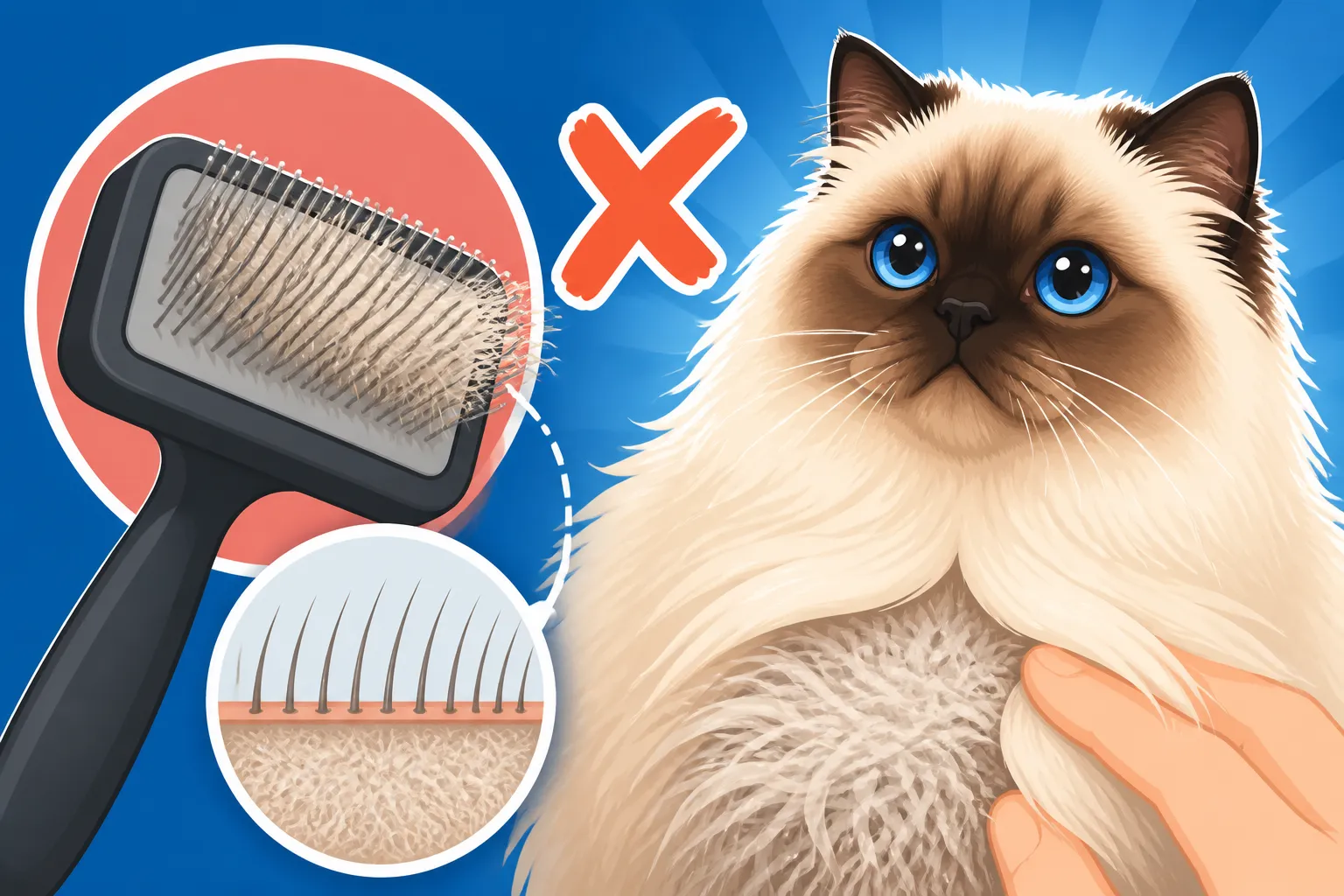
Why a Slicker Brush Misses a Himalayan’s Undercoat
It's a familiar scenario for many Himalayan cat owners: you've got your beautiful, fluffy companion, you're trying your best to keep that gorgeous coat in pristine condition, and you dutifully reach for your slicker brush. You brush and brush, and the topcoat looks smooth and lovely, but somehow, mats still seem to be lurking, especially underneath. This guide is going to peel back the layers – literally – to explain why your trusty slicker brush isn't cutting it for your Himalayan's dense undercoat, and what tools and techniques you need to truly conquer those sneaky mats.
Understanding the Himalayan's Unique Coat Structure
Before we dive into why a slicker brush falls short, we need to truly appreciate the incredible, and sometimes challenging, masterpiece that is a Himalayan's coat. It’s not just long hair; it’s a sophisticated, multi-layered system designed for insulation, elegance, and, unfortunately for us owners, a propensity for tangles.
The Double Coat Demystified
Every Himalayan boasts a magnificent double coat, a trait they inherited directly from their Persian ancestors. This isn't just a fancy term; it means two distinct types of hair growing from their skin, each with its own purpose and texture.
First, you have the outer layer, known as the guard hairs or topcoat. These hairs are longer, coarser, and typically have a slightly glossier sheen. They're the ones that give your Himalayan that flowing, regal appearance, and they're what most standard brushes, including slicker brushes, tend to glide over. This topcoat acts like a protective shield, repelling dirt and offering some defense against minor snags. When you use a slicker brush, you're primarily smoothing and detangling this outer layer, giving the impression of a well-groomed cat.
However, beneath this visible glory lies the true challenge: the undercoat. This layer consists of incredibly fine, soft, and dense hairs. Their primary function is insulation – keeping your Himalayan warm in cooler temperatures. These hairs are much shorter than the topcoat and grow in prodigious numbers, creating a thick, cottony layer close to the skin. The sheer volume and fine texture of this undercoat make it highly prone to shedding, tangling, and matting if not properly managed. It's this dense, fluffy undercoat that holds onto dead hair, traps debris, and eventually twists into the impenetrable knots that become a Himalayan owner's nightmare. You might be brushing daily, but if you're not getting to this underlying layer, you're missing the root of the problem.
Why the Persian Half Makes the Difference
The distinctive coat of the Himalayan is almost entirely a gift from its Persian heritage. When the Himalayan breed was first developed by crossing Persians with Siamese cats, the goal was to combine the Persian's long, luxuriant coat and docile temperament with the Siamese's striking colorpoint pattern and piercing blue eyes. What they absolutely kept, and what defines a huge part of their care, is that opulent Persian coat.
Persians are renowned for having one of the longest and densest coats in the cat world, and Himalayans carry this genetic predisposition. This isn't just about length; it's about the sheer volume of hair, particularly that incredibly thick undercoat. A Himalayan isn't just a long-haired cat; it's a cat with a very specific, high-maintenance type of long hair. The density means that dead hairs don't easily fall out; instead, they get trapped within the living coat, quickly forming tangles and then solid mats. This is especially true for areas like the "britches" on their hind legs, the ruff around their neck, and their armpits, where movement and friction naturally accelerate matting. Understanding this deep-seated genetic influence helps us appreciate why a simple slicker brush, designed for less dense coats, just isn't up to the task. If you want to dive deeper into this, check out How Much Undercoat a Himalayan Carries Under Its Points.
The Limitations of a Slicker Brush for Himalayan Undercoats
It’s easy to feel like you’re doing everything right when you're diligently brushing your Himalayan with a slicker brush. After all, it pulls out some hair, and the topcoat looks fantastic, right? But for a Himalayan, that visual appeal can be deeply misleading.
Surface Grooming vs. Deep Detangling
A slicker brush, with its tightly packed wire bristles, is excellent for removing loose surface hair and smoothing the topcoat. It’s fantastic for breeds with single coats or less dense double coats, where the goal is primarily to remove shedding hair and add shine. However, for a Himalayan, its design inherently limits its effectiveness. The fine, closely spaced wires of a slicker brush simply cannot penetrate the thick, cottony undercoat all the way down to the skin. Instead, what often happens is that the slicker brush skims over the top layer of the coat, giving the illusion of a thorough brushing. You're essentially "polishing" the surface without addressing the dense tangle of dead hair underneath.
This leads to a significant problem: the dead undercoat remains trapped. As more dead hair accumulates, it compacts and begins to felt, creating a foundation for mats deep within the coat, right against the skin. You might see a pile of hair on your brush and think you're making progress, but a substantial amount of the problematic undercoat is still firmly embedded. It's like trying to clean a thick rug by only sweeping the very top layer – you're moving some dust, but the real dirt is still deeply woven into the fibers. The slicker brush merely brushes the top of the undercoat, compressing it rather than pulling out the shed strands that are the precursors to mats.
The Hidden Dangers of Improper Brushing
Beyond just being ineffective, relying solely on a slicker brush can actually be detrimental to your Himalayan's coat and skin health. When the slicker brush fails to reach and remove the shed undercoat, mats begin to form unseen. These mats start small, often close to the skin, and rapidly grow larger and tighter. Because the Himalayan's topcoat is long and flowing, these mats can be completely hidden from view until they become severe.
Imagine constantly brushing the top layer of your cat's fur, but underneath, knots are tightening. This creates a painful situation. Mats pull on the skin, causing discomfort, irritation, and even open sores. When mats are ignored, they can restrict movement, hinder proper circulation, and become breeding grounds for bacteria, yeast, or parasites. It's a cruel irony that your diligent but ineffective brushing could be contributing to the very problem you're trying to prevent. Your Himalayan might seem fine outwardly, but deep beneath that beautiful topcoat, a painful problem could be brewing. It's also why it can be so hard to spot issues until they're advanced; Why a Himalayan's Coat Hides a Wound for Days perfectly illustrates this. What might look like a healthy coat could be hiding severe matting or skin issues that require veterinary intervention and potentially a full shave under sedation. This is why Why a Neglected Himalayan Ends Up Sedated for Clipping is a real and heartbreaking reality for many owners who don't have the right tools or knowledge.
The Right Tools for a Himalayan's Dense Undercoat
So, if a slicker brush isn't the answer, what is? The key lies in selecting tools specifically designed to penetrate that dense undercoat without damaging the delicate topcoat or irritating your cat's skin.
The Essential Steel Comb
For any Himalayan owner, a good quality steel comb is not just a tool; it's a necessity, the absolute hero of your grooming kit. Forget the plastic combs that snap or pull; you need a sturdy, well-made metal comb, preferably with both wide-spaced and narrow-spaced teeth.
The wide-toothed side is your first line of defense. It's designed to gently separate the longer guard hairs and penetrate deep into the undercoat, allowing you to catch and pull out loose, shed hair before it has a chance to clump. The longer, stronger teeth are capable of reaching all the way to the skin, which is crucial for effective mat prevention. Once you've worked through a section with the wide teeth, you can follow up with the narrower-spaced teeth to ensure every last bit of loose undercoat is removed and to check for any smaller tangles that might have been missed.
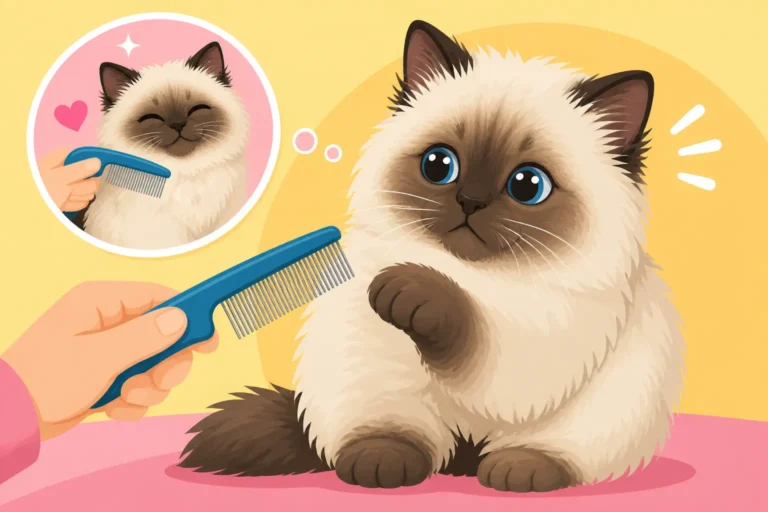
The technique with a steel comb is different from a slicker brush. Instead of sweeping over the coat, you're "line combing." This means parting the hair, holding it back with one hand, and then combing in small sections, always working from the skin outwards. You effectively create small sections, like lines, and comb each section thoroughly before moving to the next, ensuring you're addressing the undercoat directly. This method, while more time-consuming, is the only way to guarantee you're truly removing the shed undercoat and preventing mats from forming. When choosing one, consider something like the durable steel combs you can find on platforms like Amazon or Chewy, which often have a good selection of professional-grade grooming tools. For more guidance on this crucial tool, consult Which Steel Comb a Himalayan's Coat Needs.
Dematting Tools and Specialty Rakes
While a steel comb is your daily preventative hero, sometimes, despite best efforts, a mat will form. For these instances, dematting tools and specialty rakes become necessary. These are not for daily use, but for careful intervention when tangles start to become serious.
Dematting rakes typically have sharp, curved blades or teeth designed to cut through mats with minimal pulling on the surrounding healthy hair. They can be incredibly effective, but they must be used with extreme caution. You absolutely never want to pull at a mat; instead, you work the tool carefully through the mat, often using a sawing motion, to break it apart without hurting your cat. Always hold the skin taut at the base of the mat to minimize discomfort for your Himalayan.
Another type of specialty tool is an undercoat rake, which has longer, widely spaced teeth. These are particularly useful for tackling very dense, fluffy undercoats and can help loosen up compacted areas that are just starting to form into mats, making them easier to follow up with a steel comb. These tools are fantastic for extracting vast amounts of dead undercoat without cutting the healthy topcoat, but again, gentle and consistent use is key. Remember, prevention is always better than cure when it comes to mats. If you find yourself frequently reaching for dematting tools, it’s a sign that your daily combing routine might need to be intensified or refined. Knowing Working a Mat Out From Under a Himalayan's Points effectively can save your cat a lot of pain and a trip to the groomer.
Establishing an Effective Grooming Routine
Knowing which tools to use is only half the battle; the other half is integrating them into a consistent, effective routine. For a Himalayan, grooming isn't a sporadic activity; it's a daily commitment, a sacred ritual that directly impacts their health and comfort.
Daily Commitment to Prevent Mats
Let's be blunt: if you own a Himalayan, daily combing is not optional. It is absolutely essential. Their dense, fine undercoat sheds constantly, and those shed hairs, if not removed, will tangle and mat with alarming speed. A single missed day can often mean a small tangle quickly escalating into a formidable mat, especially in high-friction areas like behind the ears, under the chin, in the armpits, or on the "britches." Many owners are shocked to learn that Why a Missed Day Costs a Himalayan a Mat isn't an exaggeration – it's a simple truth of their coat type.
Think of it like this: every day, your Himalayan sheds a fresh layer of fine, downy hair. If that layer isn't removed, it intertwines with the existing coat, creating a dense, felt-like fabric. The next day, another layer sheds and gets caught, adding to the problem. What might take ten minutes of gentle combing today could take an hour of painstaking detangling tomorrow, or worse, a costly and stressful visit to the vet for a sedative shave later in the week.
Establishing a consistent schedule is paramount. Pick a time of day when your Himalayan is relaxed and receptive – perhaps after a nap, or just before a meal. Short, positive sessions are far more effective than long, infrequent ones that might overwhelm your cat. For a comprehensive guide on making this a habit, delve into The Daily Comb a Himalayan Cannot Skip. You can even make it a treat time, with your cat looking forward to the quiet attention and a little reward from their favorite snack.
Technique: Line Combing for Success
The most effective method for grooming a Himalayan's double coat is "line combing" or "line brushing." This technique ensures you're reaching every layer of that dense fur, right down to the skin, where mats typically begin.
Here’s how to do it:
- Prepare Your Space and Cat: Choose a quiet, comfortable spot. A raised surface, like a sturdy table with a non-slip mat, can make it easier on your back and keep your cat contained. Have your steel comb and any dematting tools ready. Gently talk to your cat, offering praise and reassurance. This is also where you want to start them young; Getting a Himalayan Kitten Used to the Comb is crucial for future ease.
- Start Small: Don't try to comb the entire cat at once. Begin with a manageable section, usually a less sensitive area like the side of their body, before moving to their back, chest, and finally the more delicate areas like the belly, armpits, and britches.
- Part the Hair: Using your free hand, part the hair horizontally or vertically, revealing a "line" of skin. You want to see the skin at the base of the parted hair.
- Comb from the Skin Out: With your steel comb, comb under the parted section, working your way from the skin outwards. Use short, gentle strokes. The goal is to separate and remove all the loose undercoat from that small section.
- Work in Layers: Once you've combed one line, move down about an inch, part the hair again, and repeat the process. Overlap your sections slightly to ensure no area is missed.
- Be Thorough but Gentle: If you encounter a tangle, don't pull! Instead, gently work it out with the wide-toothed side of your comb, or use a dematting tool if it's a larger mat. Always support the skin at the base of the mat to minimize discomfort.
- Check Your Work: After completing a section, run your comb through it again to ensure it glides smoothly without resistance. You should be able to run the comb all the way from the tips of the hair to the skin without snagging.
- Praise and Reward: Keep the sessions positive with praise and occasional treats. This helps your Himalayan associate grooming with a pleasant experience. For some cats, What a Himalayan Will Take to Sit Through a Comb can make all the difference.
This systematic approach, though seemingly tedious, is the most effective way to manage a Himalayan's coat. It might take How Many Minutes a Day a Persian Coat Takes on a Himalayan, but it’s an investment in their comfort and health. Remember, consistency is your best friend when it comes to keeping your Himalayan mat-free and happy.
Comparison of Grooming Tools for Himalayan Coats
To summarize the critical differences and uses of various grooming tools for your Himalayan:
| Tool Type | Best For | Effectiveness on Undercoat | Risk of Skin Irritation | Key Benefit |
|---|---|---|---|---|
| Slicker Brush | Smoothing topcoat, removing loose surface hair | Minimal; mostly surface only | High, if overused | Adds shine, detangles topcoat |
| Steel Comb | Penetrating undercoat, removing shed hair, checking for mats | Excellent; reaches skin | Low, if used gently | Thorough detangling, mat prevention |
| Undercoat Rake | Loosening dense, shedding undercoat | Very Good; specifically designed | Medium, if used incorrectly | Extracts large volumes of dead undercoat |
| Dematting Tool | Cutting through existing mats | Excellent on mats | High, if misused | Saves severely matted areas from shaving |
| Pin Brush | Long-haired cats (less dense coats), general grooming | Poor; mainly for topcoat | Low | Gentle detangling of surface hair, distributes oils |
This table should help you visualize why the steel comb and, sometimes, an undercoat rake are your main allies, while the slicker brush plays a supporting, non-essential role for a Himalayan's unique coat.
Caring for a Himalayan's magnificent coat truly is a labor of love, and it demands the right tools and techniques. While a slicker brush might offer a superficial polish, it simply cannot penetrate the dense undercoat that is the true source of matting misery. By understanding their unique double coat, investing in a quality steel comb, and committing to a daily line-combing routine, you'll be well on your way to ensuring your Himalayan remains comfortable, healthy, and majestically fluffy, just as they were meant to be.
Disclaimer
This article is for general informational purposes only and does not constitute professional advice. Laws, prices and regulations vary by location and change over time. Consult a qualified professional for guidance on your specific situation.