What a Colorpoint Division Means for a Himalayan
Many Himalayan owners, and those considering bringing one of these fluffy beauties home, often stumble upon confusing terminology like "Colorpoint Division." It's incredibly frustrating when you love a breed for its unique traits, only to find its official classification seems to bury its identity, leaving you scratching your head. This comprehensive guide will unravel the mystery of what a "Colorpoint Division" truly signifies for your beloved Himalayan, clarifying its historical context and present-day implications for showing, registration, and daily life.
The Genesis of the Colorpoint Division for Himalayans
To truly understand what a "Colorpoint Division" means for a Himalayan, we need to take a little trip back in time, all the way to the initial groundbreaking efforts that brought this stunning breed into existence. It wasn't just a happy accident; it was a deliberate, scientific endeavor born out of curiosity and a passion for genetics.
The Early Crosses and the Pointed Trait
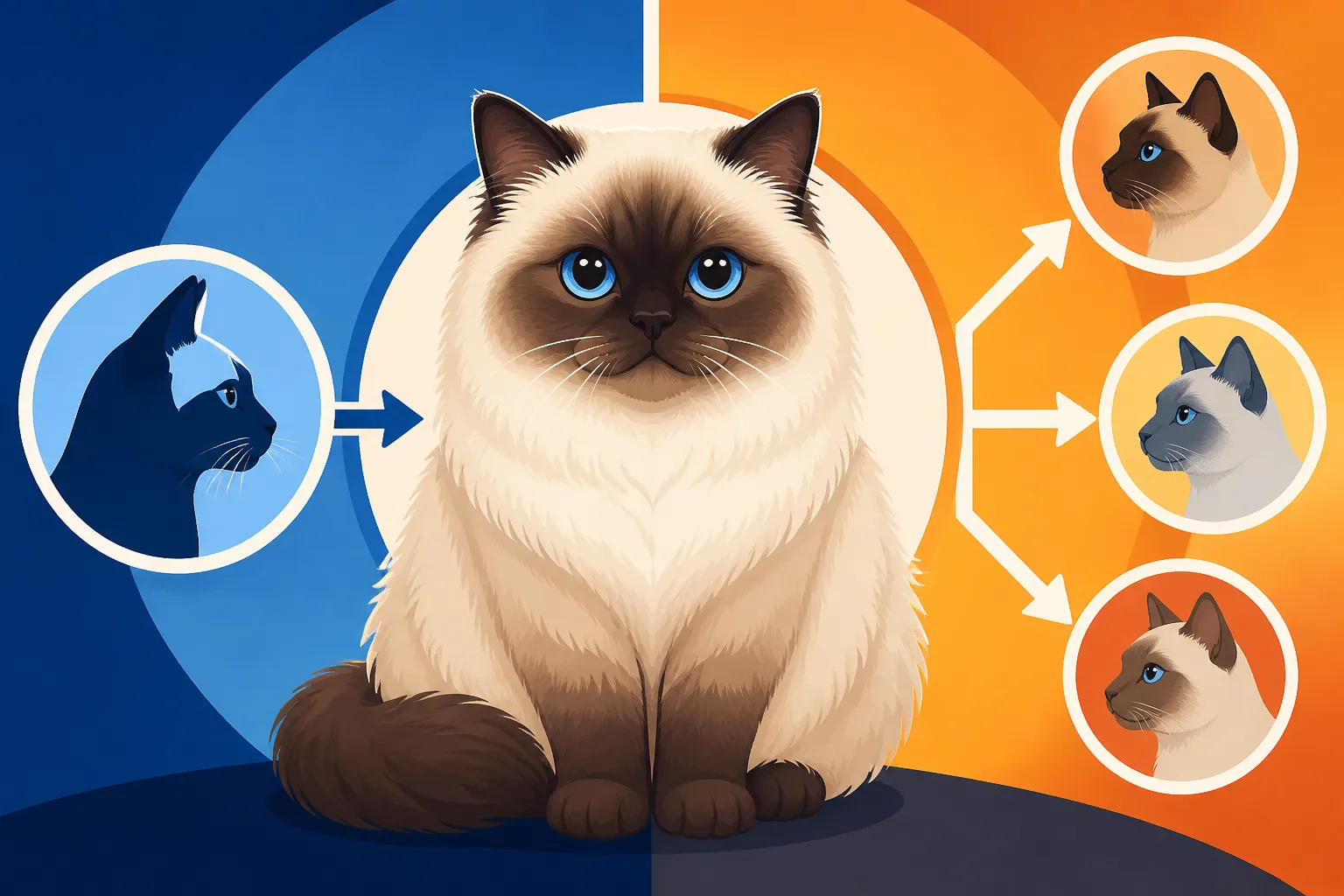
The story of the Himalayan truly begins with a visionary crossbreeding experiment. The goal was to combine the striking blue eyes and distinctive point coloration of the Siamese cat with the luxurious long coat and cobby body type of the Persian. Imagine the dedication, the patience, and the sheer genetic puzzle involved in trying to achieve this. Breeders weren't just looking for a pretty cat; they were meticulously working to understand how these traits combined and were inherited.
This process wasn't quick or easy. It involved several generations of selective breeding, carefully tracking which kittens inherited the desired traits. The challenge was immense: how do you introduce the recessive gene for colorpoint while maintaining the robust, rounded body, short legs, and broad head that define a Persian? It required a deep understanding of Mendelian genetics, making each litter a fascinating, if sometimes frustrating, step in the journey. The early breeders were truly pioneers, laying the groundwork for what would become one of the most beloved cat breeds. If you're curious about the academic origins of the breed, you might find The Himalayan Was Made at Harvard in the 1930s a fascinating read, detailing the very beginning of this intentional cross. It really helps to see how much thought went into every genetic step.
From "Siamese-Persian" to Himalayan Identity
In those nascent years, before the name "Himalayan" became widely adopted, these distinctive cats were often referred to by descriptive, if somewhat clunky, names like "Siamese-Persian." This reflected their dual heritage, but it didn't quite capture their unique charm and developing identity. It spoke to a time when they were still finding their place in the feline world, a blend rather than a defined entity.
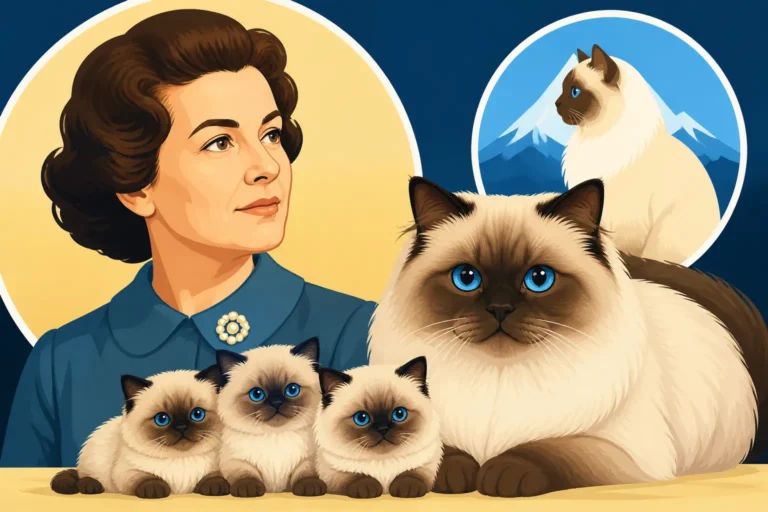
The quest for official recognition for this exquisite new breed was a journey filled with passion and persistence. It wasn't until Marguerita Goforth, a pivotal figure in the breed's history, championed their cause that things truly began to solidify. She, alongside other dedicated breeders, worked tirelessly to establish a standard and gain acceptance from major cat registries. The eventual naming of the breed as "Himalayan" was a stroke of genius, drawing a clear parallel to the similarly color-pointed Himalayan rabbit. This connection provided an easily recognizable and charming identity, moving beyond a simple description of their ancestry. The story of Marguerita Goforth and the Himalayan's 1957 Recognition truly highlights the effort involved in giving these cats their well-deserved place. It's a testament to how dedicated individuals can shape a breed's destiny.
CFA's Decision: Integrating Himalayans into the Persian Fold
One of the most significant moments in the Himalayan's history, and often a source of confusion for new owners, was the decision made by the Cat Fanciers' Association (CFA) regarding its classification. This move dramatically altered how Himalayans were registered and shown within one of the world's largest cat registries.
The 1984 Merger and its Rationale
In 1984, the CFA made a controversial decision that would forever change the official status of the Himalayan in their system. They opted to fold the Himalayan into the Persian breed group, reclassifying it as the "Himalayan Division" of the Persian. For many dedicated Himalayan breeders and enthusiasts, this felt like a slap in the face, as if their beloved breed had lost its distinct identity. It was a moment of profound debate and strong feelings within the cat fancy community.
The rationale behind CFA's decision was primarily driven by a desire for consistency in type. From their perspective, the Himalayan, genetically speaking, was essentially a Persian that happened to carry the colorpoint gene. Its body structure, coat type, and overall conformation had been bred to match the Persian standard over many decades. By integrating it, CFA aimed to emphasize the shared physical characteristics and streamline the judging process, treating the colorpoint pattern as a variation rather than a defining breed characteristic. While this made sense from a certain genetic and structural viewpoint, it certainly didn't soothe the frustrations of those who championed the Himalayan as a unique creation. Understanding Why CFA Folded the Himalayan Into the Persian in 1984 really gives insight into the administrative side of cat breeding.
The "Colorpoint Persian" Designation
Following the 1984 merger, if your Himalayan is registered with CFA, its official paperwork won't say "Himalayan Cat." Instead, it will proudly bear the designation "Colorpoint Persian." This isn't just a minor tweak in nomenclature; it's a fundamental shift in how the cat is officially recognized and positioned within the pedigree world. For many, it's a source of initial surprise, expecting to see their cat's breed name explicitly stated.
This "Colorpoint Persian" designation means that when you receive your cat's registration certificate from CFA, it will clearly list "Persian" as the breed, with "Himalayan" (or "Colorpoint") indicating the specific division. It dictates how your cat is entered into shows and how its lineage is recorded. However, it's crucial to remember that despite this official classification, the cat in your lap is still very much your beautiful Himalayan, with all the charming traits and personality you fell in love with. The paperwork doesn't change the magnificent creature purring beside you. For a deeper look into what that certificate really means, you might want to read What Your Himalayan's Certificate Actually Says. It can help demystify the official wording. Additionally, to grasp the full implications of this administrative decision, exploring Why CFA Called the Himalayan a Persian Variant provides further context on their reasoning.
TICA's Approach: Maintaining Separate Breed Status
While CFA chose to integrate the Himalayan, another prominent cat registry took a different path, preserving the Himalayan's unique identity as a standalone breed. This difference often leads to questions and varying perspectives among breeders and owners.
TICA's Recognition of the Himalayan as a Standalone Breed
In contrast to the CFA's decision, The International Cat Association (TICA) has maintained its recognition of the Himalayan as a separate and distinct breed. This stance has been a comfort to many breeders and enthusiasts who felt strongly that the Himalayan's unique blend of Siamese coloring and Persian conformation warranted its own category. TICA's philosophy often leans towards recognizing breeds based on their distinct characteristics and breeding history, which aligns well with the Himalayan's carefully developed lineage.
TICA's approach values the historical development of the Himalayan, acknowledging the deliberate crossbreeding that created it and the subsequent generations bred true. For them, the Himalayan isn't just a color variant; it's a breed born from a specific vision, combining the best of two worlds. This means that a Himalayan registered with TICA will have "Himalayan" explicitly stated on its official papers, which provides a clear and unambiguous identity for the cat and its owners. This contrasting approach is why TICA Still Registers the Himalayan as a Breed of Its Own is such an important distinction for the breed's global presence. It offers an alternative for those who wish to maintain the specific Himalayan identity.
Implications for TICA Registered Himalayans
For owners and breeders whose Himalayans are registered with TICA, the implications of this separate breed status are quite straightforward. When participating in TICA shows, your Himalayan competes as a Himalayan, judged against a standard specifically tailored to the breed's unique attributes. This can feel more authentic to those who cherish the breed's distinct heritage, rather than having it evaluated under the umbrella of another breed. It ensures that the specific blend of features—the colorpoint pattern, the blue eyes, and the Persian-derived body type—are all assessed within a framework that truly understands and appreciates the Himalayan as it is.
The TICA registration also means that pedigrees will clearly list "Himalayan" as the breed for generations, offering a consistent and easily traceable lineage. This can be particularly reassuring for breeders who are working to maintain specific lines and characteristics. It removes any ambiguity that might arise from a "division" classification and celebrates the Himalayan as a complete entity. For many, this clear identification strengthens their connection to the breed's history and future. This distinction is vital when considering Which Bodies Still Judge the Himalayan on Its Own, as it impacts how the breed is perceived and developed.
Navigating the Show Ring and Breed Standards
Understanding how the "Colorpoint Division" or separate breed status affects Himalayans in the show ring is crucial for anyone interested in the competitive aspect of the cat fancy. It dictates how these magnificent cats are evaluated and what qualities are prioritized.
Judging Himalayans Under Persian Standards
In CFA, because the Himalayan is recognized as a Colorpoint Persian, it means your beautiful long-haired, blue-eyed companion is essentially judged by the exact same strict standards as a traditional Persian. This can be quite a surprise for new show enthusiasts. Judges are looking for that classic Persian type: the broad, rounded head, the tiny, low-set ears, the round, full cheeks, and the large, round, expressive eyes. The body must be cobby and low to the ground, with short, sturdy legs and a full, flowing coat. The only real "allowance" for the Himalayan is its colorpoint pattern and the requisite blue eyes that come with it.
This means that breeders striving for success in CFA must prioritize all the classic Persian features, ensuring their Himalayans fit that mold perfectly, with the colorpoint pattern simply being an added aesthetic. Whether a cat exhibits the more extreme "Peke-face" or the slightly less dramatic "Doll-face" profile can also impact judging, as the preference within the Persian standard often leans towards the flatter, more "open" facial structure. It’s a demanding standard, where the ideal Himalayan is first and foremost an exemplary Persian. When you delve into What the Persian Standard Asks of a Himalayan, you begin to appreciate the intricate details that judges scrutinize. It's a comprehensive list of traits that define perfection in the breed. To further illustrate, examining Why a Himalayan's Head Is Judged as a Persian's makes it clear that the facial structure and overall head type are paramount, aligning directly with Persian ideals.
The Importance of Point Color and Contrast
While the Himalayan is judged on its overall Persian type, the "colorpoint" aspect remains incredibly important, particularly in how it's scored. Judges pay meticulous attention to the distinctness and evenness of the cat's points – the ears, mask, paws, and tail. These areas should display a rich, well-defined color that contrasts sharply with the paler body coat. A muddy or indistinct point color, or a body coat that is too dark, can significantly detract from a cat's score. It’s a delicate balance, where the Persian conformation must be flawless, and the colorpoint pattern must be vivid and beautifully expressed.
The breed standard recognizes a variety of point colors, each with its own specific ideal hue and depth. From the deep browns of Seal Points to the delicate grays of Blue Points, the fiery reds of Flame Points, and the softer pastels of Lilac and Chocolate Points, each color has a perfect presentation. Breeders dedicate significant effort to achieving strong, clear point coloration and ensuring the body remains as light as possible to maximize this contrast, as temperature can influence how dark a cat's points become. This focus on color and contrast is what truly defines the visual appeal of the Himalayan within the broader Persian family. Understanding How Many Point Colors the Himalayan Division Recognizes is key to appreciating the spectrum of beauty in the breed. Moreover, insights into How a Himalayan's Points Are Judged can help owners and aspiring show participants grasp the specific criteria that determine success in the ring.
Practical Considerations for Himalayan Owners
Beyond the show ring and pedigree papers, the "Colorpoint Division" classification and the Himalayan's unique characteristics have very real practical implications for daily life with these charming cats.
Understanding Your Cat's Pedigree and Papers
Bringing a Himalayan into your home means becoming acquainted with their official paperwork, which, as we've discussed, can sometimes be a little confusing due to the "Colorpoint Division" concept. If your cat is registered with CFA, its pedigree will reflect its classification as a "Colorpoint Persian." This means that while you call them a Himalayan (and everyone else does too!), officially, they're a Persian variant. It’s crucial for you to know how to interpret these documents, especially if you ever consider breeding or showing. Don't be shy about asking your breeder to walk you through the specifics of the papers. They should be transparent and happy to explain the nuances of the breed's history and current classification.
For many owners, once they understand the history, the specific wording on the pedigree becomes less about identity and more about the administrative specifics of cat registries. It doesn't change the fact that their cat has that unique Himalayan blend of a plush Persian coat and those stunning Siamese points and blue eyes. In fact, for many, the beauty of the Himalayan lies precisely in this fascinating genetic combination. As you delve deeper, reading How to Read the Breed Line on a Himalayan Pedigree can be incredibly insightful, offering clarity on the lineage and helping you appreciate the generations of careful breeding behind your cat. Ultimately, for the average loving owner, Why the Himalayan Argument Is About Paperwork, Not Cats rings true, as the cat's personality and health matter far more than its official label.
Daily Care in a 'Colorpoint Division' World
Regardless of whether your Himalayan is classified as a "Colorpoint Persian" or a standalone breed, its daily care requirements are intrinsically tied to its physical characteristics, which are a direct result of its unique breeding. That luxurious, dense Persian coat demands daily attention to prevent matting, a common and uncomfortable issue for these cats. This means setting aside time each day for a thorough combing session, making it a bonding experience rather than a chore.
Their brachycephalic (flat) facial structure also necessitates specific care. Those beautiful, large eyes can be prone to tear staining, especially on lighter-colored points, requiring gentle daily wiping with special solutions or just warm water to keep them clean and prevent skin irritation. Additionally, their flattened nose can sometimes lead to breathing challenges, making it imperative to keep them cool in warm weather and monitor any heavy panting.
When it comes to feeding, a flat-faced cat often struggles with deep, narrow bowls, pushing food out and making a mess. For example, finding the right shallow, wide bowls to accommodate their unique facial structure can be a game-changer, and online retailers like Chewy often have excellent selections designed specifically for brachycephalic breeds. Investing in high-quality steel combs and detangling sprays is non-negotiable, and places like Chewy offer a fantastic array of grooming supplies that can make this daily chore much smoother. When it comes to diet, ensuring your Himalayan gets the right nutrition for a healthy coat and to manage potential tear staining is crucial. Many specialized foods can be found easily on platforms like Chewy, delivered right to your door. If you’re looking for low-sided litter boxes, again to accommodate those shorter legs and help keep their glorious britches clean, you'll find plenty of suitable options on Chewy that prevent litter from clinging to their long fur. All these specialized items contribute to making life comfortable and healthy for your Himalayan, proving that their unique heritage influences everything from their appearance to their daily needs.
Registry Differences at a Glance
To summarize the key differences in how the two major cat registries classify the Himalayan, here's a quick comparison:
| Registry | Himalayan Status | Classification on Pedigree | Judging Standard | Primary Focus |
|---|---|---|---|---|
| CFA | Division of Persian | Colorpoint Persian | Persian Standard (with colorpoint allowance) | Type and Conformation |
| TICA | Separate Breed | Himalayan | Himalayan Standard | Unique Breed Traits |
Conclusion
The "Colorpoint Division" for Himalayans, whether as part of the Persian breed in CFA or as a standalone breed in TICA, is a topic steeped in history, genetic curiosity, and passionate debate within the cat fancy. While the nomenclature on official papers might vary, it doesn't diminish the incredible charm, unique beauty, and delightful personality of the Himalayan cat itself. For owners, understanding this classification helps in navigating the world of pedigrees, shows, and breed standards, but ultimately, it's the purr in your lap and the bright blue eyes gazing up at you that truly define your cherished companion. Appreciate your Himalayan for the magnificent creature it is, regardless of the official paperwork.
Disclaimer
This article is for general informational purposes only and does not constitute professional advice. Laws, prices and regulations vary by location and change over time. Consult a qualified professional for guidance on your specific situation.