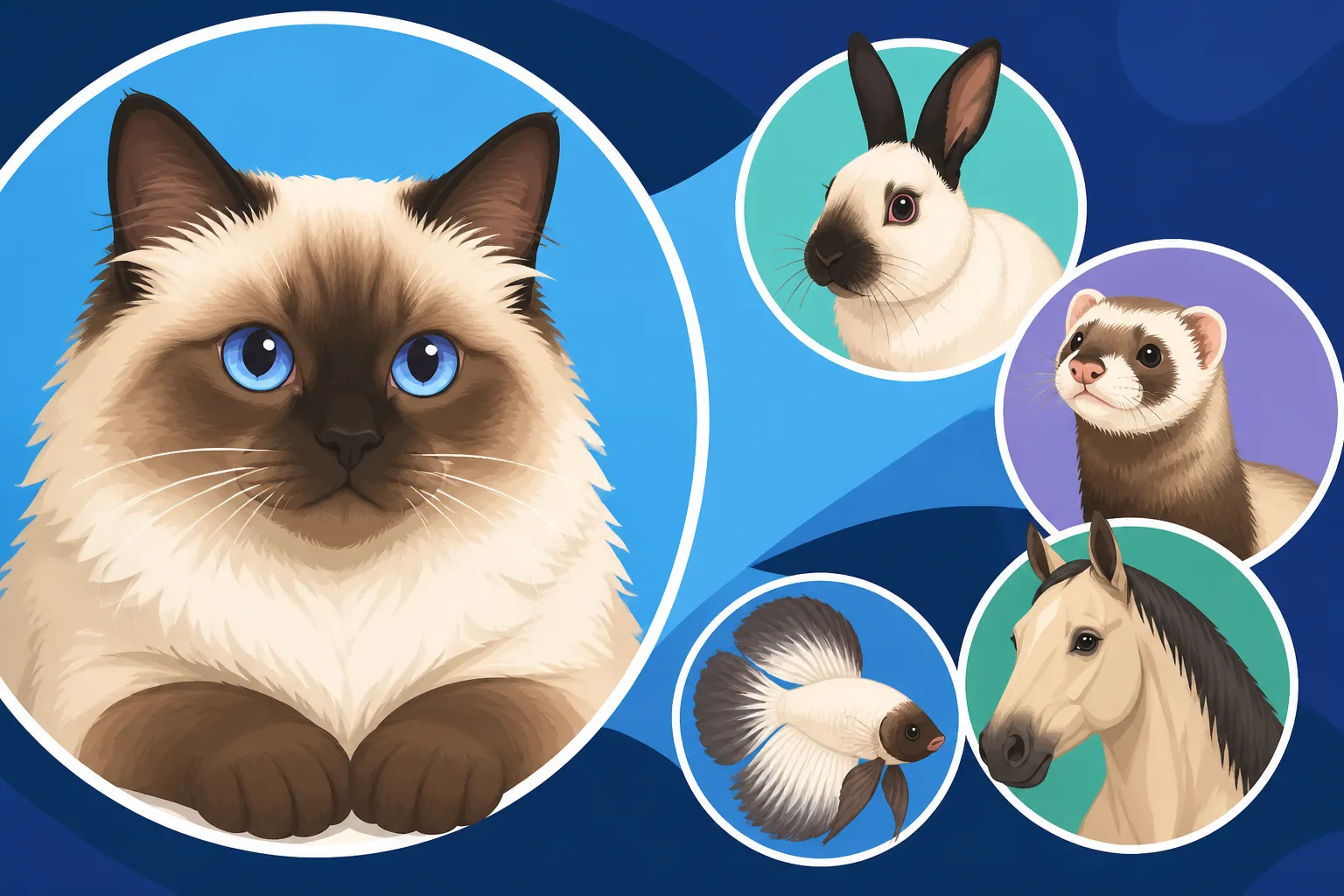
Which Other Animals Carry the Himalayan Pattern
It’s easy to look at a beautiful Himalayan cat, with those stunning blue eyes and gorgeous pointed coat, and think this striking pattern is utterly unique to them. Many cat lovers, myself included, have fallen completely head over heels for the contrast of a pale body and dark "points" on the ears, mask, paws, and tail. But what if I told you that this distinct color pattern isn't just a feline marvel? This guide is going to take you on a fascinating journey, revealing which other animals share this genetic trait, explaining the science behind it, and showing how this iconic coloring connects a surprising array of creatures across the animal kingdom.
The Unique Genetics Behind the Himalayan Pattern
The Himalayan pattern is more than just a pretty coat; it's a scientific marvel rooted in genetics. Understanding why and how this pattern appears in various animals really unlocks the mystery behind its beauty. It’s not just about what you see, but what’s happening on a cellular level.
What Makes the Points Appear
At its heart, the Himalayan pattern is a form of temperature-sensitive albinism. This might sound complicated, but it simply means that the gene responsible for producing pigment (color) only works efficiently in cooler parts of the body. Think about it: the extremities of an animal – its ears, nose, paws, and tail – are naturally cooler than its torso, which is kept warm by core body temperature. This subtle difference in temperature is precisely what triggers the pigment to develop in these "point" areas, while the warmer central body remains pale or white. It's a truly elegant biological mechanism that creates such a visually dramatic effect.
The specific gene responsible for this amazing trait is often referred to as the "Himalayan gene" or "cs gene," which codes for an enzyme called tyrosinase. This enzyme is crucial for melanin production, the pigment that gives color to skin and fur. When this gene is mutated, as it is in Himalayan-patterned animals, the tyrosinase enzyme becomes thermolabile, meaning it loses its function at normal body temperatures. It's like a tiny internal thermometer that dictates where color can and cannot form. This is why you see such a stark contrast between the warm body and the cool points. What the Himalayan Proved About Coat Genetics covers more about this fascinating scientific discovery and how it reshaped our understanding of coat color.
Temperature-Sensitive Enzyme Explained
To really grasp how this works, imagine a tiny factory inside each hair follicle, manufacturing pigment. In most animals, this factory runs at full speed regardless of temperature, producing a consistent color all over the body. But in an animal with the Himalayan gene, this pigment factory has a faulty part – the tyrosinase enzyme. This faulty part is incredibly sensitive to heat. At the core body temperature of, say, 100 degrees Fahrenheit, it barely works at all, leading to little to no pigment production. This is why the body remains pale.
However, once the temperature drops below a certain threshold, typically around 90-95 degrees Fahrenheit, that temperature-sensitive enzyme starts to become active again. This is exactly what happens in the cooler extremities. The ears, the nose, the paws, and the tail are naturally a few degrees cooler than the body's core, allowing the enzyme to kick into gear and produce pigment. The cooler the area, the more active the enzyme, and thus, the darker the points become. This also explains why, if a Himalayan cat (or rabbit!) sustains an injury and the fur grows back over a shaved area, that new fur can often be darker. The absence of insulating fur lowers the skin temperature, activating the enzyme. This phenomenon is further explored in Why a Shaved Patch Grows Back Dark on a Himalayan.
Why All Himalayan Kittens Are Born White
This is often one of the most delightful surprises for new Himalayan cat owners, and it’s a perfect illustration of the temperature-sensitive gene at work. Every single Himalayan kitten is born virtually all white or cream-colored, with no discernible points. You might wonder how such a dramatically patterned cat could start life looking so plain! The explanation lies squarely in their mother's womb.
Inside the queen's uterus, the kittens are nestled in a consistently warm environment. Their entire bodies are kept at a uniform, warm temperature, which means the temperature-sensitive tyrosinase enzyme cannot activate anywhere. There are no "cool points" for the pigment to develop, so the kittens emerge lacking any color definition. It's only after they are born and exposed to the cooler ambient temperatures of the outside world that their points begin to gradually develop. Within a few days or weeks, the faint outline of their ears and noses might start to show color, steadily deepening over the coming months. This developmental process is truly magical to witness. Why Every Himalayan Kitten Is Born Almost White offers a deeper dive into this adorable fact of Himalayan kittenhood.
Himalayan Patterned Mammals: A Broader Family
While we often associate the term "Himalayan" with our beloved cats, the truth is, the pattern got its name from another famous, furry friend. This genetic trait isn't exclusive to felines; it's a shared heritage across several mammalian species, making for some truly striking resemblances.
The Iconic Himalayan Rabbit
Long before the Himalayan cat graced our homes, there was the Himalayan rabbit. Indeed, it's this very rabbit breed that lent its name to the pattern, and subsequently, to the cat breed we adore. The Himalayan rabbit is one of the oldest known domesticated rabbit breeds, with a history stretching back centuries. They are instantly recognizable by their pure white body and contrasting dark points on their ears, nose, feet, and tail, coupled with distinctive red eyes – a characteristic of albinism.
These rabbits are medium-sized, typically docile, and have long been prized for their unique appearance. Their genetics are essentially identical to the Himalayan cat in terms of the temperature-sensitive enzyme that produces the color. Just like their feline counterparts, Himalayan rabbits are born completely white and only develop their striking points as they grow and are exposed to cooler temperatures. This shared genetic trait is a prime example of convergent evolution or, more likely, a shared ancestral mutation that found its way into different species populations. If you've ever wondered about the naming convention, The Himalayan Is Named After a Rabbit delves into this historical connection.
Mice and Rats: Small Rodents, Big Pattern
It might surprise you to learn that the Himalayan pattern is quite common in laboratory and pet mice and rats. These small rodents have been bred for a vast array of coat colors and patterns, and the Himalayan variation is a popular one. In mice, they are often referred to as "pointed" or "colorpoint" mice, but the genetic mechanism is precisely the same as in cats and rabbits. You'll see their small ears, noses, feet, and tails darken, contrasting sharply with their white or cream bodies.
For hobby breeders and enthusiasts, these pointed mice and rats are highly sought after. They carry the same temperature-sensitive albinism gene, meaning that cooler ambient temperatures will result in darker, more distinct points. This is why you might see variations in point intensity even within the same litter, depending on how warm or cool their individual nesting spots might be. It’s a clear demonstration of how robust this genetic trait is, appearing across vastly different species and manifesting in the same beautiful way. When browsing for supplies for your small furry friends, you might even spot bedding or food from brands like Chewy that cater to these specific needs, ensuring they have comfortable, temperature-stable environments.
Guinea Pigs and Hamsters: Other Common Pets
The Himalayan pattern also extends to other popular small pets, including guinea pigs and hamsters. In guinea pigs, the pattern is often seen in breeds specifically named "Himalayan" or "Colorpoint." Like their rabbit and cat cousins, these guinea pigs have a pristine white body with dark points on their nose, ears, and feet. Their eyes are typically ruby red, again, a hallmark of albinism. They are quite striking and make for very attractive pets, showcasing the pattern with their typically short, smooth coats.
Similarly, certain strains of hamsters, particularly Syrian hamsters, can exhibit the Himalayan pattern, often referred to as "pointed" varieties. Their small size makes the contrast a little less dramatic than in a larger animal, but the genetic principle remains the same. A white or light cream body with darker areas on the nose, ears, and sometimes the paws. These animals, just like Himalayan cats, are sensitive to temperature for the intensity of their points. A warmer environment might lead to lighter points, while a cooler one could result in deeper, more vibrant coloration. It really underscores how widespread this specific genetic mutation is throughout the animal kingdom.
Beyond the Usual Suspects: Surprising Carriers of the Pattern
While the Himalayan cat, rabbit, and various rodents are the most commonly recognized carriers of this unique pattern, the genetic reach extends even further into the world of exotic pets and sometimes, even unexpected corners. It just goes to show how fascinating genetics can be, popping up in diverse and sometimes surprising ways.
Ferrets and the Pointed Look
Ferrets are playful, curious creatures that come in a surprising array of colors and patterns, and yes, the Himalayan pattern is one of them! In ferrets, this pattern is typically referred to as "colorpoint" or "Siamese," reflecting the similar appearance to the Siamese cat, which also carries the Himalayan gene. A colorpoint ferret will have a pale, often creamy body coat with distinctly darker points on its mask, ears, feet, and tail. Their eyes are usually dark, which can be a distinguishing feature from true albino varieties which would have red eyes.
Just like other animals with this gene, the intensity of a ferret's points can vary with temperature and age. A ferret kept in a cooler environment might develop darker, more pronounced points, especially on their tail and paws. These ferrets are quite popular among enthusiasts who appreciate their unique coloring and playful personalities. Their presence in the ferret world further solidifies the idea that this specific gene is not confined to one lineage but has been identified and selectively bred for across various domestic species.
Other Exotic Pets
While less common, you might even find examples of the Himalayan pattern in certain exotic pet species, often through selective breeding efforts to enhance specific aesthetic traits. For instance, some varieties of chinchillas, though primarily bred for their incredibly soft fur, can display 'point' mutations that mimic the Himalayan pattern, though it might manifest differently due to their unique fur structure and natural color variations. These are typically rare and prized for their distinct look.
It’s a constant reminder that the building blocks of life, our genes, are incredibly versatile. The same fundamental genetic mutation can arise independently in different species or be passed down from a common ancestor, leading to shared traits that delight and fascinate us. This genetic thread, linking a wide array of animals through a simple temperature-sensitive enzyme, is truly remarkable.
Understanding the Implications for Care and Breeding
For anyone interested in or owning an animal with the Himalayan pattern, whether it's a cat or a rabbit, understanding the implications for their care and for potential breeding practices is really important. It’s not just about aesthetics; it ties directly into their health and the responsible stewardship of these animals.
Breeding for the Pattern
When breeders work with animals that carry the Himalayan gene, they are specifically selecting for that temperature-sensitive albinism trait. For a Himalayan pattern to fully express, an animal usually needs two copies of the recessive gene (one from each parent). This is why if you breed a Himalayan cat to a solid-colored cat that doesn't carry the gene, you'll get kittens that look solid, but silently carry one copy of the Himalayan gene. Only by breeding two carriers, or a Himalayan to a carrier, will you predictably produce kittens with the distinctive points. Whether Himalayan Rabbits and Cats Share the Gene discusses how this genetic understanding extends across species.
Responsible breeding also involves understanding how environmental factors can influence the expression of the pattern. For instance, kittens that are born and raised in warmer climates or kept in very warm indoor environments might have lighter, less intense points than their littermates raised in slightly cooler conditions. This is a common discussion point among breeders aiming for show-quality animals, where strong point contrast is highly valued. Ensuring a consistent environment can help achieve the desired depth of color.
Special Considerations for Temperature
The temperature-sensitive nature of the Himalayan pattern isn't just a fun fact; it has real implications for the animal's life. For Himalayan cats, especially, excessive heat can cause them to become uncomfortable more quickly than other breeds, due to their thick Persian-like coats and sometimes flattened facial structures that can make breathing harder. In warmer weather, their points might even lighten slightly, and their body coat might darken more than usual. Conversely, if they get too cold, their points can become extremely dark, sometimes almost blurring into their body color. How Temperature Decides a Himalayan's Point Color and Why a Himalayan in a Cold House Darkens All Over go into detail on this phenomenon.
Owners of Himalayan patterned animals, be they cats, rabbits, or guinea pigs, should always be mindful of ambient temperatures. Providing a comfortable, stable environment is key to both their well-being and maintaining the aesthetic appeal of their unique coats. This means ensuring good air circulation, especially in summer, and perhaps investing in cooling mats for cats, or ensuring adequate ventilation for rodent enclosures. For example, Chewy offers a great selection of climate-control bedding and accessories that can help keep your pointed pets comfortable year-round, contributing to both their health and the vibrancy of their points. Remember how their points deepen with age? Why a Himalayan's Points Deepen Every Year It Lives explains this natural progression.
The Shared Legacy: How the Himalayan Pattern Connects Species
The Himalayan pattern, with its striking contrast of a pale body and dark extremities, truly is a marvel of genetic expression. It links together a fascinating array of animals, from the majestic Himalayan cat we cherish in our homes to the humble mouse scurrying in a lab, and the foundational Himalayan rabbit that gave the pattern its name. This shared genetic trait underscores a profound biological connection, demonstrating how a single mutation can create beauty and distinction across diverse species.
What we learn from one species, like how temperature affects the development of points in a cat, can often be applied to understanding the nuances of the pattern in a rabbit or a guinea pig. Whether it's the rich, dark points of a seal point Himalayan cat or the subtle darkening on the nose of a Himalayan hamster, the underlying mechanism is a testament to the elegant simplicity and profound impact of genetics. It's a reminder that beneath the surface, many of our beloved pets share more than just our homes; they share incredible genetic stories. The next time you admire those beautiful blue eyes, Why the Point Gene Makes Every Himalayan Blue Eyed, and those distinct markings on your Himalayan cat, you'll know they're part of a much larger, global family of 'pointed' creatures, all showcasing nature's brilliant artistry. We can even see Why the Cold Parts of a Himalayan Grow Dark Fur and Why the Warmest Parts of a Himalayan Stay Palest by simply observing the same principles in other animals.
| Animal Species | Typical Point Colors | Body Color | Eye Color (Common) | Primary Use/Status |
|---|---|---|---|---|
| Himalayan Cat | Seal, Blue, Chocolate, Lilac, Flame, Tortie, Lynx | Cream, White, Fawn | Blue | Pet, Show Cat |
| Himalayan Rabbit | Black, Blue, Chocolate | White | Red | Pet, Show Rabbit, Commercial |
| Himalayan Mouse | Black, Blue, Chocolate | White | Red | Pet, Laboratory Animal |
| Himalayan Rat | Black, Blue | White | Red | Pet, Laboratory Animal |
| Himalayan Guinea Pig | Black, Chocolate | White | Red | Pet, Show Guinea Pig |
| Colorpoint Ferret | Dark Brown, Black | Cream, White | Dark | Pet |
Disclaimer
This article is for general informational purposes only and does not constitute professional advice. Laws, prices and regulations vary by location and change over time. Consult a qualified professional for guidance on your specific situation.