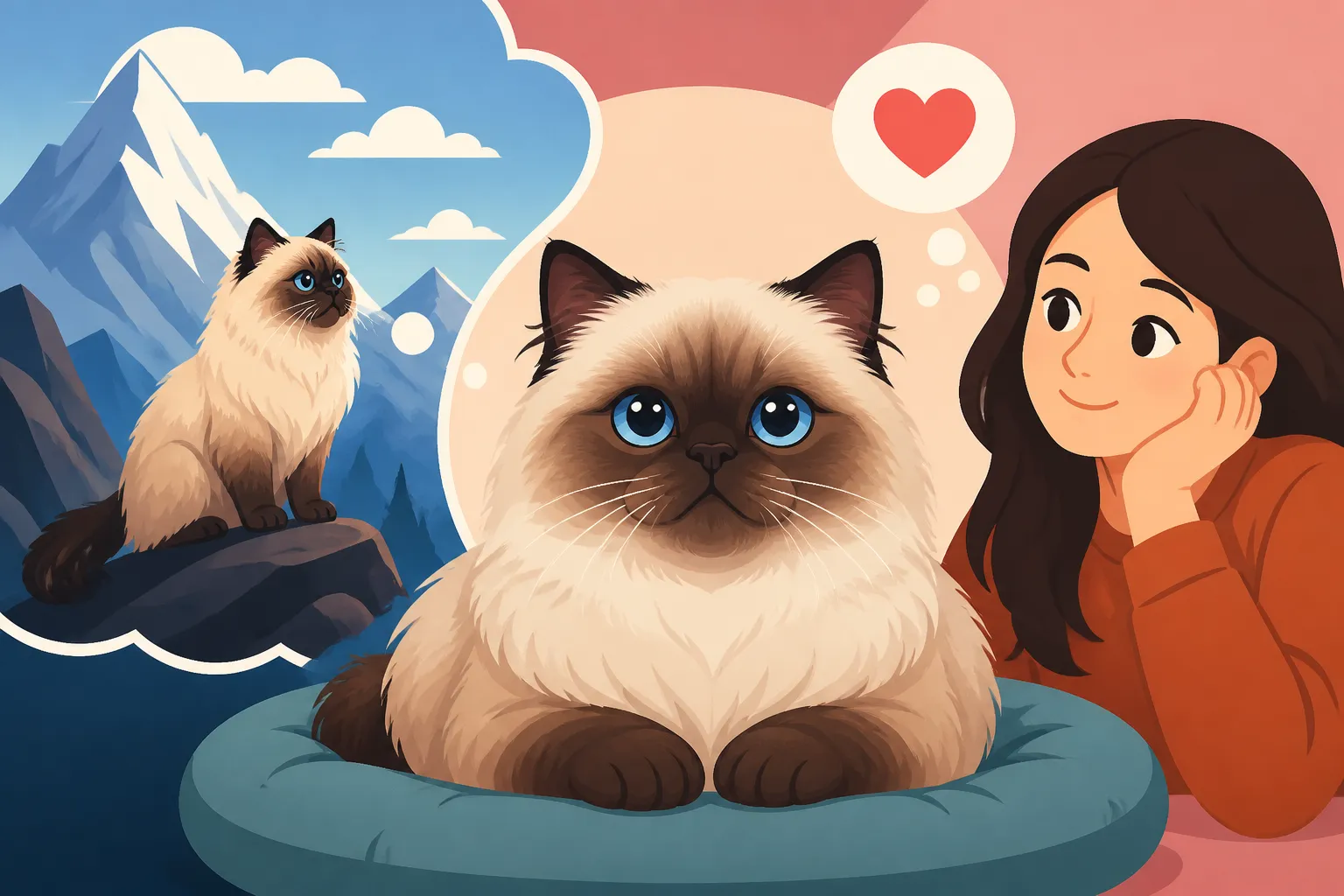
Whether the First Himalayan Was Meant as a Pet
It's a common and completely understandable question when you look at a fluffy, affectionate Himalayan draped across a sunbeam on your sofa: was this beautiful creature always destined to be a beloved pet? While their sweet disposition and stunning appearance make them perfect companions today, the very first cats that carried the unique Himalayan genetic makeup weren't initially bred with snuggles and purrs in mind. This guide will delve into the surprising scientific origins of the Himalayan cat and trace their fascinating journey from a laboratory experiment to the cherished household companions we know and love.
The Scientific Origins of the Himalayan Cat
The story of the Himalayan cat doesn't begin in a quaint cattery with a breeder dreaming of a new type of companion, but rather in the sterile environment of a university laboratory. It's a tale rooted deeply in scientific inquiry and the fascinating world of genetics, far removed from the cozy laps they now occupy. Understanding this initial purpose is key to grasping how this remarkable breed came to be.
Harvard's Genetic Experiment
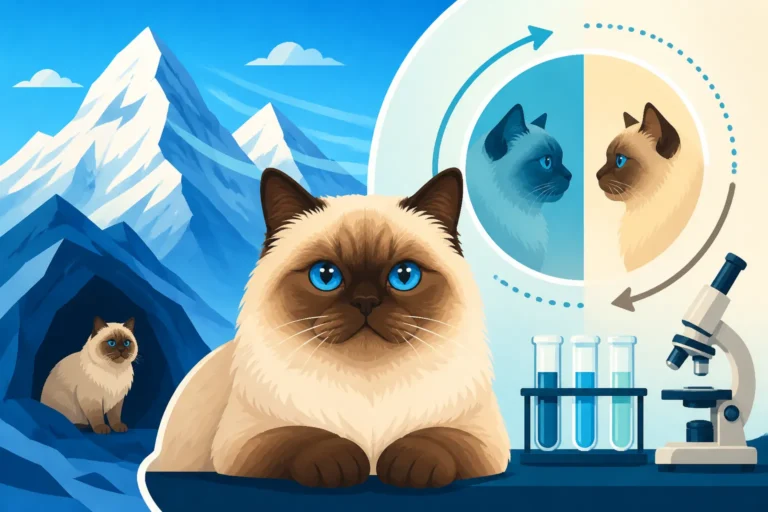
Back in the 1930s, at the esteemed Harvard Medical School, two dedicated researchers, Dr. Clyde Keeler and Virginia Cobb, embarked on a groundbreaking scientific endeavor. Their primary goal wasn't to create a new breed of cat for exhibition or companionship, but to unlock the secrets of feline genetics. Specifically, they were deeply interested in understanding the inheritance pattern of the Siamese cat's distinctive "points" – those darker extremities like the ears, face, paws, and tail. They wanted to see if they could successfully combine the long, luxurious coat of the Persian cat with the unique colorpoint gene found in the Siamese.
Imagine the methodical process: selecting a solid-colored Persian, known for its dense, flowing fur and stocky build, and carefully crossing it with a sleek, vocal Siamese, famous for its striking blue eyes and pointed coloration. This was a controlled, scientific experiment, meticulously documented, with each generation of kittens observed and recorded for specific genetic traits. These early crosses were purely for research purposes, yielding what were essentially F1 (first filial generation) and F2 crosses, which served as living data points to confirm genetic theories. The focus was on the genes, not necessarily on the individual cat's temperament or long-term pet potential, though their inherent charm was undoubtedly noted. You can learn more about this initial effort in The Himalayan Was Made at Harvard in the 1930s and explore the individuals behind it in Clyde Keeler, Virginia Cobb and the First Himalayan.
Proving the Point Gene Inheritance
The core scientific objective of Keeler and Cobb's work was to demonstrate the Mendelian inheritance of the colorpoint trait. This meant proving that the gene responsible for the Siamese pattern was indeed recessive and that it could be carried silently through generations if paired with a dominant non-point gene. They wanted to show that by breeding two cats that carried the recessive point gene, you could predictably produce kittens with the distinctive Siamese coloration, even if one parent didn't outwardly display it.
The early "Himalayans" that emerged from these crosses were, in essence, tangible evidence of their genetic hypotheses. Each kitten's coat pattern, eye color, and even the subtle darkening of their points as they matured in cooler environments, provided critical data. The true outcome they were working towards wasn't a pet ready for adoption, but a published scientific paper, detailing their findings for the academic community. This publication, as outlined in The 1936 Paper That Started the Himalayan, solidified the genetic understanding of the colorpoint trait, laying the groundwork for future breeders who would eventually see beyond the scientific data to the potential for a magnificent new breed. The cats themselves were primarily tools for this research, demonstrating principles of heredity rather than being bred for companionship qualities.
From Laboratory Subjects to Lovable Companions
While the initial intent was purely scientific, the striking results of the Harvard experiments didn't go unnoticed by the burgeoning cat fancy community. The idea of a Persian with Siamese points was simply too captivating to remain confined to a research lab. It took the vision and dedication of passionate breeders to transform these genetic marvels into the beloved, recognized breed we know today.
The Early Breeders' Vision
Once the genetic principles were established and published, the concept of a long-haired, blue-eyed, pointed cat began to spread beyond the scientific community. Breeders, particularly in the United States, became intrigued by the possibility of developing these experimental crosses into a stable, distinct breed. People like Marguerita Goforth, a pivotal figure in the Himalayan's history, were instrumental in this transition. They saw the inherent beauty and unique combination of traits and envisioned a future where these cats could be cherished pets and show champions.
Their goal was fundamentally different from the scientists'. They weren't just observing gene expression; they were actively working to create a consistent, predictable animal with a specific aesthetic and temperament. This involved countless hours of selective breeding, carefully choosing individuals that exhibited the desired Persian body type, luxurious coat, and the vibrant Siamese point colors, all while maintaining the sweet, docile temperament that would make them ideal companions. It was a painstaking process of refining traits, ensuring health, and moving from a scientific curiosity to a viable and adored breed. This dedication eventually led to Marguerita Goforth and the Himalayan's 1957 Recognition, marking a significant turning point in the breed's journey.
Establishing the Breed Standard
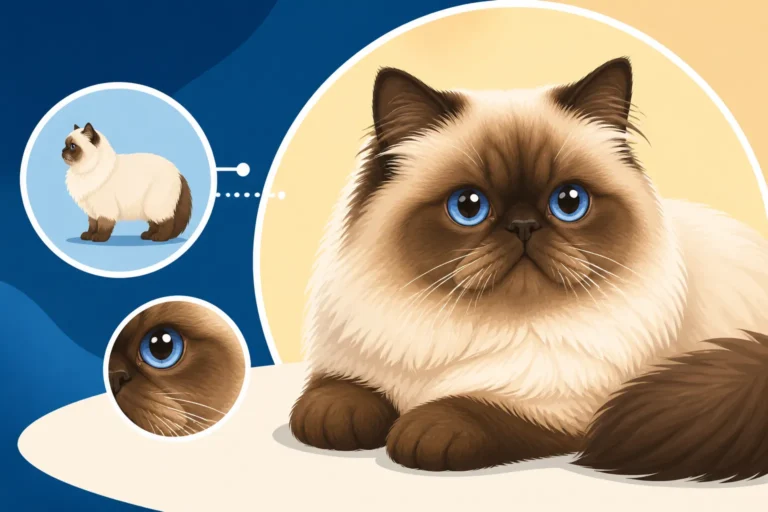
The journey from a genetic experiment to a recognized pet breed required immense effort in establishing a clear and consistent breed standard. A breed standard is essentially a blueprint, detailing all the physical characteristics and temperament traits that define a particular cat breed. For the Himalayan, this meant solidifying the Persian's cobby body, round head, small ears, and plush long coat, combined with the Siamese's distinct color points and brilliant blue eyes. This wasn't something that happened overnight; it took many generations of careful breeding to achieve consistency.
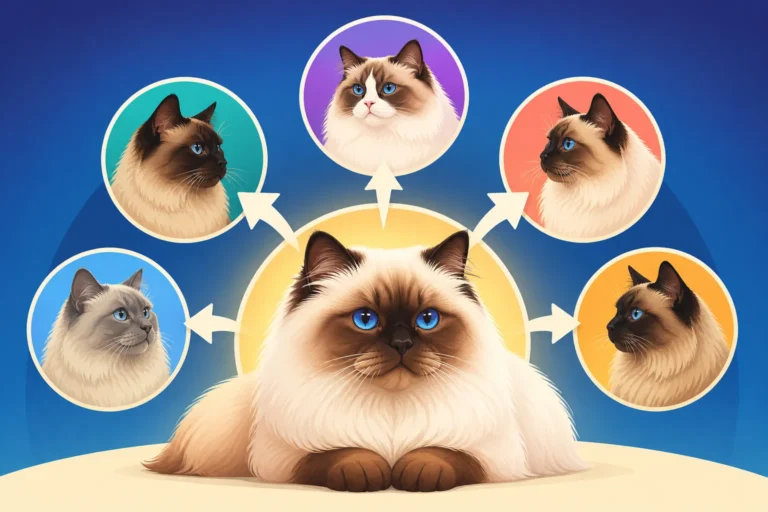
Breeders had to make critical decisions, such as which specific point colors would be recognized (seal, blue, chocolate, lilac, flame, cream, tortie, lynx) and what the ideal "type" or profile of the face should be. They sought to create cats that were not only beautiful but also healthy and well-adjusted, exhibiting the calm, affectionate demeanor that would make them suitable household pets. This focus on predictability and desirable traits for companionship was a stark contrast to the initial scientific approach. The ultimate goal was recognition by major cat associations, which officially sanctioned the Himalayan as a legitimate breed (or division, depending on the association). Achieving championship status, as detailed in How Long the Himalayan Took to Reach Championship and The Year CFA First Accepted the Himalayan, was the ultimate validation of their efforts, solidifying the Himalayan's place as a cherished pet and show cat.
| Feature | Initial Scientific Goal (1930s) | Later Breeder Goal (1950s onwards) |
|---|---|---|
| Primary Objective | Study inheritance of colorpoint gene | Create a new cat breed for companionship and show |
| Environment | Laboratory, controlled breeding experiments | Catteries, focused on breed development and consistency |
| Key Researchers | Dr. Clyde Keeler, Virginia Cobb | Marguerita Goforth, other dedicated breeders |
| Desired Outcome | Scientific data, published paper on genetics | Predictable physical traits, stable temperament, breed recognition |
| View of Cat | Living genetic experiment, data source | Valued companion animal, potential show champion |
| Focus | Genetic principles, proof of concept | Aesthetic appeal, health, temperament, pet suitability |
The Enduring Legacy: A Breed For Companionship
Today, the Himalayan cat is unequivocally a pet, loved globally for its striking looks and endearing personality. The journey from a scientific hypothesis to a beloved household member is a testament to the dedication of early breeders and the inherent charm of these cats. Their legacy is one of successful transformation, proving that a breed conceived in a lab can become an irreplaceable part of our lives.
The Himalayan's Personality and Suitability as a Pet
If you’ve ever had the pleasure of living with a Himalayan, you know they are far more than just a genetic marvel. They are renowned for their sweet, gentle, and affectionate nature, often described as "lap cats" who crave human companionship. While the first experimental crosses were simply living proof of genetic theory, the Himalayan breed was meticulously developed to possess a winning temperament, blending the docile, placid qualities of the Persian with a touch of the Siamese's intelligence and vocal tendencies.
Unlike their purely experimental ancestors, modern Himalayans thrive in a home environment where they can bond deeply with their families. They are typically calm and quiet, though they do possess a unique "chirp" or soft trill, a toned-down version of the Siamese voice, which they use to communicate their desires. They enjoy playing, but often in bursts, preferring to return to a cozy spot nearby for a nap. This combination of beauty, affection, and a relatively low-key demeanor makes them exceptionally well-suited as indoor pets. They are loyal companions who often form strong attachments to one person, following them from room to room just to be near. The transition from a scientific subject to a cherished pet highlights how truly special their evolved personalities are, making them perfect for those seeking a loving and interactive, yet generally serene, feline friend. You can read more about their unique blend of vocalizations in Why a Himalayan Talks More Than the Persian It Descends From and their desire for closeness in The Himalayan Is a Lap Cat That Answers Back.
Modern Himalayan Care Reflecting Pet Status
The way we care for Himalayans today is a direct reflection of their established status as beloved pets. No longer are they merely subjects for observation; they are family members whose health, comfort, and well-being are paramount. This involves a comprehensive care routine that addresses their specific needs, many of which stem directly from their Persian lineage and flat facial structure.
Consider their magnificent long coats, which require daily attention to prevent matting and maintain their luster. This isn't just for aesthetics; matted fur can be painful and lead to skin issues. Owners invest in specialized steel combs and grooming tools, often stocking up on products from trusted retailers like Chewy to ensure they have everything they need. Similarly, their flattened faces, a hallmark of the breed, necessitate specific care routines, such as daily wiping to prevent tear stains and keep their nose folds clean and dry. Many owners find specialized pet-safe wipes on Chewy to be indispensable for this task.
Furthermore, their unique facial structure also impacts how they eat and drink. Many Himalayans struggle with deep bowls, often pushing food out or getting their ruffs wet when drinking. Owners commonly opt for wide, shallow bowls or elevated feeders, easily found through pet suppliers like Chewy, to make mealtime more comfortable and hygienic for their flat-faced friends. Regular veterinary check-ups are also crucial, focusing on potential breed-specific concerns such as dental health due to their crowded jaws, or monitoring for genetic conditions like Polycystic Kidney Disease (PKD), which is carried through their Persian heritage. All these dedicated care practices underscore the fact that Himalayans are not just beautiful; they are complex, living beings whose needs are prioritized because they are, without a doubt, meant to be pets. Detailed grooming requirements are covered in What Daily Combing Costs a Himalayan Owner in Time, and advice on feeding can be found in Feeding a Himalayan That Cannot Reach Into a Deep Bowl.
Disclaimer
This article is for general informational purposes only and does not constitute professional advice. Laws, prices and regulations vary by location and change over time. Consult a qualified professional for guidance on your specific situation.