How Long a Himalayan Keeps Adding Coat
A Himalayan does not suddenly stop growing its coat on a particular birthday. Its kitten fluff gradually gives way to a fuller adult coat, while individual hairs keep cycling through growth, shedding and regrowth. That makes “finished coat” a little confusing: this guide explains what changes with age, what seasonal shifts are normal, and when thinning or uneven growth deserves attention.
When a Himalayan’s coat reaches adult fullness
Kitten fluff gives way to a longer coat
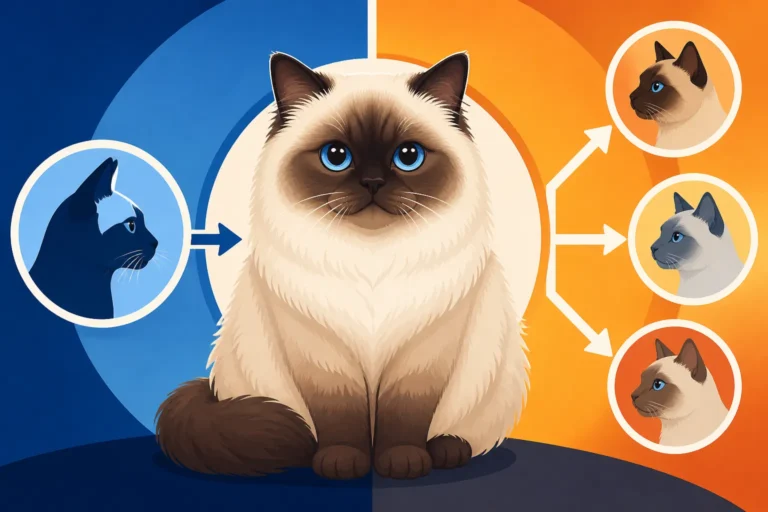
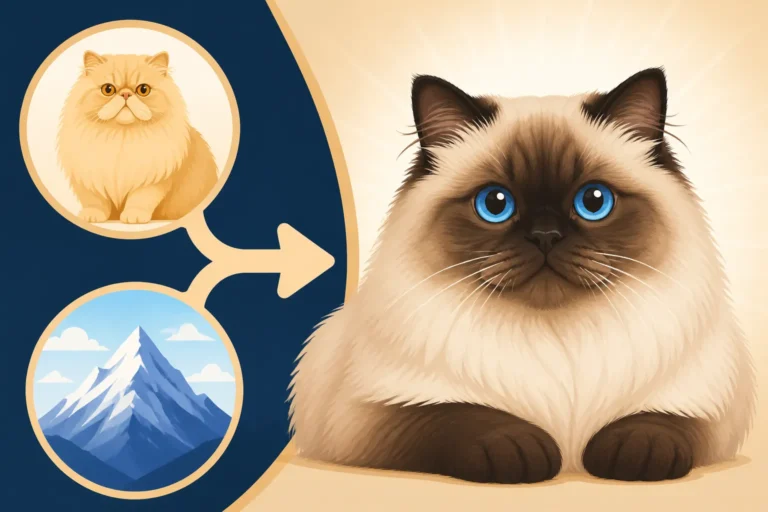
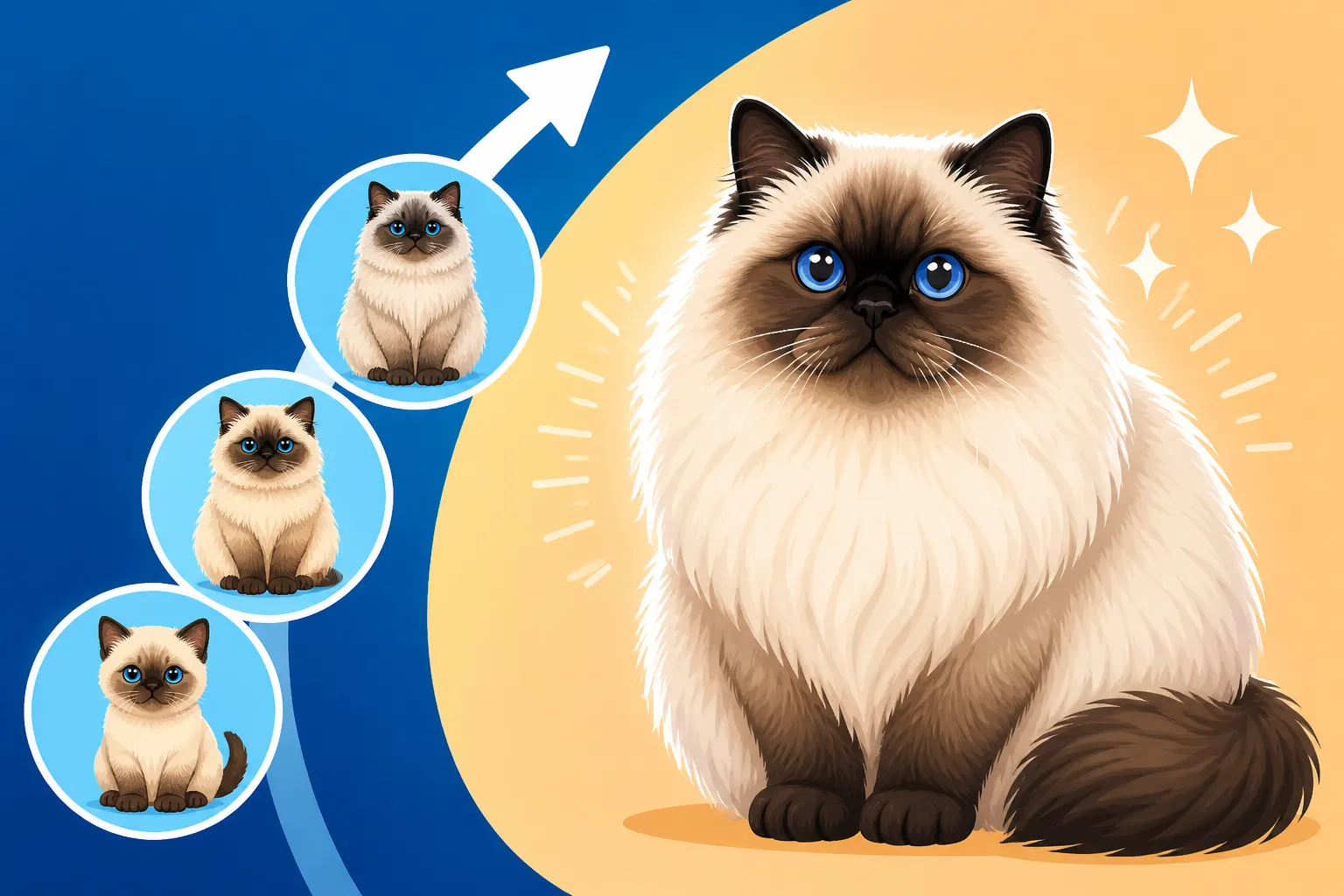
Himalayan kittens often start life with a soft, pale coat that does not yet show the adult’s full length, density or point color. As they grow, their longer outer hairs and insulating undercoat become more apparent. The change is gradual, so a kitten can look fluffy one month and noticeably fuller a few months later without anything being wrong.
The transition also varies from cat to cat. Genetics, health, nutrition and the time of year can all affect how quickly the coat fills in. Some young Himalayans develop a substantial ruff and britches early; others take longer to look like the plush adults people picture when they hear “Himalayan.”
This is why a young cat’s coat can be a poor guide to its eventual appearance. If you are choosing a kitten, an adult relative may give you a better sense of the family’s coat texture and fullness than a very young kitten can. For a closer look at the broader development timeline, see How Long a Himalayan Takes to Finish Its Coat and Points.
Adult fullness is not the same as hair growth stopping
Many Himalayans reach a much more mature-looking coat as they approach adulthood, but that does not mean every hair stops growing at the same age. A cat’s coat is made up of hairs at different stages: some are growing, some have stopped growing, and some are ready to shed. New hairs replace old ones over time.
In everyday terms, think of the coat as being maintained rather than built once and then left unchanged. A Himalayan may have reached its adult size and general coat pattern while still shedding and regrowing hair throughout life. Its ruff may look fuller in one season and less abundant in another, even though its underlying adult coat has not permanently changed.
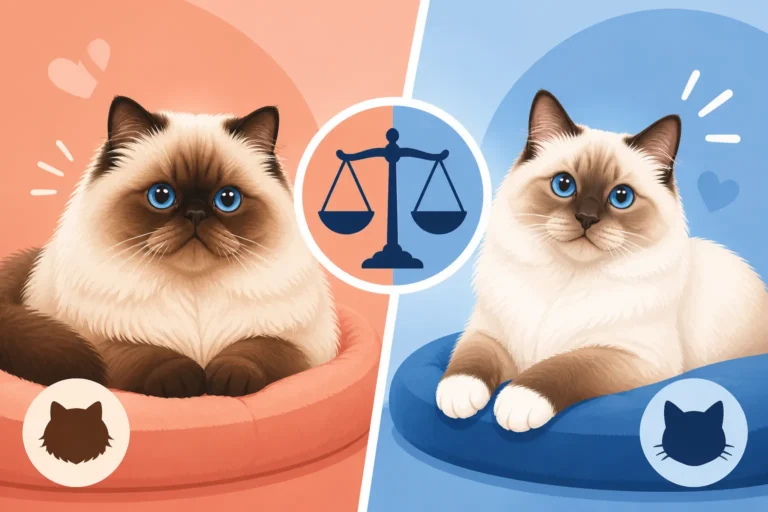
Age can also alter appearance. An older cat may have a coat that feels thinner or becomes harder to keep tidy, especially if stiffness, dental discomfort or illness makes grooming more difficult. If the coat looks different later in life, age is only one possibility; it is worth considering health and grooming habits too.
Why a Himalayan’s coat changes through the year
Seasonal shedding can make the coat look shorter
Himalayans often shed more noticeably as the weather and daylight change. When loose undercoat comes away, the coat may look less dense, particularly around the body and hindquarters. This can be surprising if you are used to seeing a dramatic winter ruff or a thick, cloudlike outline.
Indoor cats still experience coat cycles. Living in a climate-controlled home may soften the seasonal pattern, but it does not necessarily prevent shedding. A cat may leave hair on furniture and clothing throughout the year, with more loose fur at certain times. Regular combing helps remove shed undercoat before it tangles into mats.
A seasonal change should not usually create sharply defined bald spots or raw skin. If your Himalayan is losing hair in patches, chewing at its skin, or developing redness or sores, do not assume it is just a coat change. A veterinarian can help distinguish ordinary shedding from parasites, skin irritation, infection or another problem.
Temperature can affect the points and overall appearance
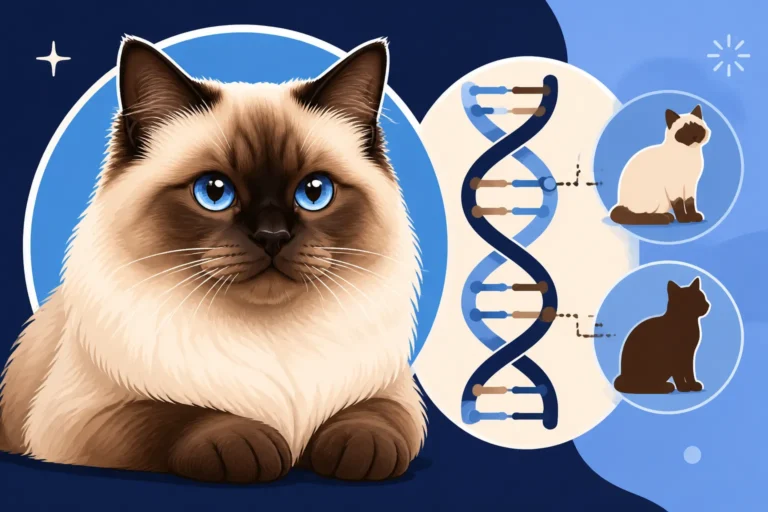
Himalayans have colorpoint coats: their cooler body areas tend to grow darker fur than warmer areas. Changes in temperature can influence how dark the points appear, so a cat’s coat may not look identical in every season. That color shift is different from the length of the hair, although the two changes can make the overall coat seem quite different.
The face, ears, legs and tail may show the most obvious color contrast, while the body coat remains lighter. A shaved or clipped area can also grow back darker than the surrounding fur. This can make a grooming clip look like a lasting color change, even when the hair is simply regrowing under different temperature conditions. For more on that effect, see How a Shaved Patch Regrows Darker on a Himalayan.
Coat color does not always tell you whether the coat is healthy. A darkening tail or a seasonal change in contrast can be normal, while a dull, greasy, brittle or suddenly sparse coat may need attention. Look at the skin and your cat’s general behavior as well as the color.
How to care for a coat that keeps changing
Comb for the coat your cat has now
A Himalayan’s coat needs ongoing care whether the cat is a kitten, an adult or a senior. The goal is not to make the coat grow faster or stay at one exact length. It is to keep the undercoat from compacting and the longer hairs from tangling, especially in friction-prone places such as the armpits, belly, ruff and britches.
Use a comb that can reach through the coat rather than only smoothing the surface. Work gently in small sections, checking that you can get down to the skin without pulling. If a tangle resists, pause instead of yanking; pulling can hurt and make a cat less willing to accept grooming next time. A mat close to the skin may be safer for a professional groomer or veterinarian to remove.
Kittens benefit from learning the routine before their coat becomes difficult to manage. Keep early sessions short and calm, and reward cooperation. An adult Himalayan who has never enjoyed combing may need an even slower introduction: a few strokes, a break, and a return to the task later can be more successful than trying to finish the entire coat at once. See How Often a Himalayan Must Be Combed and Getting a Himalayan Kitten Used to the Comb for practical grooming guidance.
Keep the face and high-friction areas in view
The coat around a Himalayan’s face needs attention in addition to the body coat. Tear moisture and food can collect on pale fur, while the nose fold can stay damp if it is not gently dried. Clean and dry the area carefully, using products intended to be safe around the eyes and following your veterinarian’s advice if the skin looks sore or smells unpleasant.
The britches and belly can pick up litter and debris, and the underarms can mat from ordinary movement. These areas are easy to overlook because the outer coat may still look beautifully fluffy. Run your fingers gently through the coat during grooming so you can find small tangles before they become tight mats.
If you are shopping for basic grooming supplies, a retailer such as Chewy may make it convenient to compare combs, wipes and other routine-care items. Choose tools based on your cat’s coat and comfort, not just on a product label. For example, a brush that makes the surface look smooth may still fail to reach the dense undercoat.
Food supports coat health but cannot set a fixed coat length
A complete, balanced diet supports normal skin and hair growth. It cannot guarantee that every Himalayan will develop the same fullness, texture or adult coat at the same pace. A cat’s inherited traits, health and grooming all matter, and adding supplements without a reason may not address the actual cause of a coat change.
If your cat’s coat becomes dull or brittle, or its skin is flaky or irritated, consider the whole picture. Has the cat’s appetite changed? Is it grooming less? Has it started scratching or licking one area repeatedly? Have you changed its food or household routine? These details can help your veterinarian decide whether the issue is dietary, skin-related or part of a broader health concern.
Chewy and other pet retailers carry many foods and grooming products, but a new food is not automatically the answer to shedding or a sparse coat. If a change is needed, ask your veterinarian how to make it gradually and whether a specific diet is appropriate for your cat. A routine combing habit and prompt attention to skin changes are often more useful than trying several products at once.
Telling normal coat changes from a problem
Look for patterns, not one loose handful of fur
Finding hair on a brush or sofa is expected for many longhaired cats. More useful clues are where the hair is coming from and whether the skin beneath it looks healthy. Broad, even shedding with normal skin is different from a bald patch, a broken-looking area, or a spot your cat keeps licking.
A simple grooming check can help you notice changes early. Once a week, look over the face, ears, ruff, sides, belly, legs and tail. Feel gently for mats and check for redness, scabs, bumps or damp areas. Keep track of changes that persist rather than relying on memory; a note about when shedding began or where thinning appeared can help at a veterinary appointment.
Age can affect self-grooming, too. A senior cat may have trouble reaching its back or cleaning its face as easily as before. If an older Himalayan’s coat becomes tangled despite your usual routine, pain or reduced mobility could be part of the problem. The change may call for more hands-on grooming and a health check, not simply a shorter haircut. For related guidance, see What an Old Himalayan Needs Once Its Coat Starts Matting.
Contact a veterinarian when the change is sudden or uncomfortable
Arrange veterinary advice if you see sudden hair loss, bald areas, persistent itching, inflamed skin, sores, a strong odor, or a coat change alongside appetite, energy or behavior changes. These signs can have several causes, and looking at the coat alone cannot identify which one is involved.
Seek advice sooner if the skin appears painful or your cat seems distressed. Do not use human skin products or try to cut close to the skin with scissors; mats can pull the skin up into the tangle, making accidental cuts easier. A veterinarian or experienced groomer can advise on safe removal and whether the skin needs treatment.
The same principle applies when a coat seems not to grow back after clipping. A clipped patch may take time to blend in, and it may regrow with a different shade. But if the skin is irritated, the area keeps expanding, or hair does not return as expected, ask a veterinarian rather than assuming it is only a cosmetic effect. See Why a Shaved Patch Grows Back Darker on a Himalayan for more on the color change that can follow clipping.
| What you notice | What may explain it | A sensible next step |
|---|---|---|
| A kitten’s coat gradually becomes fuller | Normal coat development | Keep grooming sessions gentle and consistent |
| More loose fur during a seasonal change | Shedding and coat-cycle changes | Comb regularly and monitor the skin |
| Darker points or a darker clipped patch | Temperature-related color changes during regrowth | Watch for skin irritation as well as color |
| Small tangles in the armpits or britches | Friction and dense undercoat | Gently comb early; ask for help with tight mats |
| Bald patches, sores or persistent itching | A possible skin or health problem | Contact a veterinarian |
| An older cat stops keeping its coat tidy | Reduced reach, discomfort or another health change | Arrange a checkup and adjust grooming support |
A Himalayan’s coat becomes more adult-looking as the cat matures, but it does not have one universal stop date. Hair continues to cycle, shed and regrow, and the coat’s appearance can shift with seasons, temperature, age and health. Focus on gentle, regular grooming and changes in the skin or your cat’s behavior rather than expecting the coat to remain exactly the same throughout life.
Disclaimer
This article is for general informational purposes only and does not constitute professional advice. Laws, prices and regulations vary by location and change over time. Consult a qualified professional for guidance on your specific situation.