Whether a Himalayan Kitten Can Appear in a Persian Litter
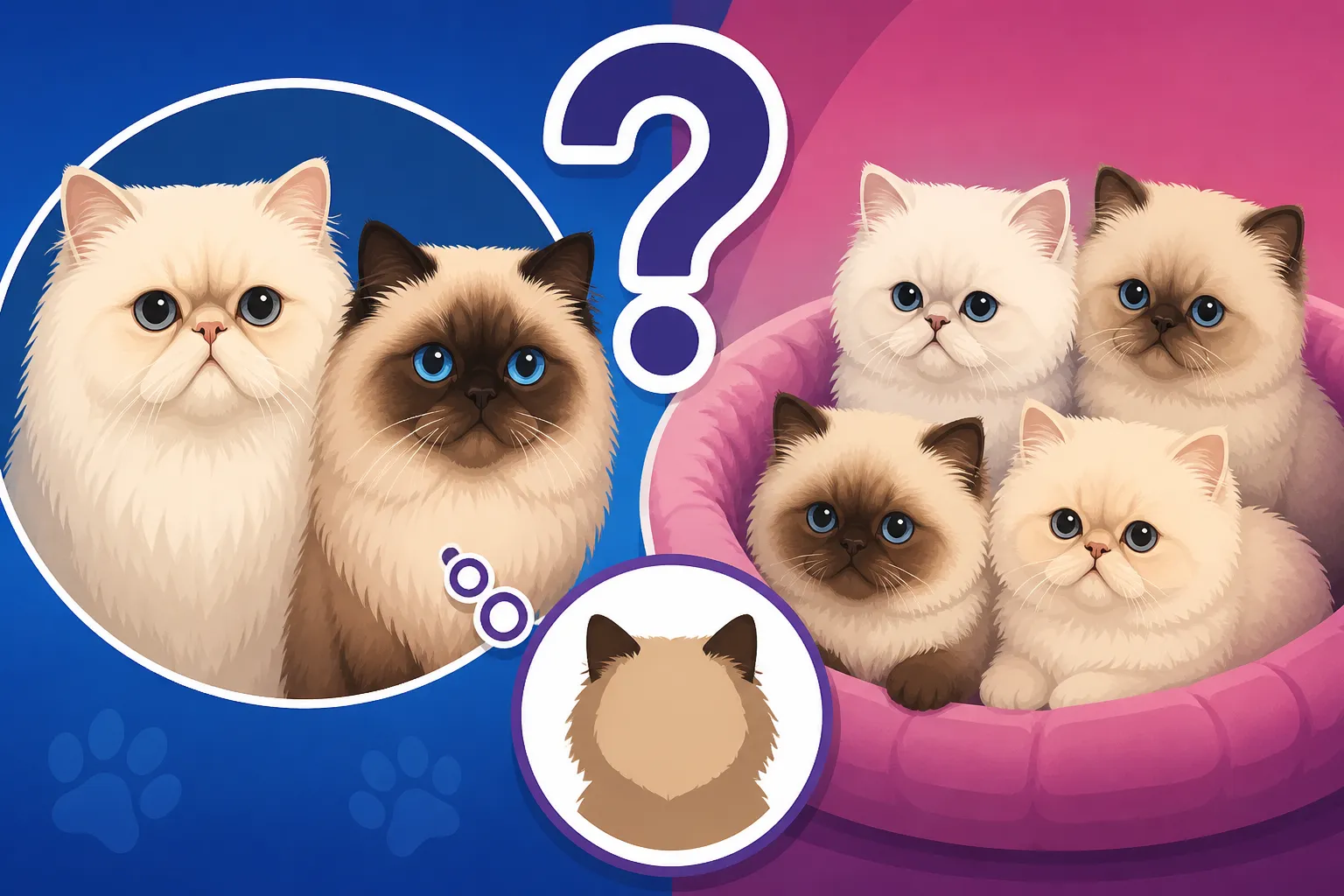
A Persian litter can include a Himalayan-patterned kitten, but only when both parents pass along the recessive colorpoint gene. That can surprise owners who expect every kitten from two Persians to look alike. This guide explains how the genetics work, what a pointed kitten may look like as it grows, and how registration and breeder records can clarify what you’re seeing.
How a Himalayan-patterned kitten can come from Persian parents
The colorpoint gene can be hidden in a Persian
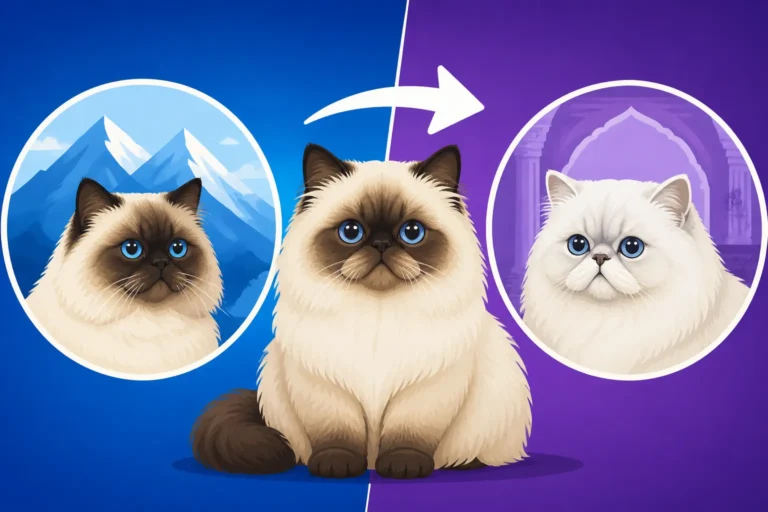
“Himalayan” commonly describes a Persian-type cat with colorpoint markings: a pale body and darker color on the face, ears, legs, and tail. A Persian can carry the gene for this pattern without showing it. In that case, the cat may look like an ordinary solid, tabby, or other non-pointed Persian, while still being able to pass the gene to its kittens.
The colorpoint pattern is recessive. A kitten generally needs to inherit a copy of the relevant colorpoint variant from each parent to show the classic pointed pattern. A Persian that carries only one copy can pass it on, but usually won’t display the pattern itself. That is why appearance alone may not tell you whether a Persian parent carries the gene. How a Persian Can Carry the Himalayan Gene Hidden
This also means that “two Persian parents” doesn’t necessarily mean “no Himalayan-patterned kittens.” The word Persian describes a breed type; it doesn’t rule out colorpoint ancestry or a hidden colorpoint gene. If both parents carry the variant, a pointed kitten is possible. If only one parent carries it and the other does not, the kittens generally won’t be pointed, though some may inherit a single copy and become carriers.
Both parents must contribute the colorpoint variant
The simplest way to think about it is that each parent contributes one copy of a gene to a kitten. A kitten that receives the colorpoint variant from both parents can show the pointed pattern. A kitten that receives just one copy is typically a carrier without the classic Himalayan appearance. A kitten that receives neither copy won’t be pointed and won’t carry that particular variant.
| Parent combination | Pointed kittens possible? | What the pairing may produce |
|---|---|---|
| Two non-carrier Persians | No, assuming neither carries another relevant colorpoint variant | Kittens that do not carry this colorpoint variant |
| One carrier Persian and one non-carrier Persian | Usually no | Some kittens may be carriers |
| Two carrier Persians | Yes | Pointed kittens are possible, alongside non-pointed kittens |
| A colorpoint cat and a carrier Persian | Yes | Pointed kittens are possible, and some non-pointed kittens may be carriers |
| Two colorpoint cats | Yes | Kittens will generally inherit a colorpoint variant from both parents, though appearance and other inherited traits still vary |
These are general genetic outcomes, not a guarantee about a particular litter. A responsible breeder should be able to explain the parents’ known genetics and the limits of any testing or pedigree information. For a more detailed look at the inheritance pattern, see Why a Himalayan Needs Two Copies of the Point Gene and Whether Two Persians Can Produce a Himalayan.
What the kittens may look like as they grow
Pointed kittens are often very pale at birth
A newborn colorpoint kitten may look almost white or cream all over. The gene affects pigment development in a temperature-sensitive way, so the cooler parts of the body tend to develop darker color. The face, ears, paws, and tail are usually cooler than the warmer torso, which is why the contrast gradually becomes visible there.
This can make an early litter photo misleading. A kitten that appears uniformly pale at birth may develop recognizable points over the following weeks. The timing and strength of the color can vary, and the body coat may not remain the same shade throughout the cat’s life. Why Every Himalayan Kitten Is Born Almost White
Look for changes around the nose, ears, tail, and feet as the kitten matures. A breeder may be able to explain which kittens are expected to be pointed based on their parents’ genetics, but a young kitten’s exact adult color and contrast can take time to become clear. If you are choosing a kitten, ask what is known about the parents’ point colors and whether the litter’s expected colors are based on documented genetics or visual guesswork.
A pointed kitten can still resemble a Persian in many ways
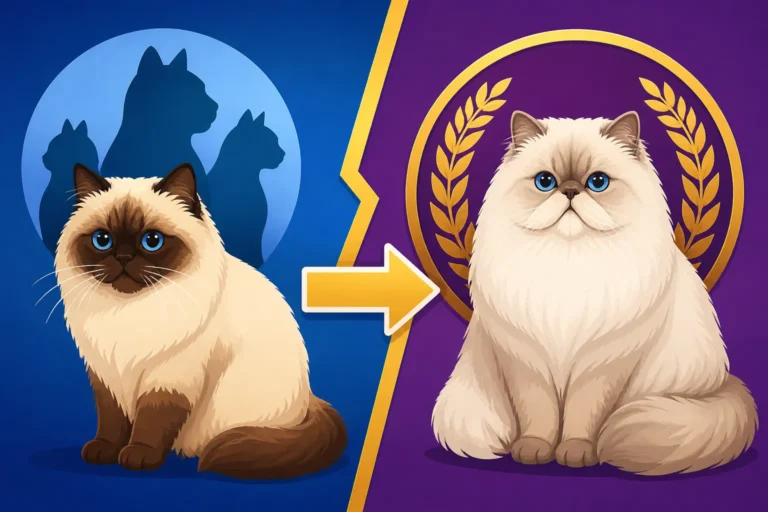
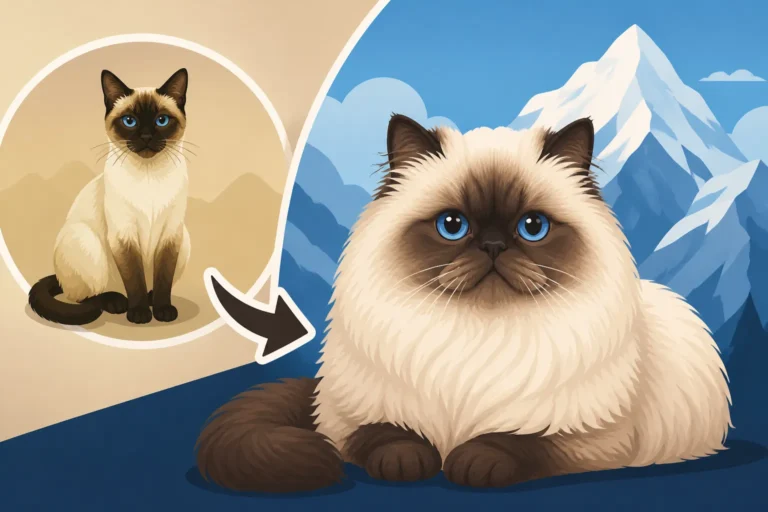
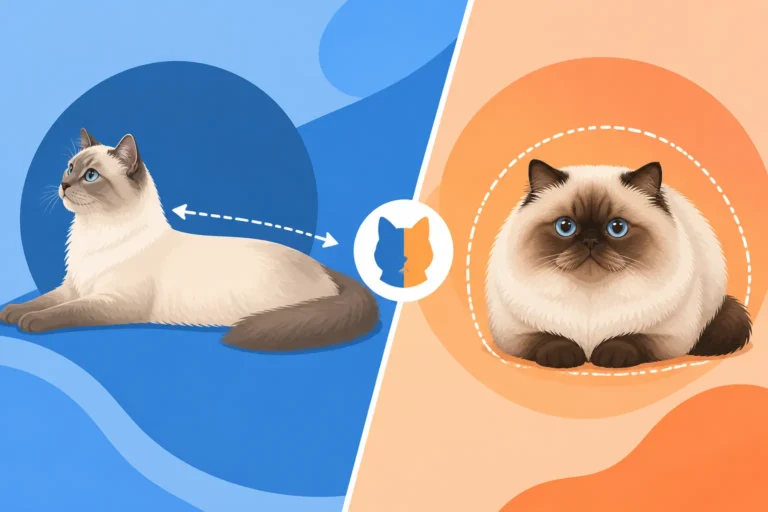
A Himalayan-patterned kitten from Persian parents may have the Persian’s long coat, round head, compact build, and other family traits. The colorpoint pattern changes where pigment appears; it doesn’t make the kitten a Siamese or mean it has the overall body type of one. Himalayan cats trace their history to Persian and Siamese ancestry, but a pointed Persian-type kitten is still often described in relation to the Persian breed.
The face can vary, too. Some cats have a more open profile, while others have a flatter face. Don’t assume that the word “Himalayan” tells you exactly what the kitten’s muzzle, breathing, or facial structure will be like. Ask to see the kitten from the side and, when possible, meet the parents. If you are comparing profiles, What a Himalayan’s Profile Should Look Like Side On offers useful context.
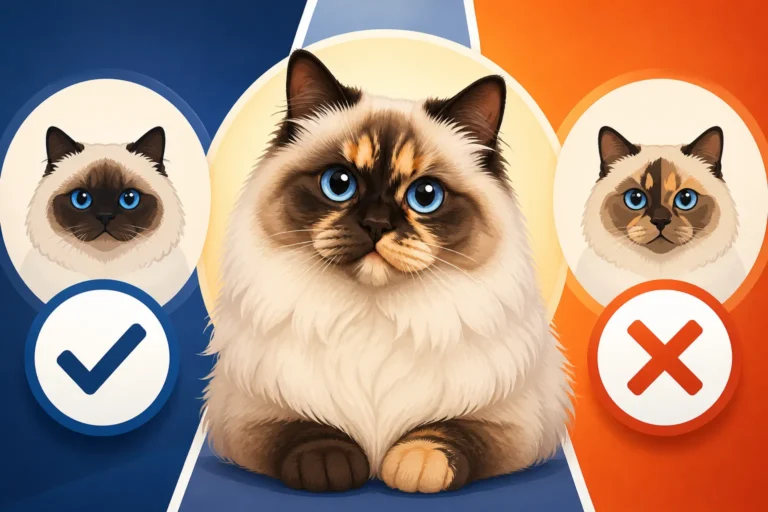
A kitten’s coat and points also change with age and environment. Point color can deepen over time, and a shaved patch may grow back darker than the surrounding coat. These changes don’t necessarily mean that the kitten was misidentified. They are part of how colorpoint pigmentation can appear in a longhaired cat.
What “Himalayan” means on records and pedigrees
Breed names can depend on the registry
There isn’t one universal rule for how every registry labels a Himalayan-patterned Persian. Some organizations treat the Himalayan as a distinct breed or category, while others include it within the Persian breed or use terms such as Colorpoint Persian. As a result, a kitten may be described as a Himalayan by its breeder while its registration paperwork uses Persian-related wording.
That difference in paperwork does not automatically mean that the breeder is being evasive or that the kitten is less of a Himalayan in everyday conversation. It does mean you should ask exactly what the pedigree and registration documents will say. What a Persian Carrying the Himalayan Gene Is Called and How the Himalayan Is Registered by TICA Today explain why the terminology can differ.
If the kitten is being sold as a Himalayan, ask the breeder to distinguish among the kitten’s appearance, its ancestry, and its formal registration. Those are related, but they are not interchangeable. For example, a kitten may have Himalayan coloring, have Persian parents, and be registered under a Persian-related category, depending on the registry and the breeder’s paperwork.
Ask for records that match the claim
A careful breeder should be willing to discuss the parents’ pedigrees, the expected colorpoint inheritance, and the registry involved. Ask whether the parents’ point status is known, whether genetic testing was used, and what evidence supports the expected colors in the litter. A pedigree can help establish ancestry, but it does not necessarily prove the parents’ genetic status unless the relevant information is documented.
Before placing a deposit, request the exact name that will appear on the registration papers and ask for a copy or clear explanation of the relevant records. If the breeder says that a kitten is pointed but cannot explain the parents’ coloring or genetic background, pause and ask more questions. How to Read the Breed Line on a Himalayan Pedigree can help you understand why the wording on the document may not match the casual name used in conversation.
A breeder should also be clear about what they can and cannot predict. Colorpoint inheritance can make a pointed kitten possible, but it doesn’t guarantee a particular shade, contrast, face shape, or adult appearance. To compare the cat’s official description with its visible pattern, see How a Himalayan’s Point Color Is Recorded.
What to do if a Persian litter includes a pointed kitten
Confirm the kitten’s identity without relying on color alone
If a kitten in a Persian litter develops darker ears, a mask, colored paws, and a tail, the pattern may be colorpoint. Still, appearance alone is not a complete record of the kitten’s ancestry or genetic status. Ask the breeder how the kitten was identified, what the parents’ documented colors are, and whether the kitten’s registration will reflect the pattern.
If you already have the kitten, bring the breeder’s records and any available test results to your veterinarian. A vet can help assess the kitten’s general health and keep the medical record consistent, while a registry or breed organization can clarify registration terminology. Neither coat color nor a casual label should be treated as a substitute for written pedigree information.
When preparing for a longhaired kitten, focus on practical care as well as color. A Persian-type coat needs regular combing, and kittens benefit from gentle handling practice early. If you already use Chewy for routine pet supplies, you can compare basic grooming tools there, but ask your breeder or veterinarian what is appropriate for the kitten’s coat and age. A comb that reaches the undercoat is more useful than a brush that only smooths the surface.
Keep the focus on health and daily care
Whether the kitten is called a Persian, Himalayan, or Colorpoint Persian, the daily needs are still those of an individual cat. Make sure the kitten has regular veterinary care, is eating a suitable diet, and is gradually introduced to grooming and face handling. A shallow, easy-to-reach food dish may be more comfortable for some flat-faced cats than a deep bowl. Chewy may be one place to compare bowls and other everyday supplies, but fit and comfort matter more than a product label.
A long coat can mat quickly, especially under the arms, around the collar, and behind the legs. Keep grooming sessions calm and brief at first, rewarding the kitten for tolerating the comb rather than trying to finish the entire coat at once. If you’re assembling a kitten-care kit, Chewy can be a convenient place to look for routine items such as litter and a carrier; check that the carrier allows good airflow and gives the kitten room to turn around comfortably.
Most importantly, don’t choose or reject a kitten based only on a registry label or the exact shade of its developing points. Ask what the breeder knows, request the records, and consider whether the kitten’s temperament and care needs suit your home. A pointed kitten can appear in a Persian litter when the genetics line up, and clear documentation is the best way to understand how that happened.
Disclaimer
This article is for general informational purposes only and does not constitute professional advice. Laws, prices and regulations vary by location and change over time. Consult a qualified professional for guidance on your specific situation.