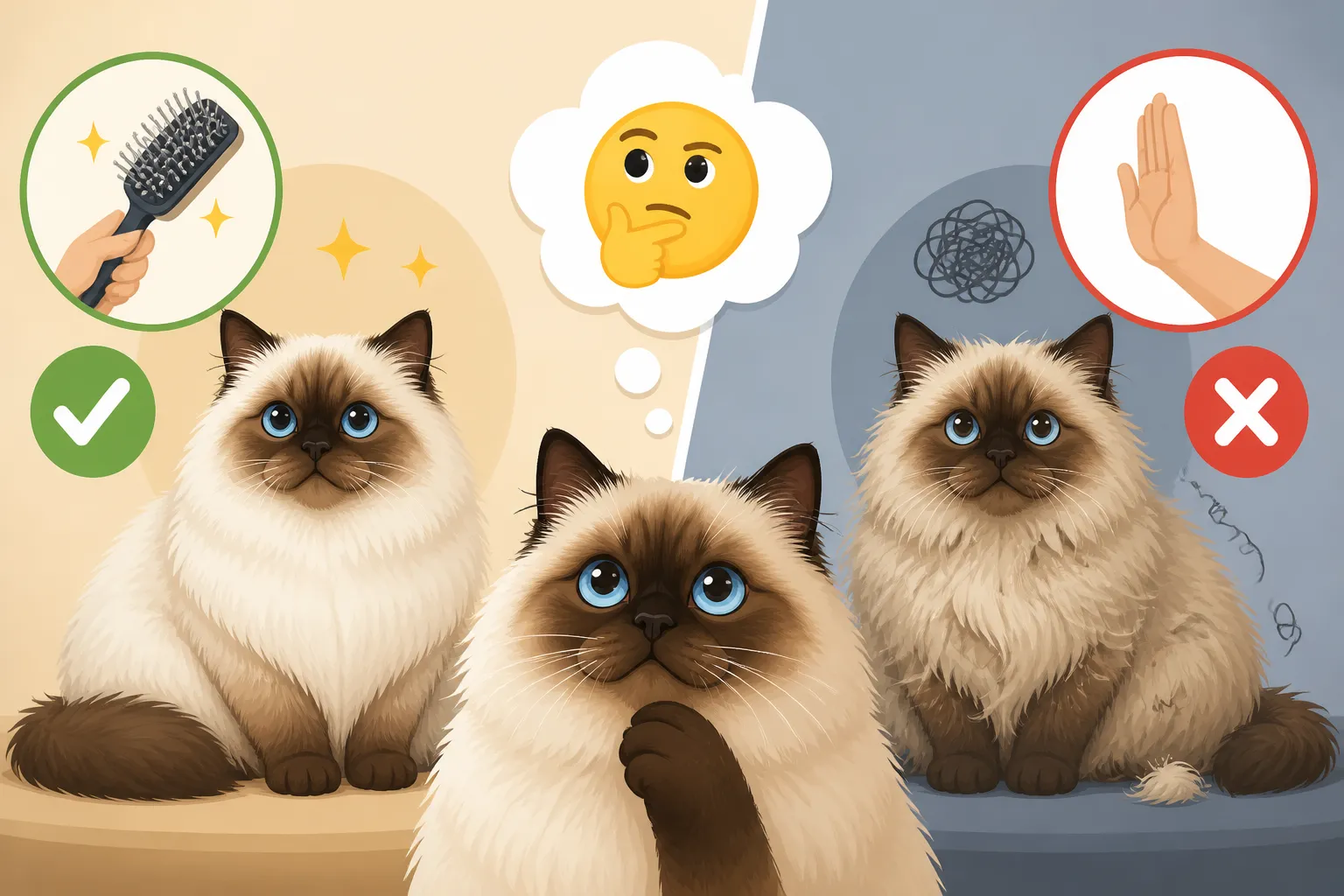
Whether a Himalayan Suits Someone Who Cannot Comb Daily
A Himalayan can look like the perfect calm, cuddly companion, but that long Persian coat needs regular hands-on care. If you cannot comb every day, the worry is understandable: a missed session can turn into a painful knot, a stressful grooming appointment, or a routine you dread. This guide explains what the commitment involves and when another cat may suit you better.
What a Himalayan’s coat asks of you
Combing is more than a quick brush-through
A Himalayan’s coat is long and dense, with a soft undercoat that can tangle close to the skin. A brush may smooth the top and make the cat look tidy while leaving tight knots underneath. That is why a thorough comb-through matters: the goal is to reach the skin gently, section by section, rather than simply neaten the surface.
The areas that often need extra attention are the armpits, behind the ears, the belly, the britches around the back legs, and the ruff around the neck. These spots rub against the body or collect loose hair, litter, and food. A cat that happily accepts a comb along its back may still object when you reach its belly or hindquarters.
A sensible session is calm and brief enough that your cat can tolerate it. You can work through one area at a time, offering a pause or a reward before the cat gets frustrated. But if you routinely have no time for even a short check of the coat, the work can accumulate faster than you expect. For a more detailed routine, see How Often a Himalayan Must Be Combed.
Daily care means checking for trouble, not chasing perfection
“Daily combing” can sound like a demand to perform a full grooming session every single day. In practice, the aim is consistent attention: check the coat, deal with small tangles before they tighten, and give extra time to areas that are starting to catch. Some days that may be a quick inspection and a few careful passes; other days the coat may need more.
The important distinction is between a missed session now and then and a lifestyle where combing is rarely possible. If work shifts, caregiving, travel, or hand pain make it hard to handle grooming consistently, it is worth treating that as a real factor in your decision—not something you will necessarily figure out later. Even a well-behaved cat may develop mats if the coat is repeatedly left unchecked.
You will also need to get the cat comfortable with handling. Begin with gentle, positive experiences while it is young, and keep sessions short before gradually working through more of the coat. Getting a Himalayan Kitten Used to the Comb covers why that early practice matters. An adult cat can learn too, but if it already dislikes grooming, building a cooperative routine may take patience and careful steps.
The right tools help, but they do not replace time
A metal comb with suitable spacing can help you work through the coat and notice resistance from a tangle. A slicker brush may help with loose surface hair, but it should not be assumed to reach every knot in a thick undercoat. Use a gentle touch: pulling hard can hurt the cat and make future grooming harder.
It helps to make grooming easy to start. Keep the comb where you usually sit with your cat, choose a quiet spot with good light, and use a stable surface if your cat is comfortable there. Some owners compare grooming tools at retailers such as Chewy, but the key is choosing something you can use calmly and consistently—not buying a large kit and hoping it solves a time problem.
Do not use scissors to cut out a tight mat close to the skin. Cat skin can be pulled up into a mat, making it difficult to see where the skin ends and the knot begins. If a mat is firm, painful, or close to the skin, ask a veterinarian or experienced groomer for help rather than tugging at it.
What happens when combing keeps getting postponed
Small tangles can become painful mats
A loose tangle is much easier to address than a compact mat. As hair sheds and catches in the coat, rubbing can tighten it. A mat may pull on the skin when the cat moves, and the area beneath it can become irritated or difficult to keep clean. Mats around the hindquarters may also collect debris from the litter box.
This is where “I’ll do it tomorrow” can become a cycle. You notice a small knot but are rushed, then the cat becomes less tolerant as it tightens, and the next attempt takes longer. If combing turns into a struggle, the cat may hide or resist being touched in the very places that need attention. Why a Himalayan Cannot Be Left a Week explains why long gaps can be a problem for this coat.
A coat that is severely matted may require professional clipping. If the cat is distressed or the mats are extensive, a veterinarian may need to advise on the safest approach. Grooming should not become a repeated battle where the cat is held down and the knots are pulled out by force. Why a Matted Himalayan Becomes a Medical Case offers more context on when coat trouble moves beyond routine home care.
A haircut is a management option, not a no-care solution
Some owners choose a lion cut or another shorter trim when regular coat maintenance is not working. This can reduce the amount of long hair to comb for a period, and a professional groomer can help determine whether it makes sense for an individual cat. It is not a permanent fix: the coat grows back, and the skin, face, nails, and remaining hair still need attention.
A shorter coat also does not remove the need to check for tangles or skin changes. If the cat’s coat is repeatedly allowed to mat until it has to be clipped, that can still mean stressful appointments and an uncomfortable animal. Before relying on haircuts as the plan, ask a groomer how often the cat will need to return and what home care will still be necessary.
Regular appointments can be helpful for owners who need support, but they work best as part of a routine rather than a substitute for all home checks. Why a Himalayan Owner Books a Groomer Anyway looks at how professional grooming can fit into ownership. If you are shopping for basic supplies, Chewy is one place owners may compare combs and grooming products, but a retailer cannot assess whether a particular mat or skin problem needs professional care.
Can a Himalayan work for someone who cannot comb daily
Consider the reason daily care is difficult
The answer depends partly on what “cannot comb daily” means in your home. If you can usually check the coat most days and arrange help when you are away, you may be able to make a reliable care plan. If you know you will regularly miss grooming for several days at a time, or the task is physically uncomfortable and there is no one who can help, a Himalayan may be a poor match.
Think beyond an ideal week. Imagine a busy stretch at work, a family emergency, a flare-up of hand or shoulder pain, or a few days when the cat is unwell and less cooperative. Would someone else be able to take over? Could you keep up with appointments and still inspect the coat between them? A realistic plan accounts for the weeks when you are tired, not only the weekends when you have time.
A table can help make the choice less abstract:
| Your situation | What it may mean for a Himalayan |
|---|---|
| You can do brief, regular coat checks and combing | More likely to be manageable if the cat accepts grooming |
| You travel often but have a dependable caregiver | Possible if the caregiver is willing and able to maintain the routine |
| You can afford and arrange professional grooming but cannot check the coat at home | Riskier, because problems can develop between appointments |
| You dislike grooming or expect to skip it often | Another breed or coat type is likely a better fit |
| You have limited mobility or hand strength and no grooming support | Consider whether the daily care will remain comfortable and sustainable |
The central question is not whether you can force yourself through grooming for a few weeks. It is whether the routine can remain kind and consistent for the cat over the long term. What Nobody Tells You Before Buying a Himalayan is useful background if you are weighing the breed’s less glamorous day-to-day responsibilities.
Grooming support must be dependable
A professional groomer can help with bathing, coat maintenance, and clipping when needed, but you should not assume that occasional appointments will keep every cat mat-free on their own. Ask a groomer what home checks they expect, whether they are comfortable handling Himalayans, and how they respond if a cat becomes anxious. A trusted veterinarian can also advise you if grooming is painful, unusually stressful, or complicated by skin or health concerns.
If you live with another person, discuss the division of care before bringing a cat home. “We’ll both help” can sound reassuring, but it is more useful to agree on who checks the coat, who books appointments, and what happens if the usual person is away. A caregiver who only visits to feed the cat may not be prepared to comb a reluctant Himalayan.
You can look for grooming supplies through shops such as Chewy, but budget and access to tools are only part of the arrangement. The harder question is whether someone in the household will actually use them, gently and often enough. If the answer is no, be honest about that before choosing a kitten or adult cat.
How to decide before bringing one home
Ask specific questions about the cat in front of you
If you are considering a kitten, ask the breeder how the kittens are introduced to combing and face handling. Ask to see the coat parted down to the skin in areas such as the armpits and britches, and observe whether the kitten tolerates gentle handling. A kitten that is relaxed during a short visit is not guaranteed to enjoy every future grooming session, but you can learn whether grooming has been introduced thoughtfully.
For an adult cat, ask about its actual routine and temperament rather than relying on general descriptions such as “easy to groom.” Find out how often it is combed, whether it has had mats, which areas it resists, and whether it has needed professional clipping. If possible, watch a caregiver handle the cat with a comb. A cat’s history can tell you more than the breed label alone.
An honest conversation should include what you can offer. If you cannot comb every day, say so and ask whether the breeder or rescue believes the particular cat’s coat and temperament are likely to work with a supported routine. You can also read Whether to Choose a Himalayan or a Solid Persian and Why a Persian Coat Makes a Himalayan Look Heavier to compare coat and care considerations without assuming that one individual will behave exactly like another.
Choose the cat whose needs fit your ordinary life
A Himalayan may be a rewarding companion for someone who enjoys calm handling and can make grooming part of the day. It may be the wrong choice for someone who strongly dislikes coat care, has no reliable backup, or is already stretched thin. That is not a failure of affection. Choosing a cat whose care matches your actual schedule is one of the kindest decisions you can make.
If you love the Himalayan’s affectionate nature and appearance but cannot manage the coat, consider meeting cats with shorter or lower-maintenance coats. That does not mean every shorthaired cat is effortless, or that every Himalayan needs the same amount of grooming. It simply gives you more options that may fit your routine with less risk of painful coat problems.
Make the decision based on the life you can consistently provide, not the version of your schedule you hope to have. If you can arrange dependable grooming support and daily or near-daily coat checks, a Himalayan may still be possible. If combing is unlikely to happen regularly, it is kinder to admire the breed from afar and choose a companion whose care needs feel sustainable.
Disclaimer
This article is for general informational purposes only and does not constitute professional advice. Laws, prices and regulations vary by location and change over time. Consult a qualified professional for guidance on your specific situation.