What the Himalayan Proved About Coat Genetics
A Himalayan’s pale body and dark ears, face, paws, and tail can look like a simple color pattern—but the coat tells a more interesting story. It shows how inherited genes and body temperature can work together to shape appearance. This guide explains what Himalayan cats helped demonstrate about coat genetics, what the pattern does and does not prove, and how it develops as a kitten grows.
What the Himalayan’s coat pattern demonstrates
A pointed coat has a genetic cause
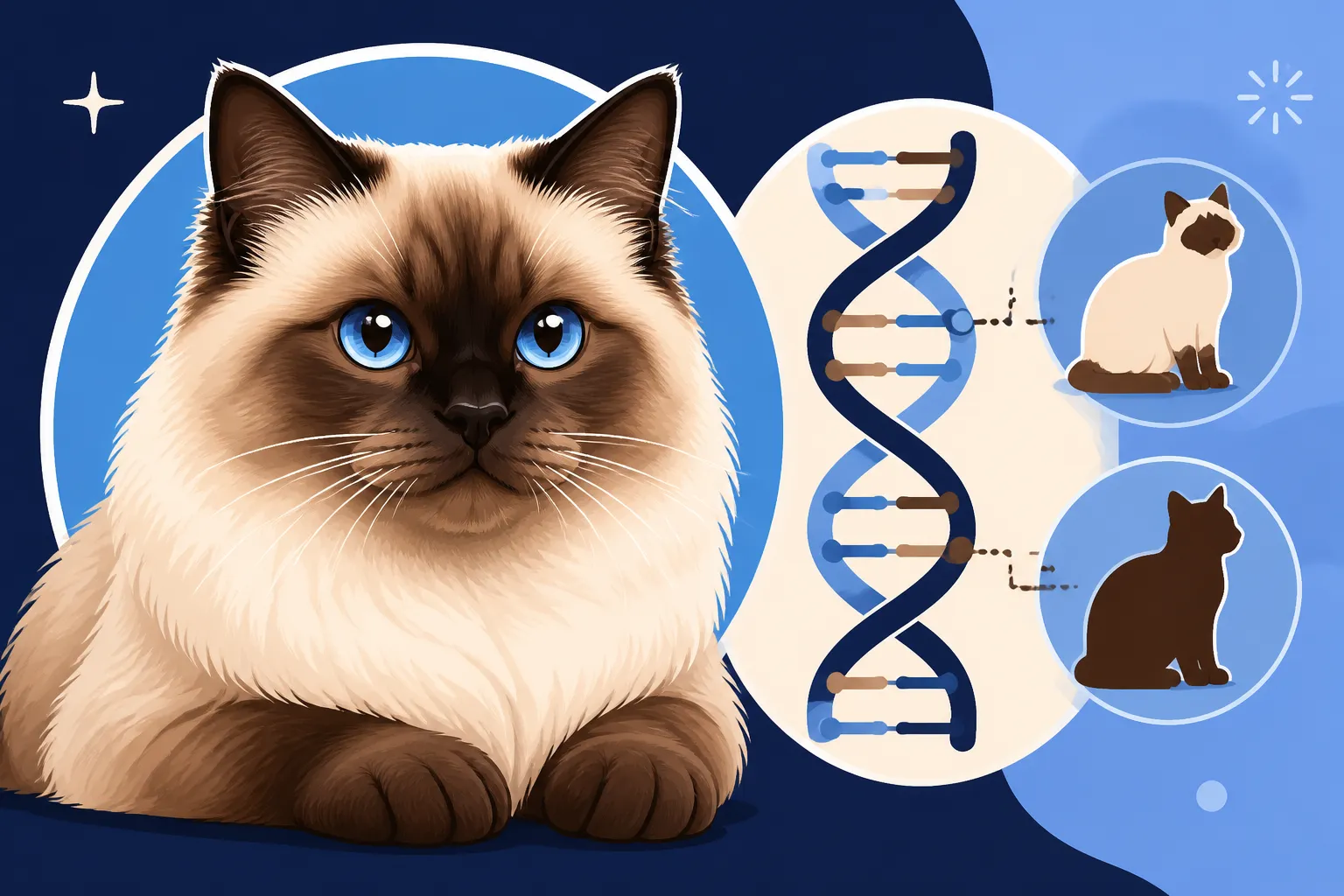
The Himalayan coat pattern is a striking example of how a gene can influence where pigment appears. A Himalayan’s body is generally lighter than its “points”—the cooler areas around the face, ears, legs, and tail. The pattern is associated with a temperature-sensitive form of the gene involved in producing melanin, the pigment that gives hair and skin their color.
The key idea is that the gene’s effect depends partly on the conditions in which it operates. In warmer parts of the body, pigment production is reduced, so the coat tends to remain pale. In cooler areas, pigment production can proceed more fully, making the fur darker. The resulting contrast is visible evidence that inherited instructions do not always produce a uniform result across the whole body.
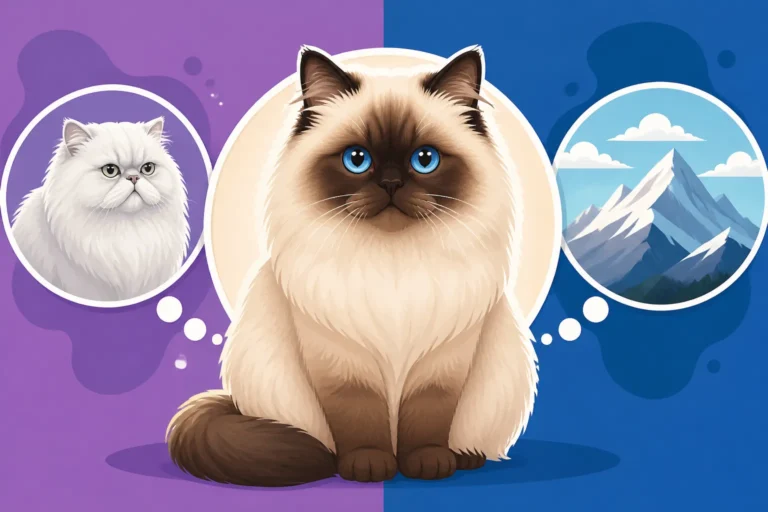
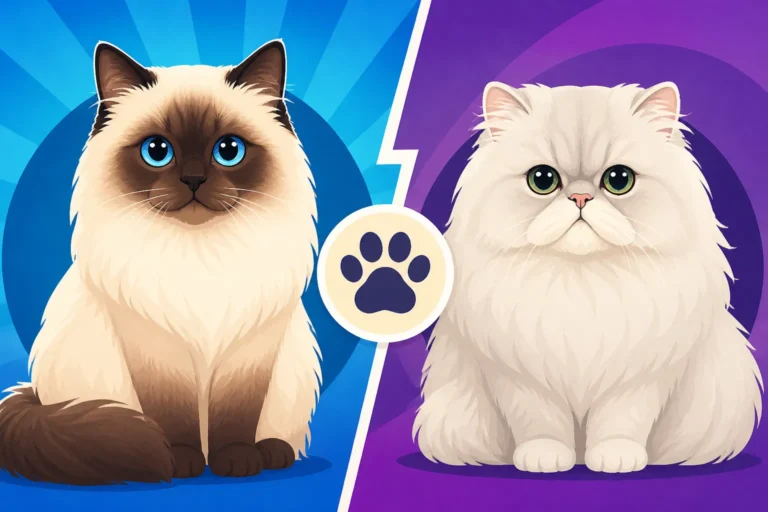
This is one reason the Himalayan is often described as a Persian with the point gene. The Persian-like coat and body type meet the pointed pattern inherited through the breed’s development. For a closer look at that combination, see Why a Himalayan Is a Persian With the Point Gene.
Temperature helps shape the visible result
A Himalayan’s coat pattern is not determined by temperature alone. Genes establish the underlying capacity for the pointed pattern; the cat’s temperature conditions influence how that pattern is expressed in the fur. That distinction matters. A cold room does not turn a non-pointed cat into a Himalayan, and keeping a Himalayan warm cannot erase the genes it inherited.
Instead, temperature helps explain why the coat may vary in shade across the body and may change over time. The ears, tail, and lower legs are often cooler than the torso, so they commonly develop deeper color. Changes to the coat, such as shaving or clipping, can also create a patch that grows back darker because the regrowing hair develops under different temperature conditions from the surrounding coat.
This interaction between inherited traits and the body’s environment is the central lesson: a visible feature can have a genetic basis while still being affected by conditions. The Himalayan’s pattern makes that relationship unusually easy to see. For more detail on the temperature component, read How Temperature Decides a Himalayan’s Point Color.
How inheritance produces pointed kittens
Two copies of the point variant are generally needed
The pointed pattern is inherited. In broad terms, a kitten usually needs to inherit a copy of the relevant colorpoint variant from each parent to show the classic pointed coat. A cat with only one copy may carry the variant without displaying the familiar Himalayan pattern, depending on the other genes it inherits.
That recessive inheritance can make a litter’s appearance less predictable to someone looking only at the parents. Two cats that do not appear pointed may still carry the variant, and their kittens may inherit a copy from both sides. Conversely, a pointed cat passes on a copy of the variant to every kitten, but the kitten’s visible coat depends on what comes from the other parent too.
The practical lesson is that appearance offers clues, but it cannot reveal every part of a cat’s genetic makeup. A pedigree or genetic information can help explain what traits may be passed on, though no single visible feature tells the whole story. The basics are explored in Why a Himalayan Needs Two Copies of the Point Gene.
The pattern is a useful example, not the whole of coat genetics
It is tempting to treat the Himalayan’s coat as a one-gene explanation for color. That would oversimplify things. The pointed pattern is one part of a larger genetic picture that can include genes affecting pigment type, shade, pattern, and how colors are distributed. Those inherited factors can interact, which is why pointed cats can have different point colors and different degrees of contrast.
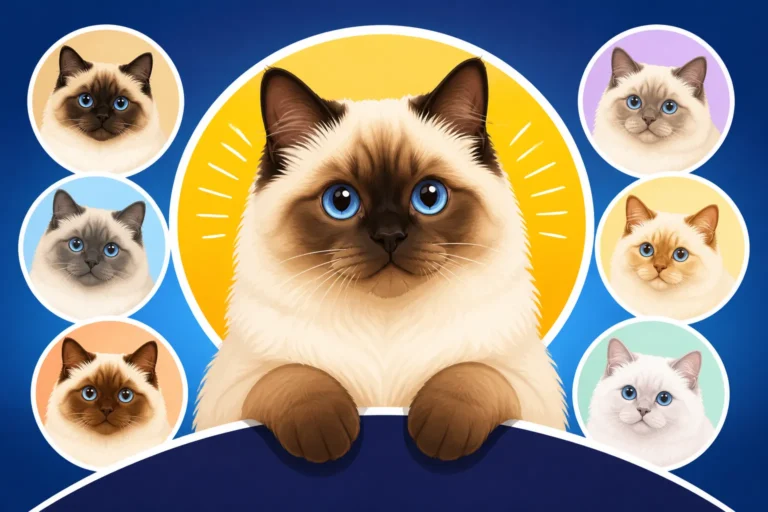
The Himalayan helped make the relationship between inheritance and visible coat pattern especially clear, but it did not demonstrate that every coat trait works the same way. A tabby pattern, solid coat, or white spotting involves other genetic influences. Even within pointed cats, the final appearance can vary: the same broad pattern may look different depending on the point color, body coat, age, and temperature.
| What you can observe | What it may help explain | What it cannot tell you by itself |
|---|---|---|
| Darker ears, face, paws, and tail | The pointed pattern is being expressed | Every gene the cat carries |
| A pale torso | Pigment expression differs across warmer and cooler areas | That temperature alone caused the pattern |
| A darker patch where fur regrew | Regrowing hair may have developed under cooler conditions | The cat’s full genetic background |
| Different point shades among cats | Inherited color traits can vary | The exact outcome of a future litter |
The Himalayan is best understood as a vivid teaching example: genes help set the pattern, and conditions influence how that pattern becomes visible.
What kittens reveal as their coats develop
Himalayan kittens are born pale
Himalayan kittens are often born nearly white or very pale because the womb is warm enough to limit pigment expression across much of the developing coat. After birth, cooler areas of the body can develop darker fur. The points usually become more noticeable gradually rather than appearing as a complete, sharply defined pattern on day one.
That gradual change can surprise new owners. A kitten may look almost solid cream or white at first, then develop darker ears, a mask, paws, or tail as it grows. The timing and depth of the color can vary, so two kittens from the same litter may not develop identical contrast at the same pace.
This is not a sign that the kitten’s coat is “changing breeds.” It is the visible pattern emerging as the coat grows under different conditions. The early appearance is covered in Why Every Himalayan Kitten Is Born Almost White and How Many Weeks Before a Himalayan Kitten’s Points Show.
The coat keeps changing after the first points appear
The first visible points are only part of the story. Color may deepen as the kitten matures, and the finished coat can take time to settle. Some owners expect the kitten’s eventual appearance to be obvious from a few early photographs, but lighting, camera settings, coat length, and the kitten’s age can all make early color harder to judge.
Temperature can also influence the shade of the coat. A Himalayan that spends more time in cooler conditions may develop darker areas, while seasonal changes can affect how the coat appears. These changes do not mean the underlying inherited pattern has been replaced; they are variations in how it is expressed.
If you are comparing kitten photos, look at the whole coat and the conditions under which each image was taken rather than relying on one snapshot. For background on the breed’s development, Why Harvard Crossed a Persian With a Siamese to Make the Himalayan and What Keeler and Cobb Were Studying When They Made the Himalayan provide useful context.
What the Himalayan did and did not prove
A visible trait can connect genes with the environment
The Himalayan’s coat is memorable because its pattern turns an abstract genetic idea into something you can see. A gene influences the cat’s ability to produce pigment; temperature-sensitive activity helps explain why darker color develops more strongly in cooler areas. The cat’s body becomes a natural demonstration of how inherited traits and environmental conditions can meet.
That does not mean the coat is a perfect scientific experiment by itself. A cat is not a controlled test, and the appearance of one Himalayan cannot account for every biological detail behind pigmentation. Rather, the breed offers a clear and accessible illustration of a broader principle: genes influence traits, while conditions can affect how those traits appear.
The pattern is also found beyond domestic cats. “Himalayan” is used for a color pattern in other animals, including rabbits, although sharing a name or a similar-looking pattern does not mean the species have identical genetic histories. The name’s background is discussed in Why the Himalayan Is Named After a Rabbit.
Coat color does not predict a cat’s personality or care needs
A pointed coat tells you about pigmentation, not temperament. It cannot tell you whether a Himalayan will be talkative, playful, shy, or especially attached to one person. Nor can coat color alone tell you whether a particular cat has inherited a health condition. Those questions involve other aspects of genetics, development, health, and individual experience.
The coat does have practical implications for everyday care. Himalayan fur is long and can mat, so owners often need a consistent combing routine. A retailer such as Chewy may be one place to compare basic grooming tools, but the right comb depends on the individual cat’s coat and tolerance. If a mat is tight against the skin, pulling or cutting it at home can injure the cat; a veterinarian or experienced groomer can help decide what is safest.
Daily face care is another routine some owners need to plan for, particularly when tear tracks collect on pale fur. Chewy may also be useful for comparing gentle, cat-safe grooming supplies, but avoid putting products close to the eyes unless they are specifically appropriate for that use. If you are unsure about irritation, discharge, odor, or a sudden change, ask a veterinarian rather than treating it as a color issue.
Thinking about those practical routines can help prevent a common misconception: the Himalayan’s striking coat is not just decoration, but it is also not a complete guide to the cat. Its strongest lesson is about inheritance and visible variation. The pattern shows how a genetic trait can be expressed differently across one animal’s body—and why understanding a coat means looking at both the genes and the conditions under which they act.
Disclaimer
This article is for general informational purposes only and does not constitute professional advice. Laws, prices and regulations vary by location and change over time. Consult a qualified professional for guidance on your specific situation.