How to Judge a Himalayan Kitten’s Nostrils at Twelve Weeks
Bringing home a Himalayan kitten is often a dream come true, but the sheer joy can sometimes be overshadowed by a silent worry about their breathing, a common concern for these beautiful flat-faced cats. Many new owners, and even some experienced ones, struggle to understand what healthy breathing should look and sound like in a young kitten, leading to anxiety about their future well-being. This guide aims to demystify how to properly assess a Himalayan kitten's nostrils at twelve weeks of age, empowering you to identify potential issues early and ensure your fluffy companion thrives.
Understanding the Himalayan's Unique Airway Challenges
It’s no secret that our beloved Himalayans, with their distinct "Persian" facial structure, come with a unique set of physiological considerations, especially when it comes to their respiratory system. While their flattened faces are undeniably adorable and a hallmark of the breed, they also contribute to what's scientifically known as brachycephalic syndrome, a condition that can make breathing a real challenge. Understanding this underlying anatomical reality is the first step in appreciating why a careful examination of their nostrils from a young age is so paramount.
The Brachycephalic Syndrome in Himalayans
The term "brachycephalic" simply means "short-headed," and it perfectly describes the Himalayan's charming, rounded head and short muzzle. While aesthetically pleasing to many, this shortened skull structure means that all the soft tissues that would normally fit a longer muzzle are now crammed into a much smaller space. Think of it like trying to fit a large blanket into a small box – some parts are inevitably going to get squished. In Himalayans, this can lead to several anatomical abnormalities collectively known as Brachycephalic Obstructive Airway Syndrome (BOAS).
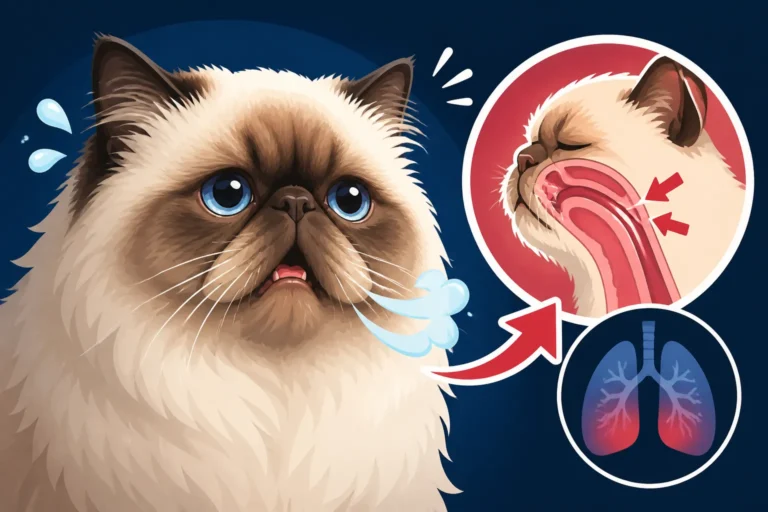
One of the most common and easily identifiable components of BOAS is stenotic nares, which simply means narrowed nostrils. Instead of wide, open passages, the nostrils can be pinched, slit-like, or almost completely closed. This significantly restricts the amount of air a kitten can take in with each breath, making them work much harder just to breathe. Imagine trying to run a marathon while breathing through a tiny straw – it's exhausting! This constant effort isn't just uncomfortable; it can lead to a cascade of problems. Their soft palates can be elongated, meaning the soft tissue at the back of their mouth dangles too far down, partially blocking their windpipe. Their tracheas can be narrower than average, and sometimes the larynx can even collapse. This combination of factors explains why a Himalayan snores louder than its Siamese ancestors, and why you might hear them making little snorts or grunts even when they're simply resting. It's a daily struggle for oxygen that many owners might not realize. The more severe these obstructions, the more impact it has on their heat regulation (they pant to cool down, which is harder with restricted airways), exercise tolerance, and overall quality of life.
Why Twelve Weeks is a Crucial Assessment Window
When we talk about assessing a Himalayan kitten's nostrils, focusing on the twelve-week mark isn't an arbitrary choice; it's a critical window for several important reasons. By this age, kittens are typically still under the careful eye of their breeder, who has the best opportunity to conduct an initial evaluation and, if necessary, seek early veterinary consultation. More importantly, a Himalayan kitten's facial structure, while still developing, has matured enough to give a relatively accurate snapshot of their nostril conformation.
Before twelve weeks, a kitten's face is still quite soft and malleable, and swelling or the general "baby fat" can obscure the true shape of their nostrils. Waiting much longer than twelve weeks means you might miss the optimal time for early intervention, should it be needed. At this stage, the kitten is active, playful, and starting to demonstrate their natural activity levels, which can also reveal subtle breathing difficulties. A kitten that tires unusually quickly during play or consistently breathes with its mouth open, even during mild activity, warrants closer inspection of its nostrils. A responsible breeder will be monitoring these signs closely, especially if their lines have shown a tendency towards more extreme brachycephaly. They should be able to provide you with honest insights into the kitten's development and perhaps even show you historical records of their parent cats, including genetic testing for other conditions like PKD1 Came Down the Persian Side of a Himalayan to demonstrate their commitment to health. This is also often around the time that a kitten has had its first comprehensive vet check-up, an ideal moment for the vet to specifically evaluate the kitten's airway.
What Healthy Himalayan Nostrils Should Look Like
Knowing what to look for can make all the difference in identifying a kitten with good respiratory health. A healthy Himalayan kitten's nostrils should be noticeably open, allowing for clear and unobstructed airflow. Forget about tiny slits; we're looking for something much more substantial. This isn't just about appearance; it's about functionality, ensuring your kitten can breathe easily and comfortably throughout its life.
Visual Cues of Open Airflow
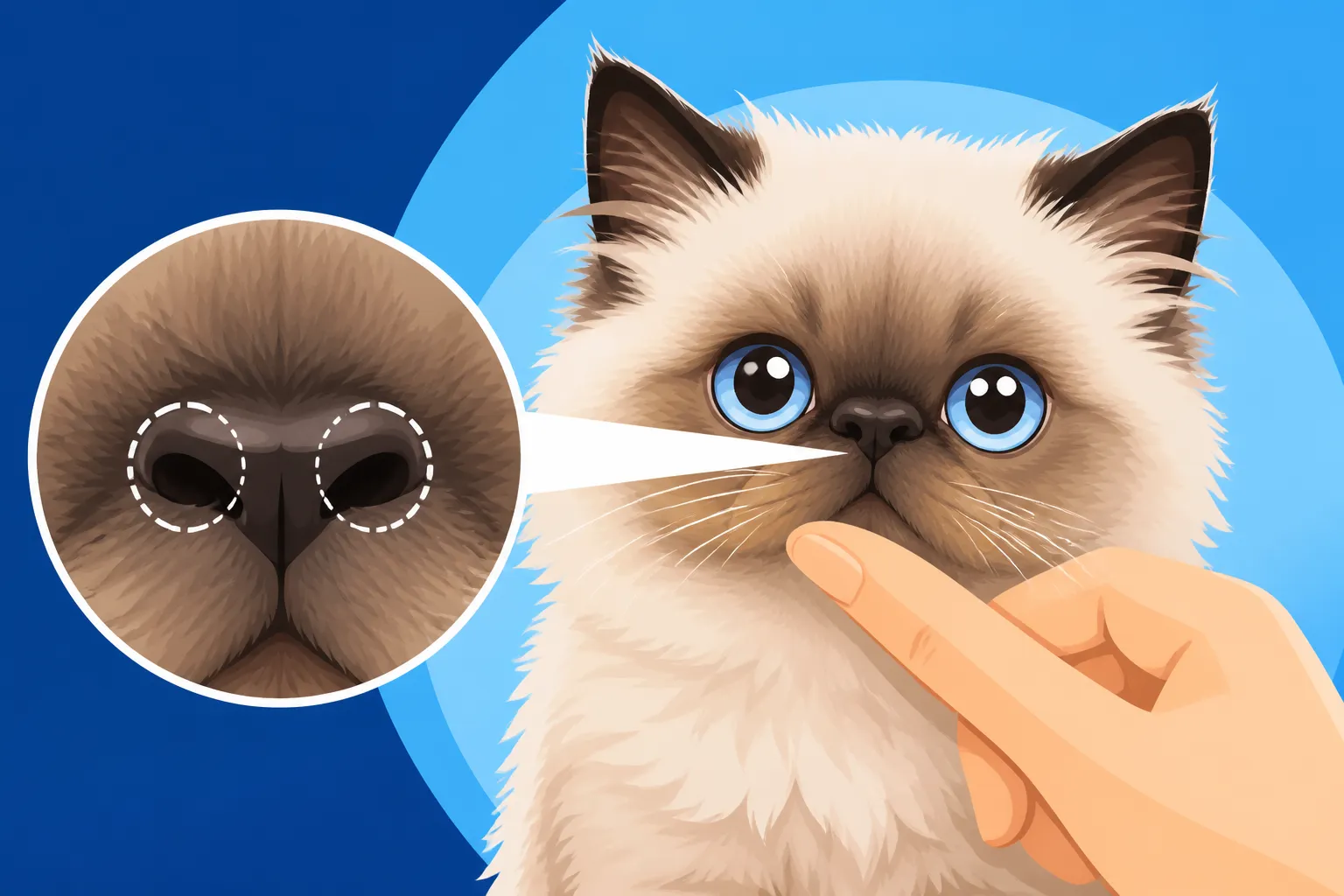
When you look at your twelve-week-old Himalayan kitten head-on, their nostrils should appear wide and patent. You should be able to clearly see into the nasal passages, almost as if you’re looking up tiny, well-formed tunnels. There shouldn't be any noticeable pinching or collapse of the alar folds (the soft tissue surrounding the nostrils). Think of it like this: if you gently press your own nose at the sides, you can mimic a pinched nostril. A kitten's nostrils should not look like they've been gently pinched. Instead, they should maintain their open shape naturally, without any visible effort from the kitten.
One easy test is to watch the kitten breathe normally. Do the nostrils flare open slightly with each inhalation, or do they seem to suck inwards? Inward movement, or a visible struggle to draw air, is a red flag. Healthy, open nostrils allow air to flow in and out smoothly, minimizing the noise associated with breathing. A truly well-built Himalayan, even with its flatter face, should have breathing that is relatively quiet and unlabored. You can learn more about What a Well Built Himalayan's Breathing Sounds Like in another one of my posts. Remember, we’re looking for a clear, unobstructed path, not just a tiny opening.
The "Teardrop" or "Comma" Shape
While "open" is the primary characteristic, the specific shape can also be a helpful indicator. Healthy Himalayan nostrils are often described as having a "teardrop" or "comma" shape when viewed head-on. This means they are widest at the bottom, where they meet the lip, and gracefully narrow as they curve upwards towards the bridge of the nose. They should have a distinct, well-defined opening, not just a thin line.
Compare this to what you might see in a kitten with stenotic nares: the nostrils might be mere slits, like two tiny vertical lines, or they could be so collapsed that they form more of a pinhole shape. There’s a noticeable lack of the elegant curve and open space you’d expect from a healthy airway. This "teardrop" appearance signifies that the cartilage and soft tissue surrounding the nasal opening are properly structured to allow ample air intake. If you're comparing kittens in a litter, look for the widest, most open, and most distinctively shaped nostrils. This visual assessment, combined with observing the kitten's general breathing, will give you a good preliminary idea of its respiratory health.
Identifying Potential Issues: Signs of Stenotic Nares
Unfortunately, not every Himalayan kitten is blessed with perfectly open nostrils. Identifying potential problems early is crucial, as early intervention can significantly improve their quality of life. Owners need to be vigilant and know what red flags to look for beyond just the visual appearance of the nose.
The Appearance of Pinched Nostrils
As mentioned, pinched or stenotic nares are the primary visual indicator of an issue. Instead of the clear, teardrop shape we discussed, you might see nostrils that are excessively narrow, appearing like tiny, almost closed slits. Sometimes, they might look like small vertical dashes, or even just tiny pinholes. The skin and cartilage around the opening might look compressed, almost as if the nose is being constantly squeezed. There's a noticeable lack of space, making it clear that airflow is restricted.
It’s not uncommon for these narrower nostrils to also be accompanied by a deeper "nose roll" – a fold of skin that can sit right above the nostrils, sometimes even partially covering them. While some degree of nose roll is characteristic of the breed, an overly prominent or damp nose roll can exacerbate breathing issues and even lead to skin infections due to moisture trapping. If you observe your kitten trying to sniff something, notice if their nostrils visibly suck inward with each breath. This "flaring in" rather than "flaring out" or staying stable is a strong indicator of reduced airway capacity. This is especially important for breeds like Himalayans where Why Show Himalayans Drifted Toward the Flatter Face, pushing certain features to an extreme.
Other Breathing Indicators to Watch For
Beyond the visual aspect of the nostrils, there are several auditory and behavioral clues that can signal your Himalayan kitten is struggling with its breathing. These are often easier to spot than just the physical appearance, especially if you're not accustomed to evaluating kitten noses.
- Noisy Breathing: A healthy kitten's breathing should be largely silent. If you hear constant snorting, wheezing, heavy panting, or loud snoring, particularly when the kitten is awake and not in deep sleep, it’s a sign that air is struggling to pass through its nasal passages or throat. Remember, Why a Himalayan Snores Louder Than Its Siamese Ancestors is a common trait, but excessive noise during wakefulness is different.
- Open-Mouth Breathing: Cats are obligate nasal breathers, meaning they naturally breathe through their noses. If your kitten is frequently breathing with its mouth open, even during mild activity or rest, this is a significant red flag. It indicates they aren't getting enough oxygen through their nose and are resorting to mouth breathing as a compensatory mechanism. This is a sign to pay close attention to, as When a Himalayan's Open Mouth Breathing Needs a Vet can indicate a serious issue.
- Exercise Intolerance: Pay attention during playtime. Does your Himalayan kitten tire out much faster than its littermates? Does it stop playing, panting heavily, after just a few minutes of mild activity? This inability to sustain normal play can be directly linked to insufficient oxygen intake due to compromised airways. Kittens should be full of short bursts of energy, but not struggling for air.
- Reverse Sneezing/Gagging: While occasional reverse sneezing can be normal in cats, if it happens frequently, or is accompanied by gagging sounds, it could indicate irritation or obstruction in the back of the throat, often linked to an elongated soft palate, another component of BOAS.
- Difficulty Eating/Drinking: In severe cases of brachycephalic syndrome, the kitten might have difficulty eating or drinking because breathing is such an effort. They might stop frequently to catch their breath or push food out of their mouths.
These signs, especially in combination with pinched nostrils, warrant immediate veterinary attention. While some minor breathing noises might be tolerated, severe symptoms can lead to chronic health problems and a reduced quality of life. Early identification is key to exploring options for improvement. Don't forget, insurance providers like Healthy Paws can be a great resource for covering unexpected vet costs, especially when dealing with congenital issues common in certain breeds.
The Importance of Professional Veterinary Assessment and Breeder Due Diligence
While your own careful observation of a Himalayan kitten's nostrils and breathing patterns is a fantastic start, it's absolutely crucial to remember that you're not a veterinarian. A professional veterinary assessment is irreplaceable for a definitive diagnosis and treatment plan. Furthermore, responsible breeders play a monumental role in mitigating these challenges right from the start.
When to Seek a Vet's Opinion
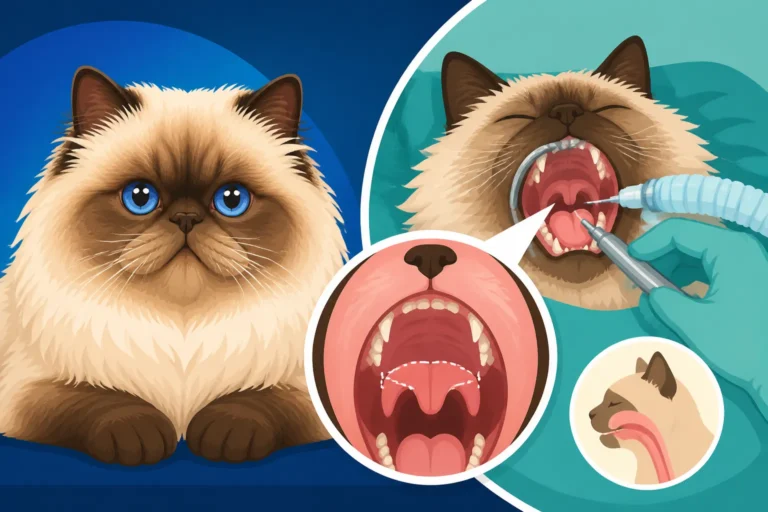
Any time you notice pinched nostrils, noisy breathing, open-mouth breathing, or any of the other indicators of respiratory distress in your twelve-week-old Himalayan kitten, it's time to pick up the phone and schedule a vet visit. Don't wait. Early detection can make a world of difference. A veterinary professional will conduct a thorough examination, not just of the nostrils, but of the entire airway system. This often includes carefully assessing the shape and diameter of the nares, checking for the presence of an elongated soft palate, and listening to lung sounds. They will also gently examine the kitten's mouth and throat, as Why a Himalayan Kitten's First Exam Includes Its Palate is incredibly important to detect any other obstructions.
Vets often use a grading system to classify the severity of stenotic nares, ranging from mild (minimal narrowing) to severe (almost completely closed). This grading helps them determine the best course of action. In some cases, a minor surgical procedure called alar fold resection, or nares widening surgery, can significantly improve airflow. This procedure is often most effective when performed young, ideally before secondary issues like laryngeal collapse develop from years of struggling to breathe. It’s a relatively straightforward surgery that can dramatically enhance a cat's comfort and long-term health. When considering the costs of potential diagnostics or treatments, remember that companies like Healthy Paws offer pet insurance plans that can help manage these expenses, allowing you to focus on your kitten's health without financial stress.
Ethical Breeding Practices and Early Intervention
A truly responsible Himalayan breeder understands the breed's predispositions and takes proactive steps to ensure the health of their kittens. They are transparent about their breeding lines, genetic testing, and any health concerns. They won't shy away from discussing potential brachycephalic issues and should be able to provide documentation for both parents, including health screenings. In fact, Which Two Certificates a Himalayan Breeder Owes You typically include proof of parental health testing.
An ethical breeder will carefully select breeding pairs with good nostril conformation and clear airways, actively working to minimize the incidence of severe stenotic nares in their offspring. They should be able to show you photos of the kitten's parents and even older siblings to demonstrate their commitment to health. If a kitten in their care is identified with moderate to severe stenotic nares, a responsible breeder might even opt for a preventative nares widening surgery before the kitten goes to its new home, at their own expense, to ensure the kitten starts its life with the best possible breathing. They understand that the kitten's long-term health is paramount. They will also ensure the kitten receives Which Two Tests Belong on Every Himalayan Pedigree before considering breeding.
When choosing a Himalayan kitten, don't be afraid to ask direct questions about the parents' breathing, their nostril structure, and what the breeder does to address brachycephalic concerns. A good breeder will welcome these questions, seeing them as a sign of a caring prospective owner. They know that a kitten’s health extends beyond just its genetics, often referring to services like Healthy Paws for ongoing care. Their dedication to producing healthy cats is ultimately the best assurance you can have for your future companion's well-being.
| Characteristic | Healthy Nostrils (Ideal) | Pinched/Stenotic Nostrils (Problematic) | Associated Breathing Sounds (Kitten) | Potential Long-term Impact |
|---|---|---|---|---|
| Appearance | Wide, open, distinct teardrop/comma shape | Narrow, slit-like, pinhole, often collapsed | Quiet, smooth airflow | Easy breathing, good exercise tolerance |
| Airflow | Clear, unobstructed view into nasal passages | Restricted, visible struggle to draw air | Occasional soft snorts/chirps | Reduced exercise tolerance, heat stress |
| Movement | Stable, may flare slightly outwards on inhale | Sucks inwards on inhale, visible effort | Persistent snorting, wheezing, snoring (awake) | Risk of secondary BOAS issues (e.g., elongated soft palate, laryngeal collapse) |
| Nose Roll | Minimal, dry, not obstructing | Prominent, can be damp, partially covers nares | Open-mouth breathing after mild activity | Requires constant monitoring, potential surgery |
| Activity | Energetic, sustained play without heavy panting | Tires quickly, heavy panting after short play, reluctance to play | Gagging, reverse sneezing | Chronic discomfort, decreased quality of life |
Disclaimer
The information provided in this article is for general informational purposes only and does not constitute veterinary advice. Always consult with a qualified veterinarian for any health concerns or before making any decisions related to your pet's health and treatment.