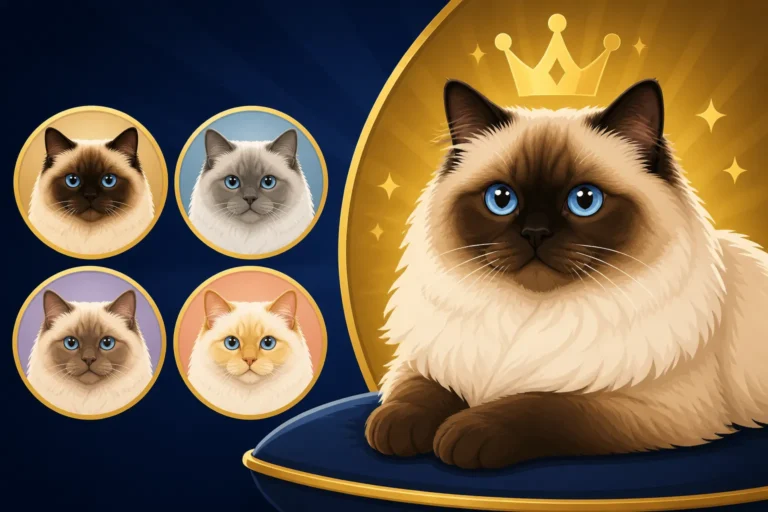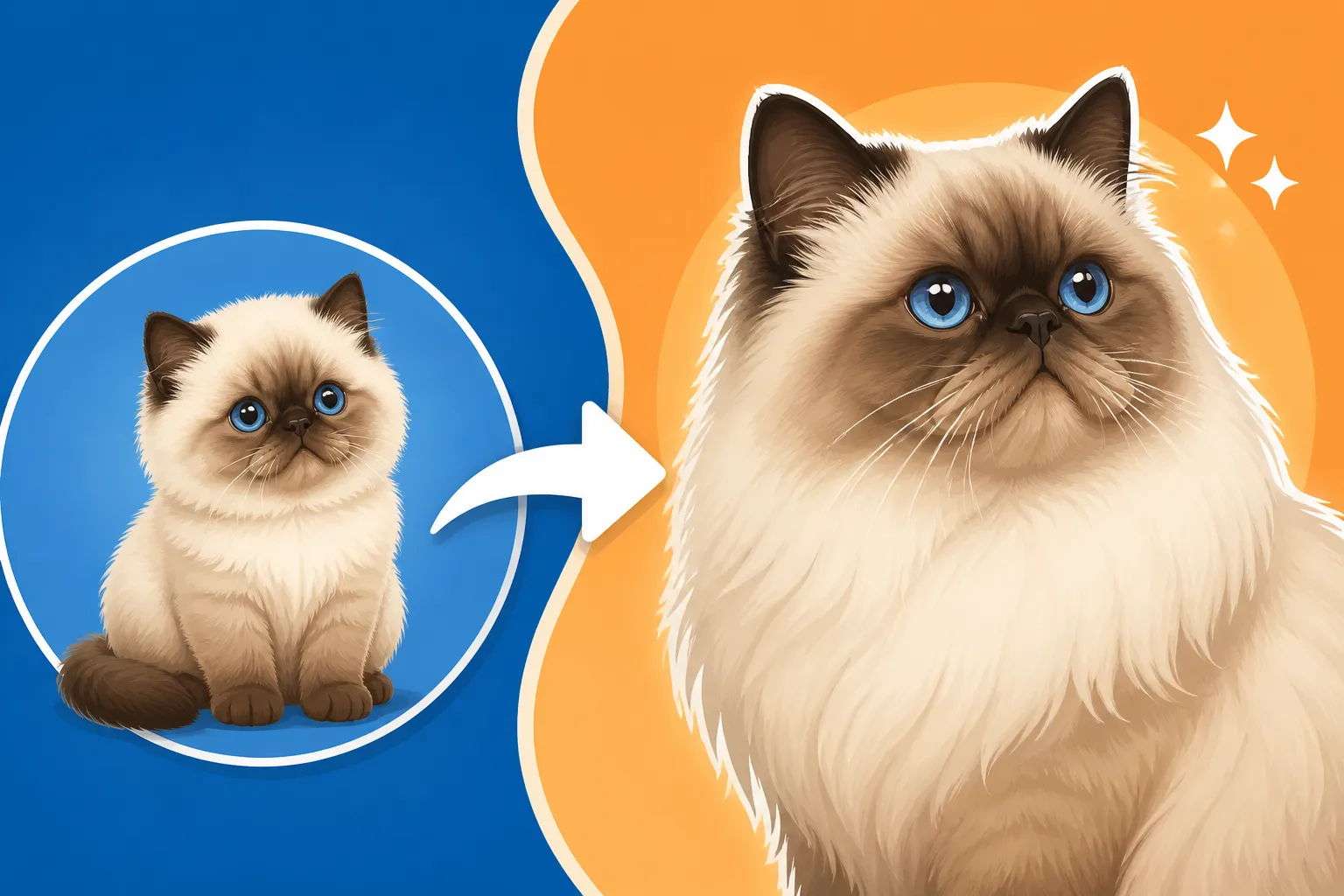
Why an Adult Himalayan’s Points and Profile Are Already Set
It's a common, completely understandable query that pops up in our community: "Will my adorable, fluffy Himalayan kitten always look this way?" Or, for those adopting an adult, "Is this the cat I'm going to have forever, or will their colors shift dramatically?" It’s natural to wonder, especially with a breed as visually stunning and unique as the Himalayan, known for its dramatic color changes from birth. This guide is here to shed light on exactly why, for an adult Himalayan, those beautiful point colors and distinctive facial features are pretty much set in stone. We'll explore the fascinating science behind these characteristics and explain what you can expect as your beloved Himmy grows, matures, and even ages, offering peace of mind that the cat you love today will largely be the cat you love for years to come.
The Wonderful Science Behind Himalayan Point Coloration
The striking "points"—the darker coloration on the ears, face, paws, and tail—are arguably the most famous characteristic of the Himalayan cat. Many new owners are fascinated by how these points develop and wonder if they'll keep changing. The good news is, once your Himalayan reaches adulthood, these colors are largely established, thanks to some incredible genetic science.
The Genetic Blueprint for Pigment
At the heart of a Himalayan's unique coloring is a specific gene, often called the "Himalayan gene" or "colorpoint gene." This gene carries the instructions for producing melanin, the pigment responsible for fur color. What makes it so special, and so visually captivating, is that it's a temperature-sensitive mutation. This means the gene's ability to produce pigment is directly affected by the temperature of the skin. Think of it like a delicate switch that only turns on when it's cool enough.
This genetic instruction is present from the moment of conception, but its effects aren't immediately obvious. Every Himalayan kitten is born almost entirely white or cream-colored, with very little visible patterning. This happens because the kitten has been cozy and warm inside its mother's womb, where the temperature was consistent and high enough to inhibit melanin production across its entire body. It's only once they're exposed to the cooler outside world that the magic begins to happen. You'll start to see those faint whispers of color on the extremities, slowly deepening over the first few weeks and months. How Many Weeks Before a Himalayan Kitten's Points Show can give you a better idea of this initial timeline.
The Temperature-Sensitive Enzyme at Work
The science behind the color is all about an enzyme called tyrosinase. In most cats, this enzyme works efficiently at normal body temperatures to produce pigment, resulting in a uniformly colored coat. However, in Himalayans (and other pointed breeds like Siamese and Ragdolls), a specific mutation means this tyrosinase enzyme is only active at cooler temperatures. Areas of the cat's body that are naturally cooler, like the ears, nose, paws, and tail, allow the enzyme to function, leading to pigment production and the characteristic darkening.
Conversely, the warmer parts of the cat's body – primarily the torso – keep the enzyme inactive, resulting in the creamy white or pale body color that contrasts so beautifully with the points. This is why a Himalayan's coat serves as a living temperature map! This enzyme activity typically stabilizes once the cat is fully grown, which means the initial set of points your adult Himalayan displays will be their permanent palette. Minor shifts can occur with significant changes in ambient temperature or age, which we’ll discuss shortly, but the core pattern and depth of color are established.
How a Himalayan's Signature Profile Develops and Locks In
Beyond their captivating color points, Himalayans are also renowned for their distinctive facial profiles. Whether you adore the traditional "doll face" with a more pronounced nose or the "peke face" with its extremely flattened features, these profiles are a significant part of the breed's allure. Just like their point coloration, these unique facial structures develop and become fixed as your cat matures.
Facial Bone Structure: From Kitten Softness to Adult Definition
When a Himalayan is a kitten, their face has a certain softness and roundness that can obscure the eventual adult profile. Their bones are still growing and developing, and the contours of their face are not yet fully formed. It’s during these crucial first 12 to 18 months that the kitten's skull, jaw, and nasal bones are maturing and solidifying into the shape dictated by their genetics. This means that if you’ve adopted a kitten, its face will likely look a little different as it reaches its full growth. When a Himalayan Kitten's Face Finishes Developing highlights this developmental period.
By the time a Himalayan reaches its first birthday, and certainly by two years of age, its facial bone structure will have largely settled. What you see is what you get. This structural development determines the depth of the nose break, the set of the eyes, and the overall roundness of the head—all key components of the breed standard. This adult profile is then permanent; it won't suddenly become flatter or more pronounced later in life, barring injury or extreme health issues. Understanding this can bring peace of mind, especially for those who fall in love with a specific "look" of an adult cat.
The Permanent Hue of Those Striking Blue Eyes
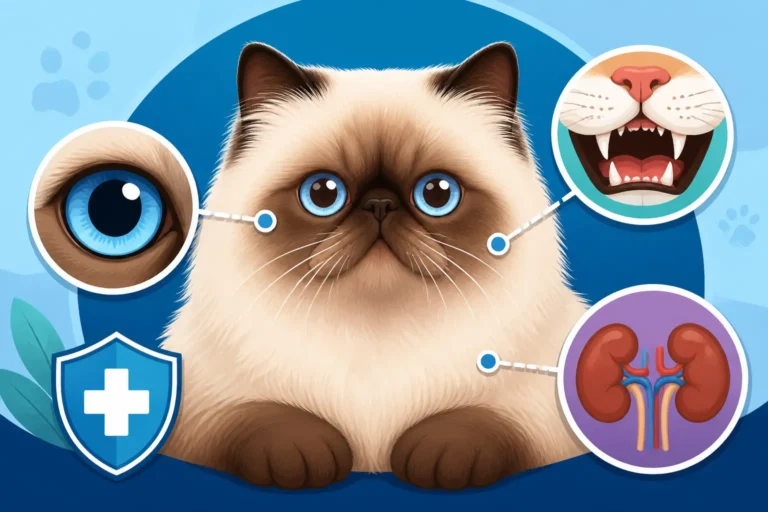
Another hallmark of the Himalayan is their vivid blue eyes. This isn't just a coincidence; it's directly linked to the same temperature-sensitive gene that creates their point coloration. The gene responsible for the colorpoint pattern also affects the pigment in the iris of the eyes, causing them to be blue. This is true for all cats with the Himalayan genetic trait.
While a kitten's eyes might start as a lighter blue and deepen slightly as they mature, an adult Himalayan's eye color is fixed. You won't find an adult Himmy's blue eyes changing to green or gold. The depth and intensity of the blue may vary slightly from cat to cat, ranging from a pale sky blue to a deep sapphire, but the fundamental color is genetically determined and remains constant throughout their adult life. These clear, expressive blue eyes are a permanent and enchanting feature, part of the package that makes a Himalayan so captivating.
Coat Texture and Density: The Full Persian Grandeur
The Himalayan inherits its magnificent long, dense coat from its Persian lineage. As kittens, their fur is often softer and less voluminous than that of a fully mature adult. It takes time for that iconic double coat to fully develop, growing in length, density, and luxuriousness. You might notice a significant difference in the thickness and texture between a 6-month-old kitten and a 2-year-old adult.
Once a Himalayan reaches maturity, typically around 18-24 months, their coat will have achieved its full potential in terms of length and density. This "full Persian grandeur" is then stable. While you'll still have the ongoing task of daily grooming to prevent mats and tangles – and perhaps turn to providers like Chewy for all your grooming tool needs – the fundamental quality and volume of the coat won't drastically alter year to year, again, barring health issues or significant neglect. This maturity means that if you admire the lavish coat of an adult Himalayan, you can be confident that you’re seeing the established norm for that particular cat. How Long a Himalayan Takes to Finish Its Coat and Points delves deeper into this developmental journey.
Environmental Influences: Minor Tweaks, Not Major Overhauls
While an adult Himalayan's points and profile are largely set, it's not to say that absolutely no changes will ever occur. Environmental factors can indeed play a role, but it's important to understand these are generally subtle tweaks or gradual processes rather than dramatic transformations. Think of it as fine-tuning rather than a complete makeover.
The Subtle Dance of Temperature and Point Shade
As we've discussed, the Himalayan's colorpoint genetics are temperature-sensitive. This means that while the pattern is set, the shade of the points can still be subtly influenced by the cat's environment. A Himalayan living in a consistently cooler climate might develop slightly darker, more intense points over time compared to one living in a warmer environment. This isn't an overnight change but a gradual deepening that occurs as the cat's body adjusts to its ambient temperature. Conversely, a prolonged period in a very warm climate might cause the points to lighten very slightly, though this is less common and usually quite subtle.
Even temporary localized temperature changes can have an effect. For instance, if a Himalayan has a patch of fur shaved for surgery, the new fur that grows back will often be darker because the shaved area is exposed to cooler air, reactivating the pigment-producing enzyme. Why a Shaved Patch Regrows Darker on a Himalayan explains this phenomenon in detail. These changes, however, do not alter the underlying genetic pattern or the facial structure. The points simply become a deeper or slightly lighter version of their established shade.
Diet, Health, and the Overall Luster of the Coat
While diet doesn't change the color of your Himalayan's points, it absolutely impacts the overall health, luster, and appearance of their coat. A well-balanced diet rich in essential fatty acids, vitamins, and minerals can ensure a soft, vibrant coat that reflects light beautifully. Conversely, a poor diet can lead to a dull, dry coat that might be more prone to matting and appear less vibrant. This is where choosing high-quality food becomes crucial for maintaining that luxurious look.
Specific health conditions can also affect coat quality and, indirectly, appearance. For example, certain metabolic disorders or skin conditions can lead to patchy fur, thinning, or a generally unhealthy coat. While these issues don't change the genetic point color or facial structure, they can certainly impact the cat's overall visual appeal. Maintaining regular veterinary check-ups and being observant of any changes in your cat's coat or skin are vital for their well-being and appearance. This is where pet insurance, like plans offered by Healthy Paws, can be incredibly valuable for unexpected health concerns.
Sunlight and Point Maintenance
Interestingly, excessive exposure to direct sunlight can sometimes have a nuanced effect on a Himalayan's coat, particularly on the body and points. While sunlight isn't going to turn a Seal Point into a Blue Point, prolonged exposure can sometimes cause a very slight "bleaching" effect on the points, making them appear a bit lighter, or cause the pale body coat to yellow. Conversely, in some cases, the warmth from the sun might theoretically slightly lighten the points, as the pigment-producing enzyme becomes less active.
However, these effects are usually minimal in an indoor cat, which most Himalayans are and should be. It’s more likely you’d see a slight yellowing of the pale body coat over time due to natural oils and environmental factors, especially if regular grooming isn't maintained. Consistent indoor living, along with regular grooming and a healthy diet, are the best defenses against unwanted cosmetic changes to their magnificent coat. Why a Himalayan's Pale Body Coat Yellows goes into more detail about this.
Embracing the Wisdom of Age: Expected Changes Over a Lifetime
As our beloved Himalayans journey through life, they, like all living beings, will experience the natural process of aging. While their core point coloration and facial structure remain set, there are predictable, gentle changes that occur over their lifespan. These aren't transformations that make them unrecognizable, but rather subtle shifts that speak to their history and maturity.
The Gradual Deepening of Points with Time
One of the most common and fascinating age-related changes in Himalayans is the gradual deepening of their point colors. As a Himalayan gets older, often past the age of five or six, their points tend to become darker and more intense. This is largely due to the cumulative effect of lower body temperatures over many years, allowing the temperature-sensitive enzyme to produce more pigment. It’s a beautiful testament to their unique genetics and a lovely visual marker of their seasoned life.
This means that an older Himalayan, especially one living in a cooler environment, might present with points that are significantly darker than they were in their youth. A Seal Point, for example, might appear almost black on its points, and its body coat might also darken slightly, reducing the contrast that is so prominent in a younger cat. While this might alter their overall aesthetic slightly, it doesn't change their fundamental color pattern. It's simply a natural part of their unique aging process. Why a Himalayan's Points Deepen Every Year It Lives offers a deeper dive into this captivating phenomenon.
Maturing Coat and Skin, Not a New Cat
An adult Himalayan's coat, while set in its density and length, will also experience changes with age. As cats get older, their fur can sometimes become a bit coarser or, conversely, finer and less dense. You might notice some thinning, particularly around the face or legs. The skin underneath might also become thinner and less elastic, which is a normal part of aging. These changes are typically gradual and don't equate to a "new" coat or a complete alteration of their majestic appearance.
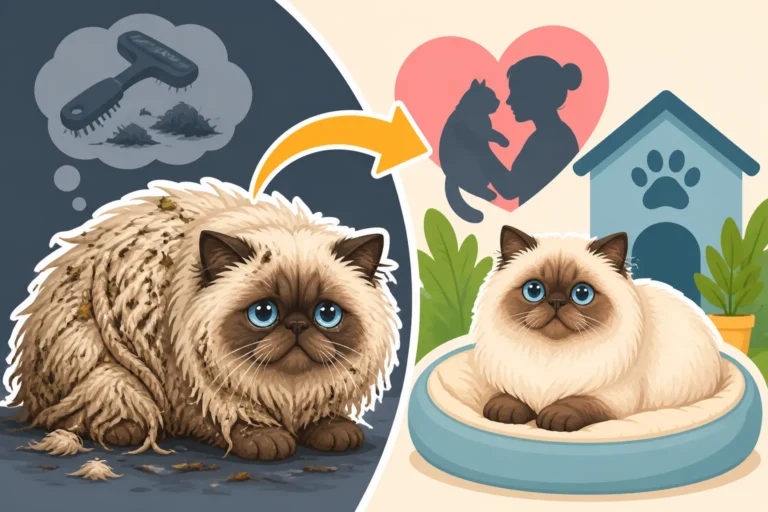
Maintaining excellent grooming habits becomes even more crucial as a Himalayan ages. An older cat might not be as flexible or meticulous with its self-grooming, making it more prone to mats and tangles. Regular combing and occasional professional grooming can help manage these natural changes and keep their coat looking its best. Think of it as preserving the beautiful tapestry of their life, ensuring comfort and health alongside their evolving aesthetics.
Understanding Age-Related Facial Shifts
While the underlying bone structure of an adult Himalayan's face is permanent, some subtle changes can occur with advanced age that might alter its expression. Loss of muscle tone, changes in dental health, and even the way their fur sits can subtly shift their facial appearance. For instance, an older Himalayan might have slightly droopier jowls or a less taut expression. Dental issues, common in older cats with crowded mouths, can also affect the shape of the muzzle if teeth are lost or gum inflammation is present.
These are not changes to the bone structure itself, but rather the soft tissues and covering of the face. An old Himalayan with very dark points might also have a less distinct mask than a younger one, further altering the perception of their face. However, the fundamental "doll face" or "peke face" profile remains, a constant reminder of their breed heritage. Recognizing these as natural signs of a life well-lived helps us appreciate our senior Himalayans even more. What Goes First in a Himalayan Past Twelve gives insight into the signs of aging.
Bringing Home an Adult Himalayan: Certainty in Appearance
For prospective owners considering an adult Himalayan, there's a unique set of advantages when it comes to knowing precisely what you're getting. While kittens are undeniably adorable, an adult cat offers a certain level of predictability that can be very appealing, especially concerning their physical traits.
The Gift of Knowing Your Cat's True Look
When you adopt an adult Himalayan, you're embracing a cat whose points are fully developed and whose facial profile is completely set. There are no surprises regarding their coloring or the shape of their beautiful face. You can see their mature point colors—whether they're a deep Seal Point, a delicate Blue Point, or a striking Flame Point—and know that this is their permanent hue. Similarly, their distinct "peke face" or "doll face" profile is fully established, allowing you to appreciate their unique aesthetics right from the start. Doll Face or Peke Face Is the Himalayan Buyer's Real Decision explores the differences in these profiles.
This certainty can be incredibly reassuring. You won't spend months wondering how dark their points will ultimately become or whether their nose will flatten further. What you see is the exquisite, finished product of their genetics and early development. This allows you to truly fall in love with the cat in front of you, confident that their appearance will remain consistent for years to come, with only the gentle, natural shifts of aging to look forward to.
Benefit of a Stable Health History
Beyond appearance, adopting an adult Himalayan often comes with the added benefit of a more established health history. While a kitten's health is full of potential and hope, an adult cat has a track record. You might have access to their veterinary records, vaccinations, and any known health conditions. This transparency allows you to make more informed decisions about their care, budgeting for any pre-existing conditions, or ensuring you have appropriate pet insurance coverage, perhaps through a provider like Healthy Paws.
Furthermore, many of the inherited health issues that can affect Himalayans, such as Polycystic Kidney Disease (PKD) or certain eye conditions, often manifest or are diagnosable by adulthood. Knowing if a cat has been tested for PKD, for instance, can provide immense peace of mind. How to Find a Himalayan's Ribs Through a Persian Coat can help you understand how to assess their body condition yourself, which is a good indicator of general health. This knowledge allows you to proactively manage their health, ensuring a long and comfortable life together.
Behavioral Consistency and Predictability
Just as an adult Himalayan’s appearance is set, their personality and behavioral patterns are also largely established. While any cat needs an adjustment period in a new home, an adult cat's core temperament is usually evident. You'll know if they are a quiet lap cat, a playful explorer, or a dignified observer. This contrasts with kittens, whose personalities are still developing and can sometimes take unexpected turns.
Knowing an adult cat's temperament can help you choose a Himmy that perfectly fits your lifestyle and household. If you’re looking for a calm companion for a quiet home, an adult cat whose personality is already known is a wonderful choice. This predictability extends to their habits, such as litter box use, grooming tolerance, and how they interact with other pets or children. It’s an overall package of certainty that makes adopting an adult Himalayan a truly rewarding experience.
| Feature | Kitten (0-12 months) | Adult (1+ years) | Senior (8+ years) |
|---|---|---|---|
| Point Color | Faint at birth, gradually darkens and defines | Set, vivid, may subtly deepen with consistent temperature | Often significantly deeper, body coat may darken |
| Facial Profile | Soft, developing bone structure, less defined | Fully formed, established "doll" or "peke" face | Same bone structure, subtle shifts in soft tissue |
| Eye Color | Lighter blue, deepens to final hue | Vibrant, permanent blue hue | Permanent blue, may seem less bright with age |
| Coat Density | Thinner, softer "kitten fluff" | Long, dense, luxurious double coat fully developed | May thin slightly, texture can change, prone to mats |
| Body Size/Weight | Rapid growth, reaching full size by 1 year | Full size, weight management is key for cobby build | May lose muscle mass, weight can fluctuate with health |
| Grooming Needs | Gentle introduction, can be playful | Daily combing essential to prevent mats | Daily combing crucial, may need more help reaching areas |
Disclaimer
This article is for general informational purposes only and does not constitute professional advice. Laws, prices and regulations vary by location and change over time. Consult a qualified professional for guidance on your specific situation.