Why a Himalayan Costs More Than a Ragdoll With the Same Points
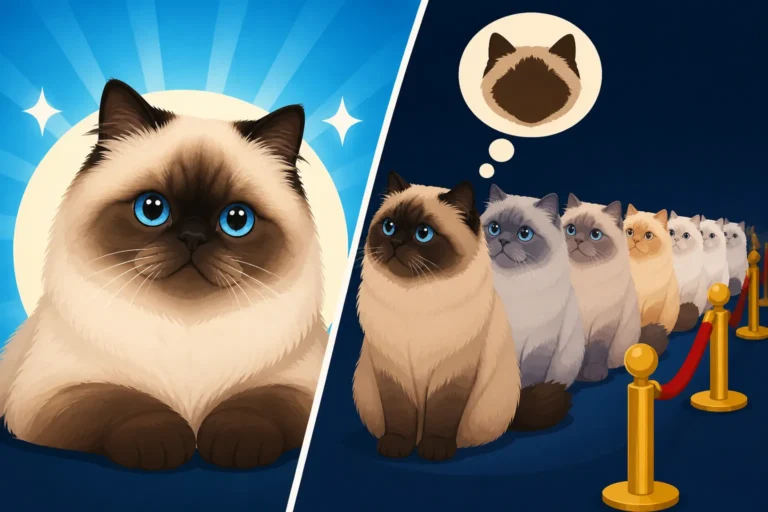
It's a common head-scratcher for many prospective cat parents: you see two beautiful pointed longhair cats, a Himalayan and a Ragdoll, both with those striking blue eyes and gorgeous coloring, yet the price tag for the Himalayan often seems to climb higher. This guide is here to unravel that mystery, diving deep into the nuanced factors that contribute to the differing costs of these two beloved breeds, going beyond just their shared colorpoint genetics.
The Core Difference: Breed History and Breeding Standards
When you look at a Himalayan and a Ragdoll side-by-side, especially a seal point of each, it’s easy to think they’re quite similar. Both are stunning examples of colorpoint cats, but their origins, the way they were developed, and the standards they are bred to are vastly different. These foundational distinctions lay the groundwork for why their price points diverge.
The Himalayan's Unique Lineage and Breeding Challenges
The Himalayan isn't just a cat that looks like a Persian with Siamese coloring; it is a Persian carrying the colorpoint gene, essentially a specifically bred variant. The breed's journey began in the 1930s at Harvard, a deliberate cross between a Siamese and a Persian to combine the Siamese's striking point coloration with the Persian's luxurious long coat and cobby body type. This wasn't a happy accident; it was a scientific endeavor! This intentional pairing and subsequent back-crossing to Persians introduced specific challenges. Breeders had to meticulously select for the desired physical traits of the Persian – the rounded head, small ears, short cobby body, and flat face – while consistently maintaining the Siamese-derived point coloration and blue eyes.
This means a Himalayan breeder isn't just breeding for "a nice cat"; they're working with a genetic cocktail that requires careful management. They are essentially breeding to the Persian standard in terms of body and head type, with the added complexity of ensuring the colorpoint gene expresses correctly and beautifully. The goal is a cat that epitomizes the Persian look with the gorgeous contrast of the points. This often means smaller litter sizes compared to some other breeds, and a longer timeline for evaluating kittens, as their full point color and facial structure develop over months. The genetic blueprint is far more intricate, and the dedication required to consistently produce healthy, typey Himalayans is significant.
The Ragdoll's Distinct Origin and Traits
In contrast, the Ragdoll's origin story, while shrouded in a bit more mystery and legend, points to a foundation of domestic longhaired cats in California in the 1960s. Ann Baker, the breed founder, selectively bred for specific traits, most notably their docile temperament, stunning blue eyes, semi-long coat, and, of course, the distinctive colorpoint pattern. The breed's name comes from their tendency to go limp and relaxed when held, a trait that became a cornerstone of their appeal.
Ragdolls were developed with a focus on their unique temperament and a less extreme physical structure compared to the Persian. They have a softer, semi-long coat that is generally less prone to matting than a Persian's, a sturdy, large body, and a more moderate head shape – still broad and rounded, but without the extreme brachycephalic (flattened face) features often seen in show-quality Himalayans. This means the breeding goals, while still requiring skill and dedication, often sidestep some of the specific health and structural challenges inherent in breeding a true Persian type, which the Himalayan essentially is. Their breeding programs might see larger litters and generally fewer complications related to extreme facial features. The historical development and the desired 'look' are simply different, influencing everything from genetic testing protocols to daily care during kittenhood.
The Impact of Physical Traits on Cost
Beyond their genetic lineage, the very physical attributes that define a Himalayan cat, particularly those inherited from its Persian side, have a profound impact on the cost of ownership, and by extension, the price a reputable breeder must charge to cover their extensive care and careful breeding practices.
Himalayan's Persian-Derived Grooming Needs
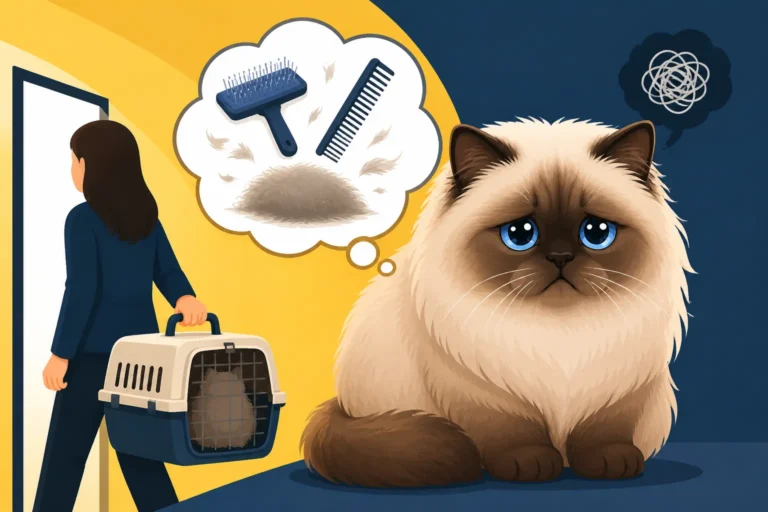
Let's be honest, that glorious, flowing double coat that a Himalayan sports is a showstopper, but it's also a full-time job. Inherited directly from its Persian ancestors, this coat is incredibly dense, fine, and prone to matting if not meticulously cared for. We're talking about daily combing, often for 15-30 minutes, to prevent painful tangles and mats that can quickly become a health issue. The Daily Comb a Himalayan Cannot Skip is not a suggestion; it’s a requirement. If a mat forms and goes unnoticed, it can pull on the skin, cause irritation, or even hide skin infections. Professional grooming can be a frequent necessity, with a lion cut often needed to reset a neglected coat, which can be surprisingly costly. What a Groomer Charges for a Himalayan Lion Cut reflects the specialized care and time involved.
For breeders, ensuring their breeding cats and kittens maintain pristine coats is a huge investment of time and resources. Kittens need to be conditioned from a very young age to accept and even enjoy this grooming routine, which requires patience and consistent handling. This intensive grooming requirement, both for the breeder and the future owner, adds a significant layer of expense and labor that simply isn't as prevalent with many other longhaired breeds.
Ragdoll's Semi-Long, Easier-Care Coat
Ragdolls also boast beautiful long hair, but it's a different beast entirely. Their coats are typically described as semi-long, silky, and far less dense than a Himalayan's double coat. While still requiring regular grooming, a Ragdoll's coat is much less prone to matting because it lacks the dense woolly undercoat of a Persian. Many Ragdoll owners find that a good comb-through a few times a week is sufficient to keep their cat's coat in excellent condition. This means less daily time commitment for the owner and, crucially, less intensive grooming overhead for the breeder.
A breeder of Ragdolls still has grooming responsibilities, of course, but the sheer volume and texture of the coat means they spend less time battling mats in young kittens and adult cats. This reduction in the daily grind of coat maintenance, while perhaps seeming minor, contributes to the overall operational cost of a cattery and is reflected in the final price of a kitten. It's not that Ragdolls are "easy," but their coat type is undeniably lower maintenance than a true Persian coat.
Brachycephalic Features and Health Considerations
Here's where a significant portion of the cost difference often lies. Many Himalayans, especially those bred to show standards, inherit the pronounced brachycephalic (flattened face) features of their Persian lineage. While undeniably cute to many, this facial structure comes with a raft of potential health challenges. Think about it: a very short nose, often tiny nostrils, and a crowded jaw. These aren't just cosmetic traits; they can profoundly affect a cat's well-being.
- Breathing Issues: Many Himalayans suffer from stenotic nares (pinched nostrils) and elongated soft palates, making breathing difficult, especially during exertion or in warm weather. This can lead to loud snoring, open-mouth breathing, and a higher risk during anesthesia. Why a Himalayan Is a Harder Anesthetic Than a Siamese is a stark reality. Breeders must be incredibly selective, often having vets evaluate kittens' airways.
- Eye Care: Those beautiful, large, round eyes are often exposed due to the flat face, leading to chronic tearing and tear staining. The nose fold can become perpetually damp and prone to skin infections if not meticulously cleaned daily. The Morning Face Routine Every Himalayan Needs isn't optional; it's preventative care.
- Dental Health: The shortened jaw means teeth are often crowded and misaligned, leading to premature dental disease, extractions, and frequent professional dental cleanings under anesthesia. How Crowded a Himalayan's Lower Jaw Gets illustrates this problem clearly.
- Polycystic Kidney Disease (PKD): While not exclusively linked to brachycephaly, PKD is a genetic condition prevalent in Persian lines and, therefore, in Himalayans. Responsible breeders invest in DNA testing to screen their breeding cats for this devastating disease. PKD1 Came Down the Persian Side of a Himalayan and How Many Himalayan Lines Still Carry PKD highlight the importance of this testing. The cost of genetic testing, veterinary check-ups focused on these specific issues, and careful breeding to mitigate these risks all contribute to a higher initial kitten price.
These potential health challenges mean that a responsible Himalayan breeder must invest heavily in veterinary care, genetic testing, and selective breeding to minimize these issues in their lines. This includes DNA tests for PKD and retinal atrophy, thorough vet checks of airways and dental alignment, and a willingness to remove cats from a breeding program if they exhibit problematic traits. These aren't cheap endeavors, and they directly factor into the cost of a well-bred Himalayan kitten.
Ragdoll's More Moderate Facial Structure
Ragdolls, thankfully, generally have a more moderate head shape. While still rounded and full-cheeked, their noses are typically a normal length, and their nostrils are open, allowing for unhindered breathing. This means they are far less likely to suffer from the brachycephalic airway syndrome, chronic tear staining, or severe dental crowding seen in many Himalayans. Their eyes are less exposed, and their dental alignment is usually quite good.
While Ragdolls, like all breeds, have their own genetic health concerns (Hypertrophic Cardiomyopathy, or HCM, being a notable one), they generally don't carry the same burden of care and potential veterinary costs associated with extreme facial structures. This translates to fewer specialized vet checks for breeding cats related to facial conformation and potentially lower long-term health maintenance costs for the owner. A breeder still invests in genetic testing for HCM and other relevant conditions, but the overall picture of health risks related to physical structure is often less complex, which can allow for a slightly lower price point.
The Influence of Registration and Recognition on Price
The world of cat registries and breed standards might seem like a dry, bureaucratic topic, but it plays a surprisingly significant role in the pricing and perceived value of a Himalayan versus a Ragdoll. How a breed is recognized and categorized directly impacts breeders' efforts, costs, and the market.
Himalayan's Complex Registration Status
The Himalayan's registration status is, shall we say, a bit convoluted, and this complexity adds layers to its value proposition. In the Cat Fanciers' Association (CFA), one of the oldest and largest registries in the world, the Himalayan isn't recognized as a separate breed. Instead, since 1984, it has been considered a colorpoint division of the Persian breed. This means that a CFA-registered Himalayan is, on paper, a Persian. Why CFA Made the Himalayan a Persian Division in 1984 explains the historical context of this decision. This merger, while aiming for consistency, creates unique challenges and costs for breeders. They must breed to the full Persian standard in every way – body type, coat quality, head structure – with the added requirement of achieving the correct point coloration and blue eyes.
However, other major associations, like The International Cat Association (TICA), still recognize the Himalayan as a distinct breed. TICA Still Registers the Himalayan as a Breed of Its Own. This split recognition means breeders often need to navigate multiple standards, and potentially register their cats with different organizations if they wish to show in both. The effort to uphold both "a Persian" and "a Himalayan" standard, depending on the registry, can mean more selective breeding, more careful record-keeping, and sometimes even a narrower gene pool to draw from if strict type is paramount. This specialized effort, coupled with the rigorous standards for a Persian, inherently drives up the costs associated with a truly well-bred Himalayan.
Ragdoll's More Consistent Breed Recognition
The Ragdoll, on the other hand, enjoys a much more straightforward and consistent recognition across virtually all major cat registries worldwide. It is universally accepted as its own distinct breed, with a unified standard that breeders can adhere to without ambiguity. This consistency simplifies the breeding process in terms of paperwork and navigating show circuits. Breeders can focus their efforts on a single, clear set of guidelines for type, health, and temperament.
While Ragdoll breeders still face all the challenges of responsible breeding – genetic health screening, maintaining excellent cattery conditions, and ensuring robust, healthy kittens – they don't have the added complexity of a split identity within the major registries. This streamlined recognition doesn't make breeding Ragdolls easy or cheap, but it removes one layer of administrative and strategic complexity that Himalayan breeders often contend with.
Breeder Investment in Show Lines and Health Testing
For both breeds, a significant portion of the kitten price covers the immense investment a responsible breeder makes in their program. This includes the cost of acquiring high-quality breeding stock (which can be thousands of dollars per cat), maintaining pristine cattery conditions, providing top-tier nutrition, and ensuring constant veterinary care.
However, the specific health testing protocols and show circuit expenses can differ. For Himalayans, beyond routine vet care, breeders must prioritize genetic testing for Polycystic Kidney Disease (PKD) and Progressive Retinal Atrophy (PRA), both inherited from the Persian side. These tests are essential to ensure healthy lines and are an additional expense. They also focus on careful selection for proper facial structure to avoid severe brachycephalic issues, which means vet checks for nostril patency and soft palate length. Showing a Himalayan often means competing within the Persian division in CFA, requiring adherence to stringent Persian standards in addition to the colorpoint.
Ragdoll breeders, while also committed to health testing, typically focus on genetic screening for Hypertrophic Cardiomyopathy (HCM) and sometimes other conditions specific to the Ragdoll breed. Their physical structure generally means fewer concerns regarding brachycephalic issues, reducing those particular vet assessment costs. Both types of breeders spend time and money on showing their cats to prove their quality and adhere to breed standards, but the Himalayan's path often involves more nuanced structural evaluations due to its Persian heritage. These rigorous health protocols and showing expenses are substantial, and they are rightly reflected in the price of a kitten from a reputable breeder.
Market Demand and Availability
The final pieces of the puzzle when it comes to pricing often involve the simple economics of supply and demand. How many well-bred cats of each type are available, and how strong is the general public's desire to own them?
Niche Appeal and Availability of Quality Himalayans
The Himalayan, with its demanding grooming routine and potential health considerations stemming from its brachycephalic features, tends to appeal to a more specific type of owner. Someone who is genuinely prepared for the daily grooming commitment, understands the potential for specific health needs, and appreciates the unique "Persian with points" look. This means the demand, while steady, might be a bit more niche than for some other breeds.
Furthermore, finding a truly quality Himalayan from a responsible breeder can be challenging. Breeders committed to health testing (PKD, PRA), careful selection for moderate facial features (avoiding extreme brachycephaly that compromises health), and maintaining exceptional coat quality are few and far between. Their breeding programs are often smaller, focusing on quality over quantity. The time and resources required to produce a well-socialized, healthy Himalayan kitten with good type are significant. The meticulous care, the genetic screening, and the specific structural challenges mean that these cats take more effort to produce correctly, naturally limiting their availability and driving up the cost of those few exceptional kittens that do come along.
Broader Popularity and Availability of Ragdolls
Ragdolls, on the other hand, have enjoyed an explosion in popularity over the past few decades. Their famously docile, "floppy" temperament, stunning good looks, and comparatively easier-care semi-long coats make them incredibly appealing to a wider audience. They are often described as "dog-like" in their affection and willingness to interact, traits that resonate with many families.
This broader appeal has led to a larger number of Ragdoll breeders, and consequently, a greater overall availability of Ragdoll kittens. While demand remains high, the larger breeding pool and often larger litter sizes can sometimes mean that kitten prices are more competitive or that there are simply more kittens available at any given time. It's important to note that “more available” doesn't mean “less quality”; there are many dedicated Ragdoll breeders producing wonderful, healthy kittens. However, the sheer volume and widespread appeal can create a market dynamic where the top-tier Ragdolls might still command a high price, but the entry point for a pet-quality Ragdoll might be slightly lower than for a similarly well-bred Himalayan, largely due to the differences in breeding complexities and daily care requirements we've discussed. Brands like Healthy Paws offer insurance plans that can help manage potential vet costs for either breed, but understanding the underlying care needs is crucial. For daily supplies and food, the cost of specific dietary needs or grooming tools can still vary based on the breed's characteristics.
Comparing the Investment: Himalayan vs. Ragdoll
Let's break down some of the key factors that influence the initial and ongoing costs for both these beautiful pointed breeds.
| Feature | Himalayan Cat (Persian-derived) | Ragdoll Cat | Impact on Cost |
|---|---|---|---|
| Coat Type | Long, dense double coat; prone to matting | Semi-long, silky single coat; less prone to matting | Himalayan: Higher grooming product cost, potential for professional grooming, more time investment. |
| Facial Structure | Brachycephalic (flattened face); potential for pinched nostrils, elongated soft palate, crowded teeth, tear staining. | Moderate wedge; open nostrils, normal bite, less tear staining. | Himalayan: Higher vet costs for airway evaluations, dental cleanings, eye care; specialized bowls. |
| Genetic Health Tests | PKD, PRA, sometimes HCM, vet airway/structural evaluations. | HCM, sometimes PKD (depending on lineage), general health screenings. | Himalayan: Specific tests (PKD, PRA) and structural evaluations add to breeder overhead. |
| Temperament | Quiet, reserved, lap cat; generally less active. | Docile, affectionate, "floppy"; playful but gentle. | Generally not a direct cost factor, but impacts lifestyle suitability. |
| Registry Status | CFA: Persian Colorpoint Division; TICA: separate breed. | Universally recognized as a distinct breed across major registries. | Himalayan: Breeder navigates complex standards, potentially impacting breeding pool and show costs. |
| Dietary Needs | May need specialized food for crowded jaw, more wet food friendly. | Generally standard quality cat food, can manage kibble well. | Himalayan: Potential for higher food costs due to specialized formulas or wet food preference. |
| Breeder Investment | High due to genetic testing, structural selection, intensive kitten grooming. | High due to genetic testing, temperament focus, cattery upkeep. | Himalayan: Often higher due to specific health/structural challenges and intensive early care. |
Why the Initial Investment Matters
When you're looking at a kitten price, it's not just about the cute ball of fluff; it's an encapsulation of a breeder's commitment to the breed, their investment in health, temperament, and adherence to established standards. For Himalayans, that price reflects the complex genetic heritage, the specialized care required for their Persian-derived features, and the rigorous health testing needed to ensure a healthy start in life.
A higher price for a Himalayan often indicates that the breeder has taken all these factors into account. They've invested in proven breeding lines, conducted extensive genetic health screenings – ensuring their cats are clear of issues like PKD1 Came Down the Persian Side of a Himalayan and eye conditions like Retinal Atrophy Reached the Himalayan From the Persian Too – and provided meticulous care to their breeding adults and kittens, including early socialization and getting them accustomed to their necessary daily grooming. They've likely vetted the kitten's facial structure to ensure it has the best possible chance at a comfortable life, avoiding extreme brachycephaly that can lead to significant breathing and dental problems.
Choosing a less expensive Himalayan, particularly one from a breeder who can't provide verifiable health certificates, detailed pedigrees, or transparent information about their breeding practices, is often a false economy. The savings upfront can quickly be dwarfed by veterinary bills for untreated genetic conditions or structural issues down the line. Whether you're looking for a Himalayan or a Ragdoll, the initial investment in a well-bred kitten from a reputable source is truly an investment in their long-term health and happiness.
Ultimately, while both breeds are absolutely enchanting, the Himalayan's deeper ties to the Persian lineage, with its associated grooming demands, specific brachycephalic health considerations, and complex registration journey, contribute to a higher cost of acquisition and ownership compared to a Ragdoll with similar stunning point coloration.
Disclaimer
This article is for general informational purposes only and does not constitute professional advice. Laws, prices and regulations vary by location and change over time. Consult a qualified professional for guidance on your specific situation.