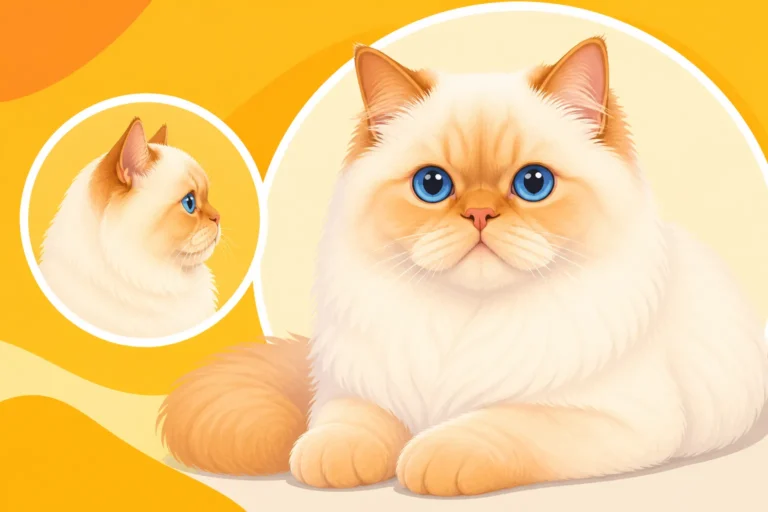
How a Himalayan’s Point Color Is Recorded
One of the most captivating things about a Himalayan cat is the stunning contrast between their pale body and their darker "points" – those wonderfully expressive ears, face mask, legs, and tail. But if you've ever looked at a Himalayan's pedigree or heard breeders talk about genetic codes, you might have wondered, "How on earth do they keep track of all these colors, and what do all those terms actually mean?" It can feel like decoding a secret language, especially when the colors themselves deepen and change over time. This guide will walk you through exactly how your Himalayan's unique point color is recorded, from the invisible genes to the official paperwork, helping you understand the story behind their beautiful coat.
The Genetic Blueprint Behind Himalayan Point Color
Before we even get to registration papers, the journey of your Himalayan's point color begins deep within their genetic code. It’s a fascinating interplay of genes that dictates not just what color appears, but where it appears on their body. Understanding this fundamental science helps clarify why Himalayans look the way they do and why their points develop in such a specific manner.
Understanding the Colorpoint Gene
At the heart of every Himalayan cat's distinctive look is a special gene, often referred to as the "colorpoint gene" or sometimes the "Siamese gene." This gene is actually a temperature-sensitive enzyme that affects the production of melanin, the pigment responsible for hair color. In simple terms, this enzyme only works efficiently in cooler body temperatures. This is why a Himalayan is born almost completely white; their mother's womb is a uniformly warm environment, preventing the enzyme from activating and producing pigment.
As the kitten grows and is exposed to the outside world, the cooler extremities of their body – the tips of their ears, nose, paws, and tail – become cool enough for this enzyme to kick into action. Slowly, over weeks and months, these areas begin to develop pigment, darkening into the rich hues we associate with the breed. The gene responsible for this unique pattern is inherited from both parents, meaning a Himalayan must receive two copies (one from its mother, one from its father) to express the colorpoint trait. This is a critical piece of information for breeders who are working to understand Which Gene Makes a Himalayan Pointed. It's a marvel of genetics that dictates the very canvas upon which all other colors will be displayed.
The Role of Base Coat Genetics
While the colorpoint gene determines where the color will show up, it's the cat's underlying base coat genetics that determine what color that pigment will actually be. Think of Himalayans as Persians wearing a special temperature-sensitive coat. They carry all the same genetic possibilities for coat colors as their Persian ancestors, such as black, red, chocolate, cinnamon, and their dilute versions (blue, cream, fawn, lilac). These base colors are what the colorpoint gene expresses.
For instance, if a Himalayan carries the gene for a black base coat, its points will develop into a deep, rich seal brown, making it a "Seal Point" Himalayan. If it carries the gene for a blue (dilute black) base, its points will be a soft, slate gray, resulting in a "Blue Point." The red gene gives us the vibrant "Flame Point," and its dilute, cream, leads to "Cream Point" points. Then there are the more complex variations, like "Tortie Points" (carrying both black/blue and red/cream genes) or "Lynx Points" (carrying a tabby gene). These variations demonstrate the incredible diversity within the breed, even with the distinct colorpoint pattern. Breeders are very aware of these genetic possibilities, aiming for specific shades that align with the recognized standards. Knowing How Many Point Colors the Himalayan Division Recognizes is key for breeders working to produce specific looks.
Official Registration and Pedigree Recording of Point Color
Once a Himalayan kitten is born and its point colors begin to emerge, the next step in its journey to being "recorded" involves official cat registries. These organizations maintain pedigrees and track lineage, and a crucial part of that is accurately documenting the cat's physical characteristics, including its specific point color. This isn't just for show cats; it's fundamental to tracing genetic lines and ensuring breed integrity.
Coded Systems for Color Identification
Cat registries, such as The Cat Fanciers' Association (CFA) or The International Cat Association (TICA), use standardized alphanumeric codes to meticulously record a Himalayan's point color on their official registration papers and pedigrees. These codes provide a universal language for breeders and owners to understand a cat's genetic makeup at a glance, regardless of descriptive names that might vary slightly from one region to another. For example, a "Seal Point" Himalayan might be designated with a code like HIMA (for Himalayan) followed by an abbreviation for its point color, such as 30 or similar. A "Blue Point" would have a different, specific numerical or alphabetical identifier.
These codes go beyond just the main colors. They also account for variations like "Tortie Point," which indicates patches of red or cream alongside another point color, and "Lynx Point," which signifies tabby markings within the points. Without these precise coded systems, the tracking of complex genetics and the accurate identification of individual cats within vast breeding programs would be nearly impossible. When you receive What Your Himalayan's Certificate Actually Says, these codes are a significant part of the document, detailing the specific color genetics of your beloved companion. It ensures that everyone, from a seasoned judge to a new owner, can understand the cat's genetic identity.
| Point Color | Description | Common Registry Code (Example) | Underlying Genetics |
|---|---|---|---|
| Seal Point | Dark brown to black points, rich and warm. | HIMA 30 (or similar) | Black-based pigment, temperature-restricted |
| Blue Point | Slate gray points, soft and cool. | HIMA 32 (or similar) | Dilute black (blue) pigment, temperature-restricted |
| Chocolate Pt | Milk chocolate brown points, lighter than seal. | HIMA 34 (or similar) | Brown pigment, temperature-restricted |
| Lilac Point | Pinkish-gray points, the dilute of chocolate, very delicate. | HIMA 36 (or similar) | Dilute brown (lilac) pigment, temperature-restricted |
| Flame Point | Orange to red points, can vary in intensity. | HIMA 33 (or similar) | Red pigment, temperature-restricted |
| Cream Point | Pale cream points, the dilute of red. | HIMA 35 (or similar) | Dilute red (cream) pigment, temperature-restricted |
| Tortie Point | Patches of red/cream mixed with another color (e.g., seal, blue) on points. | HIMA 30t, 32t, etc. | Combination of black/red or blue/cream pigments |
| Lynx Point | Tabby stripes visible within the point color. | HIMA 30L, 32L, etc. | Presence of tabby gene overlaying point color |
How Breed Standards Influence Recording
The recording of a Himalayan's point color is also heavily influenced by the breed standards set forth by the registering bodies. While CFA, for example, registers Himalayans as a "Colorpoint Persian" division within the Persian breed, the principles of specific color recognition remain. The standard dictates not only what colors are permissible but also their ideal shade, depth, and contrast against the body. This means that a breeder isn't just aiming for "blue points" but for blue points that meet the specific criteria of the standard – a clear, cool slate blue, not too dark, and with excellent contrast against a glacial white body coat.
This standardization ensures consistency within the breed and helps judges evaluate cats fairly in competition. If a cat's points don't meet the color or pattern description for its designated class, it could be disqualified or penalized. This strict adherence to standards pushes breeders to understand and record How a Himalayan's Point Color Is Recorded with incredible precision. For owners, it means that the color recorded on your cat's papers isn't just a label; it's a statement about their genetic heritage and adherence to established breed ideals. It's a testament to the careful planning and selective breeding that goes into producing a Himalayan with truly exceptional point color and contrast.
Practical Aspects of Observing and Confirming Point Color
Beyond the genetic theory and the official paperwork, there’s a very hands-on, observational aspect to a Himalayan’s point color. Anyone who has raised a Himalayan kitten, or even just watched one grow, knows that their colors aren't static. They evolve over time, and a breeder’s keen eye is essential in the early stages to correctly identify and record what the kitten will become.
Kitten Observation and Point Development
One of the most charming characteristics of Himalayan kittens is that they are born nearly pure white. It’s an adorable, fluffy surprise! Their colorpoint gene, as we discussed, is temperature-sensitive, so in the uniformly warm environment of the womb, pigment production is inhibited. It’s only after birth, as their extremities cool down, that the magic begins. Over the first few weeks, and then more dramatically through their first few months, the tiny buds of color begin to bloom on their ears, nose, paws, and tail. When a Himalayan Kitten's Points First Appear is a truly exciting time for a breeder, as they watch the subtle blush turn into a discernible shade.
Experienced breeders spend a great deal of time observing their litters during this crucial developmental period. A kitten that will become a Seal Point might show faint brownish tips, while a Blue Point will have a more grayish hue. A Flame Point might have a creamy blush that slowly deepens into apricot. It's not always obvious right away, especially with the lighter or dilute colors. This careful observation, often alongside genetic testing if parentage is ambiguous or a new color is being introduced, ensures that the correct point color is assigned before the kitten leaves for its new home. It’s during these weeks that a breeder can truly tell How a Himalayan Kitten's Points Darken Month by Month, observing the gradual transformation.
The Impact of Environment and Age on Point Color
The development of a Himalayan's point color doesn't stop once they're identified as a kitten; it continues throughout their lives, influenced by both their environment and the natural process of aging. Temperature, in particular, plays a significant role. Himalayans living in cooler climates, or those who spend more time in cooler rooms, may develop darker and more extensive points compared to their counterparts in warmer environments. The colder parts of their body produce more pigment. It's not uncommon to see a subtle shift in point intensity if a Himalayan moves from a warm Southern home to a cooler Northern one, for example.
As a Himalayan ages, their points tend to deepen and spread further across their body. What might have been a crisp, well-defined mask and leg points in a young cat can become broader and darker in an older feline. This is a natural process where the enzyme continues to work over time, leading to more accumulated pigment. Some very elderly Himalayans can even appear almost solid-colored dueaining significant darkening across their back and sides. This makes it challenging to maintain the strong contrast between body and points that is prized in the show ring. Owners of older cats often observe Why an Old Himalayan Looks Almost Solid Colored, a beautiful testament to their long lives. It's a reminder that their beauty is dynamic, a living canvas that continuously evolves. Maintaining a consistent environment and a balanced diet with supplements rich in Omega oils, which you can often find at retailers like Chewy, can sometimes help support coat health and vibrancy throughout these changes. For long-term health, especially considering the breed's predispositions, exploring comprehensive pet insurance like Healthy Paws can provide peace of mind as your Himalayan ages and their needs change.
Disclaimer
This article is for general informational purposes only and does not constitute professional advice. Laws, prices and regulations vary by location and change over time. Consult a qualified professional for guidance on your specific situation.