Why a Himalayan’s Pedigree Should Show Its Persian Side
It's incredibly frustrating when you're deeply invested in understanding your beloved Himalayan cat, only to find their official documentation feels a bit opaque or, worse, misleading. Many new Himalayan owners are surprised to discover that despite their cat being clearly a Himalayan, their pedigree might tell a story heavily centered around the Persian breed. This isn't just a quirk of cat fancy; understanding why your Himalayan's pedigree should prominently show its Persian ancestry is absolutely crucial for everything from anticipating health needs to truly appreciating their unique charm. This guide will walk you through why that Persian lineage on paper is far more than just a historical footnote.
The Inseparable History of the Himalayan and the Persian
To truly grasp why the Persian side is so vital to a Himalayan's pedigree, we first need to take a little journey back in time. The Himalayan isn't some ancient breed that sprung fully formed from the mists of time; it's a wonderfully deliberate creation, born from a desire to combine the best of two distinct worlds.
The Siamese Influence and Early Development
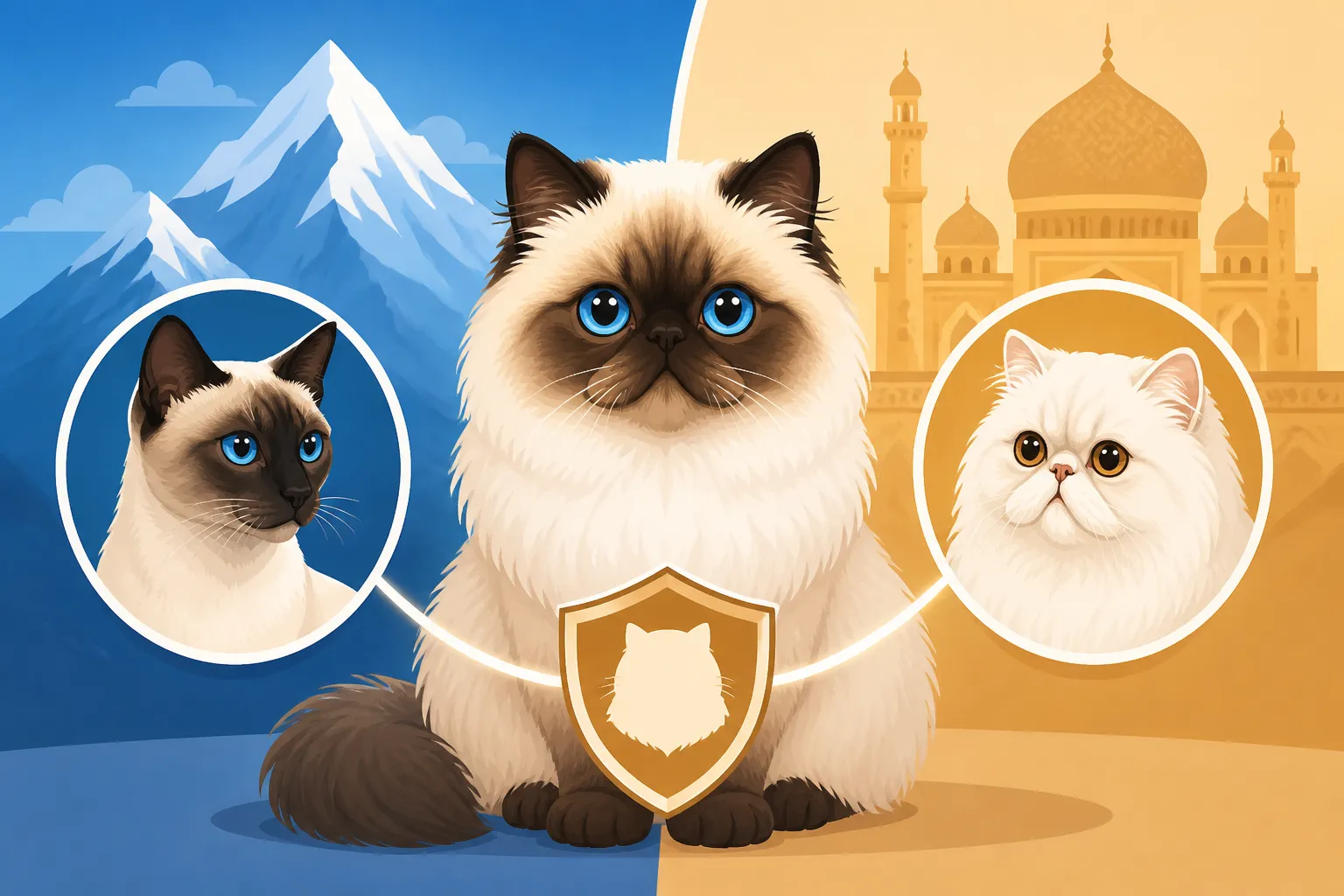
Imagine a cat breeder looking at the elegant, long-haired Persian with its serene disposition and luxurious coat, and then looking at the striking, vocal Siamese with its distinctive color points and intelligent blue eyes. "What if," they pondered, "we could have both?" And so, the Himalayan dream began. The initial crosses in the 1930s involved breeding Persians with Siamese cats. The goal was quite specific: to introduce the "point" coloration gene, responsible for the darker extremities and brilliant blue eyes of the Siamese, into the Persian's robust, cobby body and famously long, flowing coat.
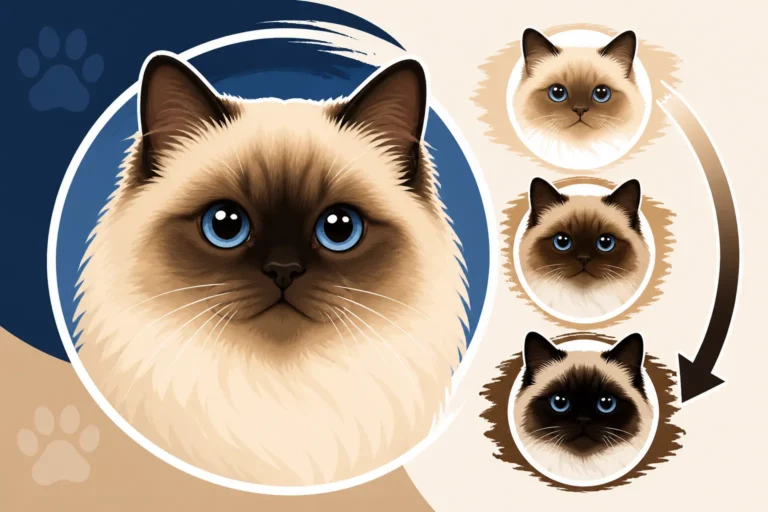
It wasn't a quick process. It took generations of careful breeding, selection, and a deep understanding of genetics to stabilize these desired traits. The resulting kittens slowly began to emerge with the plush coats and substantial build of the Persian, but with the captivating color-pointed pattern and piercing blue eyes of the Siamese. Essentially, they were long-haired, color-pointed Persians, but with a unique genetic twist that gave them their distinctive look. It's truly fascinating how this particular gene works, causing pigment to only develop in cooler parts of the body, leading to the mask, ears, feet, and tail being darker than the warmer body core.
When the Himalayan Became a Persian in the Show Ring
This origin story is key to understanding the pedigree situation. When the Himalayan was finally developed enough to seek recognition from various cat registries, a debate naturally arose: was this a brand new breed, or merely a color variation of an existing one? Different registries took different approaches.
Perhaps the most significant decision came from the Cat Fanciers' Association (CFA), one of the largest cat registries in the world. In 1984, after years of recognizing the Himalayan as a distinct breed, CFA made a pivotal decision: they folded the Himalayan into the Persian breed, designating it as the "Himalayan Division" of the Persian. This meant that, officially, a Himalayan was now considered a type of Persian, rather than a separate breed entirely.
This administrative move had, and continues to have, profound implications for paperwork. If your Himalayan is registered with CFA, its pedigree will literally say "Persian," followed by "Himalayan Division." Other registries, like The International Cat Association (TICA), chose to maintain the Himalayan as its own distinct breed. However, even with TICA, the historical and genetic ties to the Persian are undeniable, and any reputable breeder will have Persian lines prominently in their cats' ancestry. This is why A CFA Himalayan Is a Persian on Its Own Paperwork is a core piece of information for any prospective owner. The paperwork might change the name, but the genetics remain rooted in the Persian.
Why a Persian-Heavy Pedigree Matters for Your Himalayan
Beyond historical curiosity, understanding the Persian lineage on your Himalayan's pedigree is incredibly practical. It gives you a roadmap to their potential health, personality, and even physical characteristics, empowering you to be a more informed and prepared owner.
Understanding Inherited Health Risks
This is perhaps the single most critical reason why that Persian side on the pedigree is non-negotiable. The Persian breed, while stunning, is known to carry certain genetic predispositions that were, by extension, passed on to the Himalayan. A well-documented pedigree should reflect the health testing of your cat's ancestors, offering peace of mind or, at the very least, early warning.
One of the most well-known inherited conditions is Polycystic Kidney Disease, or PKD1. This progressive kidney disease, where cysts form and grow on the kidneys, can lead to kidney failure. It's a condition that primarily came to the Himalayan through its Persian ancestors. A clear pedigree will show that the parents and even grandparents were tested and found negative for the PKD1 gene. In fact, PKD1 Came Down the Persian Side of a Himalayan is such a crucial genetic link that no reputable breeder should skip this testing.
Another area of concern comes from the characteristic flat face (brachycephaly) which is also a Persian trait. While adorable, it can lead to Brachycephalic Airway Syndrome (BAS), causing breathing difficulties, snoring, and heat intolerance. A pedigree, while not directly listing BAS, can indicate lines known for healthier profiles. Also, progressive retinal atrophy (PRA), another inherited eye condition that can lead to blindness, reached the Himalayan from the Persian side. Responsible breeders will test for this too, and a clear pedigree will often show this. Retinal Atrophy Reached the Himalayan From the Persian Too highlights this direct genetic path.
When evaluating a pedigree, you're not just looking at names; you're looking for evidence of proactive health management by the breeder. Which Two Tests Belong on Every Himalayan Pedigree – namely, PKD and PRA gene tests – are paramount. If these are missing or vague on a pedigree, it's a significant red flag.
Predicting Physical Traits and Temperament
The Persian influence isn't just about potential health issues; it's also about all the wonderful traits that make Himalayans, well, Himalayans! The cobby body, the short, sturdy legs, the large round head, the small, low-set ears, and of course, that gloriously long, dense double coat – these are all hallmarks of the Persian breed that define the Himalayan's physical presence.
Even subtle differences in facial structure, such as whether your cat has a "Doll Face" with a slightly more pronounced nose or a more extreme "Peke Face" with a very flat profile, are derived from the Persian lines. Doll Face or Peke Face Is the Himalayan Buyer's Real Decision often comes down to personal preference, but knowing the ancestral lines helps predict the likelihood of one over the other.
Temperament-wise, the Himalayan is often described as a delightful blend. They have inherited much of the Persian's calm, docile, and affectionate nature, making them true lap cats. Yet, they also retain a touch of the Siamese's playfulness and conversational spark. They are generally quieter than a full Siamese, but more vocal and playful than many pure Persians. This means The Himalayan Is a Lap Cat That Answers Back, a charming characteristic directly influenced by this unique genetic combination. A breeder who understands their Persian lines can often give you better insights into what to expect from your kitten's mature personality.
Ensuring Reputable Breeding Practices
A pedigree that clearly delineates the Persian ancestry of a Himalayan is a strong indicator of a reputable and transparent breeder. Good breeders understand their cats' history, not just their immediate parents. They're proud of the lines they've developed and the health testing they've conducted.
When a breeder provides a detailed, multi-generational pedigree that includes Persian cats, it demonstrates that they:
- Understand the breed's origins: They know exactly where the Himalayan came from and the intricate blend of genetics involved.
- Are transparent about lineage: They're not trying to hide anything or gloss over the fact that a Himalayan is fundamentally a color-pointed Persian.
- Are committed to health: The inclusion of health test results for ancestral Persians shows a dedication to breeding healthy cats and eradicating genetic diseases like PKD1 from their lines.
If a breeder is vague, dismissive, or unwilling to provide a detailed pedigree showing the Persian side, it should raise a significant red flag. This could indicate a lack of knowledge, or worse, an attempt to conceal questionable breeding practices or unknown health histories. Always insist on seeing full documentation.
Deciphering Your Himalayan's Paperwork
So, you're looking at a piece of paper, perhaps with many names and dates, and you're trying to figure out what it all means for your specific Himalayan. Let's break down how to interpret that crucial Persian link.
Navigating Different Registry Standards
As we touched upon, different cat registries have different ways of classifying the Himalayan. This is where understanding the specifics of your cat's paperwork becomes important.
If your Himalayan is registered with CFA (Cat Fanciers' Association), the most common scenario is that the breed will be listed as "Persian," with "Himalayan Division" noted. This means that, according to CFA, your cat is a Persian who happens to exhibit the Himalayan color pattern. Don't be alarmed by this; it's simply CFA's official designation. The actual cat you bring home is still the lovable Himalayan you expect!
On the other hand, if your cat is registered with TICA (The International Cat Association), it's more likely to be listed as "Himalayan" as a distinct breed. Other, smaller registries may also list "Himalayan" as a separate entity. However, regardless of the top-line name, the underlying genetics and ancestral lines remain crucial. What's most important isn't just the main breed name printed, but the detailed lineage listed in the generations before your cat. What Your Himalayan's Certificate Actually Says is worth a close read to understand the specific wording for your cat.
Key Information to Seek Beyond the 'Himalayan' Label
When reviewing a pedigree, whether it says "Persian" or "Himalayan" at the top, your real detective work begins by looking at the names of the ancestors in the generations listed. Here’s what you should be actively seeking:
- Persian Cattery Names: Look for well-known and reputable Persian cattery prefixes in the names of the ancestors. This indicates that the lines have been carefully managed within the Persian breeding community.
- Clear Health Testing Notations: A truly comprehensive pedigree will often include abbreviations or notes next to the names of parents and grandparents, indicating they were tested and found clear for conditions like PKD (e.g., "PKD N/N" for negative/negative, meaning no copies of the gene). The absence of any mention of health testing, especially for PKD, should be a conversation starter with your breeder.
- Multiple Generations: A robust pedigree will show at least three, and ideally five, full generations of ancestry. This provides a much clearer picture of the genetic pool your Himalayan comes from. If a pedigree only shows one or two generations, or has large gaps, it's difficult to assess the quality of the breeding.
To make this easier, here’s a quick guide on what to look for:
| Pedigree Aspect | What a Reputable Himalayan Pedigree (Showing Persian Side) Should Have | What Might Be Missing or Concerning |
|---|---|---|
| Breed Name | "Persian (Himalayan Division)" (CFA) or "Himalayan" (TICA) | "Domestic Longhair" or no breed listed |
| Ancestral Names | Recognizable Persian cattery names and registered cat names | Generic names like "Fluffy" or "Mittens"; missing names |
| Health Certifications | Clear mention of parents/grandparents tested for PKD, PRA (e.g., N/N) | No mention of health testing, or "unknown" statuses |
| Generations Shown | At least 3-5 complete generations | Only one or two generations visible; large gaps |
| Breeder Info | Full, verifiable breeder name and contact details | Incomplete or vague breeder information |
Remember, a pedigree isn't just a fancy certificate; it's a vital health and genetic history report for your new family member.
Long-Term Benefits of Knowing Your Himalayan's Persian Ancestry
Understanding the Persian side of your Himalayan's lineage isn't just about initial curiosity or breeder validation. It provides tangible benefits throughout your cat's life, helping you provide the best possible care and plan for their future.
Proactive Health Management
Armed with the knowledge of their Persian heritage, you and your veterinarian can take a proactive approach to your Himalayan's health. You'll know which potential issues to watch for and what preventative measures are most effective.
For instance, given the prevalence of PKD in Persian lines, regular veterinary check-ups for your Himalayan should always include a focus on kidney health. This means discussing blood tests and potentially ultrasounds with your vet as your cat gets older, even if their direct parents were clear. How a Himalayan's Kidney Numbers Are Tracked From Five is a critical piece of information that helps you stay ahead of potential issues. Similarly, eye examinations for conditions like PRA should be part of their routine care. How Often a Himalayan's Eyes Should Be Examined should be a regular discussion with your vet.
Their distinctive facial structure, while endearing, also comes from their Persian side and means special attention to their respiratory health and dental care. Flat-faced cats are prone to crowded teeth and can require more frequent dental cleanings. This is why Why a Himalayan Needs Dentals Earlier Than a Siamese is a reality you'll need to prepare for. Knowing this allows you to discuss preventative strategies with your vet, such as regular dental checks and professional cleanings under anesthesia when necessary.
Being proactive can also extend to considering pet insurance. Companies like Healthy Paws offer plans that can help manage the costs of unexpected veterinary care, which can be particularly valuable for breeds with known predispositions. Having a clear picture of your cat's genetic background informs these important decisions.
Planning for Lifelong Care
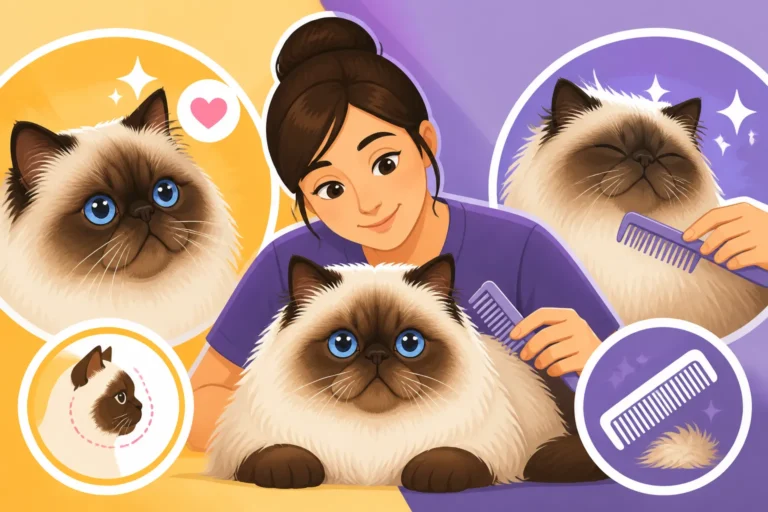
The Persian ancestry profoundly impacts the daily care routine for your Himalayan. Their luxurious, long coat, for example, is a direct inheritance from their Persian ancestors, and it requires significant dedication. The Daily Comb a Himalayan Cannot Skip isn't an exaggeration; it's a necessary part of preventing painful mats and keeping their skin healthy. You'll need the right tools and a consistent schedule to maintain that magnificent ruff and body coat.
Their unique facial structure also dictates specific daily care routines. Due to their flat faces, Himalayans are prone to tear staining and need regular cleaning around their eyes and nose folds. The Morning Face Routine Every Himalayan Needs involves gentle wiping to prevent irritation and infection.
Understanding their activity level, which leans more towards the Persian's serene demeanor than the Siamese's boundless energy, helps you manage their environment and diet. While they enjoy play, Why a Himalayan Plays Longer Than a Persian and Less Than a Siamese accurately describes their moderate energy. They're not going to be scaling your curtains, preferring to observe from a comfy perch on the sofa. This also means careful attention to their diet to prevent obesity, as they don't burn as many calories as more active breeds.
When it comes to feeding, their flat face means that they often do better with specific bowl types that don't squash their whiskers or make it hard to scoop food. If you're exploring fresh food options, consider their facial structure to ensure the food consistency and bowl type are suitable for their unique eating style. For all your other supplies, from specialized combs to low-sided litter boxes that accommodate their shorter legs and long fur, online retailers like Chewy can be a fantastic resource, often stocking items specifically designed for flat-faced, long-haired breeds.
Ultimately, embracing the Persian side of your Himalayan's pedigree means you're prepared for the whole package – the beauty, the personality, and the specific care requirements – ensuring a happy, healthy, and long life together for your cherished companion.
Disclaimer
This article is for general informational purposes only and does not constitute professional advice. Laws, prices and regulations vary by location and change over time. Consult a qualified professional for guidance on your specific situation.