Whether a Himalayan Guarantee Mentions the Airway
It’s a truly valid concern when you’re looking to bring a beautiful Himalayan cat into your home: what exactly does a breeder's health guarantee really cover, especially when it comes to those distinctive, yet sometimes challenging, flattened faces? Many prospective owners worry about potential breathing issues, and you're right to wonder if the contract protects you from the complexities of their unique airway structure. This guide will walk you through the nuances of breeder guarantees, what you should be looking for regarding airway health, and how to safeguard your new feline family member's future.
The Complex Reality of Himalayan Airway Health and Guarantees
Bringing home a Himalayan is an absolute joy, but it’s also a commitment to understanding their specific needs. Their charming, flattened faces, inherited from their Persian lineage, are undoubtedly part of their appeal. However, this very feature can also present unique health considerations, particularly concerning their breathing. When you're poring over a breeder's health guarantee, it's easy to feel overwhelmed, wondering if every potential issue is addressed or if you're missing something crucial about their little respiratory systems.
The truth is, while many reputable breeders offer comprehensive guarantees, explicit mentions of "airway issues" or "brachycephalic airway syndrome" might not always be front and center. This doesn't necessarily mean they're trying to hide anything, but rather that the language used can vary widely. It’s up to us, as diligent future cat parents, to read between the lines and ask the right questions to ensure we're fully prepared for the care our Himalayan might need.
Understanding Brachycephalic Airway Syndrome in Himalayans
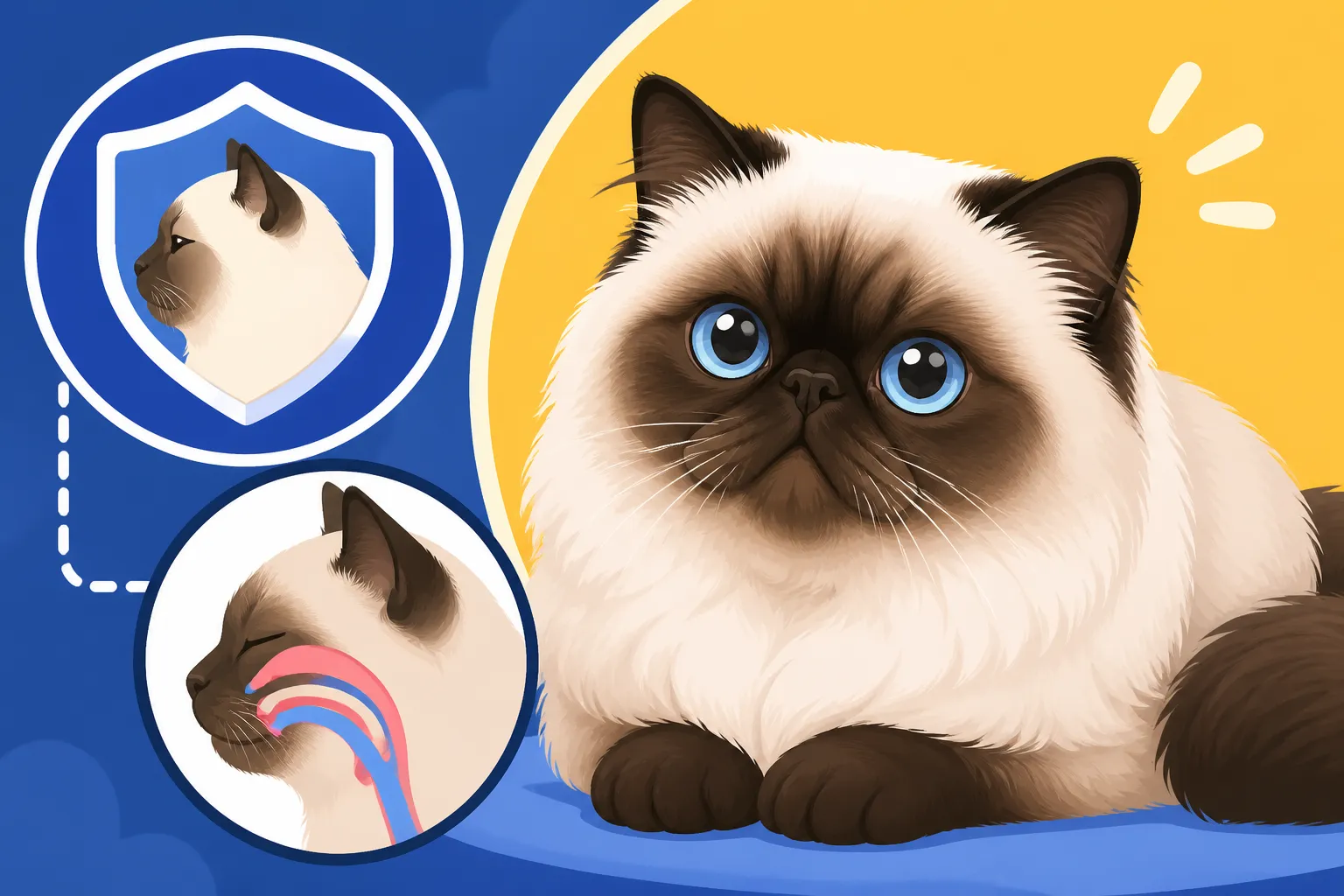
Let's talk frankly about Brachycephalic Airway Syndrome (BAS). This isn't just a fancy vet term; it's a very real collection of conditions that can affect cats with short, broad heads, like our beloved Himalayans. Think about their short snouts and flat faces – it's undeniably cute, but it means their internal structures, like their nostrils, soft palate, and trachea, are often compressed or abnormally shaped. This can lead to a whole host of breathing difficulties, from mild snoring to severe respiratory distress. You might hear them breathing a little louder than other cats, or even notice them panting after just a short burst of play. Why a Himalayan Snores Louder Than Its Siamese Ancestors delves into this.
When you're dealing with a Himalayan, understanding BAS is paramount because it can impact their quality of life significantly. Symptoms can range from noisy breathing, open-mouth breathing when stressed or warm, exercise intolerance, and even collapse in extreme heat. Imagine your furry friend struggling to catch their breath after a gentle stroll across the room – it’s heartbreaking. These aren't just minor inconveniences; they can escalate into serious medical emergencies. That's why, as a responsible owner, you need to be acutely aware of these possibilities and how your breeder addresses them in their guarantee.
The Standard Health Guarantee vs. Specific Airway Clauses
Most reputable Himalayan breeders provide a health guarantee that covers genetic defects and serious illnesses for a certain period, usually the first year or two of the cat's life. This is fantastic and essential for conditions like Polycystic Kidney Disease (PKD), which is prevalent in Persian lines. The guarantee often covers things like feline leukemia, FIV, and other common infectious diseases, ensuring your kitten arrives healthy.
However, the question of whether it explicitly mentions airway problems is where things can get a bit hazy. Some breeders might have a general "life-threatening congenital defects" clause. Does a severely stenotic nostril or an elongated soft palate fall under this? It should, especially if it requires expensive surgery to correct, but the interpretation can be subjective. Others might have a clause that covers conditions diagnosed by a licensed veterinarian within a specific timeframe, which might indirectly include airway issues if they manifest early and severely enough. You might find guarantees that specify a return or replacement policy if a cat is diagnosed with a life-altering genetic condition, but you'll have to consider if BAS, in all its forms, would be interpreted as "life-altering" in their specific wording.
The challenge lies in the spectrum of BAS. A cat that snores loudly might not be considered "defective" under a general clause, but one that collapses from lack of oxygen certainly would be. This ambiguity is precisely why it’s so important to dig deeper and ask very direct questions, or even seek clarification in writing, before committing to a kitten.
What to Look For (and Ask For) in a Himalayan Breeder's Contract
Navigating a breeder's contract can feel like deciphering ancient texts, especially when you're caught up in the excitement of choosing a kitten. But this is where your detective skills really come into play. A good contract isn't just a piece of paper; it's a testament to the breeder's ethics and your future peace of mind. When it comes to something as vital as airway health for a Himalayan, you need to be prepared to not only read every line carefully but also to ask probing questions. Remember, you're not just buying a pet; you're entering into a long-term relationship with this animal and, to some extent, with the breeder.
Dissecting General Health Clauses for Airway Implications
Many breeder contracts contain broad language, such as "guaranteed against life-threatening congenital defects" or "guaranteed against serious genetic diseases." On the surface, this sounds comprehensive, right? And for many conditions, it is. But for brachycephalic airway issues, the interpretation can be a gray area. A mild case of stenotic nares (pinched nostrils) that causes slightly noisy breathing, for instance, might not be immediately classified as "life-threatening" by a breeder, even if it could lead to complications later in life. How a Vet Grades a Himalayan's Nostrils is a great resource here.
Consider asking specific questions:
- "If my kitten is diagnosed with a severe case of elongated soft palate or stenotic nares that requires surgical intervention within the guarantee period, how is this handled?"
- "Does the guarantee cover the costs of diagnostic tests, like x-rays or an endoscope, if airway issues are suspected?"
- "What constitutes a 'life-threatening' defect in your definition when it comes to respiratory function?"
It's about getting clarity on how they interpret their own general clauses when applied to the known breed-specific challenges. A reputable breeder should be transparent and willing to discuss these scenarios openly. If they're vague or dismissive, that’s a red flag. Furthermore, always check the timeframe. Many guarantees are limited to 72 hours for infectious diseases and a year or two for genetic ones. Airway issues can sometimes become more apparent as a kitten grows, so a longer genetic guarantee is always better.
Specific Airway Language: Is it There, or Should You Request It?
The ideal scenario, of course, is a guarantee that explicitly addresses brachycephalic airway syndrome or its components (like stenotic nares, elongated soft palate). While rare, some breeders who are particularly committed to breeding healthy Himalayans with excellent structure might include such clauses. They might specify that if, within a certain age, a vet diagnoses a condition that severely impairs breathing and requires surgery, they will offer a partial refund, replacement, or cover a portion of the surgical costs.
If such language isn't present, don't be afraid to ask for it. You can politely inquire if the breeder would be willing to add an addendum or provide a separate written assurance regarding airway health, particularly if the kitten you are interested in shows any early signs of louder breathing or seems to struggle. This is where you become an advocate for your future pet. You could even propose a clause yourself, such as: "If, within two years of purchase, the kitten is diagnosed by a board-certified veterinary surgeon with Brachycephalic Airway Syndrome (including severe stenotic nares, elongated soft palate, or everted laryngeal saccules) requiring surgical correction, the breeder agrees to [X action]." Whether Widening a Himalayan's Nostrils Helps or What Soft Palate Surgery Involves for a Himalayan are examples of costly surgeries that you want to be sure are covered.
Even if a breeder isn't willing to amend the contract, their openness to discussing it and their willingness to provide information about the parents' respiratory health can be incredibly reassuring. Ask if the parents have ever had any breathing issues, snore excessively, or required any interventions. A breeder dedicated to health will be happy to share this information and potentially show you profiles of the parents to assess their facial structure. This proactive approach can save you a lot of heartache and expense down the line.
| Feature Covered | Typical Health Guarantee | Ideal Airway Guarantee |
|---|---|---|
| Life-threatening congenital defects | Yes, usually general | Yes, specifically names BAS/components |
| Infectious diseases (FeLV/FIV) | Yes, for initial period | Remains the same |
| Genetic diseases (e.g., PKD) | Yes, for 1-2 years | Yes, plus airway genetic predisposition |
| Stenotic Nares (pinched nostrils) | Implied if severe/life-threatening | Explicitly named; may cover surgical cost |
| Elongated Soft Palate | Implied if severe/life-threatening | Explicitly named; may cover surgical cost |
| Everted Laryngeal Saccules | Implied if severe/life-threatening | Explicitly named; may cover surgical cost |
| Costs of diagnostic tests | Rarely specified | May cover portion of diagnostics |
| Return/Replacement Policy | Yes, for covered conditions | Yes, specifically for severe airway issues |
The Role of Early Veterinary Checks and Lifelong Care
A breeder’s guarantee, no matter how comprehensive, is just one piece of the puzzle. Your active involvement in your Himalayan's health, starting from the moment you consider bringing them home, is paramount. This breed, with its unique characteristics, thrives on attentive care and proactive health management. You are their advocate, their guardian, and their best chance at a long, comfortable life. Don't underestimate the power of early intervention and consistent daily routines in ensuring their well-being.
The Importance of a Pre-Purchase Vet Examination
This cannot be stressed enough: before you finalize the adoption of any Himalayan kitten, arrange for a comprehensive veterinary examination. Most reputable breeders will even include a clause in their contract requiring you to take the kitten to your own vet within a few days of bringing them home. This is your window to get an impartial, professional opinion on the kitten's overall health, including an assessment of its airway.
During this critical first visit, your veterinarian will listen to the kitten's breathing, check its nostrils for any obvious narrowing, and might even gently examine its soft palate. They can give you an early indication of any potential issues that might escalate as the kitten grows. This is also the time to discuss the specific breed characteristics of Himalayans and what to watch out for. Ask your vet to pay particular attention to respiratory sounds and observe how the kitten breathes during rest and light activity. A vet can even show you What a Well Built Himalayan's Breathing Sounds Like versus one with early issues. If your vet identifies a concern that contradicts the breeder's representations or suggests a potential future problem, you still have leverage with the guarantee. This initial vet visit acts as your independent verification and is truly the best defense against unexpected health surprises down the road. Some pet insurance providers, like Healthy Paws, will want a vet check done within a specific timeframe of ownership to ensure pre-existing conditions are not excluded, so it’s wise to get this done promptly.
Managing Airway Health Throughout Your Himalayan's Life
Even if your Himalayan kitten has a perfectly clear bill of health from the vet, managing their airway health is a lifelong commitment. Their unique facial structure means they are inherently more susceptible to respiratory challenges than cats with longer muzzles. It's not just about addressing problems when they arise; it's about prevention and proactive care.
One of the biggest factors is keeping them cool. Himalayans, with their thick coats and shortened airways, struggle significantly in heat. Why a Himalayan Overheats Twice as Fast as a Siamese is something every owner needs to understand. Keep them in air-conditioned environments during warm weather, provide plenty of fresh, cool water, and avoid strenuous play during the hottest parts of the day. You might notice your cat stretching their neck out when sleeping, which can be a subtle sign they're trying to open their airway. Why a Himalayan Sleeps With Its Neck Stretched Out should prompt you to monitor their breathing more closely.
Daily observations are key. Pay attention to how your Himalayan breathes during different activities. Is their breathing consistently noisy? Do they snort or pant excessively after minimal exertion? When a Himalayan's Open Mouth Breathing Needs a Vet explains when these signs warrant immediate attention. Keep their weight in check, as obesity can significantly exacerbate breathing difficulties. Ensure they have access to appropriate food and water bowls that accommodate their flat face – specialized bowls from retailers like Chewy can make a big difference, preventing them from pushing food around or getting their ruff soaked. Also, if your vet recommends a special diet for weight management or overall health, fresh, portion-controlled meals can contribute to their well-being. Regular vet check-ups, even if your cat seems healthy, are crucial for monitoring any subtle changes in their respiratory system and addressing them before they become serious. This ongoing vigilance is how you honor your commitment to their health and happiness, far beyond the initial breeder guarantee.
Disclaimer
This article is for general informational purposes only and does not constitute professional advice. Laws, prices and regulations vary by location and change over time. Consult a qualified professional for guidance on your specific situation.