What a Himalayan Cattery’s Grooming Room Should Look Like
Anyone who has ever lived with a Himalayan knows that their glorious, flowing coat and charming, flat face come with a serious commitment to grooming. It’s not just a quick brush; it’s a daily ritual, and if you're a serious breeder or even just a devoted owner with multiple Himalayans, having a dedicated space for this vital routine isn't a luxury – it's a necessity. This guide will walk you through what an ideal Himalayan cattery's grooming room should look like, focusing on functionality, hygiene, and creating a calm environment for both you and your precious felines.
The Importance of a Dedicated Grooming Space
Trying to groom a Himalayan in your living room, kitchen, or bathroom often leads to frustration, a mess of floating fur, and a cat that’s less than thrilled with the process. A dedicated grooming room, even a small corner, signals to your cats that this is a specific activity time, fostering a sense of routine and reducing stress for everyone involved. It’s about more than just convenience; it’s about efficiency, health, and maintaining the pristine beauty these cats are known for.
Establishing a Consistent Grooming Routine
For a Himalayan, routine is everything. They thrive on predictability, and having a consistent place for their daily grooming sessions helps immensely. Imagine trying to comb through a luxurious, dense Persian coat, complete with a massive ruff and britches, while dodging household foot traffic or trying to balance your supplies on a cramped counter. It's a recipe for disaster, and often, for missed spots that quickly turn into painful mats. By creating a specific room, you're not just organizing your tools; you're organizing your cat's expectations. They learn that when they enter this room, it’s time for their pampering, and with consistency, many Himalayans will actually come to enjoy the focused attention. This dedicated space helps you stick to The Daily Comb a Himalayan Cannot Skip.
Minimizing Environmental Contaminants
A grooming room acts as a barrier, preventing loose hair, dander, and any grooming product residues from spreading throughout your home. Think about the sheer volume of fur a Himalayan can shed, especially when being thoroughly combed to remove undercoat. Without a contained space, that fur becomes airborne, settling on furniture, clothes, and even in your food. Beyond the aesthetic, a dedicated room also helps control allergens for anyone sensitive to cat dander. Furthermore, if you’re dealing with a cat that has a minor skin irritation or needs a medicated bath, containing that process to one easily sanitized room prevents potential spread of issues to other areas or cats. It’s a practical step towards maintaining a healthier environment for your whole household, and especially for a multi-cat cattery.
Essential Equipment and Setup for Himalayan Grooming
Once you’ve decided on a dedicated space, outfitting it with the right equipment and setting it up ergonomically will make all the difference. This isn't just about having the tools; it's about having them organized and accessible in a way that makes grooming smooth and efficient.
Grooming Table and Lighting
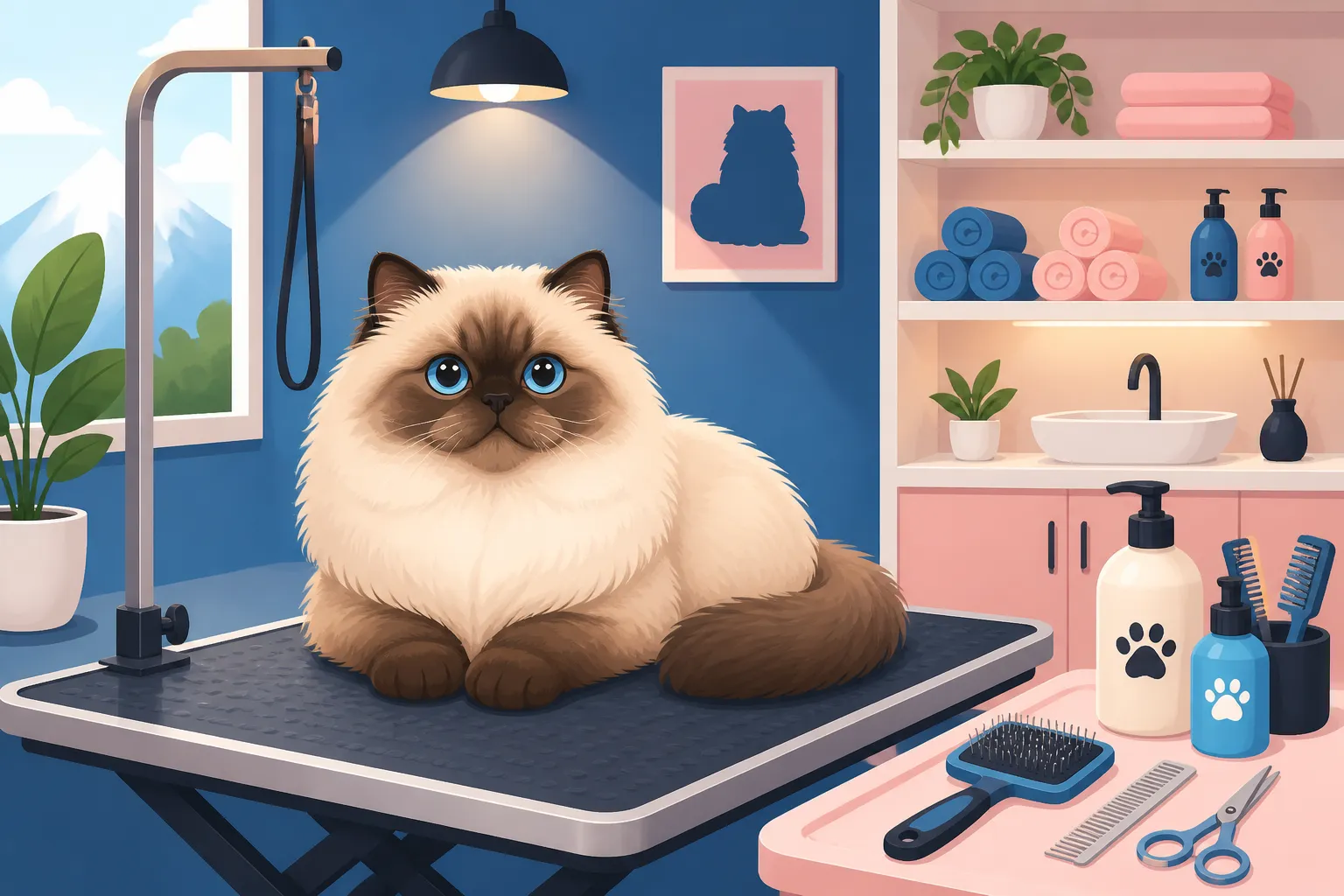
A sturdy grooming table is perhaps the most crucial piece of equipment. It elevates your cat to a comfortable working height, saving your back and allowing you to see every inch of their magnificent coat. Look for a table with a non-slip surface to keep your Himalayan secure. Many professional tables come with a grooming arm and loop, which can be invaluable for keeping a squirmy cat safely in place, preventing falls and allowing you to use both hands. Good lighting is non-negotiable. Bright, even lighting helps you spot tiny mats forming deep in the undercoat, identify any skin issues hiding beneath the dense fur, and ensure you're thoroughly cleaning those delicate facial folds. A combination of overhead lighting and a task lamp can be ideal. You'd be surprised how much Why a Missed Day Costs a Himalayan a Mat often comes down to simply not seeing a tangle in poor light.
Selection of Combs, Brushes, and Shears
The quality and type of your grooming tools are paramount for a Himalayan. You'll need:
- Steel Combs: A sturdy, all-metal comb with both wide and fine teeth is indispensable. This is your primary tool for detangling and checking for mats. Which Steel Comb a Himalayan's Coat Needs will vary slightly by individual coat density, but a good quality comb is a universal must-have.
- Slicker Brush: Best for removing loose undercoat and fluffing the coat. Be gentle, as the wire bristles can scratch the skin if used too harshly.
- Dematting Tools: Various options exist, from rake-style dematters to specialized combs. Use these carefully and only when absolutely necessary, as they can pull and stress the coat.
- Blunt-nosed Scissors: Essential for carefully trimming small mats that cannot be combed out, or for tidying up sanitary areas and around the paws. The blunt tips are crucial for safety when working near delicate skin.
- Nail Clippers: Keep those claws trimmed to prevent snags and discomfort.
Store these tools in an organized fashion – perhaps in drawers or on a pegboard – so they are always within reach. You don't want to be fumbling for a comb while your cat is on the table. For ordering replacements or trying new tools, online retailers like Chewy offer a vast selection, often with helpful reviews from other cat owners.
| Grooming Tool | Primary Use | Key Features |
|---|---|---|
| Steel Comb | Detangling, removing mats, general coat maintenance | Dual tooth spacing, sturdy metal |
| Slicker Brush | Removing loose undercoat, fluffing | Fine wire bristles, cushioned head |
| Dematter | Breaking up tough mats (use with caution) | Curved blades, ergonomic handle |
| Blunt Scissors | Trimming mats, sanitary areas, paw fur | Rounded safety tips, sharp blades |
| Nail Clippers | Trimming claws | Ergonomic handle, sharp cutting edge |
| Face Wipes | Cleaning tear stains and facial folds | Hypoallergenic, pre-moistened, gentle formula |
Bathing Station Considerations
While Himalayans generally don’t need frequent full baths, there will be times when one is unavoidable – perhaps for a show cat, a heavily soiled coat, or dealing with a specific skin issue. A dedicated bathing station in your grooming room makes this much less of a chore.
- Raised Tub/Sink: A small utility sink or a dedicated pet bathing tub, ideally raised to waist height, prevents back strain.
- Handheld Sprayer: Essential for thoroughly wetting and rinsing the dense double coat.
- Cat-Specific Shampoo and Conditioner: Always use products formulated for cats, as human products can irritate their skin and strip essential oils.
- High-Velocity Dryer: A professional-grade pet dryer significantly speeds up drying time and helps to "blow out" loose undercoat. It’s far more effective and safer than a human hairdryer (which can get too hot). Ensure your cat is accustomed to the noise and sensation gradually. Learning How to Dry a Himalayan Down to the Skin is vital to prevent skin issues and mats.
Remember to have plenty of towels on hand for after-bath blotting.
Maintaining Hygiene and Health in the Grooming Room
A grooming room is only effective if it's kept impeccably clean. This isn't just about appearances; it's about preventing the spread of parasites, bacteria, and fungal infections, especially in a cattery environment with multiple cats.
Sanitation Protocols for Tools and Surfaces
After every grooming session, especially if you have multiple cats, all tools must be thoroughly cleaned and sanitized. This means removing all hair, washing with soap and water, and then disinfecting. Many catteries use veterinary-grade disinfectants that are safe for animals but effective against common pathogens. Tables and any other surfaces that come into contact with your cats should also be wiped down and disinfected. Consider using disposable coverings on your grooming table for easier cleanup. For the long-haired Himalayan, keeping things spotless also prevents How Fold Dermatitis Starts Beside a Himalayan's Nose if their face touches a dirty surface. Regular deep cleaning of the entire room, including floors and walls, should also be part of your routine.
Air Quality and Temperature Control
Himalayans, with their dense coats and often flattened faces, are notoriously sensitive to heat. A grooming room must have excellent ventilation and temperature control. Proper airflow prevents odors from building up and helps keep the room comfortable. During warmer months, air conditioning is a must. A Himalayan can overheat quickly, especially during a stressful grooming session or after a bath when their coat is thick with water. You want to maintain a cool, comfortable environment to prevent any heat-related distress. On the flip side, during colder months, ensure the room is warm enough after bathing to prevent chills, but not so hot that it becomes stifling. Investing in a good air purifier can also help manage airborne dander and fur, improving overall air quality. The Temperature a Himalayan Starts to Struggle At is lower than you might think, making climate control critical.
Managing Hair and Waste
The amount of hair shed during a Himalayan grooming session is legendary. Having a dedicated, covered waste receptacle with a foot pedal is essential for quick disposal of hair and used wipes. Regular emptying prevents odors and keeps the room tidy. Consider also having a small hand vacuum or dustpan and brush for immediate cleanup of loose hair from the floor or table. This constant vigilance keeps the room from becoming overwhelmed with fur and maintains a clean, professional appearance.
Creating a Calm and Stress-Free Environment
A grooming room should be a sanctuary, not a source of anxiety for your Himalayan. The goal is to make grooming as pleasant as possible, transforming it from a chore into a bonding experience.
Sound and Scent Management
Cats are highly sensitive to sounds and smells. A calm grooming environment should be free from loud, sudden noises. If you use a high-velocity dryer, gradually introduce your cat to its sound and sensation, starting at a low setting and working up. Some owners play soft, calming music or use feline-specific pheromone diffusers (available from brands like Feliway) to help reduce anxiety. Avoid strong perfumes, air fresheners, or cleaning products with harsh chemical smells, as these can be overwhelming and unpleasant for a cat's sensitive nose. The goal is a neutral, peaceful atmosphere where your cat feels secure enough to relax. This relaxed state makes all the difference when tackling How Many Minutes a Day a Persian Coat Takes on a Himalayan.
Positive Reinforcement and Comfort
Always associate the grooming room with positive experiences. This means treats, praise, and gentle handling. Have a supply of your Himalayan's favorite treats readily available. Every time they tolerate a comb stroke or a wipe of their face, reward them. Make the grooming table a comfortable spot; a soft mat or towel can help. If your cat becomes overly stressed, know when to take a break. Pushing them too far will only create a negative association and make future sessions harder. Some cats respond well to a quiet, reassuring voice. The more positive you make the experience, the more cooperative your Himalayan will be over their lifetime. This positive approach can even extend to specific challenges like Getting a Toothbrush Into a Himalayan's Crowded Mouth.
Safety and Accessibility Features
Safety should always be a top priority.
- Secure Storage: Keep all grooming products, especially shampoos, disinfectants, and scissors, stored securely out of reach of curious paws. Cats are notorious for getting into things they shouldn't.
- Non-Slip Flooring: Beyond the grooming table, consider non-slip flooring for the entire room to prevent slips and falls, especially if you have an older or less agile Himalayan.
- Easy Access: For a cobby Himalayan with shorter legs, consider a ramp or steps if they need to get into a raised tub or onto a higher grooming table, rather than forcing them to jump. This reduces stress and strain on their joints. Ensuring their comfort and safety contributes to a longer, healthier life, potentially reducing the need for extensive vet care that even a good plan from Healthy Paws might not fully cover for preventable accidents.
By focusing on these elements – a dedicated, well-equipped, hygienic, and calm space – you can create a grooming room that not only meets the demanding needs of the Himalayan coat but also ensures a positive experience for your beloved felines. It’s an investment in their health, comfort, and enduring beauty.
Disclaimer
This article is for general informational purposes only and does not constitute professional advice. Laws, prices and regulations vary by location and change over time. Consult a qualified professional for guidance on your specific situation.