How Much More a Himalayan Talks Than a Persian
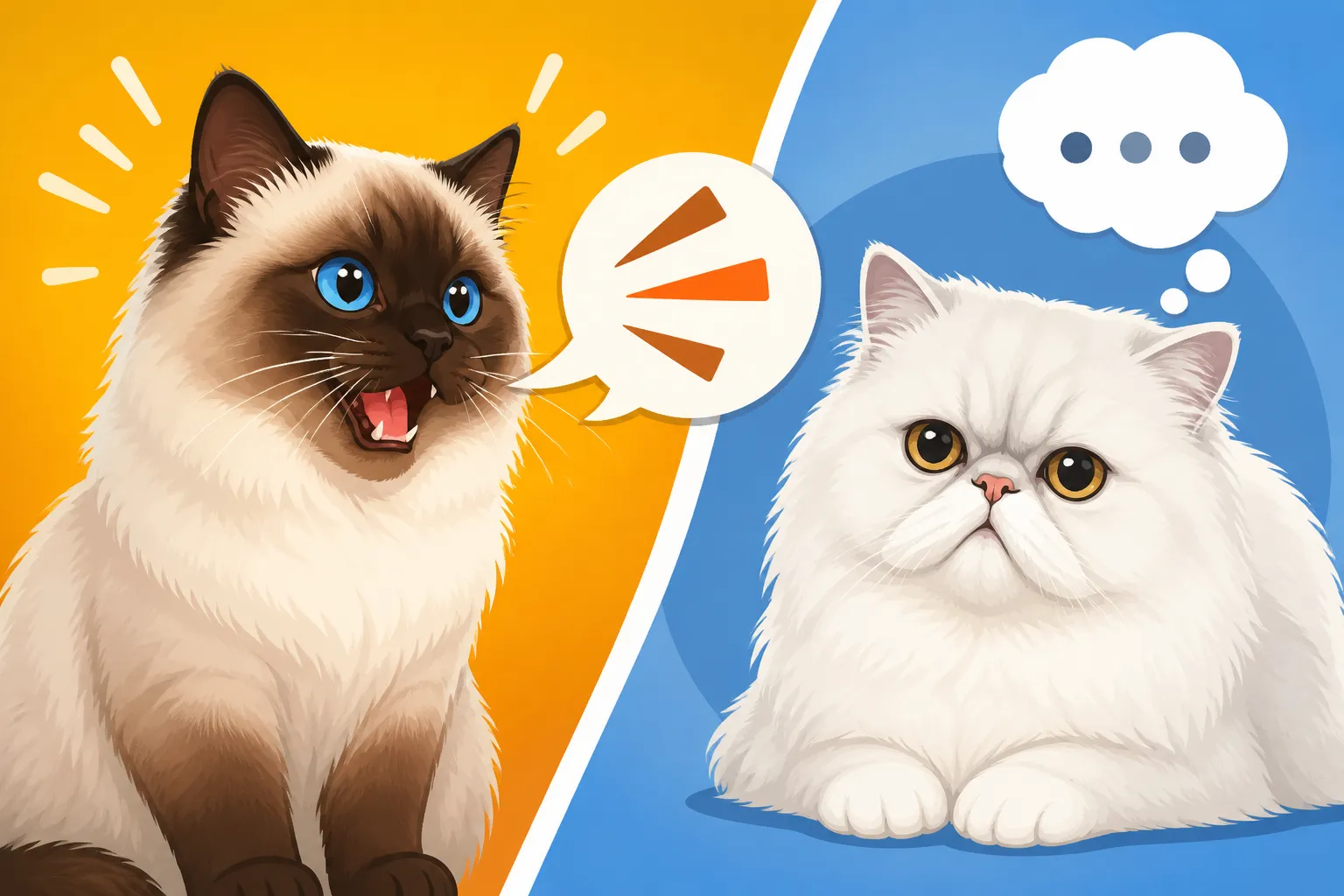
One of the most common questions I get from folks considering bringing a Himalayan into their home is about their voice. We've all heard the stereotypes: Persians are quiet, Siamese are LOUD. But where does the Himalayan, a delightful blend of both, fall on that spectrum? If you're wondering if your new Himmy will be a silent shadow or a chatty companion, this guide is here to shed some light on their unique vocal personality and help you understand their captivating forms of communication.
The Myth and the Reality: Unpacking Himalayan Vocal Tendencies
It’s easy to get caught up in preconceived notions about cat breeds, especially when they have such distinct ancestors as the Persian and the Siamese. Many people assume Himalayans are just "long-haired Persians" with color points, leading them to expect the same quiet demeanor. Others, knowing the Siamese heritage, brace themselves for constant, ear-splitting chatter. The truth, as often is the case, lies somewhere in the middle, and it's far more nuanced than a simple dichotomy. Understanding these roots helps us appreciate the Himalayan's unique vocal footprint.
Where the "Quiet Cat" Stereotype Comes From
The Persian, one of the Himalayan's foundational breeds, is famous for its placid, regal, and often very quiet nature. They are known for expressing themselves more through their large, expressive eyes and calm presence than through loud meows. A typical Persian might offer a soft "mew" or a gentle purr when seeking attention, but rarely do they engage in extended vocal soliloquies. This low-key vocalization is a significant part of their appeal for many owners seeking a tranquil companion.
When people first encounter a Himalayan, they often see the plush Persian coat, the round head, and the gentle expression, and naturally project the Persian's quietness onto them. They might think, "Oh, it's just a Persian with different markings, so it must be just as silent." This expectation can lead to a pleasant surprise or, for those truly hoping for a near-mute cat, a slight adjustment period. The reality is that the Himalayan truly is a blend, and its vocal tendencies are one of the most interesting areas where this genetic fusion shines through.
The Siamese Influence: A Whispering Echo
On the other side of the Himalayan's family tree is the Siamese, a breed renowned, or perhaps notorious, for its incredibly loud, persistent, and often dramatic vocalizations. Siamese cats are famous for their distinctive "meezer" voice, a yowl that can sound almost like a baby crying and is certainly not shy. They are known for holding entire conversations, demanding attention, and making their presence known in no uncertain terms. This strong vocal trait is one of the most defining characteristics of the breed.
The Himalayan inherited the capacity for this vocal expressiveness from its Siamese ancestors, but with a significant difference: the volume control was turned down. Think of it as having the intricate vocal cords and the inclination to communicate, but without the full booming amplifier of a purebred Siamese. While a Himalayan will certainly use its voice more than a Persian, you generally won't find yourself needing earplugs like you might with some Siamese companions. It's a gentle echo rather than a full-throated shout, allowing for charming interaction without overwhelming the household. This moderation is a hallmark of the breed's temperament. The Himalayan Kept the Siamese Voice and Lost the Volume is an excellent read if you're curious about this specific genetic inheritance.
Beyond the Meow: The Himalayan's Vocal Repertoire
When we talk about cat vocalization, most people immediately think of "meows." But just like humans have many ways to speak, cats have an impressive array of sounds they use to communicate. Himalayans, in particular, showcase a delightful range that goes well beyond a simple meow. They are not one-trick ponies when it comes to expressing themselves, offering a palette of sounds that can be quite endearing once you learn to interpret them.
You'll discover that your Himalayan might purr with the rumbling intensity of a small engine when content, or let out a series of soft chirps and trills as they greet you or lead you to their food bowl. These are often sounds of welcome or gentle requests, far from the insistent yells some other breeds are known for. They might even emit a little "mrrp" as they jump onto your lap, a quiet invitation for cuddles. Learning these subtle nuances is key to understanding your Himmy's personality and strengthening your bond. It's about listening to the quality of the sound, not just the frequency, and observing the context in which it's used. What a Himalayan Is Saying When It Chirps is a great resource for understanding these unique vocalizations.
Deciphering the Himalayan's Dialogue: What Are They Saying?
One of the most rewarding parts of living with a Himalayan is learning to understand their unique communication style. They might not be as overtly chatty as some breeds, but they are certainly communicative. Their dialogue is often a subtle interplay of vocalizations and body language, a quiet conversation waiting for you to tune in. Once you start paying attention, you'll find that your Himmy has plenty to say, and they'll develop their own little vocabulary with you.
The "Chirp" and the "Trill": Greetings and Requests
Many Himalayan owners will tell you that the "chirp" or "trill" is one of their cat's most common and charming vocalizations. This isn't a loud, attention-demanding meow. Instead, it's a soft, rolling sound, almost like a question or an invitation. Imagine a bird-like flutter in their throat, often accompanied by a gentle head rub or a slow blink.
These sounds are typically used as greetings when you walk into a room, a polite "hello" to acknowledge your presence. They might also use a chirp to get your attention for something specific, like a full food bowl, a desire for lap time, or to lead you to a favorite toy. It's their way of saying, "Excuse me, I have something to show you," without being pushy. They've learned that these gentle sounds are usually effective in getting their human companions to pay attention, reinforcing this pleasant form of communication.
The Low "Mrow": A Demand for Attention
While Himalayans tend to avoid the full-blown yowl of their Siamese ancestors, they definitely know how to signal when they truly want something. This often manifests as a distinctive, low-pitched "mrow," sometimes drawn out, but still softer than a Siamese's call. It's usually reserved for situations where they feel their needs aren't being met, or when they've decided it's absolutely crucial that you focus on them.
This "mrow" might come when they are particularly hungry and you're running late with their dinner, or when they want to snuggle and you're engrossed in a book. It's less of a complaint and more of an insistent nudge, a polite but firm declaration that "I am here, and I have a request." It’s still often accompanied by direct eye contact, perhaps a slow walk over to your feet, and a patient sit, waiting for you to acknowledge their presence. It's their way of politely escalating their vocal communication when the chirps and trills haven't quite done the trick. How a Himalayan Asks Without Raising Its Voice often refers to this particular vocalization and the subtle body language that goes with it.
When Silence Speaks Volumes: Observing Body Language
It's crucial to remember that vocalization is only one part of a cat's communication strategy, and for a Himalayan, body language can often speak volumes louder than their soft voices. Because they aren't typically a highly vocal breed, paying close attention to their non-verbal cues is absolutely essential for understanding their moods, needs, and desires. A truly empathetic Himalayan owner learns to "read" their cat as much as they "hear" them.
A Himalayan might express contentment through slow blinks, a relaxed posture on your lap, or a tail held high with a slight curl at the tip. Displeasure or anxiety might be indicated by a flattened ear, a twitching tail, or a sudden withdrawal to a favorite quiet spot. If they are feeling playful, you might see a slight crouch, wiggling rear, and wide, curious eyes. When they are truly unhappy or unwell, their silence can become particularly poignant. They might simply become withdrawn, stop purring, or lose interest in their usual routines. Being attentive to these subtle physical cues can give you deep insights into your Himmy's world, allowing you to respond effectively and strengthen your bond.
Himalayan vs. Ancestors: Vocalization Comparison
| Trait | Himalayan | Persian | Siamese |
|---|---|---|---|
| Overall Volume | Moderate to Soft | Very Soft to Silent | Loud and Insistent |
| Frequency of Talk | Frequent, but gentle | Infrequent | Constant |
| Common Sounds | Chirps, Trills, Purrs, Soft Meows, Low "Mrows" | Soft Mews, Purrs, Occasional Chattering | Yelps, Howls, Meows, Chatters, "Meezers" |
| Demanding Nature | Polite requests | Rarely demanding | Highly demanding |
| Conversational | Can engage in soft "conversations" | Generally not conversational | Very conversational, often one-sided |
| Expression Method | Mix of voice & body language | Primarily body language & eyes | Strong vocal and body language |
Factors Influencing a Himalayan's Chatter Levels
Why does one Himalayan chatter more than another, even within the same litter? It's a question many owners ponder, and the answer, as with most animal behavior, is a fascinating interplay of genetics, early experiences, and their current environment. It’s never just one thing; it’s a whole tapestry of influences that shape their individual vocal patterns.
Genetics Versus Environment: Nature and Nurture
As we’ve explored, the Himalayan's genetic blueprint gives them the potential for more vocalization than a pure Persian, thanks to their Siamese heritage. Some Himalayans might simply inherit a stronger "talkative" gene from that side of the family tree, making them naturally more inclined to use their voice. This predisposition means that even with the same upbringing, one Himmy might be a little more vocal than another simply due to their specific genetic inheritance.
However, environment plays an enormous role too. A Himalayan raised in a bustling household with lots of interaction and responsive humans might learn that vocalizing gets them attention and rewards, thus encouraging more chatter. Conversely, one in a quieter home with less direct "conversational" interaction might vocalize less. It's a classic nature-versus-nurture debate, where both factors constantly influence and reinforce each other. You can't change their genes, but you can certainly shape their communication habits through how you interact with them. For more on their lineage, consider reading Where the Himalayan's Voice Came From.
Early Socialization and Habit Formation
Just like puppies, kittens learn a great deal about communication from their mothers and littermates during their crucial early weeks. A kitten that sees its mother using soft meows to ask for food or attention might adopt similar habits. If the mother cat is particularly vocal, her kittens might pick up on that behavior. Beyond the queen, the breeder's environment significantly shapes a kitten's early vocal habits.
In a cattery where the cats are regularly spoken to and their vocalizations are gently responded to, kittens might develop a more communicative style. If they learn early on that a soft chirp gets them noticed, they'll continue to use it. On the other hand, if a kitten comes from a home where vocalizations were ignored or, worse, discouraged, they might be more reserved. When you bring a Himalayan kitten home, how you respond to their initial vocal cues will further shape their conversational style. Positive reinforcement for desired vocalizations can encourage a lovely, interactive pet.
Health and Comfort: When Vocalization Changes
A sudden change in a Himalayan's vocalization, either becoming much louder or unusually quiet, is often one of the first and most important indicators that something is amiss. Cats are creatures of habit, and deviations from their norm, particularly when it comes to communication, should always be taken seriously. They can't tell you in words that they're feeling unwell, so they use the tools they have.
For example, increased vocalization could signal pain, discomfort, anxiety, or even simply confusion if their routine has changed. A cat experiencing urinary issues might vocalize more frequently when going to the litter box. An older Himalayan with cognitive decline might become more vocal, particularly at night. Conversely, a sudden decrease in vocalization, especially if a cat is usually quite communicative, can indicate illness, pain, or depression. It's always best to consult your veterinarian if you notice a significant or prolonged change in your Himalayan's vocal habits, as it can be a critical clue to their underlying well-being. Keeping them comfortable and healthy can also influence their general demeanor, and a happy cat is often a quietly contented one. You may find insights into comfort in Why a Himalayan Sleeps With Its Neck Stretched Out.
Encouraging (or Discouraging) More Talk From Your Himmy
So, you’ve got your Himalayan, and now you’re wondering how to foster that adorable, soft conversational style, or perhaps gently curb any excessive meowing. The good news is that you, as their human companion, have a lot of influence over these behaviors. It's all about consistent interaction, understanding their needs, and providing the right environment.
Building a Conversational Bond
If you adore the soft chirps and gentle trills of your Himmy and want to encourage more of that lovely interaction, the key is to engage with them. When your Himalayan offers a soft vocalization, respond in kind! Use a gentle, high-pitched voice, make eye contact, and perhaps offer a slow blink. This teaches them that their voice gets a positive, loving reaction from you.
You can initiate these "conversations" too. Speak to your Himalayan as you go about your day – narrate what you're doing, ask them questions, and use their name frequently. Many Himalayans love to be included in your daily rhythm and will often respond with a soft vocalization or a trill, especially if they are looking for interaction. You can also encourage positive associations with their voice. For instance, if they chirp at you near their food bowl, a simple "Oh, are you hungry?" followed by feeding them reinforces that their vocal cue led to a positive outcome. Investing in puzzle feeders or interactive toys available on platforms like Amazon can also give them a reason to "talk" to you about their successes. How Often a Himalayan Uses the Voice It Inherited delves deeper into these interactive patterns.
Managing Excessive Vocalization
While Himalayans are generally not as loud as a Siamese, some individuals can become quite vocal, especially if they’ve learned that insistent meowing gets them what they want. If your Himmy's vocalizations are becoming disruptive or seem excessive, the first step is always to rule out any underlying medical issues with your vet. Once health is confirmed, you can begin to manage the behavior.
The most effective strategy is to avoid reinforcing unwanted vocalization. This means not responding to constant, demanding meows. It's tough, but consistency is vital. Wait for a moment of silence before you give them attention, food, or whatever they are asking for. This teaches them that being quiet, or using a softer, more polite vocalization, is what gets results. You can also redirect their energy. If they're meowing for play, engage them with a wand toy from Amazon. If they're meowing for food, stick to a strict feeding schedule rather than free-feeding based on their demands. Distraction can also be your friend; a new toy or a cozy spot can sometimes be enough to shift their focus.
Enrichment to Redirect Vocal Energy
Sometimes, excessive vocalization, even from a generally quiet breed like the Himalayan, can stem from boredom, lack of stimulation, or unmet needs. These cats, while often content to be lap ornaments, still have an intelligent Siamese spark that requires engagement. Providing adequate environmental enrichment can go a long way in redirecting any vocal energy into more positive outlets.
Think about toys that stimulate their hunting instincts, like feather wands or small, rolling balls they can bat around. Puzzle feeders, which make them "work" for their food, can be mentally engaging and provide a quiet activity. Tall cat trees (though Himalayans generally prefer lower perches) or window perches can offer stimulating views of the outside world, reducing the need to vocalize out of boredom. Even a simple, cozy bed from Amazon in a sunny spot can be enough to keep a Himmy content and quietly purring rather than meowing for attention. Regular play sessions, even short ones, can also burn off excess energy and provide the mental and physical stimulation they crave, making them less likely to "talk" out of sheer under-stimulation.
Disclaimer
This article is for general informational purposes only and does not constitute professional advice. Laws, prices and regulations vary by location and change over time. Consult a qualified professional for guidance on your specific situation.