Lifting a Cobby Himalayan Without Straining Its Back
Every Himalayan owner knows the unique joy and challenges that come with these beautiful, fluffy companions. One of the most common, yet often overlooked, struggles we face is simply picking them up. Their endearing "cobby" build – that stocky, dense frame with short legs – can make lifting them a genuine risk for both your back and, more importantly, theirs. This guide is here to walk you through understanding your Himalayan's physical makeup and mastering safe, gentle lifting techniques to protect their precious spine and ensure a comfortable experience for everyone involved.
Understanding the Himalayan's Unique Physiology for Safe Lifting
When you first bring home a Himalayan, you're immediately struck by their luxurious coat and those captivating blue eyes. But beneath all that fluff is a physical structure that requires a specific approach to handling. It's not just about their size; it's about their unique "cobby" build, inherited from their Persian ancestors, which makes them quite distinct from other breeds, even other long-haired cats. Ignoring these anatomical realities can lead to discomfort for your cat and potential strain for you.
The "Cobby" Body Type and Its Implications
The term "cobby" is often used in cat fancy to describe a breed with a short, stocky body, broad chest, and short, sturdy legs. Think of it as a compact, powerful little brick, lovingly covered in fur. This isn't a flaw; it's a defining characteristic of the Himalayan, much like its Persian forebears. However, this structure means their spine is relatively short and dense, and their weight is distributed differently than a more lithe, athletic cat like a Siamese. When you go to pick up a cat with a longer, more flexible spine, they often drape over your arm, their weight spreading out easily. A cobby Himalayan, however, tends to feel like a more solid mass, and if not supported correctly, that weight can put undue pressure on their middle and lower back. Imagine trying to lift a heavy, rigid box versus a flexible bag – the box requires a more deliberate, supportive lift. This is your Himalayan.
This body type also means they aren't naturally inclined to jump to great heights. They prefer to stay grounded or use steps and ramps to reach elevated spots. Because they rarely reach for the top of a bookcase, their back and joints are not accustomed to the sudden impacts or twists that come with awkward jumps or falls. This makes them particularly vulnerable to strain if lifted incorrectly, as their bodies aren't built for that kind of sudden, unsupported manipulation. Understanding this fundamental aspect of their physique is the first step in ensuring their comfort and well-being during handling. You'll find that their preference for lower surfaces is quite pronounced; they often prefer to remain at floor or sofa level, and you might notice Why a Himalayan Uses Steps Rather Than Jump rather than leap onto counters.
The Density of Bone and Muscle in a Himalayan
Beyond just the "cobby" shape, Himalayans possess a remarkable density of bone and muscle for their size. They might not look particularly muscular under all that fur, but pick one up, and you'll immediately feel their surprising heft. This isn't just fat; it's a solid, substantial build. Their bones are typically thicker and more robust than many other cat breeds, and their musculature, while not overtly athletic in appearance, is strong and compact. This density contributes significantly to their overall weight. While What a Himalayan's Cobby Frame Should Weigh can vary, even a healthy, lean Himalayan feels heavier than you might expect for its apparent size.
This dense build means that when you lift them, you're not just lifting fluff; you're lifting a solid, heavy package. If their body isn't properly supported across its full length, especially their substantial midsection and hindquarters, their own weight becomes a leverage point against their spine. It's like trying to lift a thick, heavy book by only grasping the covers – the pages in the middle sag and strain. For your Himalayan, this strain translates directly to their back muscles and spinal discs, which are simply not designed to bear their full weight without adequate support underneath them. Proper technique is crucial to distribute this density evenly and prevent uncomfortable pressure points.
Why Their Luxuriant Coat Adds to the Challenge
Ah, that magnificent, flowing coat! It's one of the Himalayan's most defining features and undeniably beautiful. But it also adds an unexpected layer to the challenge of lifting them safely. First, all that fur actually adds a bit of bulk and visual deception. A cat that looks large and voluminous due to its double coat might actually be quite lean underneath, but the visual cues can make it harder to judge where their actual body begins and ends. This can lead to misjudging your grip or failing to support the underlying frame adequately.
Secondly, and perhaps more importantly, the long, dense fur can make it surprisingly slippery to get a secure hold. Your hands might slide on the silky topcoat, making it difficult to maintain a firm, yet gentle, grip on their solid body. This is particularly true if you're trying to quickly grab them. You might inadvertently squeeze too tightly in an attempt to get a better purchase, or your hands might slip, leading to an unstable lift. Imagine trying to get a good grip on a very fluffy pillow – it's soft, but your hands don't always sink in to find purchase on the core. Moreover, if their coat is not meticulously groomed, mats can form, especially in the armpits and hindquarters. Grabbing a matted area during a lift can be incredibly painful for your cat, immediately making them resist being picked up in the future. Regular grooming, as discussed in What Daily Combing Costs a Himalayan Owner in Time, is key not just for aesthetics but for comfortable handling.
Preparing Yourself and Your Himalayan for a Lift
Lifting your Himalayan isn't just about the physical act; it's also about setting the stage for a positive experience for both of you. A sudden, unexpected lift can be startling, and if your cat associates being picked up with discomfort or fear, they'll become increasingly resistant over time. A little preparation can go a long way in making these necessary interactions stress-free.
Assessing the Situation: When and Why You Need to Lift
Before you even think about putting your hands on your Himalayan, pause and consider why you need to lift them. Is it truly necessary, or is there another way? Himalayans are creatures of habit and often prefer to move at their own pace. Sometimes, we instinctively go to pick them up out of convenience – to move them off a chair, to get them ready for a vet visit, or simply for a cuddle. But for a cat whose body isn't designed for high jumps or sudden movements, every lift should ideally be deliberate.
Think about scenarios:
- Routine Care: If it's for daily grooming, ear cleaning, or administering medication, try to guide them onto a low table or into a comfortable position first. This way, the lift is only to get them to the grooming spot, not to hold them during the grooming.
- Vet Visits: This is a non-negotiable lift into a carrier. The goal here is efficiency and security. Having a carrier that's already familiar and comfortable for them can ease the transition.
- Moving Them: If they're simply on "your" spot on the sofa, can you entice them to move with a treat or a favorite toy instead? They're quite happy to follow a routine, and Why a Himalayan Follows One Person Around the House suggests they'll often stay close by anyway.
- Emergency: In a genuine emergency, speed is of the essence, but even then, a moment's thought about support can prevent further injury if your cat is already compromised.
By minimizing unnecessary lifts, you help your Himalayan feel more secure and less wary of human hands. When a lift is truly needed, they'll be more receptive, which makes the whole process smoother for both of you.
Creating a Calm Environment for Your Cat
Cats are incredibly sensitive to their environment, and Himalayans, with their generally placid nature, thrive on routine and calm. A chaotic or noisy setting can make them anxious, and an anxious cat is much more likely to stiffen up or struggle when you try to pick them up, increasing the risk of an awkward lift. Before approaching your cat for a lift, take a moment to ensure the surroundings are as peaceful as possible.
Speak to them in a soft, reassuring voice. Approach them slowly and from the front or side, rather than swooping down from above, which can feel threatening. Let them see your hands coming. A gentle stroke on their head or along their back before the lift can help relax them and signal your intentions. If your Himalayan is especially prone to anxiety around being handled, consider offering a small, high-value treat just before or after the lift, creating a positive association. You want them to view being picked up as a neutral or even pleasant event, rather than a cause for alarm. This is particularly important with a breed that, despite its docile nature, can still resist if feeling threatened or uncomfortable. You want them to understand that you're there to help, not to impose.
Your Own Posture and Preparedness
It's not just about the cat's comfort; it's about yours too. Lifting a cobby Himalayan, especially a heavier one, can put a strain on your back if you're not careful. Just like lifting any heavy object, proper human body mechanics are essential.
First, bend your knees, not your back. Get down to your cat's level as much as possible. This reduces the distance you need to lift them and allows you to use the stronger muscles in your legs rather than straining your back.
Second, brace your core. Engaging your abdominal muscles helps stabilize your spine.
Third, clear the area. Make sure there are no obstacles you might trip over while holding your cat. You don't want to be maneuvering around furniture while trying to keep a heavy, possibly squirming, cat secure.
Having a clear path to wherever you're taking them – whether it's the grooming table, the carrier, or another room – will ensure a smoother, safer transfer. If you're struggling with your own mobility or have a back issue, consider asking for help or using specialized aids, which we'll discuss shortly. Remember, if you're uncomfortable or straining, you're more likely to make a mistake that could impact your cat's comfort and safety. Prioritizing your own posture is a critical, often overlooked, part of safely handling your Himalayan.
Step-by-Step Guide to Safe Lifting Techniques
Now for the practical part! There are a couple of primary methods that work best for lifting a Himalayan, depending on their size and temperament. The key across all techniques is always comprehensive support of their body to protect that dense, cobby spine.
The "Scoop and Support" Method for Kittens and Smaller Cats
This method is ideal for younger, lighter Himalayans or those with a more petite frame. It's a gentle yet firm approach that ensures their entire body is cradled.
- Approach Gently: As mentioned, approach your kitten or smaller cat calmly. Speak in a soft voice and let them see your hands.
- One Hand Under the Chest: Slide one hand gently under their chest, just behind their front legs. Your fingers should splay slightly to offer a broader base of support across their sternum.
- Second Hand Under the Hindquarters: Simultaneously, bring your other hand under their hindquarters, supporting their bottom and back legs. This is crucial for their cobby build. You want to support the majority of their weight here.
- Lift Evenly and Close to Your Body: Scoop them up smoothly, lifting both hands at the same time. Bring them close to your chest or stomach immediately. Holding them close minimizes swinging and keeps their body stable and secure. Their back should be straight and fully supported, not sagging.
- Cradle and Reassure: Once lifted, hold them securely against you, gently reassuring them with your voice or a soft stroke. This helps reinforce that being picked up is a safe and positive experience.
This method avoids any pressure on their abdomen and ensures their entire spine is kept in a natural, straight alignment, preventing any sudden kinks or strains. For a tiny kitten, this is usually the most natural way they're picked up, establishing good habits from the start.
The "Two-Handed Cuddle" for Adult Himalayans
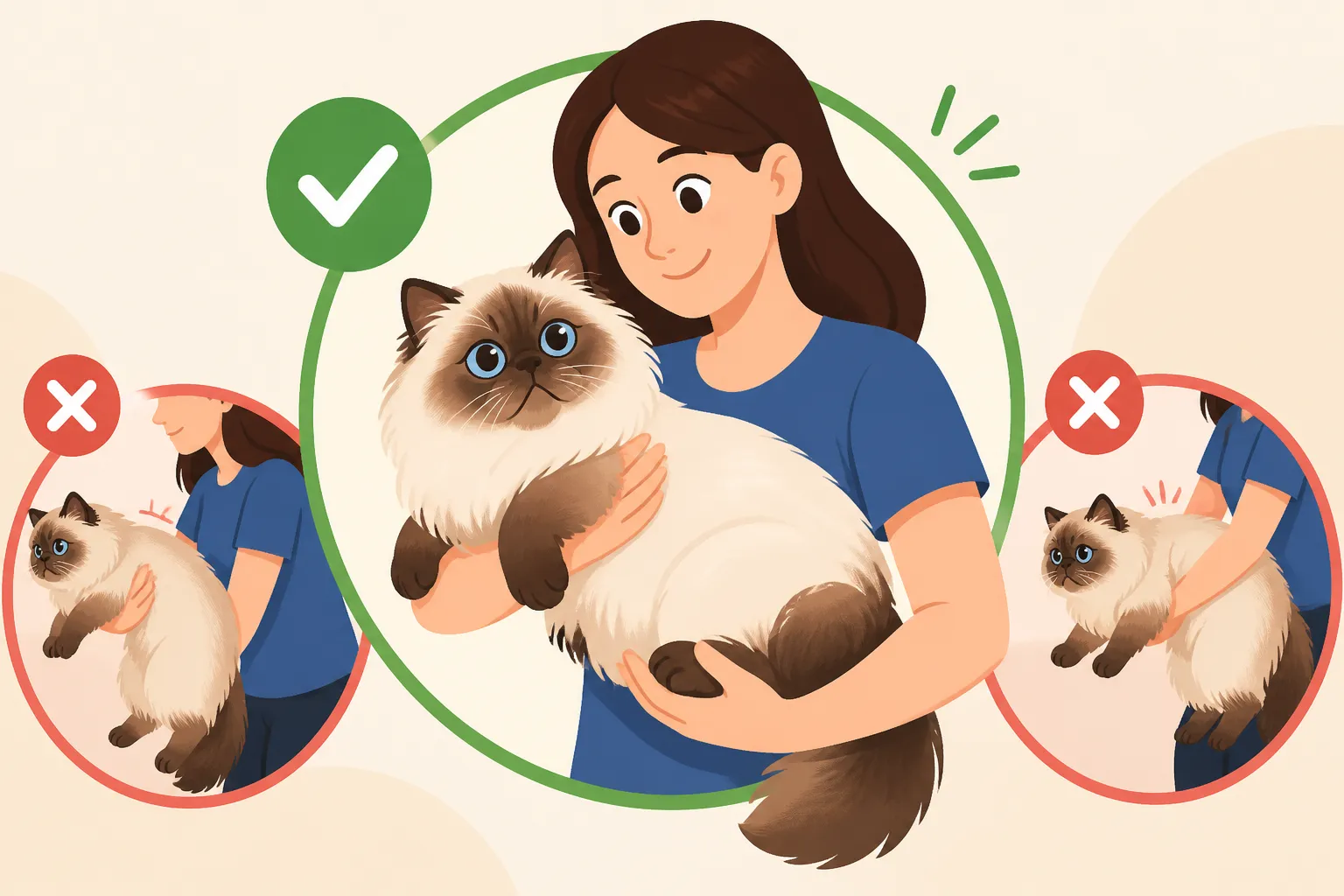
For full-grown Himalayans, who can be quite substantial, the "two-handed cuddle" technique provides the necessary broad support for their dense bodies. This isn't a quick grab; it's a deliberate, full-body lift.
- Assess and Prepare: Get down to your cat's level by bending your knees. Make sure they are calm and receptive.
- First Hand Under the Chest/Front Legs: Place one hand under their chest, just behind their front legs. Your palm should be flat, and your fingers spread to maximize the contact area. This hand will provide primary support for their upper body and prevent them from tipping forward.
- Second Hand Under the Abdomen/Hindquarters: This is the critical hand for an adult Himalayan. Slide your second hand well under their abdomen and hindquarters, ensuring you are supporting their entire lower half, including their back legs and tail base. You want to feel like you're lifting their entire center of gravity.
- Lift as One Unit: As you lift, straighten your legs (not your back!) and bring your cat close to your body. Their back should remain level, and their weight evenly distributed across both your hands and your forearm. They should feel like they're being lifted as a cohesive unit, not bending or sagging in the middle.
- Secure and Close: Keep them snug against your chest. This closeness provides additional security and minimizes the chance of them squirming or trying to jump down, which could lead to an awkward fall. Many Himalayans, once securely held this way, will relax into a contented "cuddle." This is how you develop trust, making subsequent lifts easier.
Supporting the Core and Hindquarters
The absolute golden rule for lifting any Himalayan, regardless of their size, is always support their core and hindquarters. Their cobby build means their center of gravity is quite central and low, and their dense musculature is concentrated in their torso and rear. If you only support their front half, their entire back end will sag, putting immense strain on their lower spine and abdominal muscles. This is particularly uncomfortable and potentially damaging.
Think of their spine like a beam. If you lift a beam only from one end, the middle sags significantly. To keep it straight and strong, you need support underneath its entire length. For your Himalayan, this means making sure your supporting hand or arm extends past their hips, ideally reaching to the base of their tail. This prevents the "banana bend" effect, where their midsection dips down. When their body is held level, their spine is naturally aligned, and the pressure is distributed safely. It might mean getting your arm a little further under their fluffy britches, but it’s worth it for their comfort and long-term health. Regularly checking their comfort, especially if you need to perform actions like Getting a Toothbrush Into a Himalayan's Crowded Mouth where holding is involved, will help you refine your technique.
Essential Tools and Aids for Assisting With Lifts
Even with the best technique, sometimes you need a little help. Whether it's due to your own physical limitations, a particularly heavy or squirmy cat, or simply to make life easier, several tools can greatly assist in safely moving your Himalayan. Investing in the right gear can protect both of you.
The Benefits of a Sturdy Pet Carrier or Sling
A good, solid pet carrier isn't just for vet visits; it can be an invaluable aid for safe lifting and transport around the house. For your Himalayan, look for a carrier that is sturdy, well-ventilated, and has a top-loading option. The top-loading feature is a game-changer. Instead of trying to push or coax a reluctant cat through a front opening, you can gently lower them from above, maintaining better control and reducing stress. The carrier acts as a rigid, supportive platform, effectively turning a potentially awkward lift into a secure transfer.
For carrying, especially if you need to move them a short distance frequently, a pet sling might also be an option. However, for a Himalayan, you need one that offers full body support, not just a pouch where they hang. Look for slings designed for larger, heavier pets, or those that allow them to sit in a natural, supported position with their spine straight. Many options can be found on Amazon, with reviews often highlighting how well they accommodate different cat body types. Make sure the sling distributes your cat's weight evenly across your body, perhaps over one shoulder and across your back, rather than solely relying on one arm. It provides a more natural, less strenuous way to transport them safely, especially if you have to manage stairs or multiple pets.
Using Steps or Ramps for Elevated Surfaces
As we've discussed, Himalayans aren't natural jumpers. Their cobby build and short legs mean that even modest heights, like the sofa, a favorite armchair, or your bed, can be a challenge. Rather than constantly lifting them onto these beloved spots, consider providing steps or ramps. These simple additions empower your cat to access their preferred resting places independently, reducing the need for you to lift them.
Pet steps come in various heights and materials, often with soft carpeting for grip. Ramps offer an even gentler incline, which can be particularly beneficial for older Himalayans or those with any degree of arthritis or joint stiffness. Placing these strategically next to their favorite napping spots means they can climb up and down safely, saving their back and your own. When selecting steps or ramps, prioritize stability and a non-slip surface. You don't want them wobbling or sliding, which could cause a fall. Look for designs with wide, shallow steps to accommodate their shorter legs and less agile movements. Many pet supply stores and online retailers like Amazon offer a vast selection, often with customer photos showing cats of similar builds using them. What a Cobby Himalayan Needs Wide Platforms, Not Tall Ones gives more insight into suitable structures.
Grooming Tables with Lifting Mechanisms
For those who regularly groom their Himalayan or need to manage their coat, a specialized grooming table can be a godsend. While it might seem like an extravagance, it eliminates the need for repeated awkward lifts onto household surfaces. Many grooming tables are adjustable in height, allowing you to work at a comfortable level for your back. More advanced models even feature hydraulic or electric lifting mechanisms.
These tables allow you to gently guide your cat onto a low platform and then raise them smoothly to the desired working height without any physical lifting from you. This is fantastic for larger, heavier Himalayans, or if you have any back issues yourself. The stable surface also helps keep your cat calm during grooming sessions, as they feel secure. Look for tables with non-slip tops and an attached grooming arm to keep your cat safely in place during brushing or face wiping. While these are a bigger investment, the long-term benefits for both your and your cat's comfort and safety, especially if you have a show cat or one with a particularly dense coat, are substantial. You can find a range of options, from basic models to professional-grade equipment, on platforms like Amazon.
Recognizing and Preventing Back Strain in Your Himalayan
Even with the best lifting techniques, it's vital to be vigilant for any signs that your Himalayan might be experiencing back strain or discomfort. Their stoic nature, often inherited from their Persian side, means they might not vocalize pain loudly, but subtle behavioral changes can speak volumes. Early detection and prevention are key to maintaining their quality of life.
Subtle Indicators of Discomfort After a Lift
Himalayans, being rather chill and sometimes a bit reserved, aren't always going to cry out if they're in pain. Instead, they often communicate discomfort through more subtle shifts in behavior. After a lift, keep an eye out for these indicators:
- Reluctance to Move or Jump: If your cat suddenly seems hesitant to jump onto their favorite sofa or use their usual steps, or if they move more slowly and deliberately than usual, it could be a sign of discomfort. They might also try to avoid being picked up again immediately after a lift if it caused pain.
- Changes in Posture: Watch how they lie down or sit. Are they arching their back unusually, or holding their body stiffly? Are they favoring one side? A Himalayan usually enjoys stretching out, but if they're holding themselves rigidly, something might be amiss.
- Reduced Activity or Play: Himalayans aren't known for being acrobats, but they do have their moments of playful activity. If your cat is less interested in toys, more lethargic, or spending even more time What a Himalayan Does All Day in One Chair, it could indicate they're in pain and trying to minimize movement.
- Hiding or Withdrawal: Cats often hide when they don't feel well. If your typically sociable Himalayan starts retreating to quiet, secluded spots more often than usual, it's a red flag.
- Grooming Changes: While not always directly linked to a specific lift, a cat in pain might over-groom a certain area, or, conversely, neglect their grooming entirely because it's too painful to bend or stretch. Why a Himalayan Stops Grooming When It Is Unhappy explains this further.
- Changes in Appetite or Litter Box Habits: Any deviation from their normal eating or toileting routines warrants attention, as pain can disrupt these essential functions.
If you notice any of these signs, especially after a lift or fall, it's always best to consult your veterinarian promptly.
The Importance of Regular Vet Check-ups
Even if your Himalayan seems perfectly fine, regular veterinary check-ups are absolutely non-negotiable, particularly as they age. A yearly wellness exam allows your vet to thoroughly assess their musculoskeletal health, including their spine and joints, even if you see no outward signs of trouble. Early detection of issues like arthritis, disc problems, or other spinal concerns can make a huge difference in managing the condition and maintaining your cat's comfort.
During these visits, your vet can gently palpate their spine and limbs, checking for any tenderness, stiffness, or decreased range of motion. They might ask about your cat's activity levels, how they jump, and any changes you've observed. These check-ups are also a chance to discuss preventative measures, such as appropriate nutrition for joint health, weight management (as excess weight puts extra strain on the back), and supplements if recommended. It's a proactive approach to ensure their cobby frame remains healthy and pain-free throughout their The Nine to Fifteen Years a Himalayan Usually Gets. Remember, your vet is your best partner in keeping your Himalayan happy and comfortable.
Long-Term Strategies for Joint and Spine Health
Preventing back strain and promoting overall joint health in your Himalayan is an ongoing commitment. It's about creating an environment and a lifestyle that supports their unique physique.
- Maintain a Healthy Weight: This is paramount. An overweight Himalayan carries extra pounds that directly burden their spine and joints. Even a little extra weight can make a significant difference over time. Work with your vet to determine the ideal weight for your individual cat and stick to a consistent feeding plan.
- Provide Accessible Environment: We've already touched on ramps and steps, but think holistically. Ensure their litter boxes have low sides for easy entry, especially as they get older. Keep their food and water bowls at an easily accessible height, perhaps slightly raised to avoid stooping.
- Encourage Gentle Movement: While Himalayans are not high-energy cats, regular, gentle play helps maintain muscle tone and joint flexibility. Short, supervised play sessions with wand toys or laser pointers (avoiding frustrating "no catch" endings) are perfect. Just remember that Why a Himalayan Stops Playing When It Gets Warm, so keep sessions brief in warmer weather.
- Supportive Bedding: Provide soft, orthopedic beds, especially for older cats. These cushion their joints and offer warmth, which can be soothing for aching muscles and stiff spines.
- Consider Supplements: Discuss joint supplements with your vet, especially if your Himalayan is showing early signs of stiffness or is a senior cat. Ingredients like glucosamine, chondroitin, and Omega-3 fatty acids can support cartilage health and reduce inflammation.
- Mindful Handling: Continuously apply the safe lifting techniques we've discussed. Make it a habit, and it will become second nature, protecting your cat's back with every interaction.
By implementing these long-term strategies, you're not just reacting to potential problems; you're actively building a foundation for a healthy, comfortable life for your cherished Himalayan, ensuring their charming cobby frame serves them well for many happy years.
| Lifting Situation | Recommended Technique | Key Considerations |
|---|---|---|
| Kitten/Small Cat | Scoop and Support | One hand under chest, other under hindquarters. Lift evenly. |
| Adult Himalayan | Two-Handed Cuddle | One hand under chest, other fully under abdomen/hindquarters. Keep close. |
| Reluctant Cat | Calm Approach, Reassurance | Speak softly, offer treat, avoid sudden movements. |
| Vet Visit | Carrier (Top-Loading preferred) | Gently lower into carrier. Carrier provides full support. |
| Reaching High Places | Steps/Ramps | Eliminate need for lifting. Ensure stable, non-slip surface. |
| Grooming | Adjustable Grooming Table (with lift) | Minimize manual lifts. Provides stable, comfortable height. |
| Emergency (Injury) | Flat, Rigid Surface (e.g., board) | Minimize spinal movement; slide onto support if possible. |
Disclaimer
This article is for general informational purposes only and does not constitute professional advice. Laws, prices and regulations vary by location and change over time. Consult a qualified professional for guidance on your specific situation.