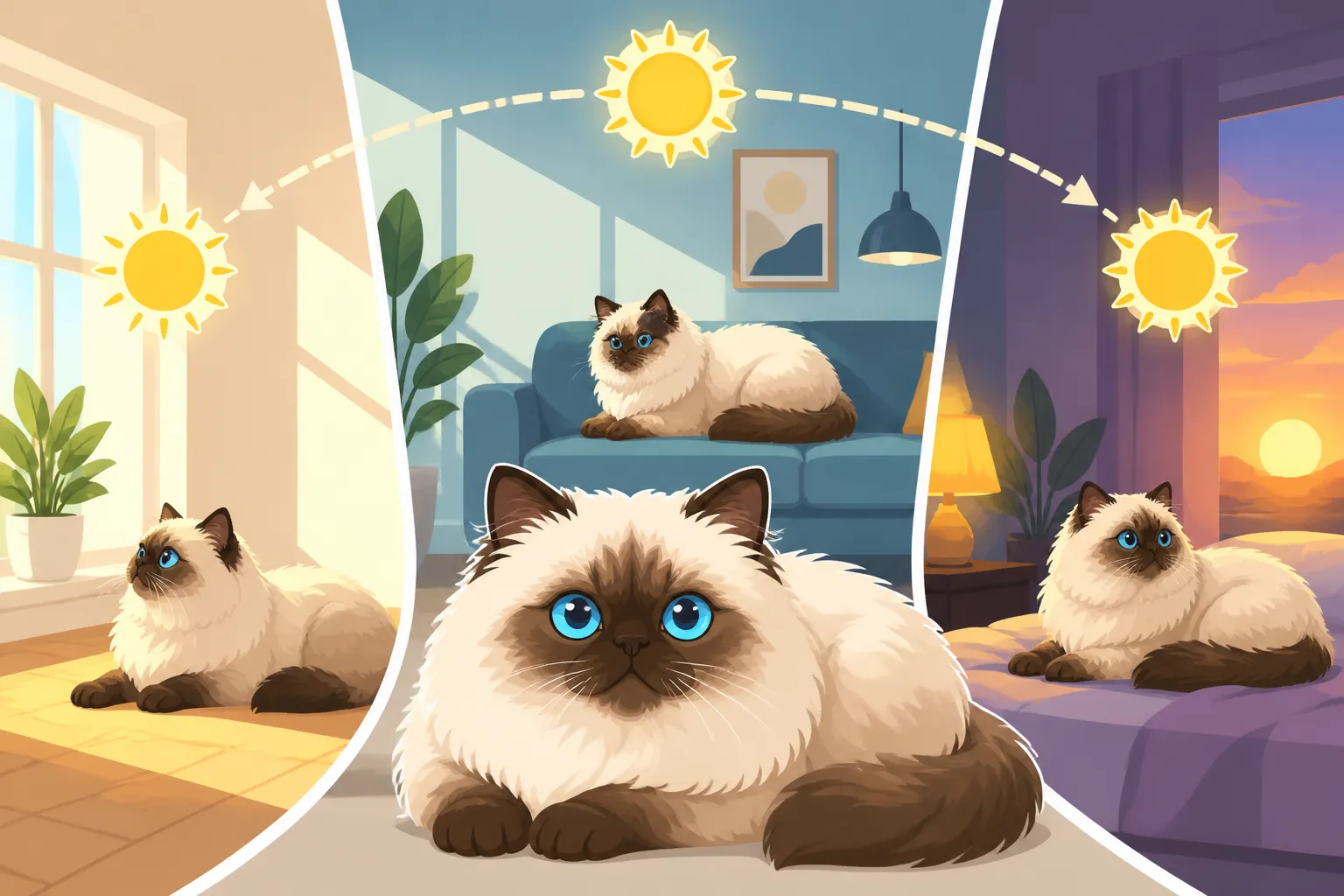
Why a Himalayan Moves Rooms as the Sun Does
Anyone who shares their home with a gorgeous Himalayan cat knows they’re creatures of habit, often found in their favorite chair, but you might also notice a peculiar daily migration. It’s not just a fancy for different views; your Himalayan’s constant shifting from sunbeam to shadow, moving from room to room with the sun’s path, is a direct response to their unique physiology and an instinctual quest for perfect comfort. This guide will delve into the fascinating reasons behind this behavior and give you practical tips to ensure your beloved companion always feels just right.
The Himalayan's Unique Sensitivity to Temperature
It might seem contradictory, but a cat that loves a sunbath can also be incredibly sensitive to heat. Your Himalayan is a beautiful blend of the sturdy, long-coated Persian and the sleek, active Siamese, and both sides of their heritage contribute to their particular temperature needs. This blend results in a cat that seeks warmth, but also one that can quickly become uncomfortably hot, prompting that constant search for the 'just right' spot in your home.
The Impact of That Luxurious Coat
Let's be honest, one of the main reasons we fall head over heels for Himalayans is that magnificent, flowing coat. It's truly a sight to behold, a dense, double layer of fur inherited directly from their Persian ancestors. This coat is designed for insulation, a cozy blanket meant to keep them warm in cooler climates. And it does a fantastic job of it! The problem arises when the indoor temperature climbs, or a sunbeam becomes too intense. That insulating coat, which is so wonderful in winter, quickly turns into a heavy, heat-trapping blanket.
Unlike some other breeds with lighter coats, a Himalayan struggles to dissipate excess warmth through their fur alone. The dense undercoat acts like a thermal barrier, holding body heat close. You might notice your Himalayan seeking out cooler spots on the tile floor, or stretching out in an elongated position to expose more of their body to the air, desperately trying to cool down. This is why you'll often see them gravitate towards a cool patch of linoleum in the bathroom or sprawl out on a marble hearth. It’s a silent, constant battle against their own beautiful, but sometimes overwhelming, fur.
Breathing Challenges and Heat Regulation
Beyond that glorious coat, the Himalayan’s distinctive facial structure, often described as a "flat face" or "peke face," plays a significant role in their temperature regulation. This brachycephalic (short-nosed) conformation, inherited from the Persian side of their family tree, means they have shorter nasal passages and often narrower nostrils. While incredibly endearing, it unfortunately makes efficient panting—a cat's primary way of cooling down—much more difficult.
Think about it: a cat needs to move a lot of air across moist membranes to evaporate water and shed heat. With a restricted airway, your Himalayan has to work harder to breathe, which in itself generates more body heat. It’s a frustrating cycle. This anatomical reality means they cannot cool themselves as effectively as a cat with a longer muzzle. They are, quite simply, more susceptible to overheating. This is why you might hear them Why a Himalayan Snores Louder Than Its Siamese Ancestors even when they are not exerting themselves. When the mercury rises, or they've been playing with their favorite wand toy for a little too long, this breathing limitation becomes even more pronounced. This is also why you'll see them avoiding direct, prolonged exposure to intense heat, instinctively moving out of that strong afternoon sunbeam before it becomes dangerous. They know, better than we do sometimes, their own limits.
The Daily Quest for Comfort: Following the Sun's Path
The sun is a powerful draw for cats, and Himalayans are no exception. There's something inherently comforting about a warm sunbeam. However, for a Himalayan, this isn't just about soaking up rays; it's a careful, almost ritualistic, dance of finding the perfect thermal balance throughout the day. They aren't just looking for warmth, but just the right amount of warmth.
From Sunbeam to Shade: A Constant Dance
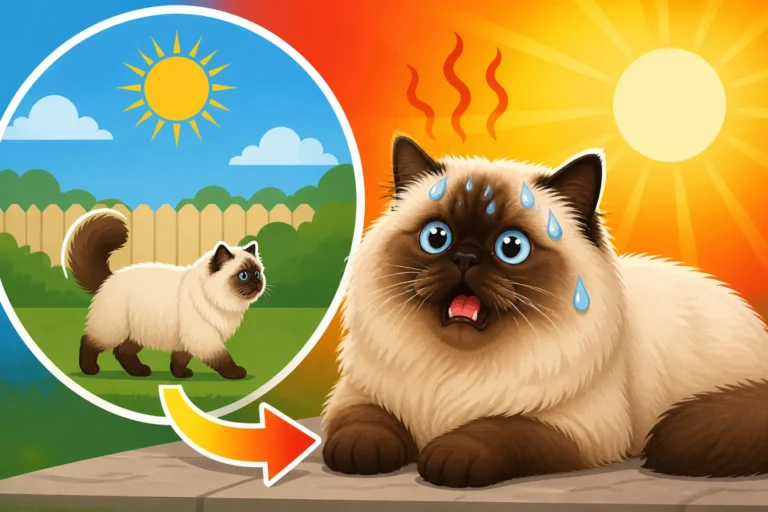
Picture this: the morning sun streams into your living room, creating a warm rectangle on the carpet. Your Himalayan is likely already there, soaking it all in. This gentle warmth is often exactly what they crave. It's cozy, relaxing, and probably reminds them of a secure, warm spot. However, as the sun climbs higher and that patch of light becomes more intense, you'll see a shift. That once-perfect sunbeam can quickly become too hot for a cat with such a dense coat and inefficient cooling system.
This is when the migration begins. Your Himalayan, ever the connoisseur of comfort, will smoothly transition from the now-too-hot sunbeam to a cooler, shaded spot nearby. Perhaps it’s under a coffee table, behind a curtain, or even just a few inches away from the direct light. They might even move to an entirely different room where the sun hasn't yet reached, or where it has already passed. It's a continuous, dynamic process throughout the day, a testament to their dedication to staying comfortable. They might bask for an hour, then disappear for two, only to reappear in another sun-drenched spot later in the afternoon. This constant movement is their way of managing their internal thermostat.
How Temperature Affects Their Signature Points
Beyond just feeling comfortable, there's another fascinating reason connected to their unique genetics that drives their temperature-seeking behavior: their point coloration. Himalayans are known for their striking "points"—the darker coloration on their ears, face, paws, and tail—which contrast beautifully with their paler body coat. This coloration isn't just random; it's temperature-dependent! It's governed by a specific gene that only produces pigment in cooler parts of the body.
This means the warmer parts of their body, like their torso, tend to remain a lighter cream or white, while the extremities, which are naturally cooler, develop that deep, rich point color. Think of it like a natural thermometer built into their fur. If a Himalayan is consistently kept in a very warm environment, their points might not develop as darkly, and their body coat might have more shading. Conversely, a Himalayan living in a cooler home will often develop richer, darker points and a clearer body coat. This even applies to injury or shaving; a shaved patch can Why a Shaved Patch Grows Back Dark on a Himalayan because the skin is exposed to cooler air. While they aren't consciously thinking, "I must find the perfect temperature to keep my points pristine!", this genetic predisposition subtly influences their preference for ambient temperatures that allow their unique coat pattern to flourish and their body to remain cool enough. They are, in a way, living works of art whose canvas is constantly being influenced by their environment.
Creating an Optimized Environment for Your Himalayan
Understanding why your Himalayan moves with the sun is the first step; the next is creating a home environment where they can always find their ideal temperature. It’s about more than just setting the thermostat; it's about thoughtful arrangement and proactive care to ensure their comfort throughout the day and year.
Strategic Placement of Beds and Water
Given their constant quest for optimal temperature, thinking about where you place their favorite resting spots is crucial. You want to provide options for both warmth and coolness, allowing them to choose what suits them best at any given moment. Consider placing a soft, plush bed in a spot that receives morning sun but is shaded by the afternoon. Conversely, have another cozy spot in a consistently cool part of the house, perhaps near a floor vent or in a quiet, north-facing room.
Don't forget about hydration, especially because their short muzzles make them more prone to overheating. Always ensure fresh, cool water is readily available in multiple locations. A wide, shallow ceramic bowl is often preferred by flat-faced cats over deeper bowls that can bend their whiskers uncomfortably or make drinking difficult. Some Himalayans even enjoy cat fountains, but make sure the water flow isn't too vigorous for their flat faces. For those warmer days, a cooling mat can be a lifesaver. You can find excellent options on Amazon that don't require refrigeration but stay cool to the touch, offering immediate relief when they lie down. Placing these strategically near their usual sunning spots can give them a cool alternative without having to move far.
| Time of Day | Himalayan Comfort Needs | Ideal Spot Characteristics |
|---|---|---|
| Morning | Gentle warmth, light exposure | East-facing window, area with soft sunlight |
| Mid-day | Avoidance of intense heat, stable temperature | Shaded corner, quiet room away from direct sun, tile floor |
| Afternoon | Moderate warmth, seeking cooler areas as sun shifts | West-facing window (until it gets too strong), cool, shaded bed |
| Evening/Night | Consistent, comfortable ambient temperature | Favorite soft bed, quiet spot, away from drafts |
Active Management of Indoor Climate
While their instinct guides them, we can definitely lend a helping hand in managing their indoor climate. During hotter months, keeping your home comfortably cool is paramount for a Himalayan. Air conditioning is ideal, but if that’s not an option, strategic use of fans can help create airflow. Ensure fans are placed safely and are not blowing directly onto your cat, but rather circulating air throughout the room. Drawing curtains or blinds on sun-facing windows during the hottest part of the day can dramatically reduce heat gain inside. For more ideas, check out How to Cool a Long Coated Himalayan in Summer.
In cooler seasons, while they might enjoy a sunbeam, avoid overly warm areas or direct heat from radiators that could lead to overheating. Their dense coat means they often feel warmer than you do, so a temperature that feels perfect to you might be a little too toasty for them. Remember, they are Why a Himalayan Overheats Twice as Fast as a Siamese. A common mistake is to assume a cat with a long coat always wants to be warm; it's about regulation, not constant heat. Be mindful of their behavior; if they're panting How Soon a Himalayan Starts Panting During Play or constantly moving away from a heat source, it's a clear signal they're uncomfortable.
Recognizing Signs of Overheating or Chilling
Being observant is key to your Himalayan's well-being. Their quiet nature often means they don't complain loudly when they're uncomfortable, but they do show subtle signs. If your Himalayan is panting heavily, appears restless, has bright red gums, or seems disoriented, they might be overheating. This is a serious situation, especially for brachycephalic breeds, and requires immediate action to cool them down gently and, if severe, a call to your vet. You might also notice them stretching out their neck, Why a Himalayan Sleeps With Its Neck Stretched Out, which can be an attempt to open their airway for easier breathing.
Conversely, while less common for Himalayans indoors, signs of being too cold might include shivering, hunching up, or seeking out enclosed, very warm spaces excessively. Knowing your individual cat's habits and preferences is crucial. If you see a sudden change in their usual movement patterns or a new reluctance to settle in their usual spots, it could be a subtle indicator that their internal thermostat is off, or that they’re generally unwell. Always trust your gut when it comes to your pet's comfort and health.
Disclaimer
This article is for general informational purposes only and does not constitute professional advice. Laws, prices and regulations vary by location and change over time. Consult a qualified professional for guidance on your specific situation.