Why a Himalayan Is Quieter Than Its Siamese Ancestors
Many Himalayan cat owners bring home their beautiful, long-haired companions expecting the infamous, often loud, vocalizations of their Siamese ancestors. It's a common misconception, leading to a pleasant surprise for many, but also a bit of confusion when their furry friend is more purr than chatter. This guide will explore the fascinating genetic blend that results in the Himalayan's generally quieter nature compared to its Siamese heritage, helping you understand the unique voice (or lack thereof) of your beloved feline.
The Legacy of the Siamese Voice in Himalayans
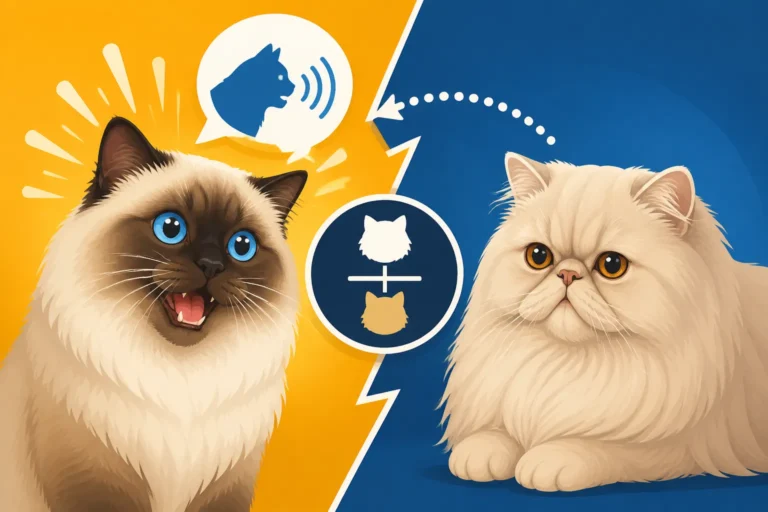
When we talk about the Himalayan cat, we're really talking about a carefully crafted blend of two very distinct feline personalities: the boisterous Siamese and the serene Persian. The Siamese, well, they're known for making their presence known! Their vocal cords are practically opera-trained, capable of a wide range of sounds, from a soft conversational chirp to a full-blown, demanding yowl that can echo through the house. It’s part of their charm for many, but certainly not for everyone.
The Siamese Ancestry's Strong Vocalization
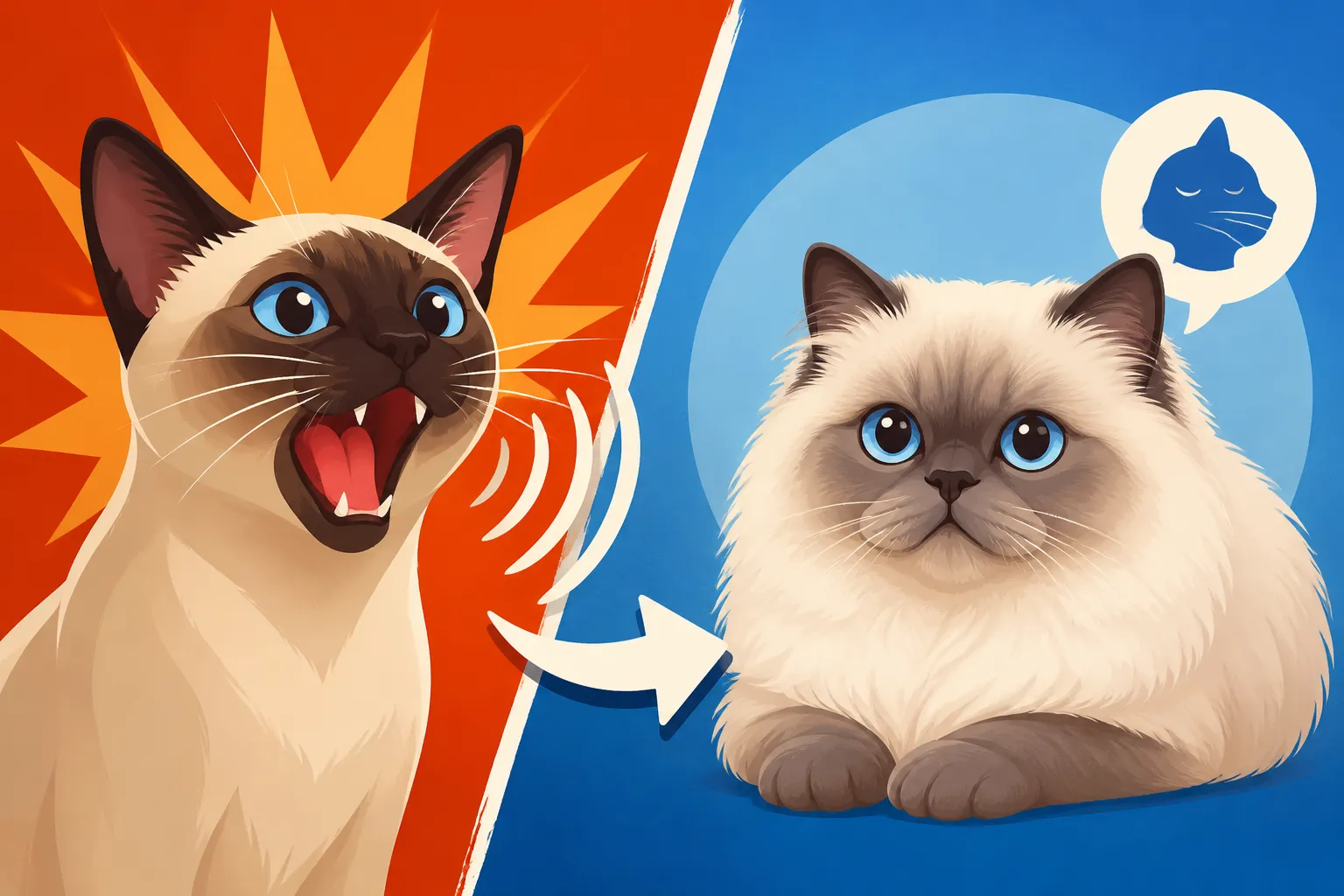
The Siamese cat, originating from Thailand (formerly Siam), developed a reputation for being one of the most vocal cat breeds in the world. They aren't just loud; they're communicative. They use their voices to tell you exactly what they want, when they want it, and often how impatient they are about it. This isn't just a learned behavior; it's deeply ingrained in their genetics and their very being. If you've ever lived with a Siamese, you know that silence is a rare commodity. They'll tell you about their day, demand attention, complain about an empty food bowl, or simply hold a lengthy conversation with themselves or the furniture. This constant chatter is a defining trait, and it was certainly a strong genetic predisposition carried by the Siamese cats used in the original Himalayan breeding programs. They wanted to inject the striking point coloration, but that strong voice came along for the ride, too.
How Genes Moderate Voice Volume
However, the Himalayan isn't just a Siamese. It's a Persian with Siamese points, and that Persian influence is a huge game-changer when it comes to vocalization. Think of it like a volume knob that got turned down quite a bit. While the genes responsible for the Siamese's vocal tendencies are present, they are significantly modulated by the Persian's more laid-back and quiet disposition. It’s a classic case of genetic compromise, where the traits of two very different parents merge to create something new. The loud, insistent "meow" becomes a softer, more infrequent murmur. The demanding yowl often translates into a gentle "mew" or a quiet chirp. It's truly remarkable how much of the Siamese intensity was toned down in the resulting hybrid. Where the Himalayan's Voice Came From offers more insight into this fascinating origin story.
The Persian Influence on Himalayan Temperament and Sound
The Persian cat, the other half of the Himalayan's genetic makeup, brings a completely different set of traits to the table. While the Siamese is an extrovert, the Persian is very much an introvert. They are known for their calm, placid, and often majestic demeanor, and this extends to their vocal habits as well.
The Quiet Demeanor of the Persian Breed
Persian cats are renowned for their sweet, gentle, and quiet nature. They are not prone to excessive vocalization, preferring to communicate through soft purrs, gentle head-butts, or simply by looking at you with their expressive eyes. If a Persian wants something, they are far more likely to sit patiently and gaze at you, perhaps letting out a soft, almost imperceptible "mew" as a subtle hint. This calm temperament is a dominant trait that profoundly influenced the Himalayan. It essentially muted the vibrant vocal heritage of the Siamese, shifting the Himalayan's overall sound profile to be much more subdued. Instead of being a cat that tells you everything, the Himalayan becomes one that shows you, often with quiet dignity. How Much More a Himalayan Talks Than a Persian further details this difference.
Physical Adaptations Affecting Vocal Projection
Beyond temperament, the Persian side also gifted the Himalayan with a distinctive physical structure, particularly its brachycephalic, or "flat," face. This facial structure isn't just about looks; it has a direct impact on how a Himalayan produces sound. The shortened muzzle and often more compact airway can naturally limit the volume and resonance of their vocalizations.
Imagine trying to project your voice with a slightly congested nose or a throat that feels a little tight; it's harder to get the same booming sound. For Himalayans, their unique facial structure means that the physical mechanics of producing a loud, sustained Siamese-like yowl simply aren't as efficient or comfortable. While they can make noise, the effort involved often means they default to quieter chirps or softer meows. This physical characteristic, coupled with the Persian's quiet disposition, creates a cat that is genetically predisposed to being a more understated conversationalist. It’s not just a choice; it’s partly a physical limitation that results in a naturally quieter presence in the home.
When Your Himalayan Does Use Its Voice
Even with their generally quiet nature, Himalayans aren't mute! They definitely have things to say, though their communication style is often far more subtle than their Siamese cousins. It’s about learning their language, which isn't always spoken aloud.
Common Reasons for Vocalization
When a Himalayan does decide to speak, it's usually for a very specific reason. Unlike a Siamese who might just be narrating its day, a Himalayan's vocalizations are typically purposeful. You might hear a soft "mew" when they are hungry and see you approaching their food bowl. A gentle trill might accompany them rubbing against your legs, asking for pets. Sometimes, a series of low chirps can be heard during playtime, especially if they are particularly engaged with a favorite Which Wand Toys a Himalayan Can Actually Follow from a brand like Amazon.
They might also vocalize if they are startled or genuinely upset, though even then, it's often a milder sound than what you'd expect from a Siamese. A sudden, unfamiliar noise might elicit a quick, sharp meow of surprise, rather than a sustained yowl of alarm. It's important to differentiate these purposeful sounds from the constant chatter of other breeds. They're telling you something important, so pay attention! What a Himalayan Is Saying When It Chirps can help you interpret these specific sounds.
Understanding Your Himalayan's Subtle Cues
Because Himalayans are not often loud, you'll become attuned to their many other forms of communication. Their body language, eye contact, and even subtle shifts in their position speak volumes. A slow blink, for example, is their way of showing trust and affection, often accompanied by a soft purr rather than a meow. If they want attention, they might sit near you, gently tap your leg with a paw, or simply stare intently until you notice them.
When they want to be let into a room, they often just sit patiently by the door, waiting for you to open it, perhaps with a soft, hopeful gaze. Rarely will you hear a persistent demand. How a Himalayan Asks Without Raising Its Voice delves into these non-vocal forms of communication. They truly embody the phrase "actions speak louder than words." Understanding these quiet cues is crucial for building a strong bond with your Himalayan, as it shows you're listening to their unique way of expressing themselves. They're not being aloof; they're just not yelling.
Encouraging Communication and Enrichment
Even though your Himalayan might be quieter than a Siamese, that doesn't mean they don't want to communicate or interact. It simply means you might need to adjust your expectations and learn to recognize their unique way of engaging with the world.
Creating a Responsive Environment
To encourage your Himalayan to communicate, whether vocally or through body language, it's essential to create an environment where they feel safe, loved, and understood. This means being observant and responsive to their subtle cues. If your cat gently nudges your hand, respond with a stroke. If they make eye contact and then slowly blink, blink back. These small interactions reinforce their attempts to connect.
Provide comfortable, quiet spaces where they can retreat, such as a cozy cat bed or a soft blanket on a preferred chair. Himalayans appreciate routine, so consistent feeding times and regular grooming sessions can become important points of interaction. During these moments, you'll often find they are most likely to offer a quiet purr or a soft "mew" of contentment. Consider a low-sided feeding bowl from Amazon that accommodates their flat face comfortably, which can make mealtime a more pleasant, and thus quieter, experience.
Recognizing and Responding to Non-Vocal Signals
Learning to read your Himalayan's non-vocal signals is paramount. A swishing tail might indicate annoyance, while a slowly waving tail could mean they are relaxed and content. Pay attention to their ear position – forward and alert, or flattened in displeasure. Their eyes, those beautiful blue depths, can tell you so much; wide and unblinking can signal interest or even a challenge, while a soft, half-closed gaze is pure bliss.
When your Himalayan curls up against you on the sofa, purring deeply, that's a profound communication of affection and trust, far more impactful than any loud meow. If they move to a different room as you enter, they might be indicating a desire for quiet time. By respecting these signals and responding appropriately, you build a relationship based on mutual understanding. This deep connection, built on quiet observation rather than loud demands, is one of the most rewarding aspects of living with a Himalayan cat. You'll soon find that their subtle expressions are just as clear, if not clearer, than the loudest yowls of their more talkative ancestors. How a Himalayan Shows Displeasure Without Moving explores some of these subtle cues.
| Vocal Trait | Siamese (Ancestors) | Persian (Ancestors) | Himalayan (Blend) |
|---|---|---|---|
| Volume | High, often loud | Low, almost silent | Moderate to Low, soft |
| Frequency | Very frequent | Infrequent | Infrequent to moderate |
| Purpose | Expressive, demanding | Subtle hints, contentment | Purposeful, gentle requests |
| Common Sounds | Yowls, meows, chirps, trills | Soft mews, purrs | Soft mews, chirps, purrs, trills |
| Communication Style | Auditory, highly vocal | Visual, tactile, quiet | Visual, tactile, subtle vocal |
Disclaimer
This article is for general informational purposes only and does not constitute professional advice. Laws, prices and regulations vary by location and change over time. Consult a qualified professional for guidance on your specific situation.