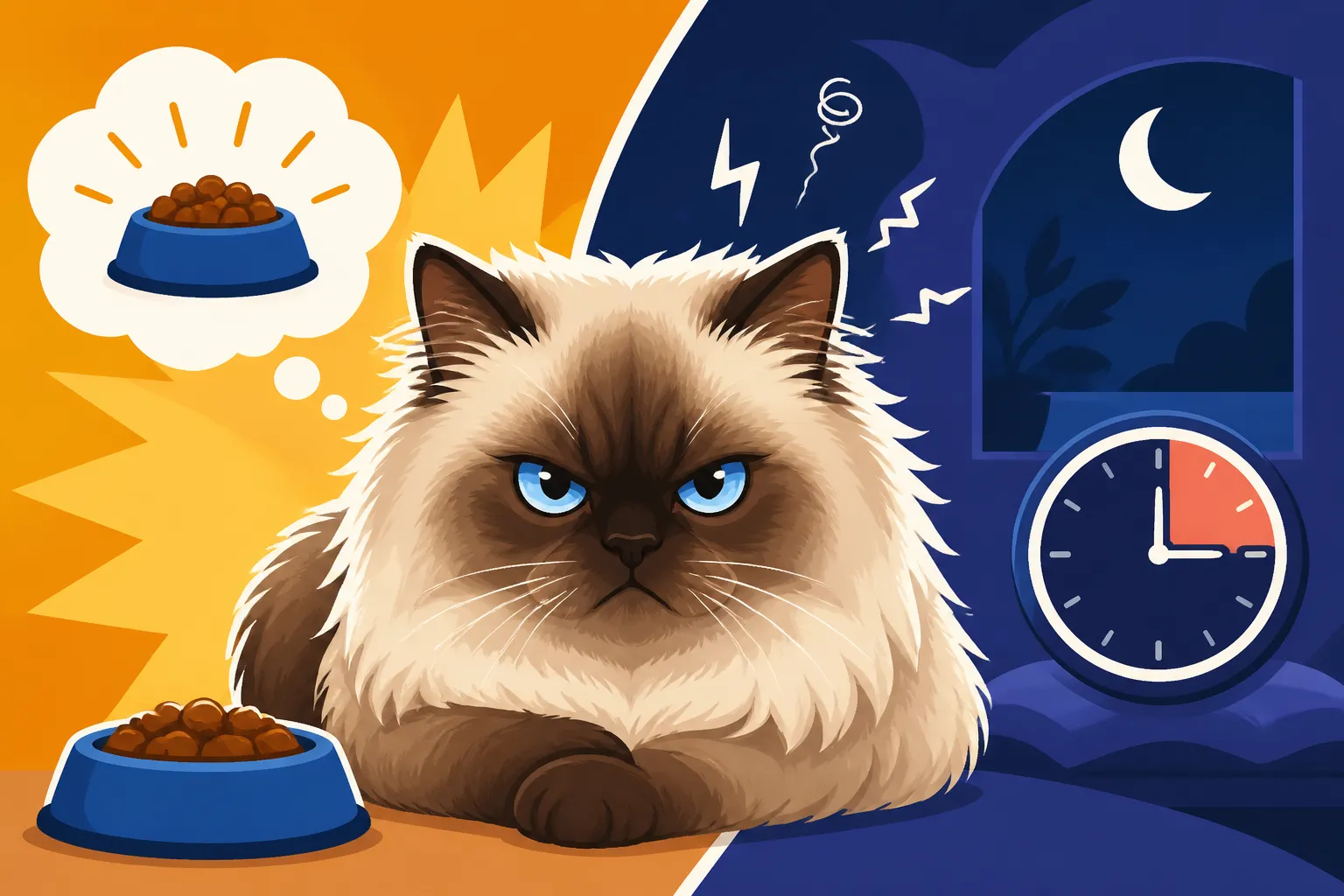
Why a Late Meal Unsettles a Himalayan for Hours
Oh, the drama! If you've ever had a Himalayan cat, you know the exquisite agony of being five minutes late with their dinner. It's not just a polite reminder they're hungry; it often feels like a full-blown existential crisis for them, leading to hours of vocal protests, pacing, and what can only be described as passive-aggressive glares. This guide is all about understanding why your beloved, fluffy companion gets so deeply unsettled by a late meal and, more importantly, how you can navigate their rigid internal clocks to keep the peace and those precious purrs flowing.
The Himalayan's Innate Need for Routine
It’s easy to dismiss a cat’s insistence on a schedule as mere fussiness, but for a Himalayan, it runs far deeper than that. Their genetic makeup, a wonderful blend of the dignified Persian and the vocal Siamese, imbues them with a profound appreciation – and expectation – of predictability in their daily lives. Think of it less as a preference and more as a fundamental pillar of their emotional well-being.
A Legacy of Predictability: How the Persian Influence Shapes Their Day
Our sweet Himalayans inherited so much from their Persian ancestors: that stunning long coat, those distinctive flattened faces (whether doll-face or peke-face), and undeniably, their generally calm and composed demeanor. Persians, by nature, are creatures of habit. They thrive in environments where their days unfold with a reassuring rhythm. They appreciate their favored sleeping spots, their designated grooming times, and yes, their meals arriving with almost military precision.
This Persian influence means that a Himalayan often constructs its entire day around a mental timetable. Waking up, sunbeam naps, play sessions, and particularly, meal times, are all slotted into this internal schedule. When you adhere to it, you foster a sense of security and trust. Their world feels stable and safe. When that schedule is disrupted, even slightly, it's not just their stomach growling; it's a fundamental unsettling of their entire perceived order. They might not jump off the furniture and start chasing dust bunnies in a frenzy, but internally, they're definitely feeling the shift. It's a quiet distress, perhaps, but potent nonetheless. This inherent need for order contributes significantly to Why a Himalayan Expects to Be Fed at the Same Hour.
The Siamese Spark: A Touch of Anxiety in Their Predictable World
Now, while the Persian side brings the calm love of routine, the Siamese side injects a fascinating twist. Siamese cats are known for their intelligence, their high energy, and their incredibly vocal nature. While Himalayans are generally quieter than their Siamese forebears, they certainly retained some of that communicative spark and, importantly, a degree of the Siamese sensitivity to change.
When a Himalayan's carefully constructed routine is broken, particularly around something as crucial as food, that Siamese genetic thread can manifest as heightened anxiety and, often, increased vocalization. They might not yowl like a purebred Siamese desperately seeking attention, but they will certainly let you know their displeasure. Expect insistent chirps, pointed meows that escalate in volume or frequency, and perhaps even a grumpy grumble or two. It's their way of asking, pleading, and sometimes demanding, "Where is my dinner?! You are late!" This blend of Persian routine-loving and Siamese expressiveness is why you might find your typically placid cat suddenly pacing the kitchen or sitting directly in front of their empty bowl, staring meaningfully at you. They're not just hungry; they're genuinely confused and a little stressed that their world isn't behaving as it should. It's a fascinating peek into What the Siamese Side Gave a Himalayan Besides Points.
How a Late Meal Disrupts More Than Just Hunger
It's tempting to think that a cat just gets a bit hungry when dinner is delayed. But for a Himalayan, whose entire physical and mental state is often finely tuned to routine, a late meal is a far more profound disruption. It's a cascade of effects, from their digestive system anticipating food to their emotional state spiraling into mild distress.
The Biological Clock and Digestive Expectations
Just like humans, cats have an internal biological clock, or circadian rhythm, that dictates many physiological processes. This includes their digestive system. When your Himalayan is accustomed to eating at, say, 6 PM every evening, their body begins to prepare for that meal well in advance. Digestive enzymes start to kick in, stomach acids begin to increase, and their metabolism shifts gears, ready to process the incoming nutrition.
When food doesn't arrive as expected, this finely tuned system gets thrown off. The enzymes and acids are there, but the food isn't. This can lead to feelings of nausea, heartburn, or general digestive discomfort. Imagine yourself getting ready for a meal – your mouth might water, your stomach might rumble – and then suddenly, the meal is indefinitely delayed. You don't just feel hungry; you feel a distinct physical unease. Your Himalayan experiences something similar, only perhaps with a deeper sense of confusion because they don't understand why the delay is happening. This isn't just about missing a meal; it's about their body actively anticipating and then being left hanging. This is a key reason Why a Himalayan Minds Its Routine More Than Its Address.
Behavioral Manifestations of Discontent
The physical discomfort, combined with that inherent need for routine, quickly translates into a range of behavioral signals. And let's be honest, they can be quite frustrating for us owners!
One of the most common manifestations is vocalization. Your Himalayan, who might typically be quite demure, suddenly finds their voice. You might hear repeated, insistent meows that increase in volume or urgency. They might trot after you, chirping or trilling, trying to lead you towards the kitchen. This isn't just a gentle nudge; it's an undeniable declaration of their discontent. Some Himalayans might even develop a deeper, more guttural grumble if truly aggrieved. You'll definitely notice if How Much More a Himalayan Talks Than a Persian.
Beyond sound, you'll see a shift in their actions. Pacing is common – back and forth, from their favored lounging spot to the kitchen, then perhaps to where you are. They might weave around your legs, almost tripping you, or sit pointedly by their bowl, staring intently, then at you, then back at the bowl, as if willing the food into existence through sheer mental force. I've even seen Himalayans resort to knocking small, non-essential items off shelves or tables – not aggressively, but with a deliberate thump that says, "Hey! Are you paying attention yet?" It’s a very particular kind of passive-aggressive attention-seeking that only a highly intelligent, routine-loving cat can perfect. It’s certainly a clear example of How a Himalayan Reacts When Its Routine Breaks. For those moments when you know you'll be late, having an automatic feeder can be a lifesaver. You can find many reliable options on Amazon that dispense meals at set times, even when you're not home.
Strategies to Maintain Your Himalayan's Mealtime Zen
Given how deeply a late meal can unsettle a Himalayan, it becomes clear that consistency isn't just helpful – it's crucial for their overall happiness and well-being. Thankfully, there are many practical strategies you can employ to keep their world predictably delicious.
Establishing a Rock-Solid Feeding Schedule
The cornerstone of a happy Himalayan is a consistent feeding schedule. This means choosing specific times for meals and sticking to them as closely as possible, every single day, including weekends and holidays.
- Fixed Times, Not Flexible Windows: Instead of aiming for "around 6 PM," commit to 6:00 PM. Cats are incredibly precise in their internal clocks. If you're feeding twice a day, perhaps 8:00 AM and 6:00 PM works best for your schedule.
- Set an Alarm: Seriously, treat it like an important appointment. A gentle reminder on your phone can be invaluable, especially during busy workdays or on weekends when your own routine might flex. This helps reinforce the habit for you as much as it does for your cat.
- Portion Control is Key: Free-feeding can lead to overeating, especially since How Few Calories a Himalayan Burns Sitting in One Chair. Measured meals at set times help regulate their digestion and manage their weight, which is vital for a cobby breed like the Himalayan. Use a kitchen scale to ensure accuracy if your cat is on a strict diet.
- The Power of Predictability: Beyond the food itself, try to make the ritual of feeding predictable. Maybe it's turning on a specific light, calling their name in a certain way, or always using the same scoop. These cues signal to your Himalayan that their cherished mealtime is approaching, building anticipation without anxiety.
Tools and Tricks for Busy Owners
Life happens, and sometimes, despite our best intentions, we're simply not able to be home at the exact moment dinner is due. This is where modern solutions truly shine.
- Automatic Feeders are Your Best Friend: For anyone with a Himalayan, an automatic feeder isn't a luxury; it's practically a necessity. These devices allow you to pre-program meal times and portion sizes, ensuring your cat gets fed precisely on schedule, even if you're stuck in traffic, working late, or enjoying a rare weekend lie-in. Many excellent models can be found on Amazon, some even offering smart features that connect to your phone. Look for feeders that can dispense wet food if that's part of your cat's diet, as well as dry kibble.
- Pre-Portioned Meals: If you feed wet food, consider portioning out meals in advance. Small, lidded containers can be prepped in the morning or the night before, making the actual feeding process quick and effortless. This also helps you maintain consistency in portion sizes.
- The Gradual Shift: If you foresee a permanent change in your schedule (e.g., a new job with different hours), don't just yank the rug out from under your Himalayan's paws. Gradually shift their feeding times by 10-15 minutes each day over a week or more. This gentle adjustment is much less unsettling for their sensitive systems.
- Enlist Help: If you're going away, ensure your cat sitter fully understands and commits to the feeding schedule. Provide clear written instructions and even demonstrate the routine. A pet sitter who respects their schedule will keep your Himalayan much happier.
Consider the layout of your feeding area too. Because of their flattened faces, Himalayans often struggle with deep or narrow bowls. A wide, shallow bowl, or even a raised dish, can make eating much more comfortable for them. You can find a great selection of these specialized bowls designed for brachycephalic breeds on Amazon.
The Art of a Graceful Schedule Adjustment (When Necessary)
Sometimes, changes are unavoidable. A vet appointment might mean fasting, or your own work schedule might genuinely shift. The trick is to manage these changes with as much grace and foresight as possible to minimize your Himalayan's distress.
- Incremental Changes are Key: As mentioned, if you need to permanently shift a mealtime, do it slowly. Move the time by no more than 10-15 minutes per day. For example, if you need to feed an hour earlier, move it by 15 minutes each day for four days. This allows their biological clock and digestive system to adjust without sudden shock.
- Compensate When Possible: If a meal must be missed or significantly delayed due to an unforeseen circumstance (like an emergency vet visit), try to offer a small, easily digestible treat or a little extra love and attention when you can feed them. This isn't a replacement for the meal, but it can help soothe their anxiety.
- Prepare for Travel: If you're going away and your cat will be staying with a sitter or at a boarding facility, ensure they understand your Himalayan's precise feeding schedule. Provide pre-measured portions if possible, and include a copy of the schedule. If your cat tolerates it, setting up an automatic feeder at the sitter's house can also help maintain familiarity. It's often easier for a Himalayan to cope if their routine is maintained, even if their surroundings are different. How to Put a Himalayan's Routine Back Together after any disruption is a slow but worthwhile process.
Observing and Responding to Your Himalayan's Cues
Learning to "speak cat" is an essential part of being a good Himalayan owner. Their communication might be subtle at times, but their body language and vocalizations offer a wealth of information about their emotional state, especially when their meal schedule is in question.
Decoding Their "Hangry" Signals
Cats, including Himalayans, have a unique way of expressing displeasure, especially when they're feeling "hangry" – that potent mix of hunger and anger. It's not always a dramatic display, but rather a series of escalating signals.
- Vocalizations: This is often the first and most obvious sign. Initially, it might be soft, questioning chirps or trills, like What a Himalayan Is Saying When It Chirps. If ignored, these can escalate to more insistent, drawn-out meows. A truly vexed Himalayan might adopt a lower-pitched, rumbling meow, or even a series of rapid, short meows, demanding your attention. Pay attention to the tone and frequency; a single, plaintive meow is different from a repetitive, demanding one.
- Body Language: Their body will tell a story too. A tail held low or twitching quickly can indicate irritation. Their ears might be slightly flattened or swiveling back and forth, listening intently for signs of food preparation. A direct, unwavering stare from across the room, followed by an equally pointed stare at their food bowl, is a classic move. Some Himalayans will pace, weave around your legs, or even lightly "tap" your hand with a paw, not with claws, but with a gentle yet firm insistence.
- Exaggerated Displays: You might notice them sitting directly in front of their empty bowl, or even sitting in it, making sure you cannot possibly miss the glaring omission. Some will sit on kitchen counters (if allowed), looking expectantly at the food storage area. It's all about making their hunger impossible to ignore, sometimes with a touch of theatrical flair.
Distinguishing between a gentle "I'm hungry, human" and genuine distress is key. If your Himalayan is pacing, vocalizing intensely, or showing signs of agitation (e.g., hiding, excessive grooming, or unusually destructive behavior), it's a strong indicator that the delay is causing significant stress.
Long-Term Well-being and Mental Health
Maintaining a consistent routine, especially around feeding, isn't just about avoiding an hour of meows; it's fundamental to your Himalayan's overall health and happiness. Their mental state is deeply intertwined with their environment's predictability.
- Stress Reduction: A predictable routine significantly reduces stress in cats. When they know what to expect, they feel safer, more secure, and less anxious. Chronic stress, whether from unpredictable feeding or other environmental changes, can manifest in various ways, from inappropriate urination or defecation to over-grooming, skin issues, or even a weakened immune system.
- Behavioral Stability: Cats that live with consistent routines tend to exhibit more stable and desirable behaviors. They are less likely to act out, become overly demanding, or develop behavioral quirks born from anxiety. A consistent feeding schedule helps maintain a calm and contented demeanor.
- Digestive Health: Regular feeding times help regulate their digestive system, preventing issues that can arise from inconsistent meal schedules, such as upset stomachs, irregular bowel movements, or even contributing to hairballs if stress leads to excessive grooming. For a breed like the Himalayan, prone to certain health considerations, maintaining optimal digestive health is paramount.
- Strengthening Your Bond: When you consistently meet your Himalayan's needs, you build a stronger bond of trust and affection. They learn that you are reliable, that you are their provider, and that their world is safe under your care. This leads to a more relaxed, affectionate, and happy companion. This kind of interaction is why The Himalayan Is a Lap Cat That Answers Back, and they answer back best when they're not preoccupied with hunger.
Ultimately, understanding and respecting your Himalayan's need for routine around meal times is one of the kindest and most impactful things you can do for them. It’s an investment in their long-term health, happiness, and the peaceful cohabitation we all strive for with our beloved pets.
Comparison of Feeding Methods for Routine Stability
To help you choose the best approach for your Himalayan, here's a quick comparison of common feeding methods and how they impact routine stability.
| Feeding Method | Description | Impact on Routine Stability | Pros | Cons |
|---|---|---|---|---|
| Free Feeding | Dry kibble is left out all day for the cat to graze on whenever they wish. | Low | Convenient for owners; cat eats when hungry. | Very poor for routine stability; can lead to overeating and obesity, especially for Himalayans. Makes it hard to monitor food intake or identify appetite changes. |
| Manual Scheduled Meals | Owner provides measured portions of wet or dry food at specific, set times throughout the day. | High | Excellent for routine; helps manage weight; allows owner to monitor appetite closely. | Requires strict adherence from owner; easily disrupted by owner's schedule changes; if late, cat gets very unsettled. |
| Automatic Feeder | Device dispenses pre-programmed, measured portions of dry (and some wet) food at set times. | Very High | Provides consistent schedule even when owner is away; manages weight; reduces owner stress. | Initial cost of feeder; requires owner to fill hopper; some cats may try to 'break into' the feeder; may not be suitable for all types of wet food, particularly if left for too long. Can lead to "Himalayan vs. Feeder" battles if not sturdy. Many options available on Amazon. |
| Puzzle Feeder | Food is hidden in a toy or dispenser, requiring the cat to "work" for their meal. | Medium-High | Stimulates mental activity; slows down eating; can be part of scheduled meals. | Not all Himalayans can easily use puzzle feeders due to their flat faces – Why a Himalayan's Face Rules Out Most Puzzle Feeders. Can be messy; doesn't replace scheduled timing for main meals. |
| Combination | Manual wet food meal at a set time, with dry food available via automatic feeder for other meals. | High | Combines benefits of wet food with convenience of automation; good for maintaining routine. | Requires careful management of portions to prevent overfeeding; still has some manual input. |
This article is for general informational purposes only and does not constitute professional advice. Laws, prices and regulations vary by location and change over time. Consult a qualified professional for guidance on your specific situation.