The Morning Face Routine Every Himalayan Needs
It’s a familiar sight for any Himalayan parent: waking up to those sweet, soulful blue eyes, only to notice the tell-tale streaks beneath them. Those adorable flat faces, while utterly charming, come with their own unique set of challenges, and ignoring them even for a day can lead to discomfort for your beloved feline friend and bigger headaches for you down the line. This guide is dedicated to helping you establish a gentle, effective, and realistic morning face routine that keeps your Himalayan’s delicate features clean, comfortable, and beautiful, preventing common issues before they escalate.
Understanding Why the Himalayan Face Needs Daily Attention
Let's be honest, part of the immense appeal of a Himalayan cat is that distinctive, expressive face. But that very feature, with its flattened nose and often prominent, round eyes, is also what makes daily facial care non-negotiable. It's not just about aesthetics; it’s fundamentally about their comfort and health. Ignoring their face can lead to tear stains that seem to set in permanently, skin irritation, and even infections, creating a cycle of discomfort for your cat and frustration for you.
The Delicate Anatomy of a Himalayan's Face
The unique structure of a Himalayan's face means that their tear ducts don't always drain as efficiently as those of a cat with a longer muzzle. Their large, round eyes are often more exposed, making them prone to environmental irritants. Add to that the prominent nose fold, which can trap moisture and debris, and you have a recipe for potential problems. It’s not a design flaw, simply a characteristic that requires specific care. You might notice that your cat’s eyes often water, and this is completely normal for the breed, but that moisture has to go somewhere, and without intervention, it becomes a breeding ground for yeast and bacteria, leading to discoloration and irritation.
Think about it from your cat's perspective. They can't exactly grab a tissue and wipe their own eyes, can they? Their front paws, while useful for some grooming, aren't designed to meticulously clean around their delicate eyes and nose folds without potentially scratching or irritating themselves. This is where we, as their caregivers, step in. Regular, gentle cleaning becomes a crucial act of love, ensuring they don't develop painful conditions from neglected facial hygiene.
Preventing Tear Stains and Skin Irritation
Those rusty-brown streaks under a Himalayan's eyes are more than just a cosmetic issue. While What Turns a Himalayan's Tear Stains Rust Colored can tell you more about the specific causes, the stains themselves are often a result of porphyrins in their tears, which darken upon exposure to light. However, persistent dampness beneath the eyes and within the nose fold also creates a perfect environment for yeast and bacterial growth. This can lead to a condition called "fold dermatitis," which is intensely itchy and uncomfortable for your cat. Imagine having a persistent rash right on your face – that's what we're trying to prevent for them.
When we talk about preventing these issues, we’re not just talking about cleaning existing stains. We're talking about preventing the conditions that allow them to form and worsen. A daily routine aims to keep the area dry and clean, minimizing the chances of those pesky microbes taking hold. This proactive approach saves your cat from potential pain and saves you from costly vet visits down the road to treat an infection that could have been avoided.
Gathering Your Essential Facial Care Tools
Before you even think about approaching your Himalayan for their morning face routine, it’s vital to have all your supplies laid out and ready. Rushing around to find a cotton ball or a specific wipe mid-session can make your cat anxious and less cooperative. This is a task that benefits immensely from preparation and a calm environment. Having the right tools also makes the job more effective and gentler on your cat’s sensitive skin and eyes.
The Right Wipes and Cotton Products
Forget harsh chemicals or abrasive cloths. When it comes to your Himalayan's delicate face, gentle is the name of the game. You'll want to stock up on soft, lint-free cotton pads or balls, similar to what you might use for your own skincare. These are perfect for applying gentle cleansers or simply warm water.
However, for convenience and often superior efficacy, many owners turn to pre-moistened pet-specific eye wipes. These are usually formulated with gentle, non-irritating ingredients specifically designed for use around a cat's eyes. When looking for these, particularly on platforms like Chewy or Amazon, always check for claims of being fragrance-free and free from harsh chemicals. Some wipes are even infused with natural soothing agents like aloe or witch hazel, which can be beneficial. It's also wise to avoid human baby wipes, as they often contain perfumes or additives that can sting a cat's eyes. Remember, Which Wipes Are Safe Around a Himalayan's Blue Eyes is a great resource if you're unsure about specific products.
Safe Cleansers and Solutions
For daily cleaning, often just plain warm water is sufficient, especially if you're diligent about the routine. However, for more persistent staining or to ensure a thorough clean, you might consider a veterinary-approved eye wash or a mild, diluted saline solution. These are typically available at pet stores or through your vet.
Some owners also use a very dilute solution of boric acid, but it's crucial to use this sparingly and with extreme caution, always consulting your vet first. Never use hydrogen peroxide, rubbing alcohol, or anything that could seriously irritate or damage their eyes. The goal is to clean and soothe, not to sting or inflame. If you're dealing with very dark or stubborn stains, resist the urge to scrub aggressively. Instead, focus on consistent, gentle wiping over time. Sometimes, a combination of a daily wipe and a weekly, more targeted application of a specialized solution can work wonders.
| Tool Category | Specific Item | Best Use | Key Benefit for Himalayans |
|---|---|---|---|
| Wipes | Pet-specific eye wipes | Daily tear stain removal, quick clean-ups | Gentle formulation, pre-moistened convenience |
| Cotton | Cotton balls/pads | Applying water/cleanser, gentle drying | Soft, lint-free, versatile |
| Cleansers | Warm water | General cleaning, rinsing | Non-irritating, always available |
| Veterinary eye wash | Persistent staining, minor irritation | Formulated for ocular safety, soothing | |
| Combs | Fine-toothed flea comb | Removing crusts, checking for debris | Precise, gentle on delicate areas |
| Gloves | Examination gloves (optional) | Hygiene for owner, protection if cat resists | Keeps hands clean, prevents contamination |
Executing the Gentle Morning Face Routine
Now for the main event! Approaching your Himalayan with a calm demeanor and gentle hands is key to making this a positive experience for both of you. Consistency is far more important than intensity, so aim for a few minutes of calm, focused attention each morning rather than a frantic scrub once a week.
Establishing a Calm Environment and Routine
Cats thrive on routine and predictability. Try to pick a consistent time each morning when your Himalayan is relaxed, perhaps after their breakfast or a good stretch, but before they settle down for a serious nap. A quiet corner of the house, away from distractions, is ideal. Talk to them in a soft, reassuring voice throughout the process. Avoid sudden movements or loud noises.
It's helpful to establish a specific spot for this routine – a low table, a lap on the sofa, or even a soft mat on the floor. Consistency in location, time, and your own calm energy helps signal to your cat what’s coming and that it’s nothing to fear. Think of it as a bonding ritual, a quiet moment you share. Over time, many Himalayans will actually come to enjoy or at least tolerate their morning face fuss, especially if it's consistently associated with positive reinforcement like a favorite treat afterward.
Step-by-Step Face Cleaning
Here's a breakdown of the gentle steps to keep those beautiful faces pristine:
- Preparation: Have all your wipes, cotton pads, and cleansers ready. Gently pick up your Himalayan and place them comfortably in your chosen spot. Speak to them softly, petting them to help them relax.
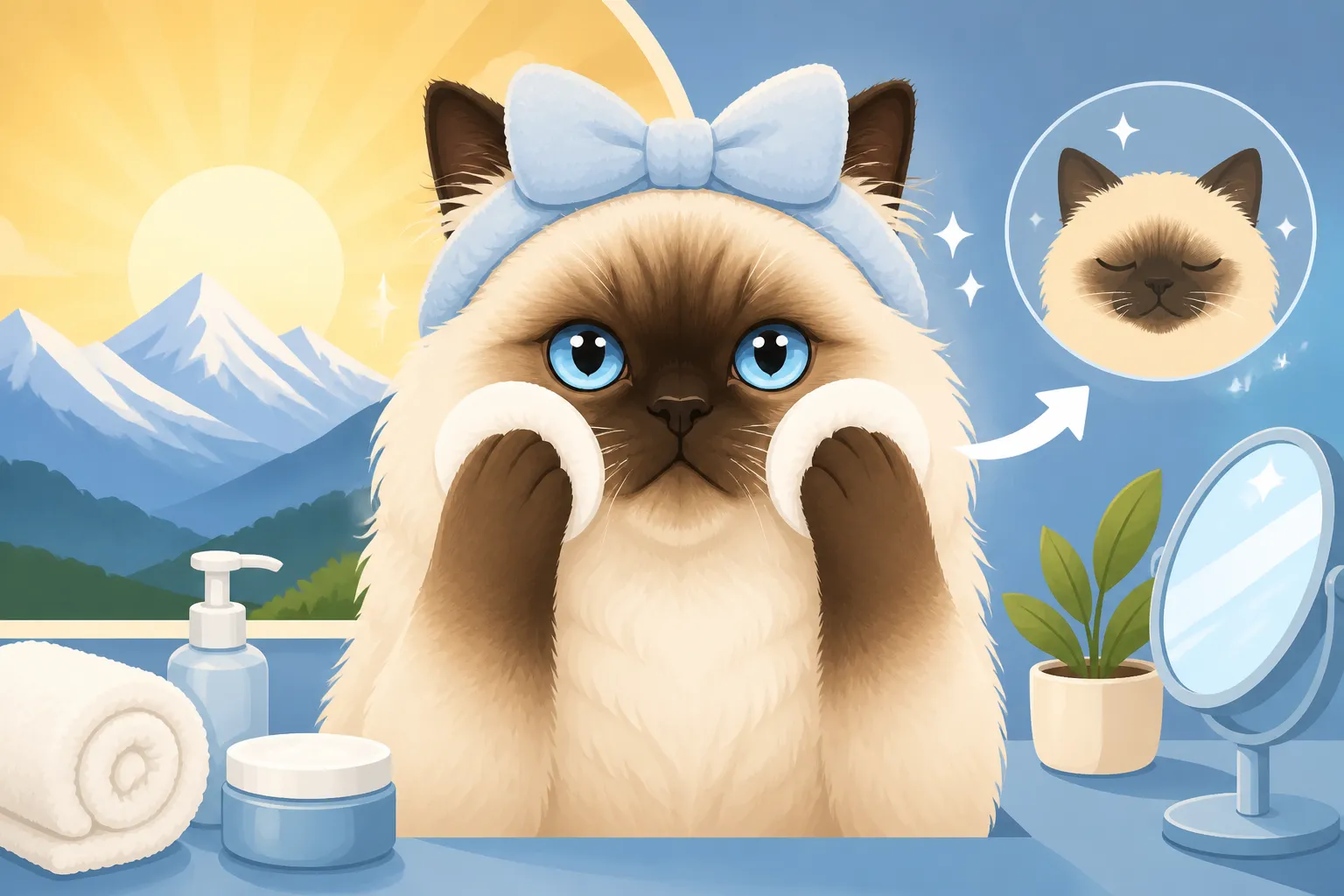
- Eye Area First: Take a fresh, moist cotton pad or a pet-specific eye wipe. Gently wipe from the inside corner of the eye (near the nose) outwards, along the tear track. Use a fresh part of the wipe or a new pad for each eye to prevent spreading any potential bacteria. The goal is to lift away any accumulated crusts, discharge, or reddish-brown tear stains. Don't press too hard; gentle strokes are all that's needed. If there's stubborn crusting, hold the damp pad over the area for a few seconds to soften it before gently wiping. Remember, How Often a Himalayan's Eyes Should Be Examined is important for catching any underlying issues.
- The Nose Fold: This is a critical area often overlooked. Many Himalayans have a pronounced fold of skin above their nose. This area can get damp and collect debris, leading to irritation and odor. With another clean wipe or damp cotton pad, gently lift this fold (if present) and carefully clean inside and around it. Pay special attention to keeping this area as dry as possible, as persistent moisture can quickly lead to infection.
- Drying: After cleaning, use a dry, soft cotton pad or a clean corner of a cloth to gently pat the cleaned areas dry. This is especially important for the nose fold to prevent moisture build-up. Ensuring the area is dry helps prevent bacterial or yeast growth.
- Check for Other Issues: As you're doing this, it’s a great opportunity to give their face a quick once-over. Are their nostrils clear and open? Is there any redness, swelling, or unusual discharge from their eyes or nose? Are their ears clean (though these aren't part of the daily routine, it's a good time for a quick visual check)? This routine allows you to catch minor issues before they become major problems.
- Positive Reinforcement: As soon as you're done, offer a small, irresistible treat or some praise and gentle petting. This creates a positive association with the routine, making future sessions much easier.
Remember that How Long a Himalayan's Face Routine Takes isn't long if you're consistent. A few minutes each morning can make all the difference.
Addressing Common Facial Challenges
Even with a consistent routine, Himalayans can present specific challenges that need a little extra attention. These aren’t failures in your care, but rather common quirks of the breed that require targeted solutions.
Managing Stubborn Tear Stains
Some Himalayans, no matter how diligent you are, seem to develop more pronounced tear stains. If warm water and gentle wipes aren't cutting it, you might need to consider specialized tear stain removers. These often contain mild enzymes or natural ingredients that help break down the porphyrins causing the discoloration. Always choose products specifically formulated for cats and read the instructions carefully. Many of these products require consistent application over several weeks to see significant improvement.
It's also worth considering diet. Sometimes, certain ingredients in food can contribute to staining, though this is less common than genetic predisposition. Ensure your cat is on a high-quality, balanced diet. Also, always provide fresh, filtered water in a shallow, wide bowl (like those you can find on Amazon or Chewy) that doesn't bend their whiskers or require them to deep-dive their face into the water, as some tap water minerals can also exacerbate staining. Why Tear Stains Are Worse on a Cream Bodied Himalayan because the contrast is more obvious, but all Himalayans can get them.
Preventing and Treating Nose Fold Dermatitis
The nose fold is a prime spot for issues, and How Fold Dermatitis Starts Beside a Himalayan's Nose is a condition you definitely want to avoid. If this area is consistently damp, it can become red, inflamed, and even infected with yeast or bacteria, emitting a rather unpleasant odor. Prevention is, as always, key: meticulous cleaning and, crucially, thorough drying. After cleaning, take a dry cotton pad or a soft tissue and gently dab the fold until it's completely dry. You can even apply a tiny pinch of cornstarch (unscented) or a vet-approved anti-fungal powder to help keep the area dry, but always clear this with your veterinarian first, as some powders can be irritating.
If you suspect dermatitis has already set in (redness, itching, odor, sensitivity), a trip to the vet is necessary. They can prescribe medicated wipes or ointments to clear up the infection and alleviate your cat’s discomfort. Don't try to self-diagnose or use human creams, as these can be harmful.
Dealing with Eye Discharge and Irritation
While a little clear or brownish eye discharge is normal for a Himalayan, anything excessive, thick, colored (yellow, green), or accompanied by redness, swelling, squinting, or pawing at the eyes warrants immediate veterinary attention. This could indicate an infection, an injury to the eye, or an underlying health issue.
For minor irritation, perhaps from a dust particle, a gentle saline eye wash can help flush it out. These are safe to use and can often be found at pet supply stores or pharmacies. However, if the irritation persists or worsens, don't delay a vet visit. Your cat's eyesight is precious, and early intervention is critical for many eye conditions. Why a Himalayan's Eye Injury Cannot Wait Until Monday emphasizes the urgency when an eye issue arises.
Making the Routine a Positive Experience
No one wants to wrestle their cat every morning, and your Himalayan certainly doesn't want to be stressed. Turning the daily face routine into a pleasant, or at least tolerable, experience is all about patience, positive reinforcement, and understanding your cat's cues.
Positive Reinforcement and Rewards
Every time your Himalayan tolerates, or even cooperates with, their face cleaning, they deserve a reward. This doesn't have to be a huge production. A tiny, high-value treat (something they absolutely adore but don't get all the time), a few seconds of intense petting in their favorite spot, or a quick play with a wand toy can work wonders. The key is immediacy – the reward should come right after the desired behavior, so they associate the cleaning with something good.
Over time, this positive association will build. Some cats will even start to anticipate the routine with less resistance, knowing that a yummy snack or fun playtime is coming. Be generous with your praise, even if it's just a calm "Good kitty!" If you find your cat becoming agitated, try to end the session on a positive note, even if it means only getting one eye done. Pushing too hard can make them dread the next session.
Gentle Handling and Patience
A Himalayan's cobby build and often placid nature can sometimes make us think they're more tolerant of handling than they actually are. While many are true lap cats, they still appreciate gentleness and respect for their personal space. When cleaning their face, hold them securely but not tightly. Support their body, perhaps cradling them in one arm or having them sit on your lap, facing away from you so you can access their face more easily.
If your cat shows signs of stress – tail twitching, flattened ears, struggling, growling, or trying to bite – ease up. Take a break. Reassure them. Sometimes, a short, successful session is better than a long, traumatic one. It might take weeks, or even months, for a new kitten or a rescue cat to fully accept the routine. Don't get discouraged. Consistency and infinite patience are your most powerful tools. Getting a Himalayan Kitten Used to the Comb offers similar advice for their coat, which applies perfectly here.
Signs of Discomfort and When to Stop
Learning your cat's body language is crucial. Look for subtle cues that they're becoming uncomfortable:
- Tail twitching or thumping: Often an early sign of irritation.
- Flattened ears: Indicates anxiety or annoyance.
- Lip licking or yawning: Can be displacement behaviors due to stress.
- Tensing their body: They're preparing to resist.
- Vocalization: Growls, hisses, or even a low moan mean they've had enough.
- Swatting or biting: This is a clear "stop!" signal.
If you see these signs, it's time to pause or end the session. Never force the issue. If your cat consistently becomes aggressive or extremely distressed during facial care, consult with your vet or a professional cat groomer. They might be able to offer specific handling techniques, or there might be an underlying pain issue making them sensitive. In rare cases, for cats who truly cannot tolerate handling, sedation might be necessary for essential grooming, but this is a last resort and something to discuss with your vet. Why a Himalayan That Fights Grooming Ends Up Sedated outlines the challenges of resistant cats.
Long-Term Benefits of Daily Face Care
While a daily routine might feel like a chore at first, the long-term benefits for both you and your Himalayan are immeasurable. It’s an investment in their health, comfort, and your shared bond.
Healthier Skin and Eyes
Consistent cleaning and drying dramatically reduce the risk of skin infections and irritations around your Himalayan's eyes and nose fold. By keeping the area free of moisture, debris, and bacterial buildup, you prevent painful conditions like dermatitis and conjunctivitis. Healthier skin means less itching, less scratching, and ultimately, a happier cat.
Furthermore, routinely inspecting their face means you're much more likely to spot any potential problems early. A slight redness, a new bump, or a change in eye discharge can be identified and addressed promptly by your vet, often preventing minor issues from escalating into serious health crises. This vigilance extends their quality of life significantly, helping to ensure that The Nine to Fifteen Years a Himalayan Usually Gets are as healthy and comfortable as possible.
Reduced Grooming Stress
A Himalayan that is accustomed to daily, gentle facial handling from a young age will typically be much more cooperative for all grooming tasks, and even vet visits, throughout their life. This early conditioning makes everything easier – from simple wipe-downs to more involved medical examinations where their face needs to be carefully assessed.
Think about it: if the only time you touch their face is when they're already in pain or when you're rushing, they'll always associate it with negative feelings. But with a consistent, calm, and positive daily routine, they learn to trust you and understand that even though it might not be their favorite thing, it's part of your loving care. This reduced stress benefits both the cat and the owner, fostering a stronger, more trusting relationship.
Enhanced Bond Between You and Your Cat
Beyond the practical health benefits, the daily face routine is a unique opportunity for bonding. Those few minutes each morning become a quiet, intimate moment shared between you and your Himalayan. It's a time for gentle touch, soft words, and focused attention that reinforces your connection.
Cats are incredibly perceptive, and they will sense your patience, care, and dedication. This consistent, positive interaction builds trust and strengthens the emotional ties you share. It's not just about cleaning a face; it's about communicating love and ensuring the well-being of your cherished companion. This routine is a testament to the special bond you have, contributing to a happy, healthy life for your elegant Himalayan.
Disclaimer
This article is for general informational purposes only and does not constitute professional advice. Laws, prices and regulations vary by location and change over time. Consult a qualified professional for guidance on your specific situation.