Why Food Ends Up on a Himalayan’s Chin and Ruff
If you’re a Himalayan parent, you've likely sighed, chuckled, or perhaps even groaned at the sight of food plastered to that glorious ruff or clinging stubbornly to that sweet, flattened chin. It’s a common frustration, isn't it? Our beautiful, dignified Himalayans often look like they've worn their dinner rather than eaten it, and this guide is here to shed light on exactly why that happens and, more importantly, what you can do about it to keep mealtime less messy and your kitty's majestic coat pristine.
Understanding the Unique Himalayan Anatomy
The Himalayan cat, with its distinctive "smushed" face and luxurious coat, is undeniably stunning. But these very features, which we adore, are precisely what make mealtime a bit of an adventure, often resulting in food ending up everywhere but inside their mouths. It's not a sign of bad table manners; it's a direct consequence of their unique physical characteristics.
The Brachycephalic Challenge: Shortened Jaw and Flat Face
Let's talk about that adorable face. Himalayans are a brachycephalic breed, meaning they have a shortened skull, a flattened face, and often a compressed jaw structure. Think of it like trying to eat spaghetti with a very short spoon in a wide bowl – it’s just not designed for efficiency. This unique facial structure means their upper and lower jaws often don't align perfectly, and the angle at which they approach food can be quite different from a cat with a more conventional muzzle.
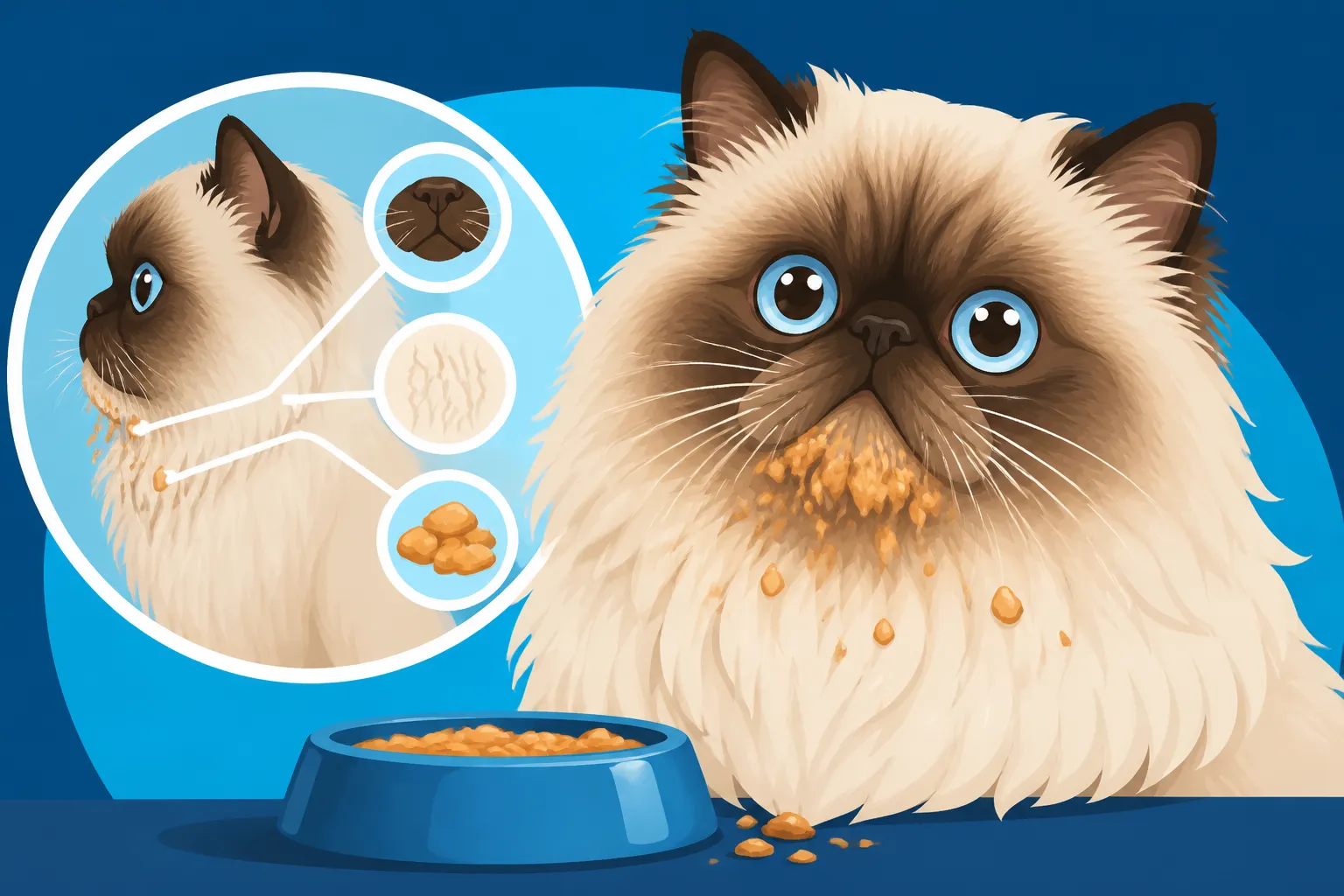
When a Himalayan goes to eat, they don't have the extended snout that other breeds use to scoop or grasp food effectively. Instead, they often have to push their face directly into the food bowl, which, as you can imagine, is a direct invitation for kibble crumbs or wet food paste to cling to their chin and nose folds. Their flattened nose itself can also get in the way, requiring them to use the side of their mouth more, which isn't the most graceful or clean way to dine. You might notice them tilting their head at odd angles, trying to compensate, but often, it just moves the mess around. It's a daily dance of geometry and gravity that usually ends with food on their face. You can learn more about What a Peke Face Himalayan's Profile Measures and What a Doll Face Himalayan's Profile Measures to understand these facial types better.
The Magnificent Ruff and Its Role in Mealtime Mayhem
Ah, the ruff! That glorious, voluminous mane of fur around a Himalayan's neck is one of its most defining and beautiful characteristics. It adds to their regal appearance, making them look like tiny lions. However, during mealtime, this beautiful feature transforms into a highly effective food-collecting device. When a Himalayan dips its head into a bowl, that thick, long fur around its neck and chest acts like a natural net, catching every stray morsel.
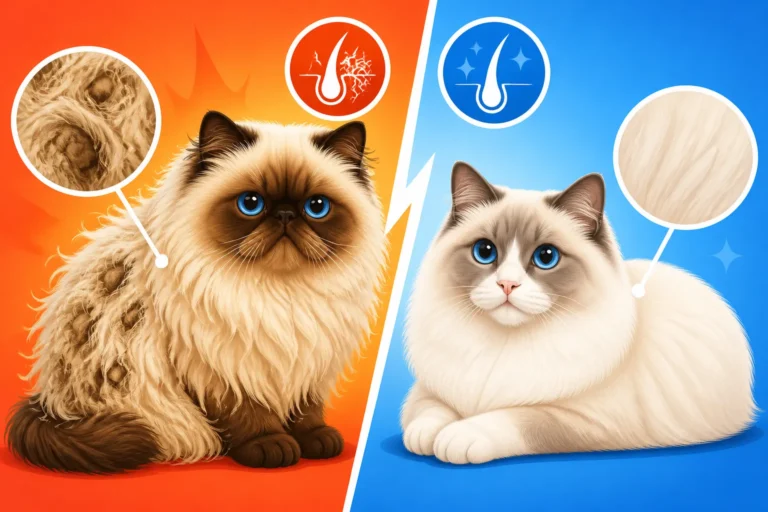
Imagine wearing a fluffy scarf while eating a messy sandwich – inevitably, crumbs, sauces, and bits will get tangled in the fabric. It's the same for our Himalayans. Wet food, in particular, adheres to the fine strands of their ruff with surprising tenacity, drying into stiff, unpleasant patches if not immediately cleaned. Even dry kibble can get trapped in the undercoat, leading to shedding issues and potential skin irritation if left unnoticed. This is especially true for the fur directly under their chin and around their cheeks. The longer and denser the ruff, the more surface area there is for food to become embedded, creating a perpetually messy situation that requires constant vigilance and grooming.
Crowded Teeth and Eating Difficulties
Beyond the external facial structure, the internal architecture of a Himalayan's mouth also contributes to the messy eating dilemma. Due to their brachycephalic skull, Himalayans often have crowded teeth, even though they have the same number of teeth as other cats. This means their teeth can be rotated, misaligned, or simply packed too closely together. This crowding makes it harder for them to grasp and chew food efficiently.
When a cat struggles to pick up individual pieces of kibble or tear off chunks of wet food, they might resort to pushing the food around with their tongue and chin, or trying to scoop it up with their lower jaw in an awkward fashion. This can cause more food to spill out of their mouth or cling to their facial fur. Furthermore, crowded teeth can lead to dental issues, such as plaque buildup and gum disease, which can make eating painful. A cat experiencing oral discomfort might eat more slowly, drop food, or even try to avoid chewing certain types of food, all of which can increase the mess. Understanding How a Shortened Jaw Crowds a Himalayan's Teeth and Why a Himalayan Needs Dentals Earlier Than a Siamese can provide more context on these issues. Regular dental check-ups are crucial for these cats, not just for their overall health, but also to minimize discomfort that might lead to messy eating.
Common Culprits: Food Types and Bowl Choices
It's not just your Himalayan's anatomy at play; the choices you make about their food and feeding equipment can significantly impact how messy mealtime becomes. Believe it or not, simply changing the type of food or the bowl you use can make a world of difference.
Wet vs. Dry Food: Which is Messier?
This is often a hot debate among Himalayan owners! Both wet and dry foods have their own challenges when it comes to mess, and understanding these can help you choose or manage them better.
Wet Food Woes: On one hand, wet food can be notoriously messy. Its soft, pâté-like consistency or chunky gravy texture adheres readily to fur. When your Himalayan dives into a bowl of wet food, it’s almost guaranteed that some will end up smeared on their chin, caked in their nose folds, or clinging stubbornly to their glorious ruff. As it dries, it can become stiff and crusty, creating uncomfortable matting and requiring immediate cleanup. The delightful aroma of your cat's gourmet dinner can quickly turn into a less delightful scent when it's mixed with dried cat food on their chest. You might find that some wet food, particularly very soft or saucy varieties, are worse culprits than others. This is why How Much Wet Food a Flat Faced Himalayan Gets Through can impact not just their diet, but also your cleaning routine.
Dry Kibble Concerns: You might think dry kibble would be cleaner, but it presents its own set of challenges. While it doesn't smear in the same way, individual kibble pieces can easily fall out of a Himalayan's mouth due to their jaw structure or get pushed out of the bowl. These stray bits can then become embedded in the dense fur of their ruff or scatter across the floor, becoming tiny, crunchy landmines for unsuspecting human feet. Sometimes, the act of crunching can also send small particles flying, and these can settle on the surrounding fur. So, while it may not result in sticky smears, it certainly contributes to a messy eating area and often, a crumb-filled ruff.
The Wrong Bowl Can Make All the Difference
You wouldn't eat soup out of a teacup, right? The same logic applies to our Himalayans and their food bowls. The design of the bowl itself plays a colossal role in managing mealtime mess. Using a standard, deep, or narrow bowl is often an open invitation for food to end up everywhere.
Deep Bowls: A deep bowl forces your Himalayan to plunge their entire face into it to reach the food at the bottom. This means their chin, nose, and ruff all come into direct contact with their meal, maximizing the chances of food residue sticking to their fur. It also makes it difficult for them to see what they're eating, leading to more pushing and shoving of the food.
Narrow Bowls: Similarly, narrow bowls restrict access, making it awkward for their flattened faces. They might have to contort their head in uncomfortable ways, leading to more spills. Why a Himalayan Pushes Food Out of a Round Bowl highlights how the shape impacts eating.
Plastic Bowls: While not directly related to shape, plastic bowls can also contribute to mess in an indirect way. They can harbor bacteria, which can lead to chin acne or skin irritation around the mouth. This discomfort might make a cat eat more cautiously or awkwardly, exacerbating the mess. Plus, the static cling of plastic can sometimes attract stray fur and food particles.
The whiskers are another important factor. Cats typically prefer bowls that don't press or bend their sensitive whiskers. Deep, narrow bowls can cause "whisker fatigue," making mealtime uncomfortable and leading them to scoop food out of the bowl to eat it from the floor – a surefire way to increase mess. Choosing a bowl designed with your Himalayan's unique needs in mind is not just about cleanliness, but about comfort too.
Drinking Habits and Water Beard Woes
It's not just food that causes a mess; water can be just as problematic, leading to the infamous "water beard." Himalayans, with their long ruffs and flattened faces, tend to get their chin and chest fur soaked when they drink from a traditional water bowl.
As they lower their head to drink, the fur around their mouth and on their chest dips into the water. Because their face is flat, they can't simply lap from the surface without their chin and even parts of their nose getting wet. The water then clings to the long strands of their ruff, creating a damp, heavy "beard" that can then drip across the floor or onto furniture. Over time, this constant dampness can lead to skin irritation, especially in the folds around their mouth, and can also contribute to the notorious tear staining that affects many Himalayans. Why a Himalayan Soaks Its Ruff Drinking explains this in more detail. The minerals in tap water can also leave residue on their fur, making it stiff and discolored if not regularly wiped. This seemingly simple act of drinking requires as much consideration as eating to keep your Himalayan clean and comfortable.
Practical Strategies for a Cleaner Mealtime
Now that we understand why our Himalayans are so prone to making a mess, let's talk about tangible solutions. There are many strategies you can employ to minimize mealtime mayhem and keep that glorious coat looking its best.
Choosing the Right Bowls and Feeding Setups
The first and arguably most impactful change you can make is in your feeding equipment. The right bowl can significantly reduce the amount of food that ends up on your Himalayan's face and ruff.
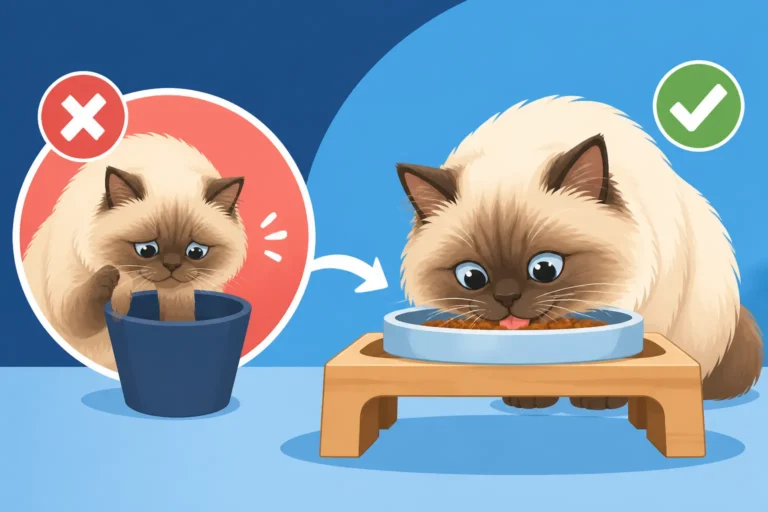
Shallow, Wide Bowls: Opt for bowls that are wide and shallow, often referred to as "whisker-friendly" or "flat-faced cat bowls." These designs allow your Himalayan to access their food without having to push their face deep into the bowl or bend their sensitive whiskers. Look for ceramic or stainless steel options, as these are easier to keep clean and don't harbor bacteria like plastic can. Brands like Messy Cats or Dr. Catsby's often offer bowls specifically designed for brachycephalic breeds, which you can find readily on platforms like Amazon or Chewy. Which Bowl Shape a Flat Faced Himalayan Can Use offers more specific recommendations.
Raised Bowls: Some Himalayans benefit from raised feeding platforms or bowls. Elevating the bowl to a comfortable height can reduce the strain on their neck and back, allowing them to approach their food more naturally and potentially reducing spillage. This can be especially helpful for older cats or those with any mobility issues. Just make sure the height isn't too high, as it could make reaching the food even more awkward.
Water Fountain Considerations: For water, consider a pet fountain with a wide, open surface rather than a deep basin. This encourages drinking from a moving stream, which some cats prefer, and can also make it easier for them to drink without soaking their entire chin. Just be prepared for potential drips as they pull their head away.
Smart Food Choices and Preparation
Beyond the bowl, what you put in the bowl and how you present it can also help manage mess.
Food Consistency for Wet Food: If your Himalayan eats wet food, consider the consistency. Pâté-style foods are often easier for them to manage than chunky stews with gravy, as the chunks can be hard to pick up, and the gravy can be very messy. If you use chunky food, you might consider mashing it lightly with a fork before serving to make it more uniform and easier for them to lap up.
Kibble Size and Shape: For dry food, look for smaller kibble pieces that are easier for their crowded jaws to pick up and chew. Some brands formulate kibble specifically for brachycephalic breeds, often with a unique shape that's easier for them to grasp. Always check the ingredients to ensure it's a high-quality, nutritionally complete food, regardless of its shape.
Smaller, More Frequent Meals: Instead of one or two large meals, consider offering smaller, more frequent meals throughout the day. This can prevent them from eating too quickly out of intense hunger, which often leads to more frantic, messy eating. A slow feeder bowl designed for flat-faced cats can also help regulate their eating pace.
When it comes to specific food types, you might explore human-grade fresh food options, which often come in a soft, easily consumed consistency that might be less messy than traditional canned food for some Himalayans. For a wide variety of kibble and canned food tailored for specific needs, Chewy is an excellent resource, offering detailed product descriptions and customer reviews to help you find the right fit for your cat's unique facial structure.
Post-Meal Grooming and Daily Face Care
Even with the best bowls and food choices, some mess is inevitable. This is where your dedicated grooming routine comes into play. Regular cleaning after meals is not just about aesthetics; it's vital for your Himalayan's health and comfort.
Immediate Wipe-Down: Make it a habit to gently wipe your Himalayan's face and chin after every meal, especially if they've had wet food. Use a soft, damp cloth or a pet-specific facial wipe (available on Amazon, for instance). This prevents food from drying and caking onto their fur, which can lead to uncomfortable mats and skin irritation. Pay close attention to the folds around their nose and mouth where food can get trapped. Why a Himalayan's Face Must Be Wiped Every Day is not just a suggestion, it's a necessity.
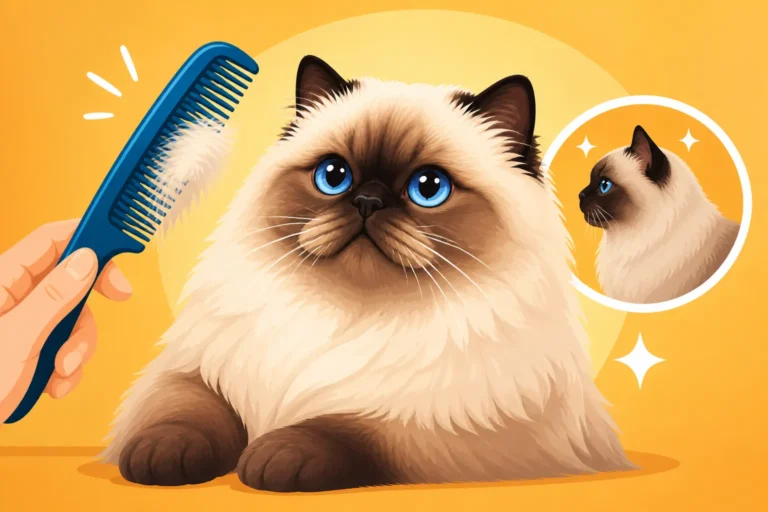
Ruff Brushing: A quick comb through their ruff with a fine-toothed steel comb after meals can help remove any trapped kibble crumbs or dried wet food particles before they become stubborn mats. This is particularly important for their dense undercoat. How Long a Himalayan's Face Routine Takes is typically only a few minutes, but it's time well spent.
Regular Grooming Schedule: Beyond mealtime cleanup, your Himalayan's glorious coat requires a consistent, thorough daily grooming routine. This includes brushing the entire body, paying special attention to areas prone to matting like the ruff, armpits, and britches. This overall coat health makes it harder for food to get deeply embedded and easier to clean when it does.
Addressing Tear Stains: While not directly food-related, tear stains often go hand-in-hand with facial mess for Himalayans. Keeping the area around their eyes clean and dry can prevent the rust-colored staining that is common. Cleaning the Fold Beside a Himalayan's Flattened Nose is a critical part of preventing both staining and skin infections.
When the Mess Points to Deeper Issues
While a certain amount of mess is par for the course with a Himalayan, excessive or sudden changes in eating habits and messiness can sometimes signal an underlying health issue. It's important to know when to escalate your concerns from a simple grooming challenge to a veterinary consultation.
Recognizing Dental Problems
If your Himalayan is suddenly making more mess than usual, dropping food, showing reluctance to eat, or tilting their head at extreme angles while chewing, dental issues should be one of your first considerations. As mentioned earlier, their crowded jaws make them prone to various oral health problems.
Signs of Dental Discomfort:
- Dropping Food: They pick up kibble only to drop it repeatedly.
- Chewing on One Side: Favoring one side of their mouth.
- Bad Breath: Beyond normal cat breath, a truly foul odor can indicate infection.
- Pawing at Mouth: Rubbing their face or pawing at their mouth.
- Reduced Appetite or Weight Loss: Pain can make eating unappealing.
- Increased Mess: More food falling out or clinging to their face because they're struggling to chew.
- Drooling: Excessive drooling, sometimes mixed with blood.
A comprehensive dental exam by your veterinarian is crucial. They can assess for gingivitis, periodontal disease, resorptive lesions, or even fractured teeth that might be causing pain. Addressing these issues with professional cleaning or extractions can significantly improve their comfort and, consequently, their eating habits and mess levels. Regular check-ups are key to staying ahead of these problems. You can learn more about How Often a Himalayan's Crowded Mouth Needs Cleaning.
Other Health Concerns Affecting Eating Habits
Beyond dental pain, a range of other health problems can subtly manifest as changes in eating behavior and increased messiness. It's always best to consult your vet if you notice persistent changes.
Gastrointestinal Issues: Conditions like inflammatory bowel disease (IBD), stomach upset, or even mild nausea can make a cat eat awkwardly, slowly, or become more prone to vomiting or regurgitating food, which is certainly messy. If your cat is unusually picky, shows signs of digestive upset after eating, or starts associating mealtime with discomfort, it's worth investigating.
Respiratory Issues: Himalayans, being a brachycephalic breed, can sometimes have compromised airways. If eating causes them to breathe more heavily, snort, or pant excessively, they might become more agitated during meals, leading to mess. In rare cases, structural issues like an elongated soft palate can contribute to eating difficulties. When a Himalayan's Open Mouth Breathing Needs a Vet is a critical article for understanding severe respiratory distress.
Neurological Issues: While less common, certain neurological conditions can affect a cat's coordination and ability to eat cleanly. Tremors, disorientation, or weakness could make precise eating difficult.
Vision Problems: As cats age, their vision can sometimes decline. If a cat can't see their food bowl clearly, they might be more clumsy and messy while eating. How Retinal Atrophy Blinds a Himalayan by Five and Whether a Blind Himalayan Notices the Change are good resources if you suspect vision issues.
Pain or Arthritis: Cats are masters at hiding pain. If your Himalayan is experiencing discomfort in their neck, jaw, or even their front legs (perhaps from arthritis), lowering their head to eat from a bowl on the floor could be painful, leading to awkward positioning and mess. A raised bowl could offer relief in such cases, but a vet visit is essential to diagnose and manage the pain.
Keep a watchful eye on your Himalayan's overall demeanor, energy levels, and bathroom habits. Any significant change in their normal routine, especially around eating, warrants a conversation with your veterinarian. They can help rule out underlying medical conditions and provide guidance tailored to your cat's specific needs.
Disclaimer
This article is for general informational purposes only and does not constitute professional advice. Laws, prices and regulations vary by location and change over time. Consult a qualified professional for guidance on your specific situation.