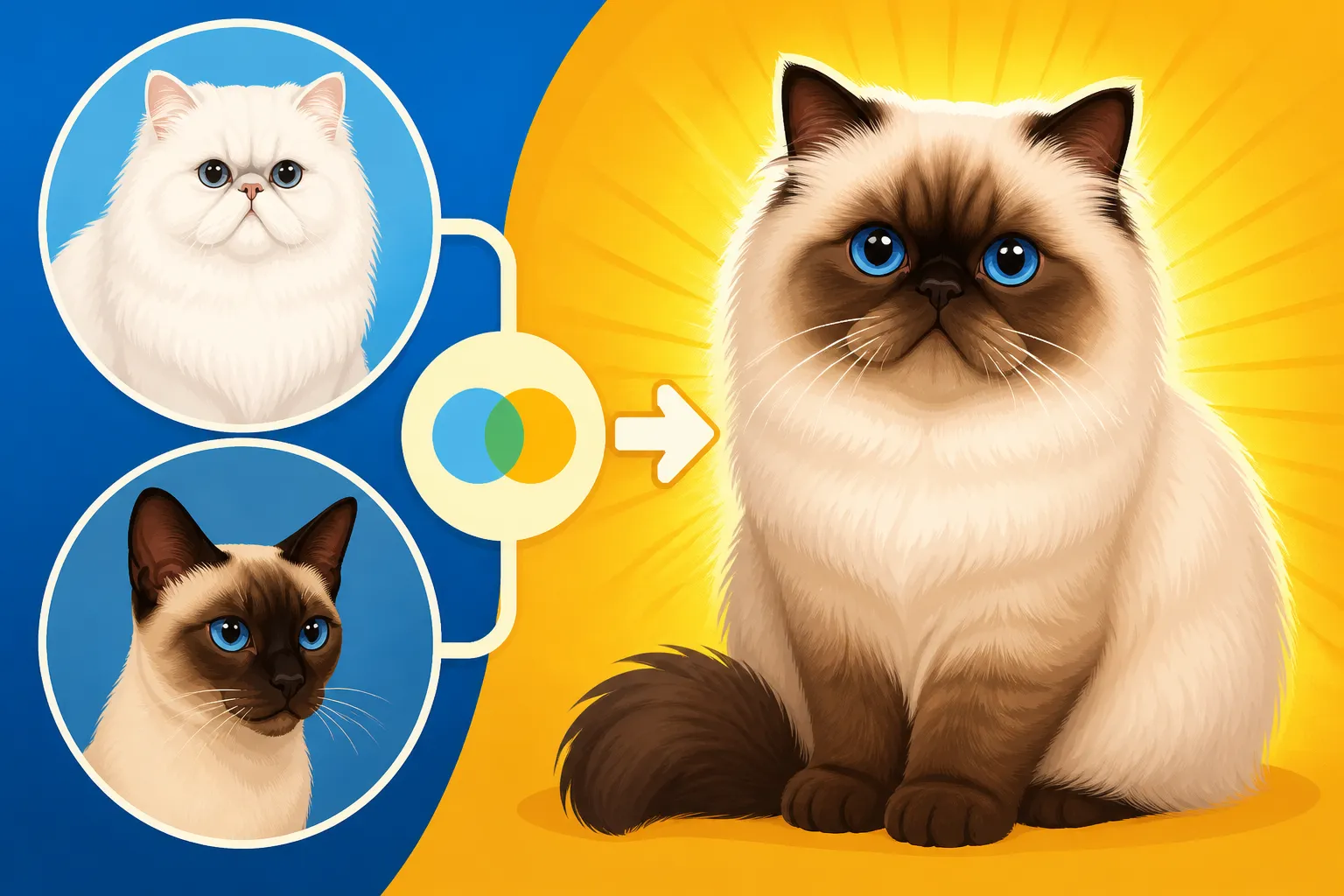
Why the Cross That Made the Himalayan Was Attempted
It’s easy to look at the beautiful, long-haired Himalayan cat today and simply appreciate their stunning appearance. But have you ever stopped to wonder how this unique blend of Persian elegance and Siamese coloring came to be? Many people assume they simply appeared, or are a natural variation, but the truth is, the Himalayan was the result of a deliberate, scientific crossbreeding effort, born out of a fascinating curiosity to understand genetic inheritance. This guide will take you back in time to explore the intriguing reasons behind the creation of this beloved breed.
The Scientific Curiosity Behind the Cross
Back in the 1930s, the world of genetics was rapidly expanding, and scientists were keen to understand how specific traits were passed down through generations in various species. Cats, with their diverse coat colors and patterns, presented an ideal canvas for these studies. The Himalayan cat, as we know it, didn't just happen; it was a testament to scientific inquiry.
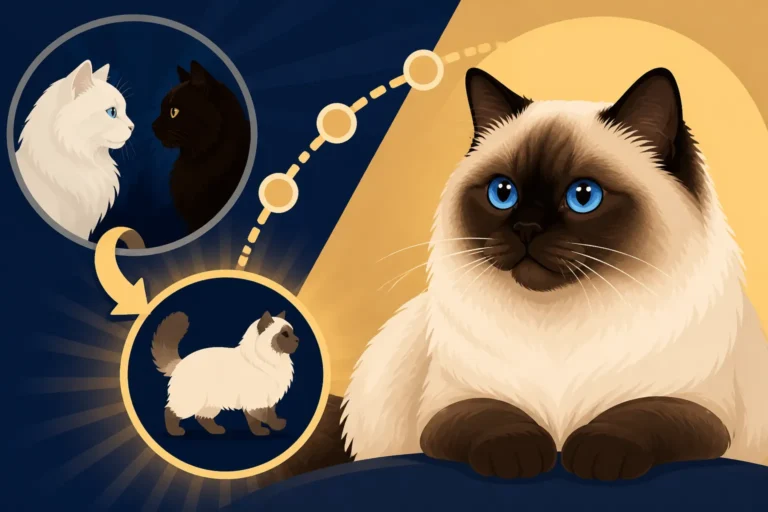
The initial experiments weren't even necessarily aimed at creating a new "breed" as a pet, but rather at exploring the fundamental principles of heredity. Researchers at institutions like Harvard University were deeply interested in how certain genes expressed themselves, particularly those responsible for coat color and pattern. They wanted to see if they could combine distinct characteristics from two very different existing breeds – the luxurious, long-haired Persian and the vividly pointed, vocal Siamese – and predict the outcome. This was about understanding the biological machinery, not just admiring the aesthetic result.
You see, the Persian cat brought its famously dense, flowing coat and its distinctive cobby body type to the table. The Siamese, on the other hand, was renowned for its striking colorpoint pattern – pale body with darker "points" on the ears, face, paws, and tail – and those captivating blue eyes. The scientists, led by figures such as Clyde Keeler and Virginia Cobb, sought to investigate if these traits could be successfully merged and consistently reproduced. It was a groundbreaking endeavor, truly pushing the boundaries of what was known about feline genetics at the time. Their work essentially set the stage for what we now celebrate as the Himalayan. The earliest records point to The Himalayan Was Made at Harvard in the 1930s, with key individuals like Clyde Keeler, Virginia Cobb and the First Himalayan being instrumental.
Unraveling the Mystery of Pointed Coats
One of the primary drivers behind crossing the Persian and Siamese was to specifically study the inheritance of the "pointed" coat pattern. This isn't just a random coloring; it's a fascinating genetic phenomenon known as temperature-sensitive albinism.
The Genetics of Colorpoints
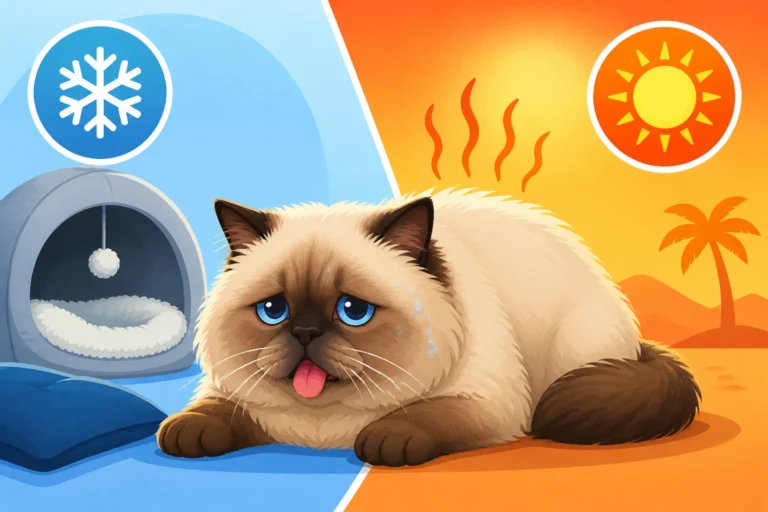
Imagine a little kitten developing inside its mother. If it carries the genes for point coloration, its body temperature plays a crucial role in how its fur color develops. The enzyme responsible for producing pigment can only function efficiently in cooler temperatures. This means that the parts of the kitten's body that are naturally cooler – like the extremities (ears, nose, paws, tail) – develop darker pigment. The warmer core of the body, where the enzyme is less active, remains pale. This is Why the Cold Parts of a Himalayan Grow Dark Fur and Why a Himalayan's Ears and Tail Are the Darkest Points.
The Siamese cat was the perfect candidate to introduce this specific genetic trait because it embodies the colorpoint pattern so clearly. By breeding a Siamese with a solid-colored Persian, the researchers could meticulously track how this temperature-sensitive gene was passed down. They wanted to observe if the long Persian fur would retain the point coloration, and how many generations it would take for these traits to stabilize. This was far more than just a casual cross; it was a controlled experiment into Mendelian inheritance in felines.
The Role of Pigmentation and Temperature
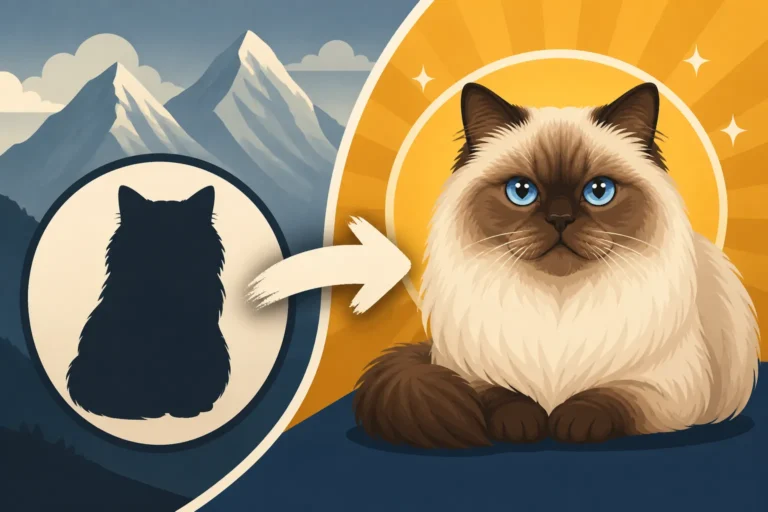
The scientists involved were essentially asking, "Can we put the Siamese's 'thermostat-controlled' coloring onto a Persian's luxurious coat?" The subsequent generations, carefully documented and analyzed, provided invaluable insights into how recessive genes like the one for colorpoint expression work. It showed that for a cat to display the pointed pattern, it generally needed to inherit two copies of the specific gene, one from each parent. This is a concept explored further in Why a Himalayan Needs Two Copies of the Point Gene. The results of these early findings were eventually published in a seminal document, highlighted in The 1936 Paper That Started the Himalayan. If you want to dive deeper into the original research, understanding What the 1936 Paper Said About the Himalayan Cross can be quite enlightening.
Combining Desired Traits: Persian Elegance Meets Siamese Color
While the initial impetus was scientific, it quickly became clear that the resulting kittens held immense appeal. The idea of a cat with the stunning long hair, round face, and gentle disposition of a Persian, combined with the exotic, blue-eyed, point-colored beauty of a Siamese, was incredibly attractive.
The Best of Both Worlds
Breeders, seeing the unique beauty emerging from these crosses, began to take a serious interest in developing these cats into a distinct and recognizable breed. The long, flowing coat of the Persian required significant grooming, of course, but it added an unparalleled softness and elegance. Imagine running your hands through that plush fur! On the other hand, the Siamese brought those piercing blue eyes, an intense gaze that perfectly complemented the dark points. The challenge was to consistently produce kittens that inherited both these sets of desirable characteristics without the less desirable traits, such as the Siamese's famously loud voice or slighter build.
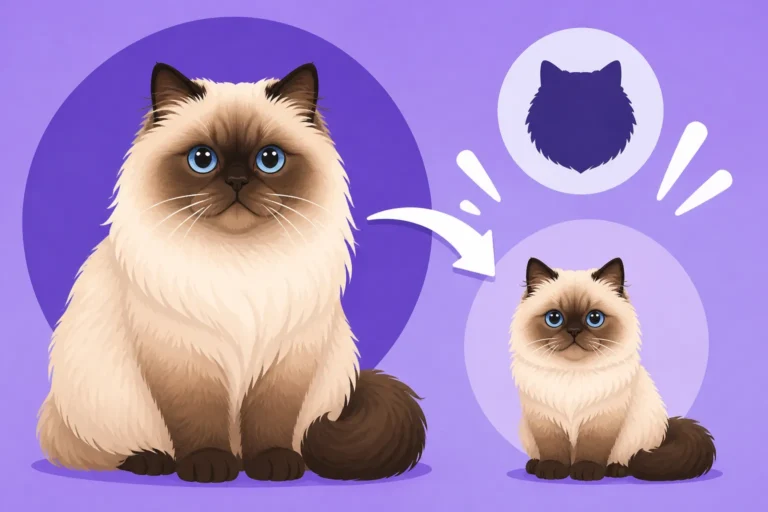
The ideal was a cat that retained the substantial, "cobby" body and flat face that had become synonymous with the Persian, but with the striking color and pattern of the Siamese. This was a true labor of love and patience, requiring many generations of careful selection and breeding. It wasn't just about getting a pointed longhair; it was about getting a Persian-type pointed longhair.
A Dream for Cat Lovers
For many cat enthusiasts, this combination was a dream come true. They loved the serene, often docile nature of the Persian but longed for the captivating color and contrast that the Siamese offered. The Himalayan effectively filled this niche, offering a visually stunning cat with a generally calm demeanor, though often with a slightly more playful streak than a pure Persian, thanks to its Siamese ancestry. These characteristics are what many Himalayan owners cherish today, often sourcing quality supplies and food for their beloved pets from retailers like Chewy. Getting the right comb for that Persian coat is essential, and Chewy has plenty of options!
Beyond the Lab: The Path to a New Breed
The journey from a scientific experiment to a recognized cat breed is a long and arduous one, requiring dedication, meticulous record-keeping, and a clear vision. What started as an academic exercise at Which University the Himalayan Research Was Done At eventually blossomed into a concerted effort to establish a new breed standard.
Early Breeders and Establishing Standards
Once the genetic principles were understood, a dedicated group of breeders picked up the torch. They set out to stabilize the look and temperament of these "Colorpoint Persians," as they were sometimes called. This meant careful selection, often involving backcrossing to Persians to reinforce the desired body type and coat length, while maintaining the Siamese point pattern. It wasn't just about random breeding; it was a deliberate program to create consistency.
This process involved documenting every mating, every litter, and every kitten's development. It took How Many Generations the First Himalayan Took to achieve the level of consistency needed for breed recognition. They had to prove that the traits were reliably inheritable and that the resulting cats were healthy and distinct enough to warrant their own classification. This methodical approach is the backbone of all responsible cat breeding, ensuring the longevity and health of a breed.
The Legacy of the Cross
The initial scientific cross didn't just create a beautiful cat; it significantly contributed to our understanding of feline genetics. It demonstrated the power of selective breeding to combine and refine traits from different lineages. Over time, the name "Himalayan" became widely accepted, even as some registries eventually reclassified them as a division of the Persian. Whether viewed as a distinct breed or a Persian variant, the Himalayan remains a testament to the scientific curiosity and the passion of early breeders who dared to imagine a cat that combined the best of two beloved worlds. This fascinating origin story is part of What the Himalayan Experiment Was Trying to Prove, and its success truly demonstrates How the Himalayan Changed Persian Breeding and even influenced future cat breeding endeavors, making it arguably Whether the Himalayan Was the First Deliberately Designed Cat. You can find many specialized products for these unique cats, from food to grooming tools, on platforms like Chewy, which makes caring for them a bit easier.
| Trait | Persian Contribution | Siamese Contribution | Himalayan Outcome |
|---|---|---|---|
| Coat Length | Long, flowing, dense double coat | Short, sleek single coat | Long, flowing, dense double coat (like Persian) |
| Body Type | Cobby, heavy boned, rounded | Svelte, lithe, elegant | Cobby, heavy boned, rounded (like Persian) |
| Head Shape | Round, broad, flat face, small ears | Wedge-shaped, large ears | Round, broad, flat face, small ears (like Persian) |
| Eye Color | Various (copper, blue, green, odd-eyed) | Deep blue only | Deep blue only (like Siamese) |
| Color Pattern | Solid, tabby, shaded, bi-color (non-pointed) | Colorpoint (dark extremities, pale body) | Colorpoint (dark extremities, pale body) |
| Temperament (General Tendency) | Docile, calm, quiet | Vocal, active, playful | Generally calm and sweet, but often more playful and vocal than a pure Persian, less intense than a Siamese |
The legacy of these early crosses continues today, influencing how we view and care for these magnificent animals. Whether you're buying their favorite food or a new grooming brush, places like Chewy are invaluable resources for Himalayan owners.
Disclaimer
This article is for general informational purposes only and does not constitute professional advice. Laws, prices and regulations vary by location and change over time. Consult a qualified professional for guidance on your specific situation.